How to Price House Cleaning: Hourly, Flat Rate, Per Square Foot and Per Room (Plus a Free Checklist)
How much to charge for house cleaning: hourly vs flat rate vs per square foot vs per room, standard vs deep vs move-out cleans, recurring discounts, add-ons, supplies, pet and condition adjustments, minimums, deposits and cancellation policy, with a worked quote example and a free printable checklist.
Why house cleaning pricing goes wrong
Most new cleaners price by guessing, copying a competitor or quoting low to win the first client. The problem is that two homes with the same square footage can take very different amounts of time: pets, clutter, number of bathrooms, how long since the last clean and what the client actually expects all change the job. A repeatable method fixes that: know your target hourly income, pick a pricing model, estimate time honestly, adjust for clean type and condition, itemize extras and protect yourself with a minimum, a deposit and a cancellation policy.
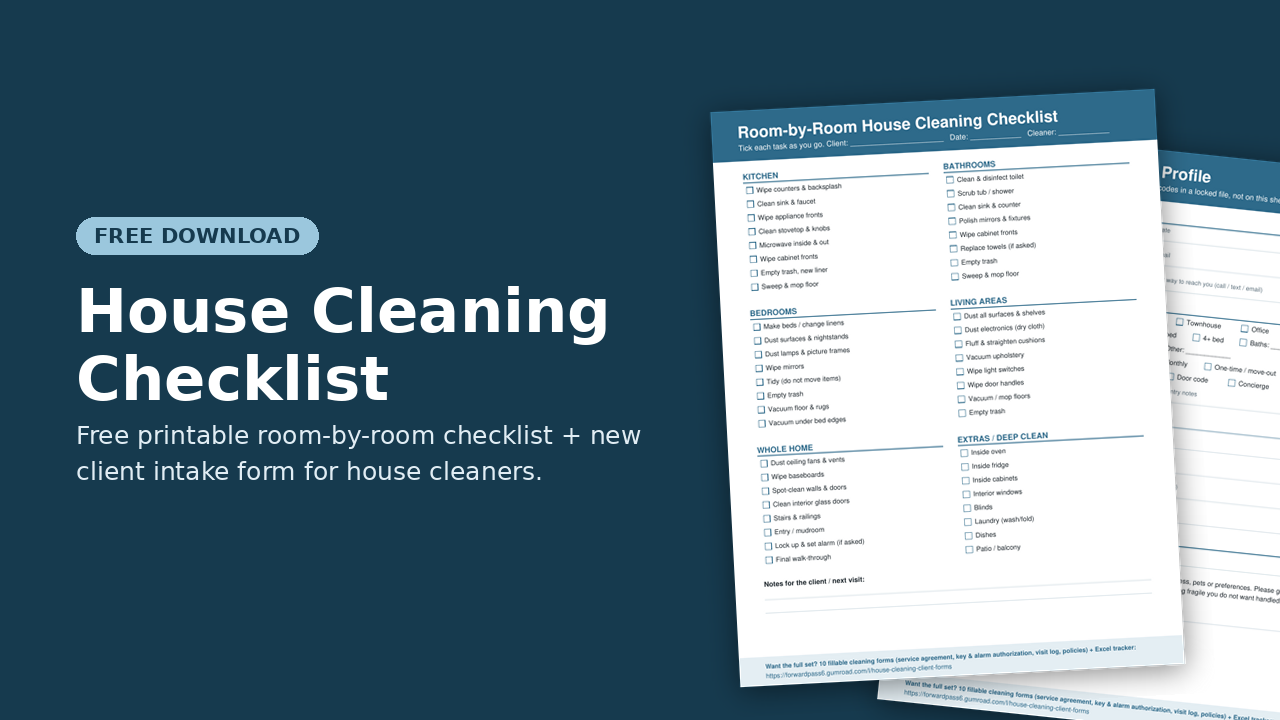
Free House Cleaning Checklist
A printable room-by-room cleaning checklist with 48 tasks plus a new client intake and home profile form.
Download free →1. Start with your costs and target hourly rate
Every pricing model is really an hourly rate in disguise. Before you quote anything, work out what an hour of your time has to cover: your pay, any helper wages, supplies, travel time and fuel, insurance, bonding if you carry it, software, marketing and taxes. Unpaid time such as driving between jobs and answering messages counts too. Once you know the hourly number you need, you can turn it into a flat, per-room or per-square-foot price and check that each quote still clears it.
2. Choose a pricing model: hourly, flat rate, per square foot or per room
- Hourly: you charge for time on site, per cleaner. Fair for unpredictable jobs and first cleans, but clients cannot see the final cost in advance and you earn less as you get faster.
- Flat rate: one price for a defined scope. Clients prefer it and you are rewarded for working efficiently, but you need a good time estimate and a clear checklist of what is included.
- Per square foot: quick to quote from listing details, useful for move-out and larger homes. Combine it with bedroom and bathroom counts, because square footage alone hides a lot of variation.
- Per room: a set price per bedroom and bathroom (bathrooms and kitchens usually priced higher), with extra rooms added on. Easy for clients to understand and easy to put on a service menu.
Many cleaners quote the first visit hourly or after a walkthrough, then move the client to a flat rate once they know how long the home really takes.
3. Price standard, deep and move-out cleans differently
Define each clean type in writing so the client knows what they are paying for:
- Standard (maintenance) clean: dusting reachable surfaces, kitchen counters and exterior of appliances, bathrooms, floors, making beds and emptying trash. Assumes the home is kept up regularly.
- Deep clean: everything in a standard clean plus baseboards, door frames, light switches, blinds, cabinet fronts, detailed bathroom scrubbing and built-up grime. Usually takes noticeably longer, so it is priced higher, and is often required as the first visit before recurring service.
- Move-in / move-out clean: an empty home cleaned top to bottom, often including inside cabinets, drawers and appliances. Price it from a walkthrough or photos, because condition varies widely.
4. Offer recurring discounts for weekly and biweekly service
Recurring clients are the backbone of a cleaning business. Homes cleaned often take less time per visit, and a standing schedule cuts the time you spend finding new work, so many cleaners give a lower per-visit price for weekly service, a smaller discount for biweekly, and charge the full rate for monthly or one-time cleans. Set your own discount levels from your actual visit times, and state in the agreement that the recurring price depends on keeping the schedule; if visits are skipped and the home needs more work, the one-time rate can apply.
5. Itemize add-ons
Keep the base price focused on the standard checklist and list extras separately on your service menu:
- Inside oven
- Inside fridge
- Interior windows and tracks
- Laundry (wash, dry, fold) and changing bed linens
- Inside cabinets and drawers
- Baseboard and wall spot cleaning
- Blinds, ceiling fans and light fixtures
- Dishes
- Garage, basement or patio sweep
Price add-ons as a flat fee each or by the time they take. Itemizing raises the average ticket without making the base quote look expensive.
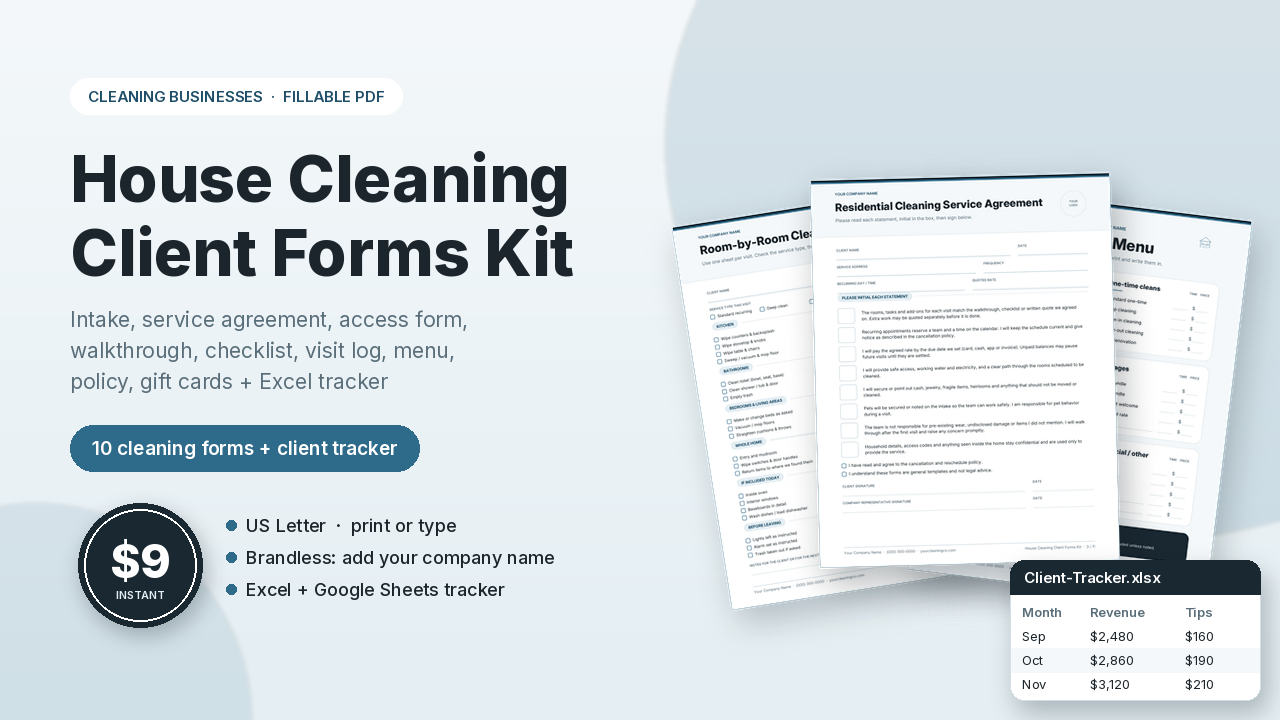
House Cleaning Client Forms Kit
10 fillable forms (intake and home profile, service agreement, key and alarm authorization, walkthrough sheet, room-by-room checklist, visit and quality log, service menu, cancellation policy, photo release, gift certificates) plus an Excel client tracker.
Get it →6. Decide who supplies products and equipment
Most clients expect the cleaner to bring supplies and equipment, so build that cost into your rate. If a client wants you to use their products (for example, for allergies or a preferred brand), note it on the home profile. If they request specialty products you do not normally carry, you can charge for them separately. Either way, write it down so there is no confusion on the first visit.
7. Adjust for pets, condition and the home itself
Your base price assumes an average home in average condition. Adjust up for:
- Pets: shedding, litter areas and pet hair on furniture all add time
- Condition: first cleans, homes not cleaned in months, heavy buildup, clutter you have to work around
- Layout: extra bathrooms, multiple stories and stairs, large kitchens
- Occupants: a home with several kids or roommates usually takes longer than one with a single occupant
Explain any adjustment on the quote, and reassess after the first visit if the job takes much longer or shorter than expected.
8. Set a minimum, a deposit and a cancellation policy
Every visit has fixed costs: driving, loading supplies and setup. A minimum charge keeps small jobs worthwhile. For larger one-time jobs such as deep or move-out cleans, many cleaners take a deposit to hold the date. A written cancellation policy protects your schedule: state the notice period, any late cancellation fee, and what happens if you arrive and cannot get in (a lockout fee). Include payment terms and when payment is due.
9. Worked example (example numbers only)
Here is how a flat-rate quote comes together. The rates below are example numbers to show the math, not recommended prices for your market:
- 3-bedroom, 2-bathroom home, standard clean estimated at 3 cleaner-hours at an example $45 per hour = $135
- One large dog, example pet adjustment = $15
- Add-ons: inside fridge at an example $25 and inside oven at an example $30 = $55
- One-time total = $205 (above the example $100 minimum, so the minimum does not apply)
- First visit booked as a deep clean, estimated at 5 cleaner-hours at the same example rate = $225 before add-ons
- Biweekly recurring option for the standard clean at an example 10% off the $150 base (clean plus pet adjustment) = $135 per visit, add-ons extra when requested
Research what cleaners in your area charge, time your real jobs, and set your own rates from your costs and target hourly income.
10. Put it in writing
A written quote and service agreement protect both you and the client. Include the clean type and checklist, frequency and recurring price, add-ons, who supplies products, pet and condition notes, the minimum charge, deposit, payment terms, cancellation and lockout policy, and how you handle keys, alarm codes and breakage. Do a walkthrough on the first visit to note existing damage, then follow up to confirm the next visit and ask for a review.
Common pricing mistakes
- Quoting without knowing your target hourly rate
- Pricing a deep clean the same as a standard clean
- Using square footage alone and ignoring bathrooms, pets and condition
- Giving ovens, fridges and laundry away for free
- No minimum charge, deposit or cancellation policy
- Never reviewing a recurring price after the first few visits
FAQ
How do you price house cleaning?
Work out the hourly rate you need to cover pay, supplies, travel, insurance and taxes, estimate how long the home takes, then turn that into an hourly, flat, per-room or per-square-foot price. Adjust for clean type, pets and condition, itemize add-ons and apply a minimum charge.
Should I charge hourly or a flat rate for house cleaning?
Hourly is fair for first visits and unpredictable jobs. A flat rate is easier for clients and rewards you for working efficiently. Many cleaners quote the first clean hourly or after a walkthrough, then switch recurring clients to a flat rate.
How much more should a deep clean cost than a standard clean?
A deep clean covers more tasks and usually takes noticeably longer, so price it from your time estimate for that specific home rather than a fixed markup. Many cleaners require a deep clean as the first visit before recurring service.
Do house cleaners give discounts for weekly or biweekly service?
Many do, because homes cleaned regularly take less time per visit and a standing schedule is valuable. A common structure is the biggest discount for weekly, a smaller one for biweekly and full price for monthly or one-time cleans.
What add-ons can house cleaners charge extra for?
Common add-ons include inside the oven, inside the fridge, interior windows, laundry and linen changes, inside cabinets, baseboards, blinds, ceiling fans and dishes.
Should house cleaners charge a deposit or cancellation fee?
A deposit is common for large one-time jobs like deep or move-out cleans, and a written cancellation policy with a notice period, late cancellation fee and lockout fee protects your schedule. Put both in your service agreement.
This page is general guidance, not legal, tax or insurance advice. Business licensing, insurance, bonding, employment and contract rules vary by state and city and change over time, so check yours before you take jobs.
Related templates
Free House Cleaning Checklist
A printable room-by-room cleaning checklist with 48 tasks plus a new client intake and home profile form.
Download free →House Cleaning Client Forms Kit
10 fillable house cleaning forms plus an Excel client tracker.
Get it →More free guides
- Price Increase Letter to Clients
- Cleaning Gift Certificate
- House Cleaning Walkthrough Checklist
- House Cleaning Client Questionnaire
- Cleaning Client Intake Form
- House Cleaning Checklist
- Holiday Deep Cleaning Pricing
- Junk Removal Estimate Template
- House Cleaning Service Agreement
- Airbnb Cleaning Checklist
- How to Price Window Cleaning
- Mattress Cleaning Pricing
- Area Rug Cleaning Pricing
- Dryer Vent Cleaning Pricing
- Carpet Cleaning Pricing
- Upholstery Cleaning Pricing
- Tile and Grout Cleaning Pricing
- Air Duct Cleaning Pricing
- Deep Cleaning Pricing
- Move-Out Cleaning Pricing
- Office Cleaning Pricing
- Airbnb Cleaning Pricing
- Post-Construction Cleaning Pricing