Post-Construction Cleaning Pricing: How to Quote Renovation Cleanups
How cleaners can quote renovation cleanups: rough, final and touch-up phases, rate per cleaner hour or per square foot, add-ons for dust, windows and cabinets, the walkthrough, deposit and agreement, and a worked quote.
Why renovation cleanups are easy to underprice
A post-construction clean looks like a big deep clean, but it is not. Construction dust gets into cabinets, vents, light fixtures, window tracks and baseboards, and it keeps settling for days. There may be paint specks, sticker residue, grout haze and debris left behind. Cleaners who quote it like a normal deep clean often work twice the hours for the same money.
A clearer method: decide which phase you are cleaning, set your rate per cleaner hour, estimate crew hours from a walkthrough, add fees for the extra work, and put it all in writing. The steps below end with a worked quote. All numbers on this page are example numbers, not market data.
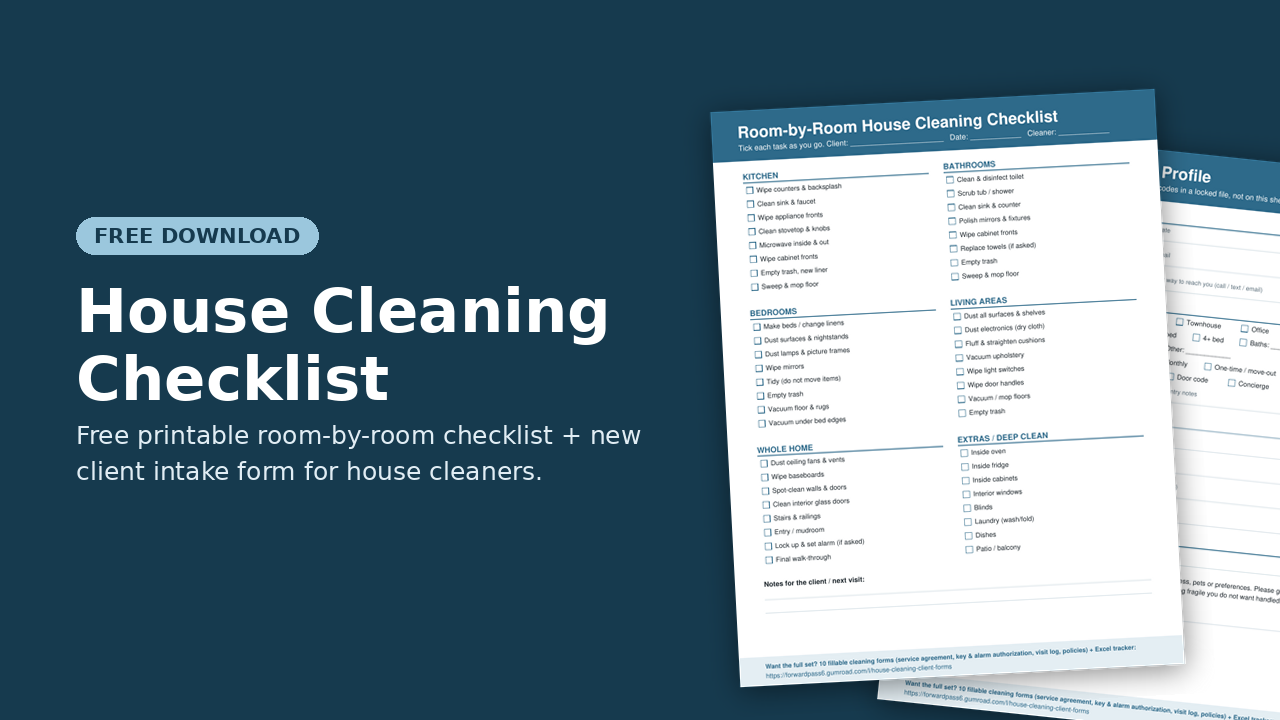
Free House Cleaning Checklist
A printable room-by-room cleaning checklist with 48 tasks plus a new client intake and home profile form.
Download free →1. Know which phase you are pricing
Ask the client or contractor which clean they need. Each phase is a separate job with its own price.
| Phase | What it covers | Typical effort |
|---|---|---|
| Rough clean | Debris, sweeping, heavy dust before finishes | Lower detail, physical work |
| Final clean | Every surface, inside cabinets, fixtures, windows, floors | Most hours, highest detail |
| Touch-up clean | Light dust and smudges right before move-in | Short visit, flat fee |
2. Set your rate and estimate crew hours
Start with what one cleaner hour must earn after wages, supplies and travel. Then estimate the hours from the walkthrough.
- Example rate: $50-70 per cleaner hour for final cleans.
- Example per square foot: $0.30-0.60 for a final clean, depending on dust and detail.
- Example minimum: a job minimum such as $250 so small rooms still cover travel and setup.
- Track your real hours on the first few jobs and adjust.
3. Add fees for the extra work
List the common extras so you are not doing them for free.
| Add-on | Example fee | Notes |
|---|---|---|
| Heavy dust (no dust barriers used) | +15-30% of the base | More passes, more filters |
| Interior windows and tracks | $5-10 per window | Paint specks and stickers |
| Inside cabinets and drawers | $3-6 per cabinet | Dust settles inside |
| Paint or adhesive removal | Hourly | Careful work on finishes |
| Second visit after more dust settles | Flat fee or hourly | Common on big jobs |
| Small debris haul-away | Flat fee | Large debris is the contractor's job |
Write down what you will not do, such as moving heavy materials or handling hazardous waste.
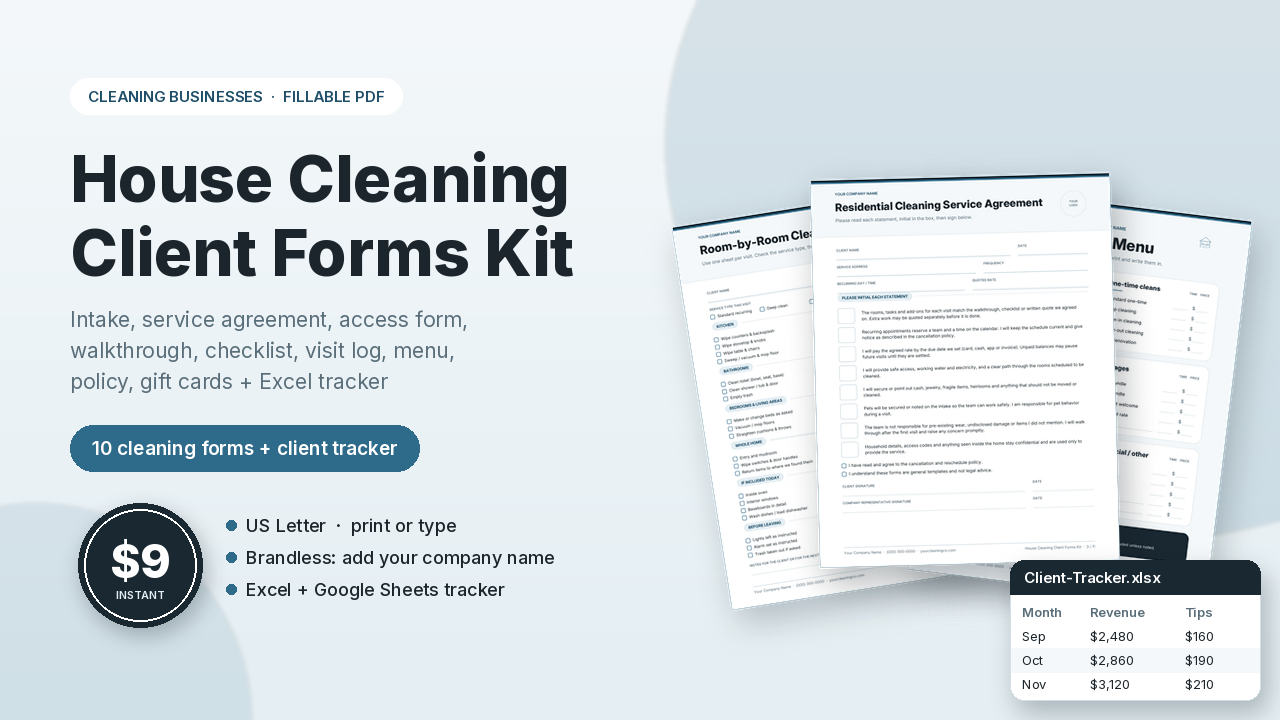
House Cleaning Client Forms Kit
10 fillable forms (intake and home profile, service agreement, key and alarm authorization, walkthrough sheet, room-by-room checklist, visit and quality log, service menu, cancellation policy, photo release, gift certificates) plus an Excel client tracker.
Get it →4. Walkthrough, deposit and the agreement
Walk the site before quoting, take photos and confirm the date when the trades will be out. A clean that starts while painters are still working wastes your hours.
Take a deposit to hold the date and set the balance due on completion. Put the phase, scope by room, exclusions, price, extra-visit fees, cancellation terms and payment due dates in a written agreement. The house cleaning forms linked on this page include a service agreement and checklists you can adapt for renovation jobs.
Worked example: final clean after a kitchen and bath remodel
Here is how the method adds up, using the example numbers above.
- Final clean of a 1,800 sq ft home after a kitchen and two-bathroom remodel.
- Walkthrough estimate: 2 cleaners x 6 hours = 12 cleaner hours at $55 = $660.
- Heavy dust (no barriers on the kitchen side): +15% = $99.
- Interior windows: 14 x $6 = $84.
- Inside kitchen cabinets: 20 x $4 = $80.
- Total $923, with a 30% deposit (about $277) at booking and the balance on completion.
- Optional touch-up clean before move-in: quoted separately as a flat fee.
These are example numbers to show the math, not market rates. Use your own costs, local rates and the hours each job really takes.
FAQ
How much should I charge for post-construction cleaning?
Work out your hourly target per cleaner, estimate the crew hours from a walkthrough, then add fees for heavy dust, debris, windows and extra visits. Some cleaners quote per square foot instead. Any rates on this page are example numbers, not market data.
Why does post-construction cleaning cost more than a deep clean?
Fine construction dust settles on every surface, inside cabinets, vents and window tracks, and often needs more than one pass. There can be paint specks, adhesive, stickers and debris, plus extra equipment such as HEPA vacuums. It usually takes far longer than a regular deep clean of the same home.
Should I charge per square foot or per hour?
Per square foot is easy for clients to compare, but it only works once you know how long a typical job takes you. Hourly or a fixed quote from a walkthrough protects you on messy or unusual jobs. Many cleaners quote a fixed price based on estimated crew hours.
What is the difference between a rough clean and a final clean?
A rough clean happens before finishing work ends: removing debris and heavy dust. A final clean happens after the trades leave: detailed dusting, wiping every surface, windows, fixtures and floors. Some jobs add a touch-up clean right before move-in. Price each phase separately.
Do I need to see the site before quoting?
Yes, whenever you can. Photos help, but a walkthrough shows how much dust, debris and detail work there really is. Quote in writing after the walkthrough and say what is and is not included.
What should a post-construction cleaning agreement include?
Address, phase (rough, final or touch-up), scope by room, what is excluded (such as hauling large debris or hazardous materials), price, deposit, the date the site will be ready, extra-visit fees, cancellation terms and payment due dates.
This page is general guidance, not legal or tax advice. Business licensing, tax and consumer rules vary by location, so check the rules where you work.
Related templates
Free House Cleaning Checklist
A printable room-by-room cleaning checklist with 48 tasks plus a new client intake and home profile form.
Download free →House Cleaning Client Forms Kit
10 fillable house cleaning forms plus an Excel client tracker.
Get it →