Tutoring Agreement Template: What to Include, Plus a Free Student Intake Form
What to put in a private tutoring agreement: schedule, rates, packages, cancellations, parent communication, progress reports and online sessions, with a free printable student intake form and session notes sheet.
Why private tutors need a written agreement
Most problems in private tutoring come from things agreed only by text or in passing: how much notice a family must give to cancel, whether a missed session is still paid, when prepaid packages expire, and how often parents hear about progress. A short tutoring agreement signed before the first session answers those questions and makes an independent tutor look like an established business. It matters most around midterms, finals and the January restart, when families book in a hurry and schedules change often.
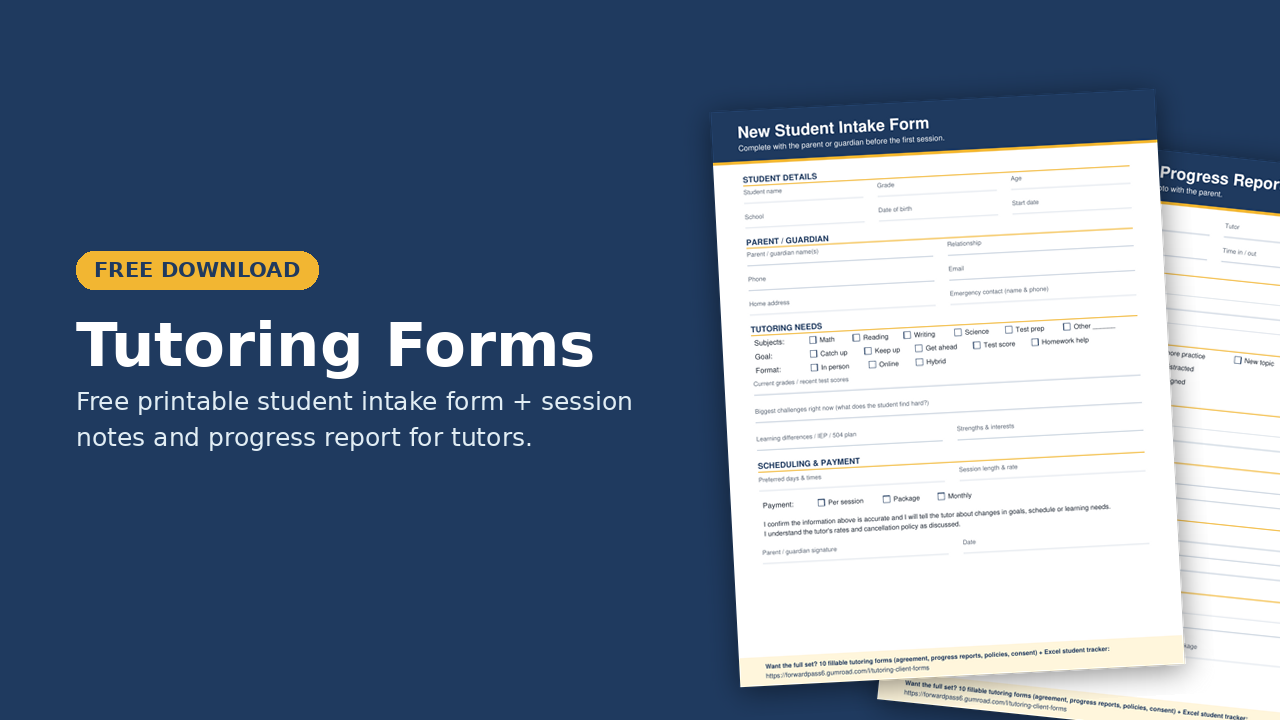
Free Tutoring Forms
A printable new student intake form plus a session notes and progress report sheet for private tutors.
Download free →Start with a student intake form
Before the first session, collect:
- Student details: name, grade, school and subjects or tests to work on.
- Parent or guardian contacts: who books, who pays and who gets progress updates.
- Goals: grade targets, test dates and what success looks like to the family.
- Learning needs: IEP or 504 accommodations the family chooses to share, attention or focus notes, and what has or has not worked before.
- Logistics: in person or online, location, preferred days and times.
Schedule, location and online sessions
State session length, regular days and times, and where sessions happen. For online tutoring, name the platform, who sends the link and what the student needs (camera, microphone, materials). For in-home sessions, say whether a parent or adult must be home. Keep late-arrival rules simple: a session that starts late still ends at the booked time.
Rates, packages and payment
List your hourly or per-session rate, any package discounts and when payment is due, usually before the session or at the start of each month. Prepaid packages work well for both sides: the family gets a better rate and you get steady income. Say when package sessions expire, whether they can be shared between siblings, and that unused sessions are not refunded after a set date.
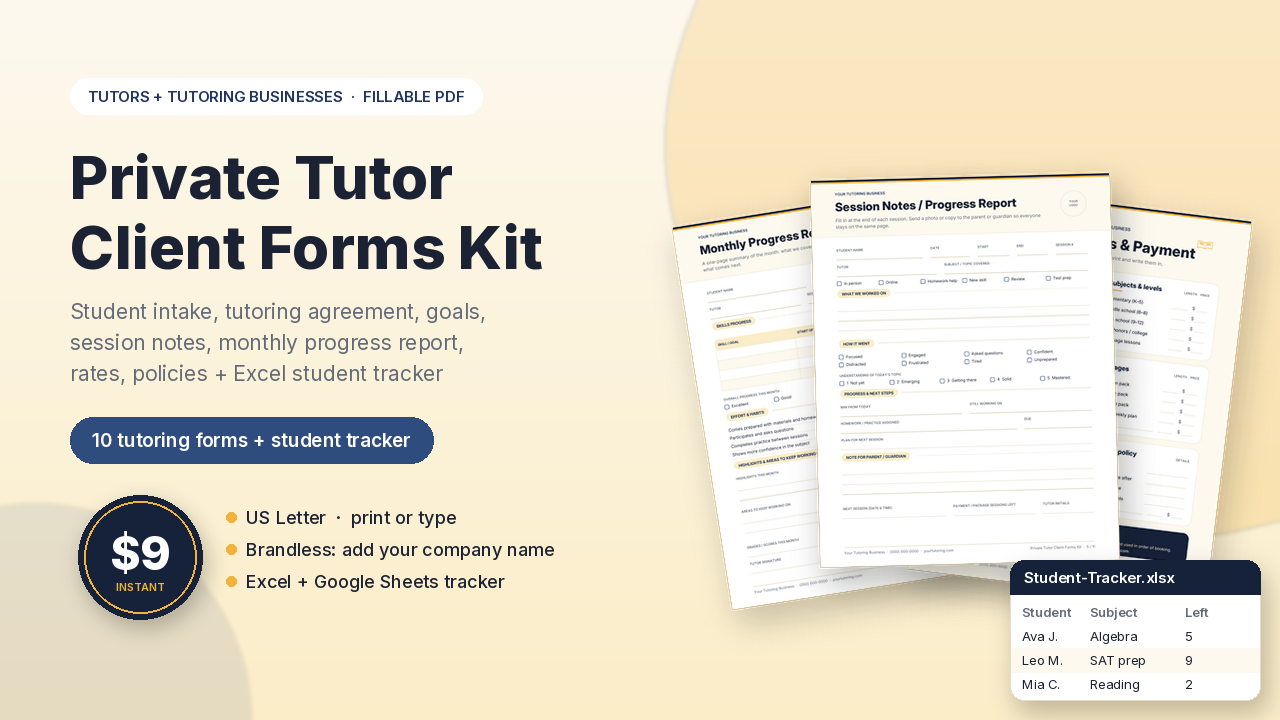
Tutoring Client Forms Kit
10 fillable forms (student intake, tutoring services agreement, learning goals and baseline assessment, session notes, monthly progress report for parents, homework tracker and more) plus an Excel student tracker with package sessions left.
Get it →Cancellation and no-show policy
The most common rule is 24 hours notice, with late cancellations and no-shows charged in full or counted against a package. Add what happens when you cancel (a make-up session or credit), and how you handle snow days, illness and school holidays. Putting this in writing removes most awkward conversations later.
Progress reports and parent communication
Parents keep paying when they can see progress. Write brief session notes after every session (topics covered, what clicked, homework and focus for next time) and send a short monthly progress report with goals, scores and next steps. Say in the agreement how and when you communicate, such as a weekly text summary and a monthly report.
Holiday gift certificates and January packages
Before winter break, offer gift certificates for a starter package and a January exam-prep package for midterms and spring tests. Families who start in January often continue through the school year, so an organized intake and tracking system pays off fast.
FAQ
What should a tutoring agreement include?
Session schedule and location, rates and packages, payment terms, cancellation and no-show policy, communication and progress reports, and signatures from the parent or adult student.
Should tutors charge for late cancellations?
Many tutors charge in full for cancellations with less than 24 hours notice, or count the session against a package. Whatever you choose, put it in writing.
How often should tutors send progress reports?
A short note after each session plus a monthly progress report keeps most parents informed without extra work.
Do I need a separate agreement for online tutoring?
Usually not. Add a section on the platform, links, equipment and recording rules to your standard agreement.
This page is general guidance, not legal advice. Review the wording for your state and any school or platform rules.
Related templates
Free Tutoring Forms
A printable new student intake form plus a session notes and progress report sheet for private tutors.
Download free →More free guides
- Appointment Reminder Templates
- Cancellation Policy Templates
- Tutoring Gift Certificate
- Tutoring Progress Report
- Tutoring Intake Form
- Winter Break Tutoring Rates
- How Much to Charge for Tutoring
- Nanny Contract Template
- Daycare Enrollment Form
- Personal Trainer Intake Form and Liability Waiver
- Massage Intake Form