Winter Break Tutoring Rates: How to Price Holiday Sessions, Finals Prep and January Packages (Plus Free Forms)
How private tutors can price the winter season: finals and midterm cram sessions, winter break intensives, holiday availability and short-notice fees, online vs in-home rates, group and sibling sessions, January prepaid packages and holiday cancellation rules, with a worked example and free forms.
Why winter needs its own tutoring rate sheet
For private tutors, the end of the year is uneven. Late November and December bring finals, midterms in some schools, and a wave of last-minute requests from students who fell behind during the fall. Then winter break arrives, regular weekly sessions pause while families travel, and January brings a new semester, new goals and new students. If you price every one of those sessions at your normal hourly rate, you can end up working the busiest weeks for the same pay and losing income during the quiet weeks.
A winter rate sheet fixes that. Decide which dates count as finals season, which packages you will offer over the break, what extra fees apply and how families pay to hold a spot. The sections below cover finals and cram pricing, winter break intensives, holiday availability and short-notice fees, online and in-home rates, group and sibling sessions, January packages, and cancellation rules, with a worked example at the end.
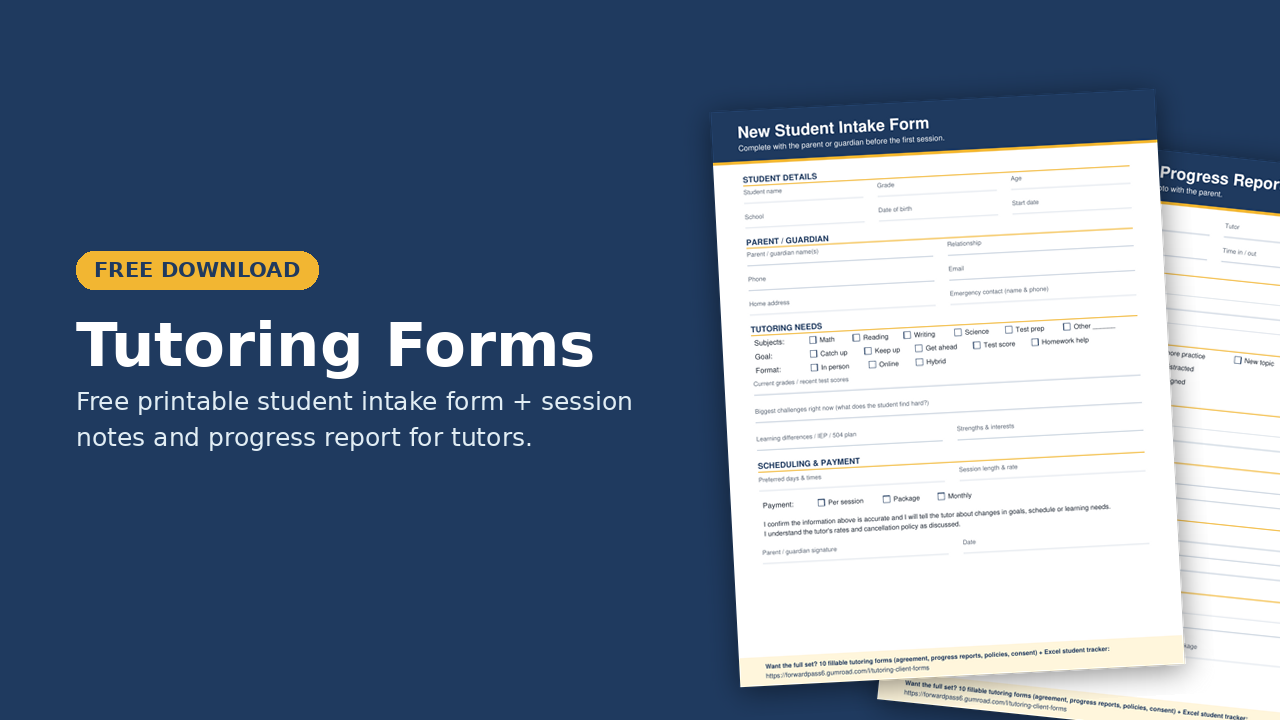
Free Tutoring Forms
A printable new student intake form plus a session notes and progress report sheet for private tutors.
Download free →1. Finals and midterm cram pricing vs regular rates
Start from your regular rate for one-to-one sessions. Finals prep is different from weekly tutoring: students often want longer sessions, sessions on short notice, practice tests you have to prepare or mark, and help across a whole unit or semester rather than this week's homework. That extra work is a good reason to price finals prep as its own service.
- Finals review session. A longer session, such as 90 minutes, focused on one exam, with a practice test or review sheet included.
- Finals prep package. A small set of sessions in the two or three weeks before exams, booked and paid together.
- Exam-eve session. A short session the evening before an exam, offered only if you have space and priced at your short-notice rate.
As an example only, a tutor who charges $50 per hour for regular weekly sessions might charge $85 for a 90-minute finals review session that includes a practice test, and $230 for a package of three finals sessions. These are example numbers, not market rates. Base your own prices on your subject, level, prep time and what families in your area pay.
2. Winter break intensive packages
Winter break is a good time for focused catch-up or get-ahead work because students have free time and no new homework. An intensive is a fixed number of sessions over a set period with one clear goal, such as reviewing first-semester math, preparing for a placement or entrance test, or building reading and writing skills before January.
Price the intensive as one package: the number of sessions, the length of each, the dates they fall between, what is included, such as a baseline assessment and a short progress summary at the end, and the total price paid in advance. A package price can be slightly lower per hour than single sessions, because you fill your schedule in a quiet period and get paid up front.
3. Holiday availability and short-notice fees
Decide your holiday availability before families ask. Mark the days you are closed, such as Christmas Eve, Christmas Day and New Year's Day, the days you offer limited hours, and the dates when the regular weekly schedule pauses and restarts.
If you choose to work on a holiday or a date you normally keep free, add a holiday fee for that session. For sessions booked with less than a set amount of notice, such as 24 hours, add a short-notice fee. Keep both simple, such as a flat amount per session, list them on your rate sheet, and apply them the same way to every family.
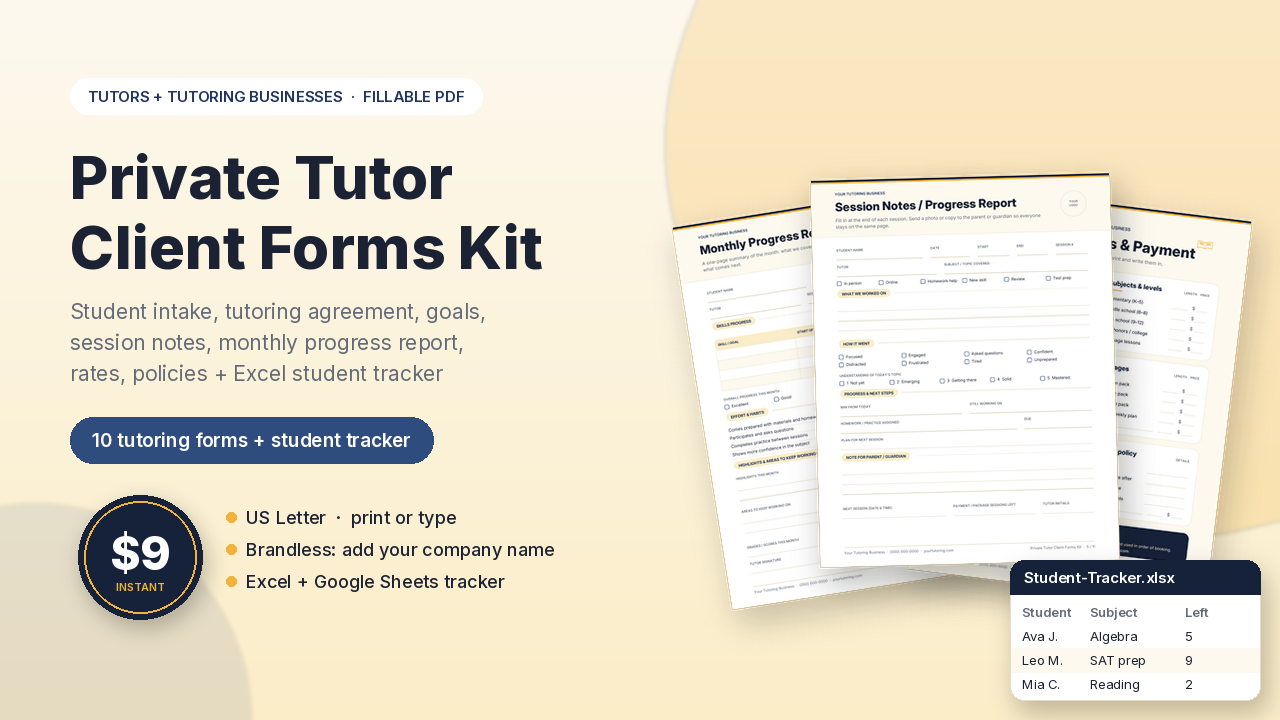
Tutoring Client Forms Kit
10 fillable forms (student intake, tutoring services agreement, learning goals and baseline assessment, session notes, monthly progress report for parents, homework tracker and more) plus an Excel student tracker with package sessions left. Want every kit? See the bundle.
Get it →4. Online vs in-home rates
Many families travel over the break, so online sessions can keep students on track from anywhere. Online sessions usually cost you less time because there is no driving, so some tutors price them a little lower than in-home sessions. Others keep one rate for both and add a travel fee for in-home visits.
For in-home sessions, include a set travel zone in your price and charge per mile or by zone beyond it. Winter weather can also affect in-home sessions, so say in advance whether a session moves online if roads are bad, rather than being cancelled.
5. Group and sibling sessions
Siblings home for the break, or a few classmates preparing for the same exam, can share a session. Price small groups per student, at less than your one-to-one rate, so each family pays less but the session earns you more. Set a maximum group size, such as three or four students, and only group students who are working on the same material at a similar level.
Write down what happens if one student cannot attend: whether the others pay the same per-student price, or whether the session converts to a one-to-one rate.
6. January semester-start packages and prepaid bundles
January is when many families decide to start tutoring after a difficult first semester or a disappointing report card. Offer a semester-start package that begins with a baseline assessment, sets learning goals with the student and parents, and includes a set number of weekly sessions, such as eight or ten, paid in advance.
Prepaid bundles help both sides. Families get a clear total and sometimes a small saving, and you get a steady schedule and payment before the work. State how many sessions are included, how long the bundle lasts, whether unused sessions expire and whether the bundle can be refunded.
7. Cancellation and no-show rules over the holidays
Holiday travel, illness and busy family schedules make late cancellations more common in December and early January. Set a clear notice period for cancellations, decide whether late cancellations and no-shows are charged in full or count as a used session from a package, and say whether you offer make-up sessions.
Many tutors allow one free reschedule per package with enough notice and ask families to share travel dates when they book. Ask every family to sign your tutoring agreement with these rules and complete a student intake form before the first session.
A worked example (example numbers)
Say a tutor's regular rate is $50 per hour for in-home sessions and $45 for online sessions. For the season they offer a 90-minute finals review at $85, a winter break intensive of six one-hour online sessions for $250 paid in advance, a $15 short-notice fee for sessions booked less than 24 hours ahead, and a January package of eight weekly sessions for $360.
- Finals: one student books two 90-minute finals reviews: 2 x $85 = $170
- Winter break: two siblings share the online intensive at $40 per student per session: 6 x 2 x $40 = $480
- Short notice: one exam-eve session added the night before: $50 + $15 = $65
- January: one family prepays the eight-session package: $360, unused sessions expire after 10 weeks
- Total booked for the season from these families: $170 + $480 + $65 + $360 = $1,075
These numbers are examples only. Use your own rates, costs and local rules, and check each package against the time it really takes, including prep, marking and travel, so you know what you earn per hour during your busiest weeks.
Before you open winter booking
Get your paperwork ready before the requests arrive: a student intake form, a tutoring agreement with your rates, package terms and cancellation policy, a holiday availability calendar, session notes and a short progress report for parents. Publish your finals rates, winter break packages, fees and January bundles in one place, share them with current families first, and you can spend the season teaching instead of answering the same questions by text.
FAQ
Should tutors charge more for finals prep?
Many do, because the weeks before exams bring a spike in requests, more evening and weekend sessions and more prep work for each student. A common approach is to keep your regular hourly rate and offer finals prep as its own clearly priced session or short package, rather than quietly raising the rate for regular students. Publish the finals rate and the dates it applies before families start booking.
Do I need a separate price for a winter break intensive?
It helps. An intensive is a set number of sessions over a short period with a clear goal, such as reviewing a semester of algebra or preparing for a January placement test. Pricing it as one package with a fixed number of sessions, a start and end date and paid in advance is easier for parents to compare than a string of single sessions.
Is it fair to charge a short-notice or holiday fee?
Yes, as long as it is stated in advance and applied the same way to everyone. Sessions booked with less than a set amount of notice, or on dates you would normally keep free, such as Christmas Eve or New Year's Day, cost you more. Put the fee and the dates it applies to on your rate sheet and in your tutoring agreement. Any amounts on this page are examples only, not market rates.
Should online sessions cost less than in-home sessions?
Many tutors charge less for online sessions because there is no travel time or cost, and more for in-home sessions to cover driving and the time between appointments. Others keep one rate and add a travel fee. Either way, make the difference clear so families can choose, and include any travel zone or per-mile charge in writing.
How should I price sibling or small group sessions?
A common approach is a per-student price that is lower than your one-to-one rate, so the total for the session is higher than a single student but each family pays less per child. Set a maximum group size, decide whether students must be at a similar level, and state what happens to the price if one student cannot attend.
What cancellation policy works over the holidays?
Holiday travel makes last-minute cancellations more common, so state your notice period, whether late cancellations and no-shows are charged in full or count as a used session, and whether sessions in a prepaid package expire. Many tutors allow one reschedule per package and ask families to share travel dates when they book. Have parents agree to the policy in writing before the first session.
This page is general guidance, not legal, tax or insurance advice. Business, prepayment, gift card and consumer rules vary by state and city, so check your local rules and have your tutoring agreement and policies reviewed by an attorney or insurer.
Related templates
Free Tutoring Forms
A printable new student intake form plus a session notes and progress report sheet for private tutors.
Download free →Tutoring Client Forms Kit
10 fillable tutoring forms (intake, agreement, progress report, session notes) plus an Excel student tracker.
Get it →