How Much to Charge for Tutoring: Hourly Rates, Packages, Cancellations and Travel (Plus Free Forms)
How to set private tutoring rates: find your target hourly rate, count prep and travel time, choose hourly vs packages vs monthly plans, price test prep and group sessions, and set cancellation rules, with a worked example and free printable forms.
Why tutoring rates are hard to set
A one-hour tutoring session is rarely one hour of work. There is lesson prep, travel or tech set-up, messages with parents, progress notes and the occasional last-minute cancellation. Many new tutors pick a number that sounds friendly, then find their real hourly pay is much lower. A simple method fixes that: know what each working hour must earn, count every hour a student really takes, and choose a pricing model that keeps your schedule full.
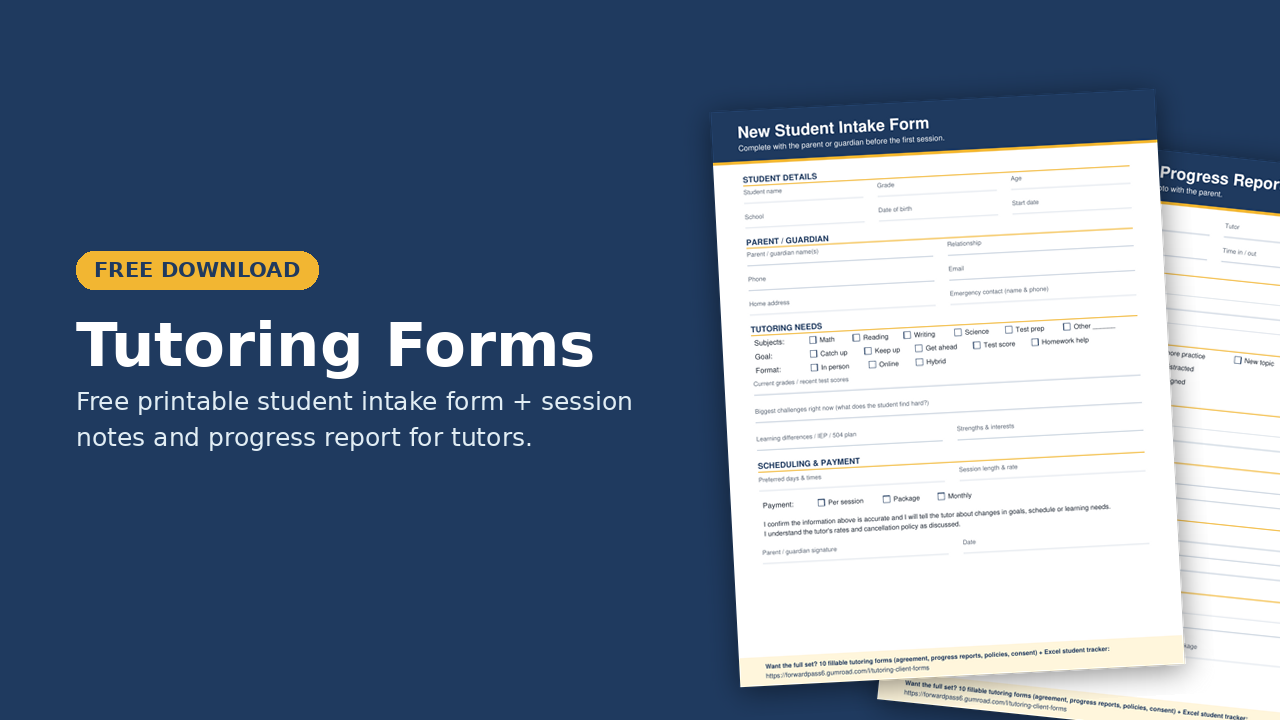
Free Tutoring Forms
A printable new student intake form plus a session notes and progress report sheet for private tutors.
Download free →1. Work out your target hourly rate
Add up what tutoring costs you each year: the pay you want, books and practice materials, software and video call tools, a laptop or tablet, mileage, marketing, any platform or card fees and money set aside for taxes. Then estimate how many sessions you can realistically teach per week, allowing for school holidays and quiet months. Divide yearly costs by teaching hours and you have the rate each session needs to clear.
2. Count the hidden time per student
- Prep: reviewing homework, planning the lesson, finding practice questions
- Travel: driving to and from in-home sessions, or set-up time for online lessons
- Admin: scheduling, parent messages, invoices and progress reports
- Assessment: a first-session baseline check and periodic reviews
If every session carries 20 to 30 minutes of hidden time, your rate needs to cover it, or you need to charge separately for things like written reports.
3. Choose a pricing model
- Hourly (pay as you go): easy to start, but income swings when students skip weeks.
- Session packages: for example 8 or 10 sessions paid up front at a small discount. Steadier income and better attendance.
- Monthly plans: a fixed weekly slot billed monthly. The most predictable option for regular students.
- Test prep programs: a set number of sessions plus practice tests, priced as one program.
Many tutors keep an hourly rate for occasional help and steer regular students toward packages or monthly plans.
4. Adjust for subject, level and format
Rates usually rise with the level and stakes of the subject: exam prep, advanced math and science, or specialist support often earn more than general homework help. Online sessions save travel time, so some tutors price them a little lower or simply fit more into a day. For in-home sessions, add a travel fee or a minimum session length outside a set radius. Small groups can lower the price per student while raising what you earn per hour.
5. Set cancellation, no-show and payment rules
Late cancellations are the biggest leak in tutoring income. Decide your notice period (24 hours is common), whether late cancellations are charged in full or count against a package, and how reschedules work. Ask for payment before the session or at the start of each month, state when packages expire, and put all of it in a signed tutoring agreement so parents know the rules from day one.
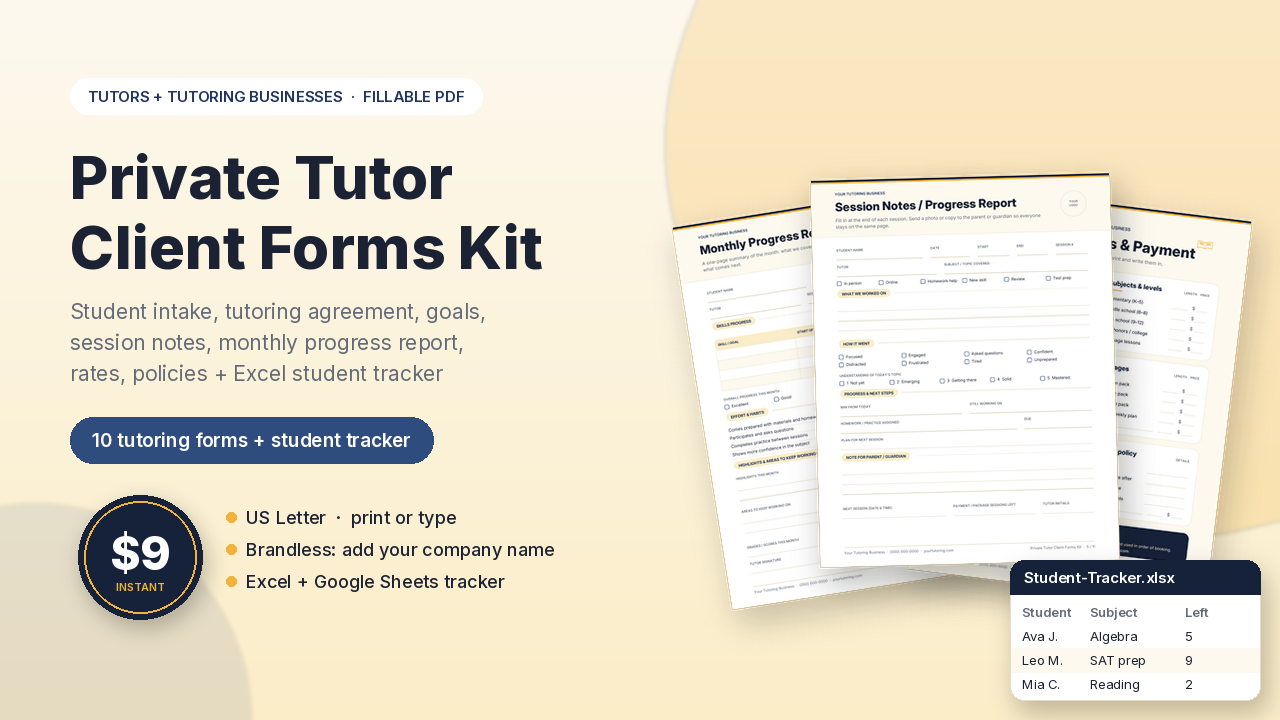
Tutoring Client Forms Kit
10 fillable forms (student intake, tutoring services agreement, learning goals and baseline assessment, session notes, monthly progress report for parents, homework tracker and more) plus an Excel student tracker with package sessions left.
Get it →Worked example (example numbers only)
These numbers are made up to show the method, not a recommended price. Say a tutor wants to earn 30,000 a year from tutoring, has 4,000 in yearly costs and money set aside for taxes, and can teach about 800 sessions a year. That is 34,000 divided by 800, or 42.50 per session. Each session carries about 25 minutes of prep and admin, so the tutor rounds up to 45 an hour, offers a 10-session package at 420 paid up front, and adds a 10 travel fee for homes more than 15 minutes away. Plug in your own numbers and local market rates.
Common pricing mistakes
- Charging only for time in the session and ignoring prep and travel
- No cancellation policy, so missed sessions cost you money
- Packages that never expire
- Discounting so deeply that a full week still does not pay the bills
- Raising rates without notice instead of giving parents a clear date
- No written agreement or progress reports, so parents question the value
FAQ
How much should I charge for tutoring?
Work out the rate you need to cover your pay, materials, travel, software and taxes, then divide by the sessions you can realistically teach. Check what other tutors in your area and subject charge so your rate fits your market.
Should tutors charge for prep time?
Most build prep into the hourly rate rather than billing it separately. If a student needs extra work such as custom practice tests or written reports, it is fair to charge for that or include it in a higher package price.
Are tutoring packages better than hourly rates?
Packages give you steadier income and usually better attendance, while hourly rates are simpler for occasional help. Many tutors offer both and give a small discount for paying up front.
What is a fair cancellation policy for tutoring?
A common approach is 24 hours notice; cancellations inside that window are charged in full or count as a used session. Allow a set number of free reschedules if you want to be flexible, and put the rule in writing.
Should online tutoring cost less than in-person tutoring?
Not necessarily. Online sessions save you travel time, so some tutors charge slightly less, while others keep one rate and add a travel fee for in-home visits.
How often should tutors raise their rates?
Many review rates once a year or at the start of a school year, and give current families a clear notice period before a new rate takes effect.
This page is general guidance, not legal, tax or business advice. Rules on contracts, working with minors, background checks and taxes vary by location, so check the rules where you work.
Related templates
Free Tutoring Forms
A printable new student intake form plus a session notes and progress report sheet for private tutors.
Download free →Tutoring Client Forms Kit
10 fillable tutoring forms (intake, agreement, progress report, session notes) plus an Excel student tracker.
Get it →More free guides
- Tutoring Gift Certificate
- Tutoring Progress Report
- Tutoring Intake Form
- Winter Break Tutoring Rates
- How Much to Charge for Babysitting
- Tutoring Agreement Template
- Weekly Lesson Plan Template
- How to Calculate Your Freelance Hourly Rate (Simple Formula)
- Free Freelance Invoice Template (and What to Put on It)
- SAT Tutoring Rates