Personal Trainer Intake Form and Liability Waiver: What to Include Before January
What personal trainers and coaches should collect from new clients: intake questionnaire, health screening, informed consent and liability waiver, assessment, goals and session tracking, with a free printable intake form.
Why intake paperwork matters in January
New Year resolutions bring the biggest wave of new clients a trainer sees all year. Many are returning after a long break, some have injuries or conditions they forget to mention, and most quit by February if their goals are vague. A consistent intake process, signed before the first session, protects you, helps you program safely and gives you a baseline to show progress. Set it up in December so you are ready when the inquiries arrive.
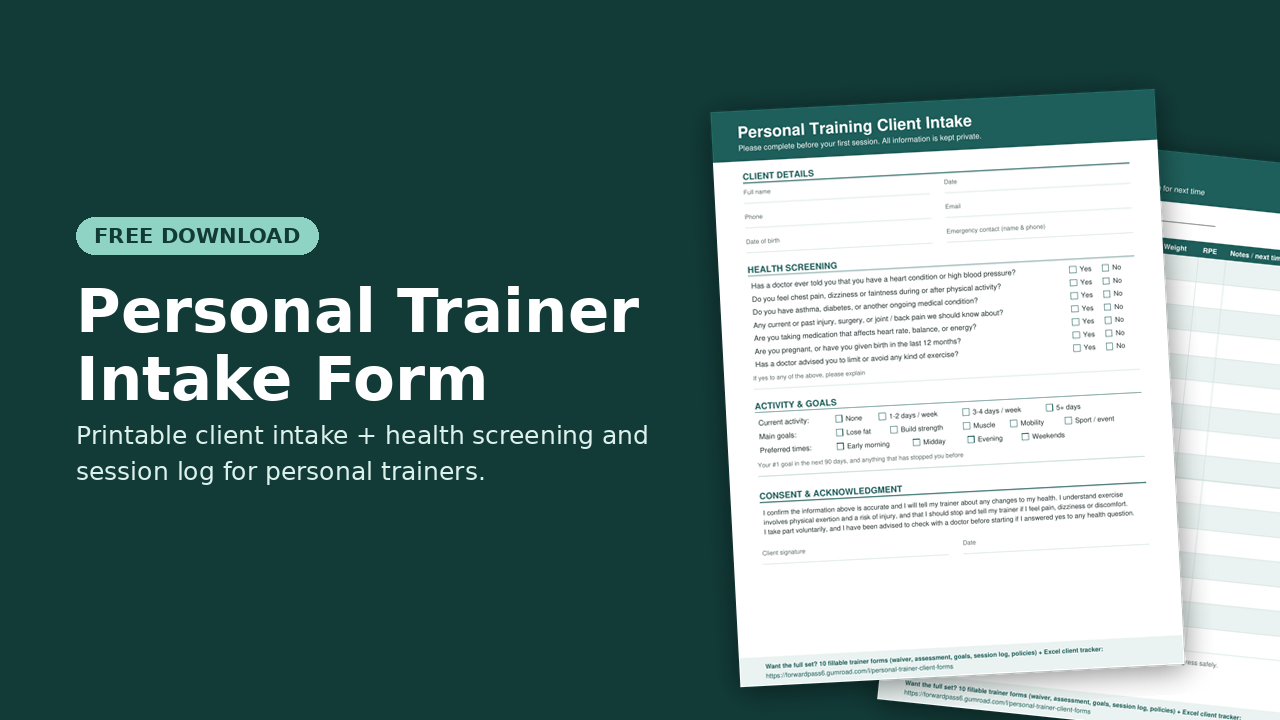
Free Personal Trainer Intake Form
A printable client intake and 7-question health screening plus a training session log for trainers and coaches.
Download free →What the intake questionnaire should cover
- Contact and emergency details, including an emergency contact who will be reachable during sessions.
- Training history: current activity level, past programs and what has or has not worked.
- Lifestyle: sleep, stress, work schedule, nutrition habits and available training days.
- Goals: the main goal, why it matters now and a 90-day target you can measure.
- Preferences: in person or online, preferred times and equipment access.
Health screening, not medical clearance
A short health history asks about heart and blood pressure problems, chest pain or dizziness, ongoing conditions, injuries and joint pain, medication and pregnancy, and whether a doctor has advised any limits. A yes answer is a reason to ask the client to check with their healthcare provider before starting. Make clear on the form that it is a history questionnaire, not medical clearance, and that trainers do not diagnose.
Informed consent and liability waiver
The waiver explains that exercise carries risk, that the client takes part voluntarily, will follow instructions and report pain or symptoms right away, and releases you from claims to the extent your state allows. It does not replace liability insurance. Have every client sign before the first session, and keep the signed copy with their file.
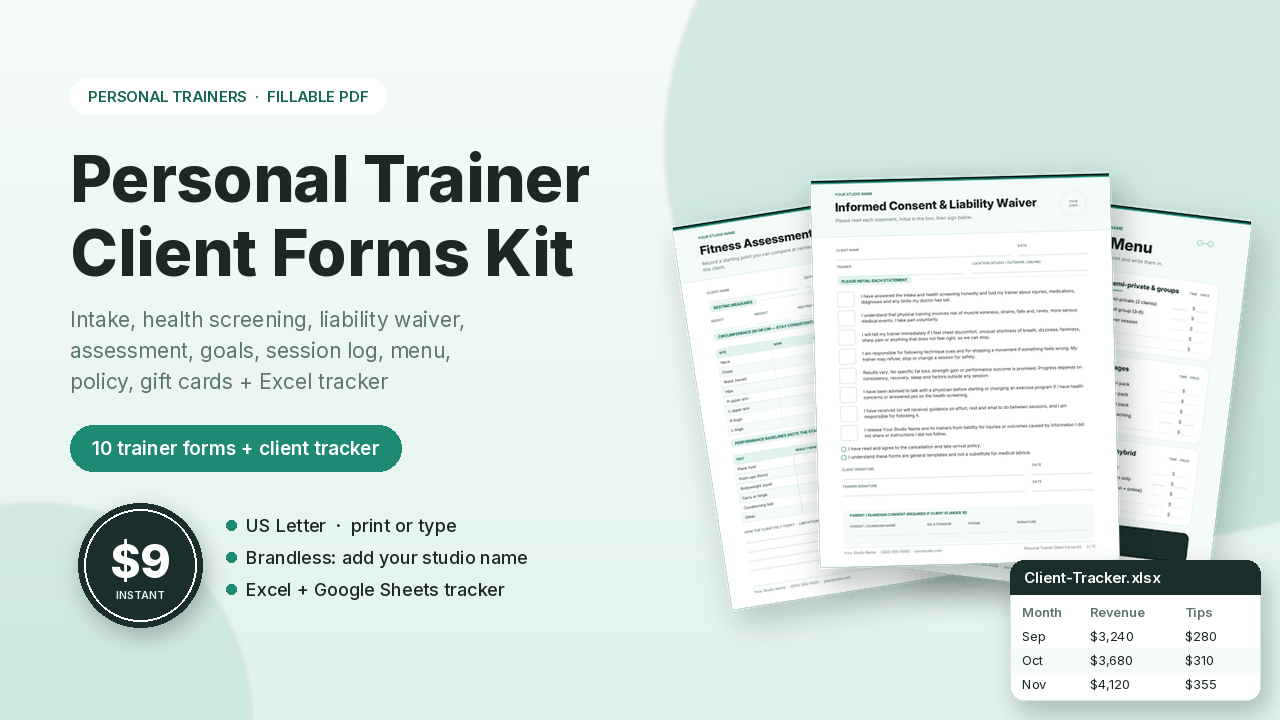
Personal Trainer Client Forms Kit
10 fillable forms (intake and lifestyle questionnaire, health screening, informed consent and liability waiver, fitness assessment, goal setting and training plan, session log, training menu, cancellation policy, photo release, gift certificates) plus an Excel client tracker.
Get it →Run a baseline assessment and set goals
Record simple, repeatable measures: resting heart rate, body measurements if the client agrees, mobility checks, and a few strength and conditioning tests. Turn the results into a short training plan with specific goals and check-in dates. Re-testing every 6 to 8 weeks gives clients visible progress, which is the main reason they keep paying.
Track sessions, packages and cancellations
Log each session with the focus, exercises, sets, reps, load, effort and notes for next time. Sell sessions in packages with an expiration date, and put your cancellation and no-show policy in writing, usually 24 hours with the session counted if missed. A simple client tracker shows remaining sessions, renewal dates and who has gone quiet.
Holiday gift certificates and January packages
Training sessions are a popular holiday gift. Offer gift certificates for an intro package before Black Friday, and a New Year starter package with an assessment and a set number of sessions. Gift recipients arrive in January ready to start, right when your intake system pays off.
FAQ
What forms does a personal trainer need?
At minimum an intake questionnaire, a health screening, an informed consent and liability waiver, and a session log. Many trainers add an assessment, goal sheet and cancellation policy.
Is a PAR-Q the same as medical clearance?
No. A health screening questionnaire flags clients who should check with a healthcare provider first. It is not a medical clearance.
Does a liability waiver replace insurance?
No. A waiver helps set expectations and may limit some claims depending on your state, but trainers should still carry liability insurance.
How often should I reassess clients?
Many trainers reassess every 6 to 8 weeks so clients can see measurable progress.
This page is general guidance, not legal or medical advice. Waiver enforceability and business rules vary by state.
Related templates
Free Personal Trainer Intake Form
A printable client intake and 7-question health screening plus a training session log for trainers and coaches.
Download free →Personal Trainer Client Forms Kit
Fillable personal trainer forms plus an Excel client tracker.
Get it →