Massage Intake Form: What to Ask, Plus a Free Health History and Consent Form
What to include on a massage therapy intake form: contact details, health history, medications, contraindications, pressure preferences, consent and SOAP notes, with a free printable intake and consent form.
Why the intake form matters
A good intake form protects the client and the therapist. It flags conditions that call for a modified session or a doctor's OK, records what the client wants from the session, and shows you took a proper history before any hands-on work. It also saves time on the table: you walk in knowing the focus areas, pressure preference and anything to avoid. Holiday gift certificates bring many first-time clients in December and January, so a clear intake process matters most right now.
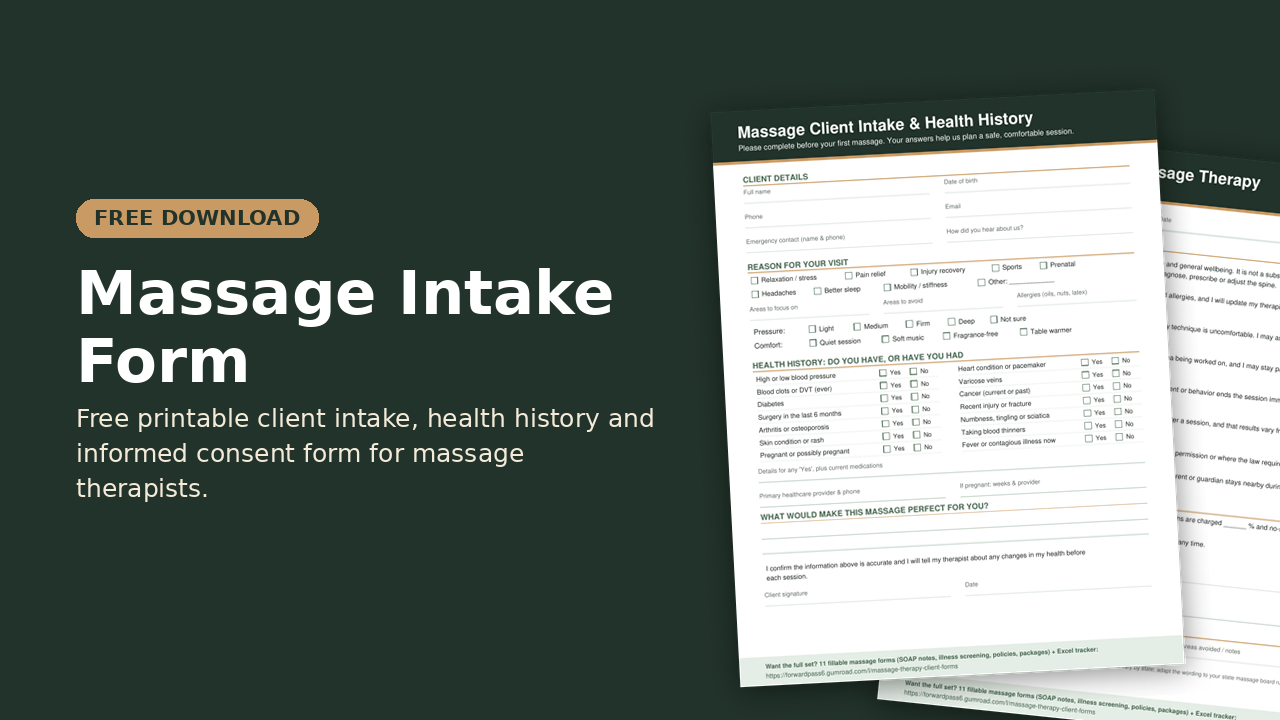
Free Massage Intake Form
A printable massage client intake and health history form plus an informed consent form for massage therapists and solo practices.
Download free →What to ask on a massage intake form
- Contact and emergency details: name, phone, email, date of birth and an emergency contact.
- Reason for visit: relaxation, specific pain or tension, sports recovery, stress.
- Focus and avoid areas: a simple body map works better than a long list.
- Pressure and preferences: light, medium or firm, music, temperature, scent sensitivities and oil or lotion allergies.
- Previous massage experience and how the client heard about you.
Health history and contraindications
Ask about current medications, recent surgeries or injuries, high blood pressure, heart conditions, blood clots or varicose veins, diabetes, skin conditions, pregnancy, and anything the client is being treated for. Explain that the questions help you plan a safe session, not diagnose. Add a short pre-session check on return visits: any illness, fever, new injuries or medication changes since last time.
Informed consent and draping
The consent form explains what massage is and is not, that the client can ask to change pressure or stop at any time, that draping is used and only the area being worked on is uncovered, and that the client will tell you about any changes in their health. Have every new client sign it before the first session and keep it with their record.
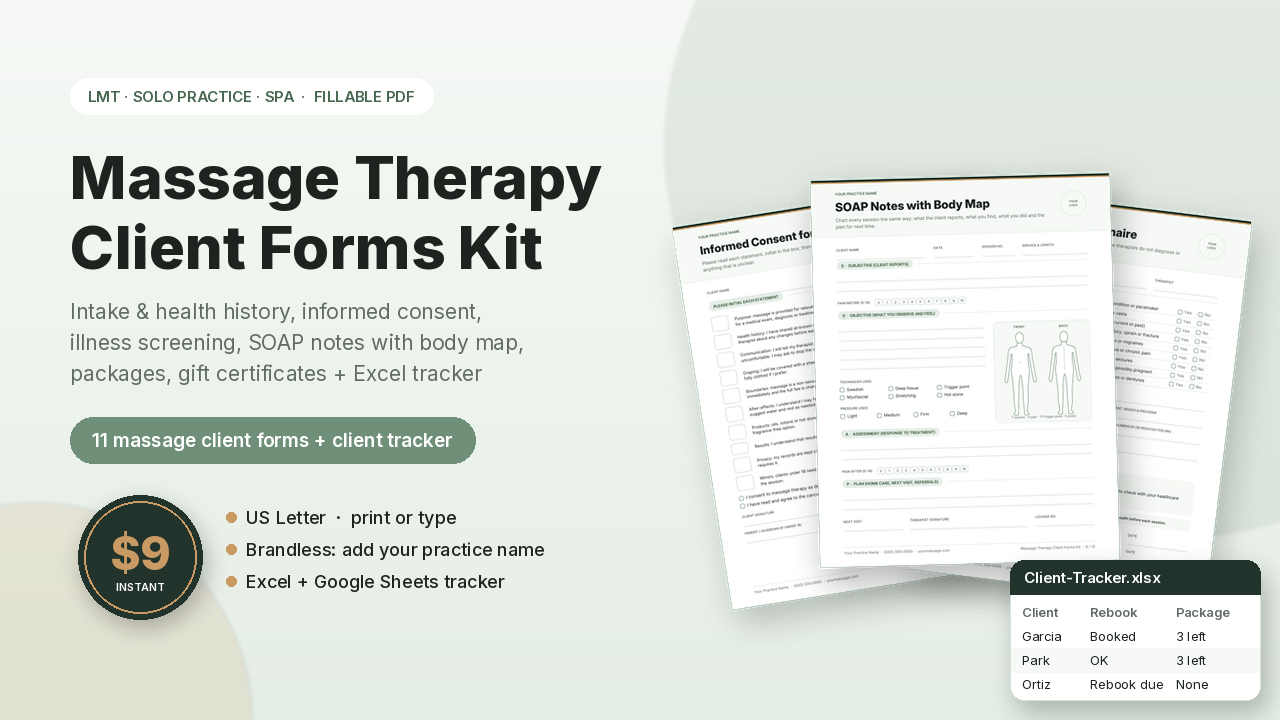
Massage Therapy Client Forms Kit
11 fillable forms (new client intake, health history questionnaire, informed consent, pre-session illness and contraindication check, SOAP notes with body map, treatment session log, cancellation and no-show policy and more) plus an Excel client tracker with rebook reminders.
Get it →SOAP notes and session records
After each session, write brief SOAP notes: Subjective (what the client reports), Objective (what you observe and feel), Assessment (how they responded) and Plan (focus and rebooking for next time). A body map makes notes faster. Good records support continuity of care and show a professional standard of practice.
Cancellation policy and rebooking
Put your cancellation and no-show rule in writing, usually 24 hours with a fee for late cancellations. Track rebook dates, health history update dates (many therapists refresh it yearly) and package sessions left in a simple client tracker so regulars do not slip away.
Gift certificates for the holidays
Massage is one of the most popular holiday gifts. Offer gift certificates and multi-session packages before Black Friday, and have intake forms ready so gift recipients can book smoothly in January.
FAQ
What should be on a massage intake form?
Contact and emergency details, reason for visit, focus and avoid areas, pressure preferences, allergies, health history, medications and a signed consent.
How often should clients update their health history?
Many therapists ask for a full update once a year and a quick pre-session check at every visit for new illness, injuries or medication changes.
What are SOAP notes in massage therapy?
A short session record: Subjective client report, Objective findings, Assessment of response, and Plan for next time.
Is an intake form a medical clearance?
No. It helps you plan a safe session and spot when a client should check with a healthcare provider first. Massage therapists do not diagnose.
This page is general guidance, not legal or medical advice. Record-keeping and licensing rules vary by state.
Related templates
Free Massage Intake Form
A printable massage client intake and health history form plus an informed consent form for massage therapists and solo practices.
Download free →Massage Therapy Client Forms Kit
Fillable massage therapy client forms plus an Excel client tracker.
Get it →