Nanny Contract Template: What to Include (Free Checklist)
What to put in a nanny contract or babysitter agreement: pay and overtime, schedule, duties, house rules, sick days and PTO, termination, confidentiality and emergency medical authorization, with a free checklist.
Why a nanny needs a written contract
Most nanny arrangements start with a friendly interview and a text that says something like "$22 an hour, Monday to Friday, starting the 4th." That works until the first week of overtime, the first sick day, the first snow day when the parents work from home, or the first time someone wants to end the arrangement. A one or two page nanny contract (also called a nanny work agreement or babysitter agreement) puts the answers in writing before anyone needs them. It protects the family, protects the nanny, and makes the job feel professional from day one. The checklist below covers what families and nannies most often forget to agree on.
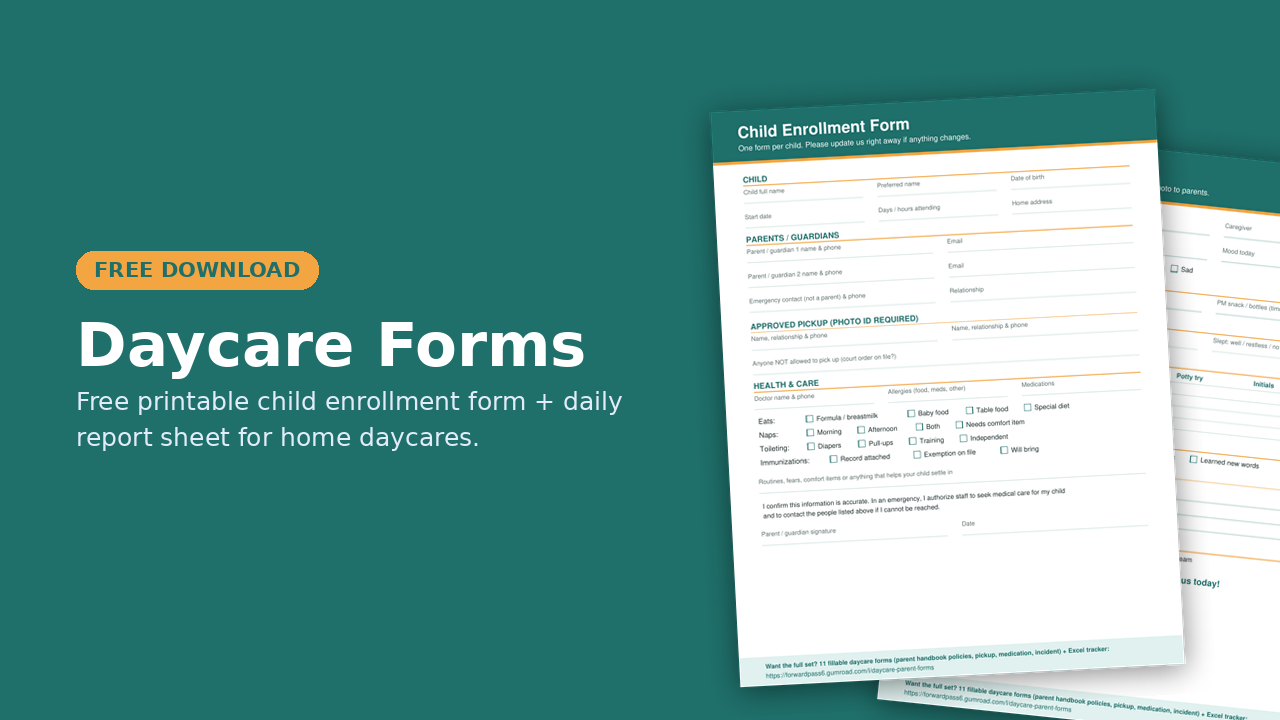
Free Daycare Forms
A printable child enrollment form plus a daily report sheet for parents. Works just as well for a nanny or regular sitter.
Download free →1. The basics: parties, start date and trial period
Start with the names of the parents or guardians and the nanny, the children in care with their ages, the work address and the start date. Many families add a short trial period, often two to four weeks, during which either side can end the arrangement with little notice. Say whether the job is live-in or live-out, full time, part time or a nanny share with another family, and when the agreement will be reviewed (every six or twelve months is common).
2. Pay, guaranteed hours and overtime
Pay is where most disagreements begin, so be specific:
- Hourly rate, and any different rate for extra children, overnights, holidays or last-minute bookings.
- Guaranteed hours: many professional nannies ask to be paid for an agreed number of hours each week even if the family comes home early or goes on vacation. If you agree to this, write the number down.
- Overtime: the threshold (for example, hours over 40 in a workweek), the overtime rate, and whether overtime must be approved in advance. Overtime rules for household workers differ by state, and some states also count daily hours.
- Pay day and method: weekly or every two weeks, by direct deposit, check or a payment app.
- Extras: mileage when the nanny uses their own car, reimbursement for outings and supplies, and how receipts are handled.
3. Schedule and timekeeping
List the regular days and start and end times in a simple weekly grid. Add what happens when a parent is running late (is it paid in 15-minute blocks, at the overtime rate?), how much notice is needed for schedule changes, and whether the nanny may be asked to stay late or work weekends. A weekly timesheet signed by both sides is the easiest way to avoid arguments about hours, and it gives the family a clean record for payroll.
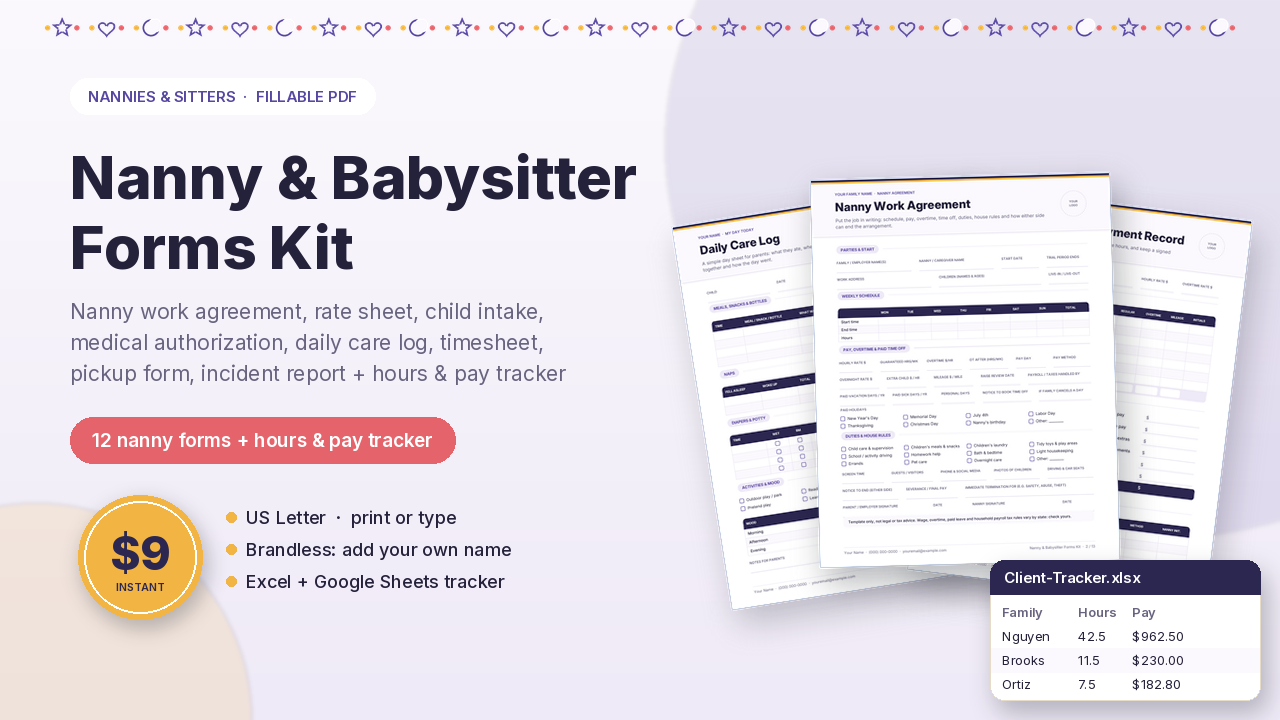
Nanny & Babysitter Forms Kit
12 fillable forms (nanny work agreement, babysitter rate sheet, child information form, emergency contacts and medical authorization, allergy and medication log, daily care log, weekly timesheet, pickup authorization, incident report and more) plus an Excel tracker for hours, overtime and pay.
Get it →4. Duties: what is and is not part of the job
Write down the child-related duties the nanny is responsible for, such as meals and bottles, naps, diapering and potty training, school drop-off and pick-up, homework help, activities and keeping a daily care log. Then list household tasks that are included, often limited to the children's laundry, tidying play areas and cleaning up after meals. Anything outside that list, like family laundry, pet care, grocery runs or cooking for the adults, should be agreed separately and, ideally, paid for. Clear duties prevent the slow "job creep" that causes many nannies to quit.
5. House rules and parenting approach
Families have strong views on screen time, snacks and sweets, naps, discipline, outings, visitors and phone use. Agree on these up front and put them in a simple list. Common items include: screen time limits, which foods are allowed, whether friends or playdates can visit, where the children may go without asking first, rules on photos and social media, and the family's approach to discipline (redirection, time-ins, no physical punishment). If the nanny will drive the children, note whose car is used, car seat rules, insurance and that phones are never used while driving.
6. Sick days, paid time off and holidays
Spell out how many paid vacation days the nanny gets, how far in advance time off must be requested and whether the family or the nanny chooses some of the dates. Add paid sick days (some states and cities require paid sick leave for household workers), paid holidays by name, and what happens when the family travels or cancels a day. Also say what happens when a child is sick: does the nanny still work, and is there a point at which a child should stay with a parent?
7. Confidentiality and privacy
A short confidentiality clause asks the nanny not to share private family information, house codes, schedules or photos of the children, and not to post about the family online. It can also cover the other direction: whether the family uses cameras in the home and where. Being open about cameras builds trust; secret recording can create legal and trust problems.
8. Emergencies and medical authorization
Every nanny should have, in writing: emergency contacts, the pediatrician, the preferred hospital, insurance details, each child's allergies, conditions and medications, and a signed authorization that lets the nanny seek emergency medical treatment if a parent cannot be reached. Add a medication log if the nanny gives any medicine, a list of who may pick up the children (and who may not), and an incident report form for falls, bites and other injuries so parents always get the full story in writing. Nannies with current CPR and first aid training are worth noting in the agreement too.
9. Ending the arrangement
Agree how much notice each side gives to end the job (two weeks is common, sometimes more for long-term nannies), whether the family pays severance or the notice period in lieu of working it, and which actions mean immediate termination, such as leaving the children unattended, drug or alcohol use, or driving unsafely. A short, fair termination section makes a hard conversation much easier when it comes.
A note on taxes and the law
This checklist is educational, not legal or tax advice. In the US, a family that pays a nanny above a yearly threshold is usually treated as a household employer, which can mean payroll taxes, a W-2 and state registration, and minimum wage, overtime and paid sick leave rules vary by state and city. Rules change every year, so check your state's labor department and the IRS household employer guidance, or talk to a nanny payroll service or tax professional before you sign or pay.
FAQ
What should a nanny contract include?
The parties and start date, pay rate, guaranteed hours and overtime, schedule, duties, house rules, paid time off, sick days and holidays, confidentiality, emergency and medical authorization, termination and notice, and signatures from both sides.
Is a babysitter agreement different from a nanny contract?
A babysitter agreement is usually shorter and covers rates, booking and cancellation, house rules and emergency contacts for occasional care. A nanny contract adds guaranteed hours, overtime, paid time off and termination for an ongoing job.
Do nannies get paid overtime?
In many states, yes. Household workers are often covered by overtime rules for hours over 40 in a workweek, and some states also count daily hours or have special rules for live-in nannies. Check your state before agreeing on pay.
Do families have to pay taxes for a nanny?
Often, yes. Families who pay a nanny above the yearly IRS threshold are usually household employers and may owe payroll taxes. This is general information, not tax advice, so check current IRS and state guidance.
This page is general guidance, not legal or tax advice. Wage, overtime, sick leave and household employer tax rules vary by state and city and change over time, so check yours before you sign or pay.
Related templates
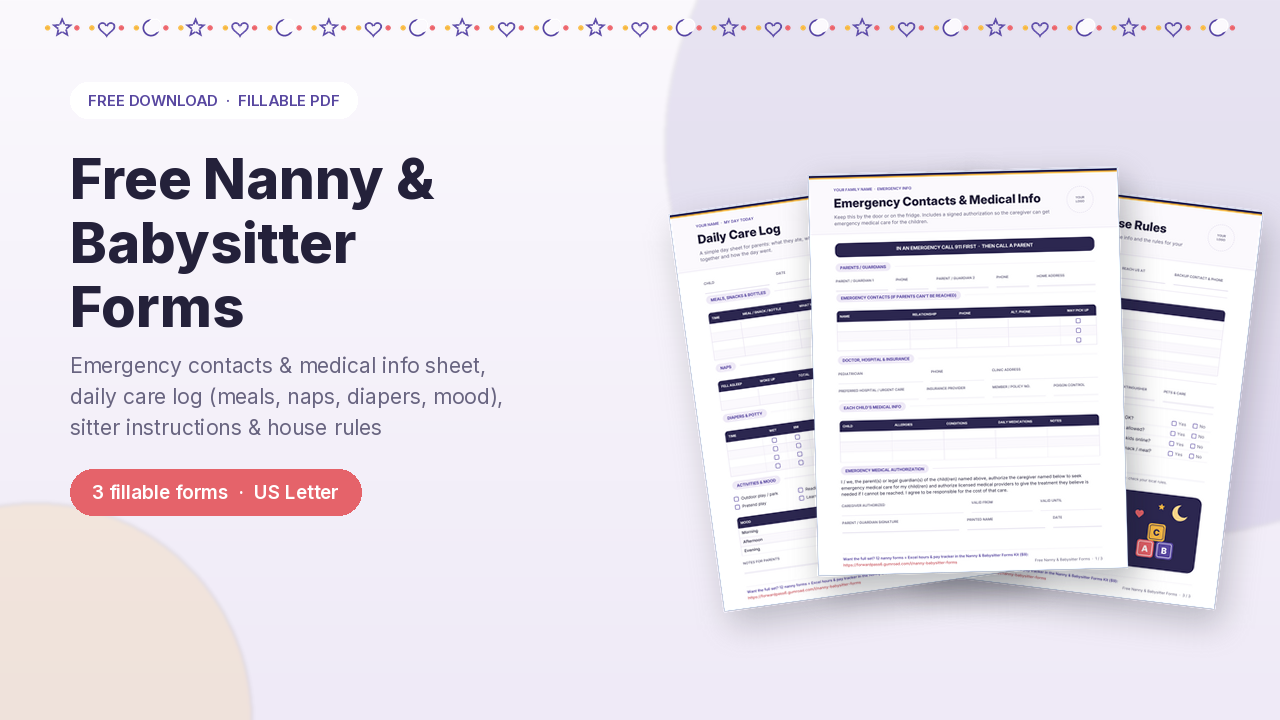
Free Nanny & Babysitter Forms
A fillable emergency contacts & medical info sheet, a daily care log and a sitter instructions & house rules page.
Download free →Nanny & Babysitter Forms Kit
Fillable nanny agreement, logs and timesheet plus an Excel hours and pay tracker.
Get it →