How Much to Charge for Pet Sitting and Dog Walking: Rates, Fees and Policies (Plus Free Forms)
How to price pet sitting and dog walking: target hourly rate, drop-in visit and walk pricing by length, overnight and house sitting rates, extra pet, medication, holiday and last-minute fees, travel zones, packages, deposits and cancellation policy, with a worked example and free printable forms.
Why pet sitting pricing goes wrong
Most new pet sitters and dog walkers pick a number from an app or a neighbor's flyer and never revisit it. Then the calendar fills with 30-minute visits spread across town, the drive between them is unpaid, holidays get booked at the normal rate, and a client with three cats and a diabetic dog pays the same as a client with one easy goldfish. A simple pricing method fixes that: know what your time has to earn, price each service by length and workload, charge for the extras that add real time or responsibility, and protect your schedule with deposits and a cancellation policy.
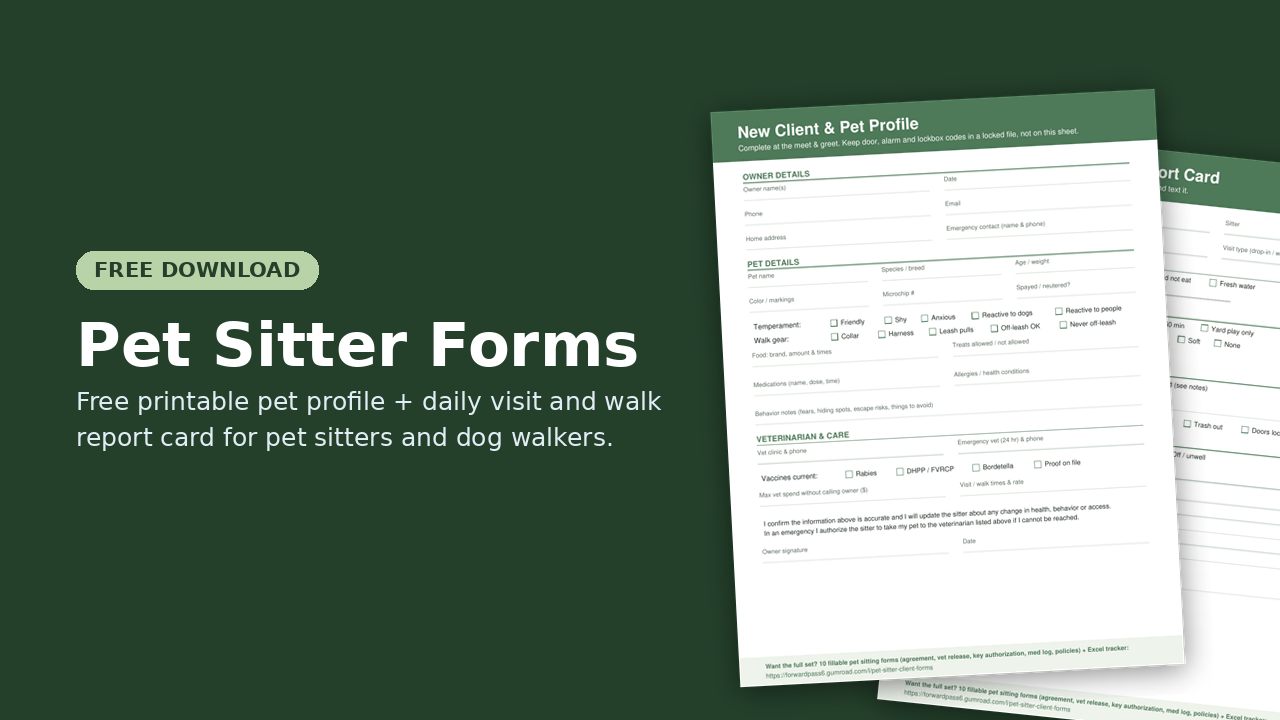
Free Pet Sitter Forms
A printable new client & pet profile plus a daily visit and walk report card for pet sitters and dog walkers.
Download free →1. Work out your target hourly rate
Every visit price is an hourly rate in disguise. Add up what the business costs each month: the pay you want, insurance and bonding, fuel and vehicle wear, phone and booking software, leashes, poop bags, treats and cleaning supplies, card fees, marketing, a background check if you offer one, and money set aside for taxes. Then estimate the hours you can actually spend with pets each month. Unpaid time counts against you: driving between homes, meet and greets, texting owners, updating visit reports and handling keys. Divide costs by paid hours and you have the rate each visit needs to clear.
2. Price drop-in visits and walks by length
The simplest structure is a set price per visit length, for example 15, 30, 45 and 60 minutes. Short visits cost you almost as much drive time as long ones, so they should carry a higher per-minute price. Spell out what each visit includes: feeding, fresh water, litter scoop or yard clean-up, a walk or play time, a quick home check, and a text or photo update.
- Cat and small animal drop-ins: usually the shortest visit, focused on feeding, litter, medication and company.
- Dog drop-ins: a potty break and feeding, often with a short walk.
- Dog walks: solo walks priced by length, with an optional lower per-dog price for a second dog from the same home. If you offer group walks, set a maximum group size and price per dog.
3. Price overnights and house sitting separately
An overnight stay means you are responsible for the pets and home for many hours, and you give up your own evening and morning. Price it as a flat nightly rate rather than by the hour, and say exactly what it covers: arrival and departure windows, how many hours the pets may be left alone during the day, how many walks or feedings are included, and whether midday visits cost extra. House sitting for longer trips can include extras such as plants, mail and trash for a small add-on or as part of a premium nightly rate.
4. Add fees for the extra work
- Additional pets: a per-pet charge beyond the number included in the base visit.
- Medication: oral meds can be included or a small add-on; injections such as insulin usually carry a separate fee because of the skill and responsibility involved.
- Puppies, seniors and special needs: more frequent potty breaks, mobility help or behavior management take time.
- Holidays: a holiday surcharge on major holidays and peak travel weeks, listed by date in your policy.
- Last-minute bookings: a fee for same-day or next-day requests.
- Early morning and late evening: a premium for visits outside your standard hours.
- Extra clean-up: accidents, vomit or a very messy yard beyond normal care.
- Vet trips and pet taxi: priced by time plus mileage.
5. Set a service area and travel fees
Drive time is the silent profit killer. Draw a core service area where your normal prices apply, then add a travel fee for homes outside it, either per visit or per zone. Grouping clients by neighborhood and offering set walk windows helps you fit more paid visits into each hour.
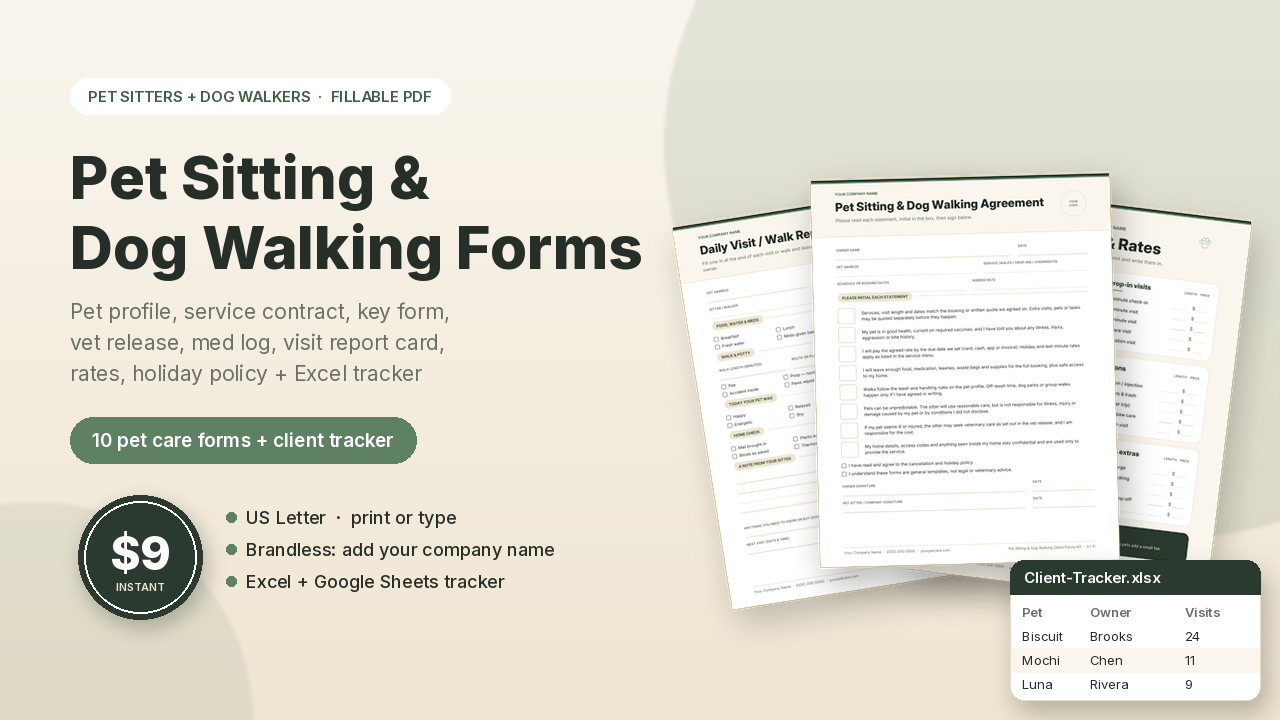
Pet Sitting & Dog Walking Client Forms Kit
10 fillable forms (client & pet profile, service agreement, key and alarm authorization, veterinary release, medication log, visit report card, meet & greet checklist, services and rates, cancellation & holiday policy, photo release) plus an Excel client and pet tracker.
Get it →6. Offer packages and regular-client pricing
Weekday dog walkers do best with recurring clients. Offer a weekly or monthly package, such as five walks a week, at a slightly lower per-walk price in exchange for a fixed schedule and prepayment. For vacation care, a trip package that bundles a meet and greet, daily visits or overnights and a key handoff is easier to sell than a list of single visits. Keep discounts small, and make sure the package price still clears your target rate.
7. Deposits, cancellations and payment terms
Vacation bookings tie up your calendar, often during your busiest weeks. Common protections include a deposit or full prepayment for trips and holidays, a cancellation window with a partial refund or credit after the cutoff, stricter terms for holiday bookings, and a clear rule for trips that end early. Collect payment before the service for new clients and state how you accept payment. Put all of this in a signed service agreement so the owner sees it before they book.
8. Worked example
These are example numbers to show the method, not market rates for your area.
- Target rate: $40 per hour of working time, including drive time
- 30-minute dog walk plus about 15 minutes of driving and updates: 0.75 hours x $40 = $30
- Second dog from the same home: +$8
- Twice-daily cat drop-ins for a 5-day trip, 20 minutes each plus 15 minutes driving: 10 visits x 0.58 hours x $40 = about $233
- Insulin injection on each visit: 10 x $5 = +$50
- Trip overlaps a major holiday, 2 days at a $10 per day surcharge: +$20
- Example trip total: $233 + $50 + $20 = $303, with a 50% deposit at booking
Swap in your own costs, timings and local rates. The point is that every number comes from your time and target rate, not a guess.
9. Put it in writing
A client and pet profile, a signed service agreement, key and alarm authorization, a veterinary release and a daily visit report protect you and the owner. Include feeding and medication instructions, vet and emergency contacts, behavior notes, your services and rates, extra fees, deposit, cancellation and holiday terms, key handling rules and photo permission. A meet and greet before the first booking lets you confirm all of it in person and spot pets that need a different price.
Common pricing mistakes
- Pricing without knowing your target hourly rate
- Ignoring drive time between visits
- Charging the same for one pet and four
- Giving medication and injections away for free
- No holiday or last-minute surcharge
- No deposit or cancellation policy for trips
- Never raising prices as fuel and insurance costs rise
FAQ
How much should I charge for pet sitting?
Work out the hourly rate you need to cover your pay, insurance, fuel, supplies, software and taxes, including drive time, then price each visit length, walk and overnight from that rate and add fees for extra pets, medication, holidays and travel.
How do you price dog walking?
Most dog walkers set a price per walk by length, such as 30 or 60 minutes, with a small charge for each additional dog from the same home, and offer weekly packages at a slightly lower per-walk rate for regular clients.
How much should I charge for an overnight pet sitting stay?
Overnights are usually a flat nightly rate rather than hourly, because you are responsible for the pets and home for many hours. State the arrival and departure windows, what care is included and whether midday visits cost extra.
Should pet sitters charge extra on holidays?
Yes, many pet sitters add a holiday surcharge for major holidays and peak travel weeks, list those dates in their policy and ask for a deposit or prepayment for holiday bookings.
Should I charge extra for giving medication?
Oral medication is often included or a small add-on, while injections such as insulin usually carry a separate fee because they take skill and add responsibility. Record dosing instructions in writing.
Do pet sitters need a contract?
It is strongly recommended. A signed service agreement with your rates, fees, cancellation terms, key handling, veterinary release and emergency contacts protects both you and the owner.
This page is general guidance, not legal, tax, insurance or veterinary advice. Business licensing, insurance and contract rules vary by state, county and city and change over time, so check yours before you take bookings.
Related templates
Free Pet Sitter Forms
A printable new client & pet profile plus a daily visit and walk report card for pet sitters and dog walkers.
Download free →Pet Sitting & Dog Walking Client Forms Kit
10 fillable pet sitter and dog walker forms plus an Excel client and pet tracker.
Get it →More free guides
- Pet Sitting Gift Certificate
- Pet Sitter Meet and Greet Checklist
- Holiday House Sitting Rates
- Pet Sitting Holiday Rates
- Pet Sitting Contract Template
- How to Price Dog Grooming
- Dog Grooming Client Intake Form
- How to Price House Cleaning
- Dog Boarding Pricing
- Dog Walking Pricing
- Cat Sitting Rates
- House Sitting Rates