Pet Sitter Meet and Greet Checklist: What to Ask, Check and Get Signed
A step-by-step meet and greet checklist for independent pet sitters, house sitters and dog walkers: how to book and run the visit, the questions to ask about every pet, the home walkthrough, keys and alarm codes, vet authorization, emergency plans, red flags that mean you should decline, and the forms to collect before the first stay.
Why the meet and greet matters
A meet and greet is the short, usually free visit a pet sitter or dog walker makes to a new client's home before the first booking. It looks like a friendly chat, but it is really the most important business step in pet sitting. In 20 to 40 minutes you find out whether the pets are a good fit for you, you learn the home, you collect the information you will need when the owner is unreachable, and you get the paperwork signed while everyone is in the same room.
Sitters who skip it or rush it tend to discover problems at the worst possible moment: a dog that will not let a stranger in the door, a key that does not work, an alarm code nobody wrote down, a cat that needs insulin twice a day, or a vet who will not treat a pet without the owner's permission. A structured checklist turns the visit into a repeatable routine, makes you look organized and professional, and helps a new client feel safe handing you their keys. It also helps you say no politely when a booking is not right for you.
This guide walks through the whole visit in order: before you arrive, meeting the pets, the questions to ask, the home walkthrough, keys and alarm codes, vet and emergency planning, red flags, and what to get signed before you leave.
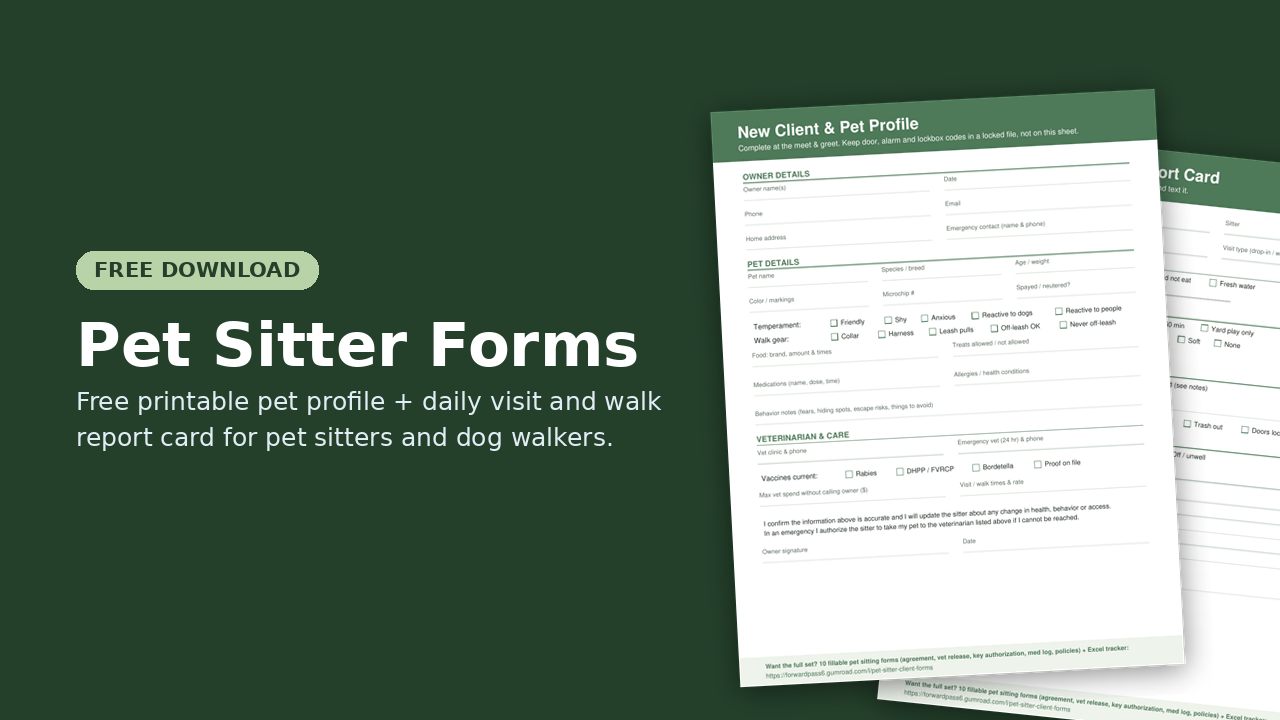
Free Pet Sitter Forms
A printable new client & pet profile plus a daily visit report card for house sitters, pet sitters and dog walkers.
Download free →Before you arrive: book it like a real appointment
Treat the meet and greet as an appointment, not a favor. A few things to set up when the client first contacts you:
- Confirm dates and services first. Ask for the booking dates, how many visits per day or whether they need overnights, and how many pets. If you are already full for those dates, say so before anyone spends time on a visit.
- Send your intake form ahead. Ask the client to fill in the new client and pet profile before you come. You will spend the visit confirming and filling gaps instead of writing down a phone number from scratch.
- Share your rates and policies in writing. A simple services and rates sheet plus your cancellation and holiday policy avoids an awkward money conversation on the doorstep.
- Decide whether the visit is free. Many sitters offer a free meet and greet inside their normal service area and charge a small fee (or credit it toward the first booking) for long drives. Whatever you choose, say it up front.
- Ask that every pet and every adult who will be home be present, including the person who usually handles feeding and medication.
Bring a printed copy of your forms, a pen, your phone for photos (with permission) and a few treats, after checking with the owner that treats are allowed.
Meeting the pets
Let the pets come to you. Stay calm, avoid direct eye contact with nervous dogs, and let the owner introduce you. Watch how each animal behaves with you, with the owner and with each other, and note it on the pet profile. You are trying to answer one question: can you safely care for this pet when the owner is not there?
- Dogs: practice the routine you will actually do. Ask the owner to show you how to put on the leash and harness, then take a short walk together if time allows. Check how the dog reacts at the door, to other dogs and to people passing by.
- Cats: find out where they hide. A cat that disappears for the whole visit is common, but you need to know the hiding spots so you can confirm the cat is safe on every visit.
- Small pets, birds and reptiles: ask the owner to walk you through cage cleaning, handling, lighting and temperature. Take photos of settings and food amounts.
- Multiple pets: ask whether any of them need to be separated at feeding time or when nobody is home.
The questions to ask about every pet
Use this as a checklist and fill in a separate profile for each animal. The goal is that another sitter could care for the pet using only your notes.
| Topic | What to ask | Why it matters |
|---|---|---|
| Basics | Name, species, breed, age, weight, color, microchip number, a recent photo | Needed for lost pet posters, vets and shelters |
| Feeding | Food brand, amount, times, where food is stored, treats allowed, any food that is off limits | Most sitting mistakes are feeding mistakes |
| Medication | Name, dose, timing, how to give it, what to do if a dose is missed, where it is stored | Write it down; never rely on memory |
| Health | Allergies, conditions, recent illness or surgery, what is normal for this pet (appetite, energy, stool) | You can only spot a problem if you know what normal looks like |
| Behavior | Fears, triggers, resource guarding, escape habits, reactions to strangers, kids or other dogs | Protects you and the pet; some issues mean you should decline |
| Walks and exercise | Leash and harness, routes, length, off-leash rules, dog parks allowed or not, weather limits | Avoids injuries and liability for off-leash incidents |
| House rules | Allowed on furniture, crate times, rooms that are off limits, where the pet sleeps | Keeps the routine familiar for the pet |
| Waste and litter | Litter box locations and cleaning, where to put waste bags, yard pickup | Owners notice this first when they come home |
| Comfort | Favorite toys, hiding spots, what calms them down, words or commands they know | Helps an anxious pet settle |
The home walkthrough
Ask the owner to give you a short tour, and note anything you will need on a visit. A walkthrough checklist:
- Entry and exit: which door you will use, how the lock works, whether there is a second door or gate the pets could slip through.
- Pet supplies: food, treats, medication, leashes, poop bags, litter, cleaning supplies, spare towels.
- Thermostat and lights: the settings to leave, and whether you should open blinds or rotate lights for security.
- Utilities and shutoffs: where the main water shutoff and breaker box are, in case of a leak or outage.
- Off-limits areas: rooms you should not enter, and rooms the pets must stay out of.
- Plants and household tasks: plants to water, mail and packages, trash day. Agree on which extras are included and which cost more.
- Hazards: open stairs, pools, chemicals, cords, gaps in a fence, holiday decorations within reach of pets.
Ask before taking photos inside the home. Many sitters photograph only the pet supplies, the feeding setup and medication labels, and keep those photos in the client file.
Keys, alarm codes and home access
Home access is where trust is won or lost, so make it formal. Record exactly how you will get in and test it before you leave:
- Keys: how many keys you receive, which locks they open, and how they will be returned at the end. Label keys with a code, not the client's name or address.
- Lockboxes and smart locks: the code or app access, and a backup plan if a battery dies or a code fails.
- Alarm system: the code, the alarm company's phone number, the password the company will ask for, and what to do if the alarm goes off. Try disarming and arming it once while the owner is there.
- Cameras: ask whether there are indoor cameras. Many sitters are comfortable with them; you simply want to know.
- Other people with access: neighbors, cleaners or family members who may come by while you are sitting, so you are not surprised by someone walking in.
- Backup contact with a key: a local person who can get in if you are locked out.
Write all of this on a key and home access authorization form and have the client sign it. It protects both sides: the client knows exactly what you hold, and you have written permission to enter the home.
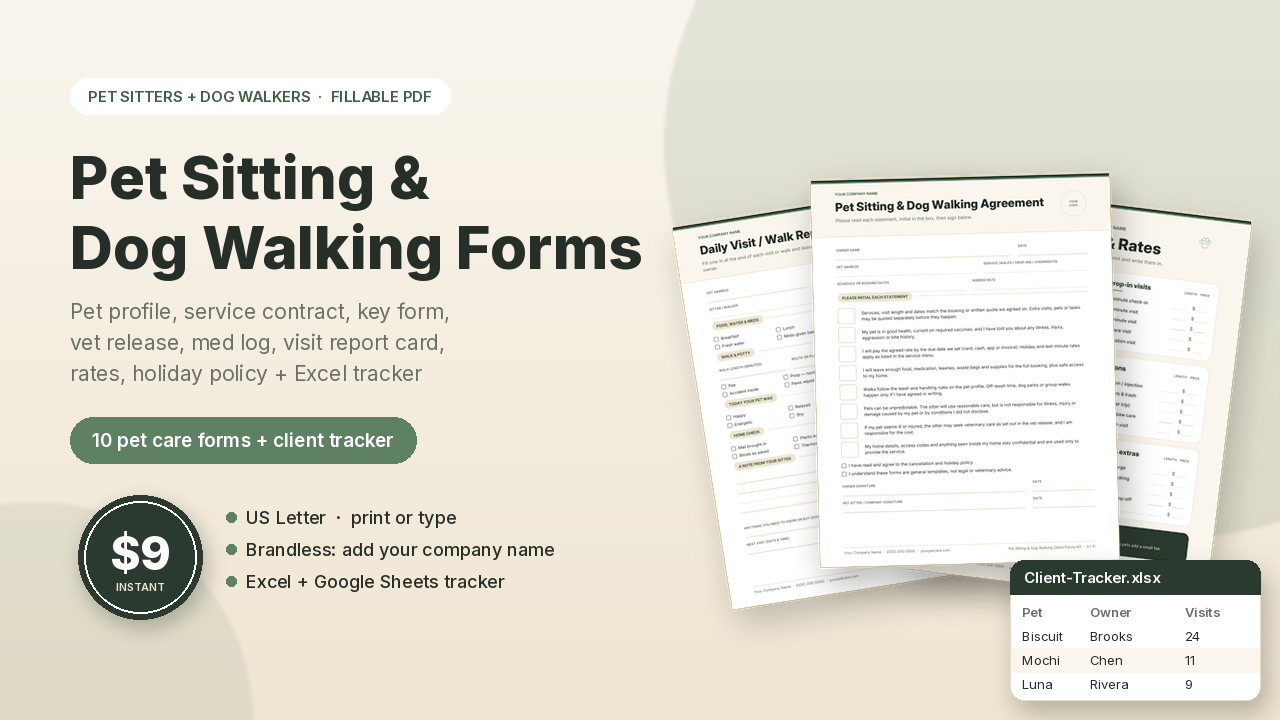
Pet Sitting & Dog Walking Client Forms Kit
10 fillable forms including a service agreement, key, home access & alarm authorization, veterinary release, daily visit report with home check, services and rates sheet and a cancellation & holiday policy, plus an Excel client tracker. Everything you need to hand over or get signed at the meet and greet.
Get it →Vet release and emergency plan
Emergencies are rare, but the meet and greet is the only time you can plan for them calmly. Collect:
- Regular vet: clinic name, address, phone number, and whether the pet is on file under the owner's name.
- Emergency vet: the nearest 24-hour animal hospital, so you are not searching at midnight.
- Veterinary release: a signed authorization allowing you to take the pet to a vet and approve treatment if the owner cannot be reached.
- Spending limit: the amount the owner authorizes for emergency care without a call back, and how you will be reimbursed. As an example, an owner might write "up to $500 (example) without calling me", but the amount is the owner's decision.
- Emergency contacts: at least one local backup person besides the owner, with a phone number and permission to make decisions.
- Disaster plan: where carriers are kept, and where to take the pets if the home is unsafe because of a storm, fire or flood.
Agree how often the owner wants updates and in what form. Many sitters send a short visit report with a photo after every visit, which builds trust and creates a record of each visit.
Red flags: when to decline the booking
Part of the meet and greet is deciding whether to take the job. It is fine, and professional, to decline. Common reasons sitters say no:
- A dog that shows aggression toward you, including growling, lunging or snapping, and an owner who brushes it off.
- Medical care beyond your training or comfort, such as injections you have not been shown how to give.
- An owner who will not sign your agreement, vet release or key authorization.
- Unsafe homes or yards: broken fences, no working locks, or hazards the owner will not fix.
- Requests outside your services or insurance, such as off-leash dog park visits when your policy does not allow it.
- Pressure to lower your rates sharply, or to skip the deposit for a holiday booking.
A short, polite script helps: "Thank you for having me over. I do not think I am the right fit for this booking, and I would hate to take it and not be able to give your pets the care they need." If you know another sitter who handles that situation, you can mention them.
What to get signed before you leave
The best time to collect signatures is at the end of the meet and greet, while the client is still sitting with you. A typical set of paperwork:
| Document | What it covers | When |
|---|---|---|
| New client and pet profile | Contact details, every pet's profile, feeding, medication, behavior | Filled in before or during the visit |
| Service agreement | Services, dates, rates, payment terms, deposit, what happens if something goes wrong | Signed at the meet and greet |
| Key, home access and alarm authorization | Keys and codes held, permission to enter, return of keys | Signed when keys are handed over |
| Veterinary release | Permission to seek care and an emergency spending limit | Signed at the meet and greet |
| Cancellation and holiday policy | Notice periods, deposits, holiday surcharges, minimum stays | Shared before, acknowledged at signing |
| Daily visit report | Food, water, potty, medication, walk, home check, notes | Used on every visit |
Deposits, payment and booking the first stay
Close the visit by confirming the booking. Read back the dates, the number of visits or overnights and the total, and explain how and when you are paid. Many sitters take a deposit to hold dates, especially over holidays. As an example only: a sitter might ask for a 50% deposit on a holiday booking, payable within 48 hours to confirm the dates, with the balance due before the first visit. Your own numbers depend on your market and your policy.
Before you leave, test the key, check you have every code, and confirm the owner's travel contact details. Then send a short follow-up message the same day thanking them and summarizing the dates, total and next steps. That written summary prevents most misunderstandings.
Common meet and greet mistakes
- Skipping the visit for repeat clients' new pets. A new puppy or a newly adopted cat needs its own meet and greet.
- Not testing keys and alarms. A key that sticks or a code that fails is a common reason sitters get locked out.
- Taking verbal instructions for medication. Write down the name, dose and timing, and photograph the label.
- Leaving without signatures. Clients rarely sign and return forms after you leave as quickly as they promise.
- Agreeing to extras for free. Plant watering, mail, trash and extra pets add time; price them or decline them.
- No backup contact. If the owner is on a plane and you are locked out, you need someone local.
- Forgetting to update the profile. Pets age, medications change, and owners move. Refresh the profile before each booking.
A simple one-page checklist to print
If you want a quick version to carry to every visit, this order works well:
- Confirm dates, services, number of pets and total
- Meet every pet; note behavior and any concerns
- Fill in or confirm each pet profile: feeding, medication, health, behavior, walks, house rules
- Home walkthrough: entry, supplies, thermostat, shutoffs, off-limits rooms, hazards
- Keys, lockbox, smart lock and alarm: record and test
- Regular vet, emergency vet, vet release and spending limit
- Emergency and backup contacts, disaster plan
- Update schedule and visit report format
- Sign service agreement, access authorization, vet release; acknowledge cancellation policy
- Deposit and payment; send a same-day summary
Keep a copy of every signed form and pet profile in a client folder, paper or digital, and bring the relevant pages with you to each booking.
FAQ
What is a pet sitter meet and greet?
A short visit to a new client's home before the first booking, where the sitter meets the pets, learns the home and routine, collects contact, vet and access details, and gets the agreement and releases signed.
How long should a meet and greet take?
Most take 20 to 40 minutes. Homes with several pets, medications or complex alarm and access setups can take longer, so allow extra time.
Should pet sitters charge for a meet and greet?
Many offer it free within their service area and charge a small fee, or credit it toward the first booking, for long drives or repeat no-shows. Whatever you choose, state it in writing before the visit.
What questions should I ask at a pet sitting meet and greet?
Ask about each pet's feeding, medication, health, behavior and triggers, walks and exercise, house rules, litter and waste, plus home access, alarm codes, vets, emergency contacts and how the owner wants updates.
What paperwork should a pet sitter get signed?
Typically a service agreement, a key and home access authorization, a veterinary release with an emergency spending limit, and an acknowledgment of the cancellation and holiday policy, plus a completed client and pet profile.
When should a pet sitter decline a client?
When a pet shows aggression toward you, the care needed is beyond your training, the home is unsafe, or the owner will not sign your agreement and releases. Declining politely is part of running a professional business.
This page is general information for independent pet sitters, house sitters and dog walkers, not legal, veterinary or insurance advice. Rules for service agreements, releases and liability vary by location. Have your forms reviewed by a qualified local professional, carry appropriate insurance, and follow your veterinarian's guidance on pet health. Example amounts and time frames are for illustration only.
Related templates
Free Pet Sitter Forms
A printable new client & pet profile plus a daily visit report card for house sitters, pet sitters and dog walkers.
Download free →Pet Sitting & Dog Walking Client Forms Kit
Fillable pet sitting forms, including a service agreement, key and alarm authorization and vet release, plus an Excel client tracker.
Get it →