How to Price Dog Grooming: Size, Coat, Services and Fees (Plus Free Forms)
How much to charge for dog grooming: target hourly rate, pricing by size, breed and coat, full groom vs bath and brush vs maintenance, matting, de-shedding and behavior fees, add-ons, mobile vs salon pricing, rebooking intervals, deposits and no-show policy, with a worked example and free printable forms.
Why dog grooming pricing goes wrong
Many new groomers copy the salon down the road or charge one price per breed and stop there. Then a "small" doodle arrives matted to the skin, won't stand for the dryer and takes three hours instead of ninety minutes, and the appointment barely covers shampoo. A pricing method fixes that: know what an hour of your table time has to earn, price by size and coat, separate your service levels, charge for the extra work that matting and behavior cause, and protect your book with rebooking, deposits and a no-show policy.
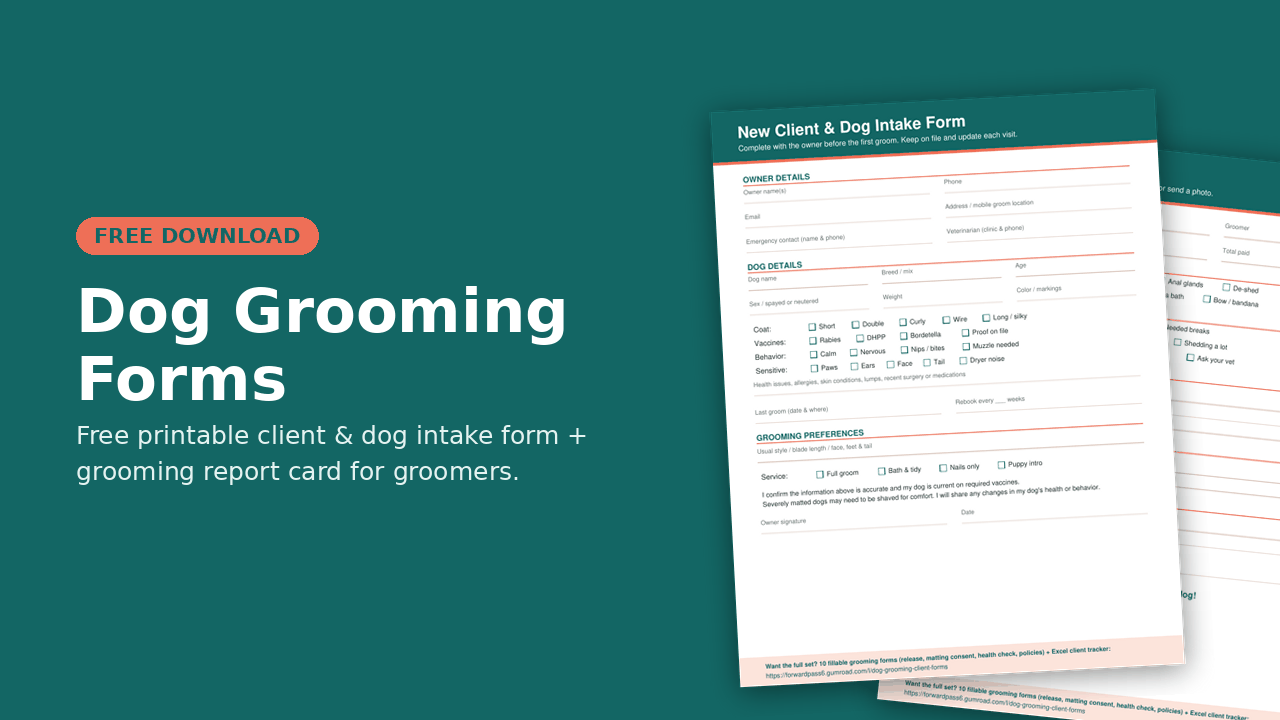
Free Dog Grooming Forms
A printable new client intake form plus a grooming release and consent form.
Download free →1. Start with your costs and target hourly rate
Every groom price is an hourly rate in disguise. Add up what the business costs to run: your pay, any bather or assistant wages, rent or van payments, shampoos and conditioners, blades, sharpening, clipper and dryer repairs, towels, laundry, water and power, insurance, booking software, card fees, marketing and taxes. Include the unpaid time too, such as cleaning the table and tub, answering messages, and for mobile groomers, driving between stops. Divide the total by the hours you can actually groom each month and you have the rate every appointment needs to clear.
Then time your own work. Track how long each dog really takes from check-in to pickup-ready for a few weeks. Those real times are what turn your hourly rate into fair prices.
2. Price by size, breed and coat type
Size alone is not enough, because a large short-coated dog can be faster than a small dog with a dense or curly coat. Most groomers combine two things:
- Size tiers by weight, for example small, medium, large and extra large, with weight ranges you choose and publish.
- Coat categories, such as smooth or short coats, double coats that shed heavily, and curly, wire or drop coats that need clipping, scissoring or hand-stripping.
A simple grid of size tier by coat type covers most dogs. Breeds that need more scissor work, hand-stripping or a specific breed trim can sit in a higher row or be quoted at the first visit. Publish the grid as "starting at" prices, and explain that the final price depends on coat condition and behavior on the day.
3. Separate your service levels
- Full groom: bath, blow-dry, brush-out, haircut or trim to the chosen style, nails, ears, and sanitary and pad trims.
- Bath and brush: bath, dry, thorough brush-out, nails and ears, with a tidy of feet and face but no full haircut. Popular for short and double coats.
- Maintenance or tidy-up visit: a shorter appointment between full grooms, such as face, feet and sanitary trim plus nails, for dogs on a regular schedule.
- Puppy introduction: a short, gentle first visit to get young dogs used to the table, dryer and handling.
Write down exactly what each level includes. A clear menu lets you charge with confidence and stops "while you're at it" extras from eating your time.
4. Matting, de-shedding and behavior fees
Condition changes the job more than anything else, so check the dog at drop-off and agree on extra charges before you start.
- Matting: dematting is slow and uncomfortable for the dog. Many groomers charge a dematting fee by time or severity, and shave the coat short instead when brushing out would be unkind. Get the owner's written consent for a shave-down and explain that skin under heavy mats can show redness or irritation.
- De-shedding: undercoat removal for heavy shedders takes extra bathing, drying and brushing time, so price it as a separate treatment or add-on.
- Behavior handling: dogs that bite, panic or need two people or extra breaks take longer. A handling fee, shorter sessions or a referral to a groomer who works with fearful dogs are all reasonable options. Note behavior on the dog's record so you can plan the next visit.
- Extra dirty or flea-infested dogs: extra baths, flea treatment and cleaning your space all cost time and product.
Explain these fees on your price list and in your grooming agreement, so owners are never surprised at pickup.
5. Price add-ons separately
Keep the core services focused and offer extras on a menu:
- Nail grinding or filing (instead of or after clipping)
- Teeth brushing
- Specialty or medicated shampoo (when the owner supplies a vet-recommended product, or you stock one)
- Conditioning or deep moisturizing treatment
- Paw balm or nose balm
- Hand-stripping (often quoted by time)
- Creative extras like bows, bandanas or pet-safe color
Price each add-on by the minutes it takes at your target rate plus product cost. Nail trims and small tidy-ups can also be sold as walk-in services between grooms.
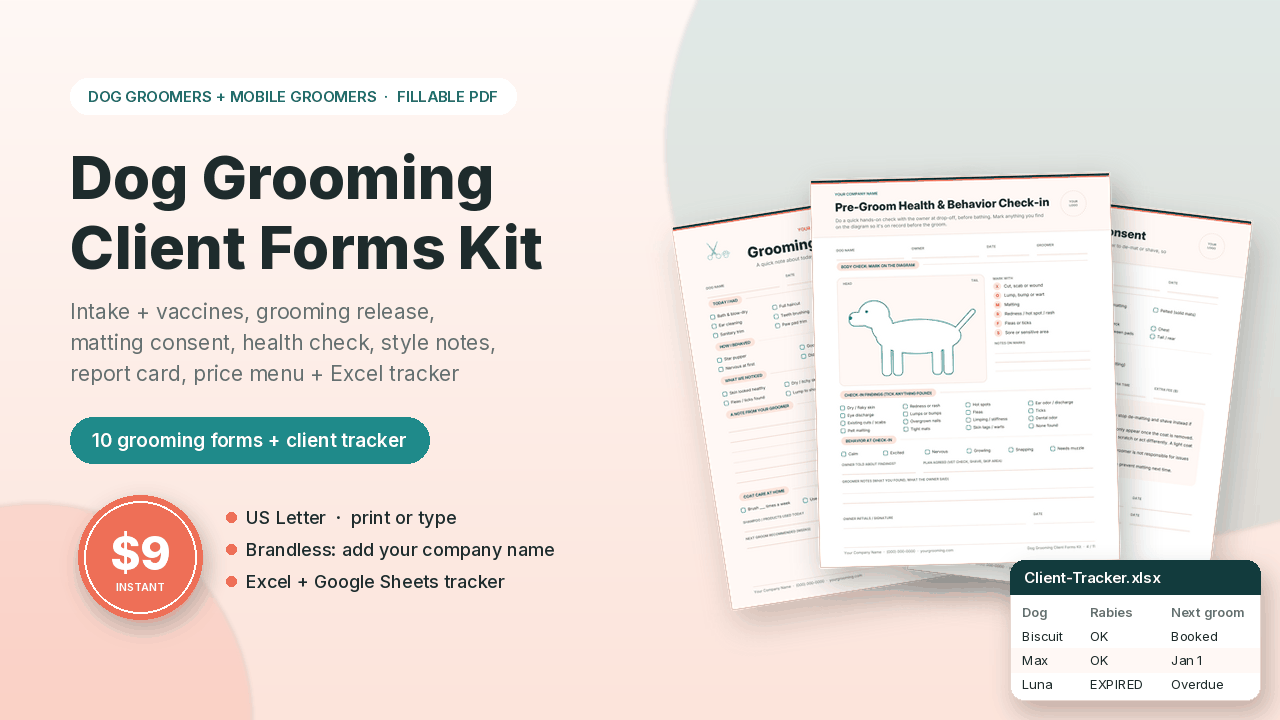
Dog Grooming Client Forms Kit
Fillable grooming forms (client & dog profile with vaccine record, grooming agreement & release, pre-groom health check, matting consent, style notes, report card and more) plus an Excel client tracker with next-groom-due dates and vaccine expiry alerts.
Get it →6. Mobile vs salon pricing
Mobile grooming saves owners a trip and gives the dog one-on-one time with no kennel wait, but it costs you more per appointment: van or trailer payments, fuel, generator or power, water tanks, and drive time between stops. Mobile groomers usually charge more than salon groomers for the same service, add a travel or convenience fee, set a minimum per stop, or offer a discount when several dogs at one address are booked together. Define your service area, and charge a fee for addresses outside it.
Salon groomers carry rent and utilities instead, but can work on more than one dog at a time with a bather. Either way, your prices should come from your own costs and timings, not a competitor's list.
7. Rebooking intervals: the key to coat condition and steady income
Regular grooming keeps coats manageable, which makes each visit faster and kinder for the dog. Recommend an interval for every dog based on coat type and style, for example every four to eight weeks for many clipped and curly coats, and suggest booking the next visit before the owner leaves. Some groomers charge a lower rate to dogs who stay on schedule and a higher one when a dog arrives long overdue and matted, since the work really is different. Track each dog's last groom and next due date so you can send reminders.
8. Deposits, cancellations and no-shows
An empty slot is lost income you cannot get back. Common protections include:
- A deposit for new clients, long appointments or holiday bookings, credited to the final price
- A cancellation window, such as 24 or 48 hours, with a fee for late cancellations
- A no-show policy: a fee, a required deposit for future bookings, or both
- A late pickup fee if dogs are collected well after the agreed time
- A late arrival rule, such as a shortened service or rescheduling if the dog arrives too late to finish properly
Put the policy in your grooming agreement, have every client sign it, and apply it consistently. The holiday season is when clear deposits and cancellation rules matter most.
9. Worked example (example numbers only)
Here is how a full groom price comes together. The figures below are example numbers to show the math, not recommended prices for your area:
- Medium doodle-type dog, full groom, estimated 2 hours of table time
- Example target rate $45 per hour, so 2 hours = $90
- Example shampoo, conditioner and supplies = $5
- Moderate matting on legs and ears, estimated 30 extra minutes, example dematting fee = about $23 (half an hour at $45)
- Add-on requested: teeth brushing, example price $10
- Example total: $90 + $5 + $23 + $10 = $128
- Suggested next visit in 6 weeks. If the owner books it before leaving and the dog stays on schedule, the matting fee likely won't apply next time.
Swap in your own costs, timings and local rates. The point is that every number comes from your time and target rate, not a guess.
10. Put it in writing
A client and dog profile, a signed grooming agreement and release, and a record of every visit protect you and the owner. Include vaccine records, health issues and allergies, behavior notes, the service and style requested, your price list and extra fees, matting and shave-down consent, emergency vet permission, deposit, cancellation and no-show terms, and pickup rules. A short report card at pickup shows the owner what you did and anything you noticed, such as skin redness or ear problems.
Common pricing mistakes
- Pricing without knowing your target hourly rate
- One price per breed with no size or coat adjustment
- Dematting and handling difficult dogs for free
- No separate bath and brush or maintenance option
- No travel fee or service area for mobile work
- No deposit, cancellation or no-show policy
- Never raising prices as product, fuel and rent costs go up
FAQ
How do you price dog grooming?
Work out the hourly rate you need to cover your pay, supplies, equipment, rent or van costs, insurance and taxes, time how long each service takes by size and coat type, then add supplies, matting or behavior fees and any add-ons the owner chooses.
Should dog grooming be priced by size or breed?
Most groomers use both: size tiers by weight plus coat type, because a small dog with a dense or curly coat can take longer than a large dog with a short coat. Publish these as starting prices and adjust for condition.
How much extra should I charge for a matted dog?
Base the dematting fee on the extra time it takes at your target hourly rate, and state it on your price list. When mats are severe, a shave-down with the owner's written consent is often kinder and quicker than brushing out.
What is the difference between a full groom and a bath and brush?
A full groom includes a haircut or trim to a chosen style along with the bath, dry, brush-out, nails and ears. A bath and brush covers bathing, drying, brushing, nails and ears with only a light tidy, so it is shorter and priced lower.
Should mobile groomers charge more than salons?
Usually. Mobile groomers carry van, fuel, generator and drive-time costs, so many charge higher base prices, a travel or convenience fee, or a minimum per stop.
Do dog groomers need a no-show policy?
It is strongly recommended. A deposit for new or long appointments, a cancellation window with a late fee, and a no-show fee or required future deposit, written into your signed grooming agreement, protect your schedule and income.
This page is general guidance, not legal, tax, insurance or veterinary advice. Business licensing, vaccine requirements, animal handling rules and contract rules vary by state, county and city and change over time, so check yours before you take bookings.
Related templates
Free Dog Grooming Forms
A printable new client intake form plus a grooming release and consent form.
Download free →Dog Grooming Client Forms Kit
Fillable grooming forms plus an Excel client tracker with rebooking dates and vaccine alerts.
Get it →