House Sitting Rates: How Much to Charge Per Night (With or Without Pets)
How house sitters can price overnight stays: base nightly rate, pet add-ons, extra visits and chores, long stays and holidays, deposits, keys and the agreement, and a worked weekly quote.
Why house sitting is easy to underprice
House sitting looks simple: stay at the home, keep it safe and look after anything that needs care. But an overnight sit blocks your evening and morning, often includes pets, plants, mail and trash, and can stop you from taking other jobs. Sitters who quote one flat nightly price for every home end up doing the most work for the same money.
A clearer method: set a base nightly rate for the home, add fees for pets and extra visits, price long stays, set travel and deposit rules, and write it all down. The steps below finish with a worked weekly quote. All numbers on this page are example numbers, not market data.
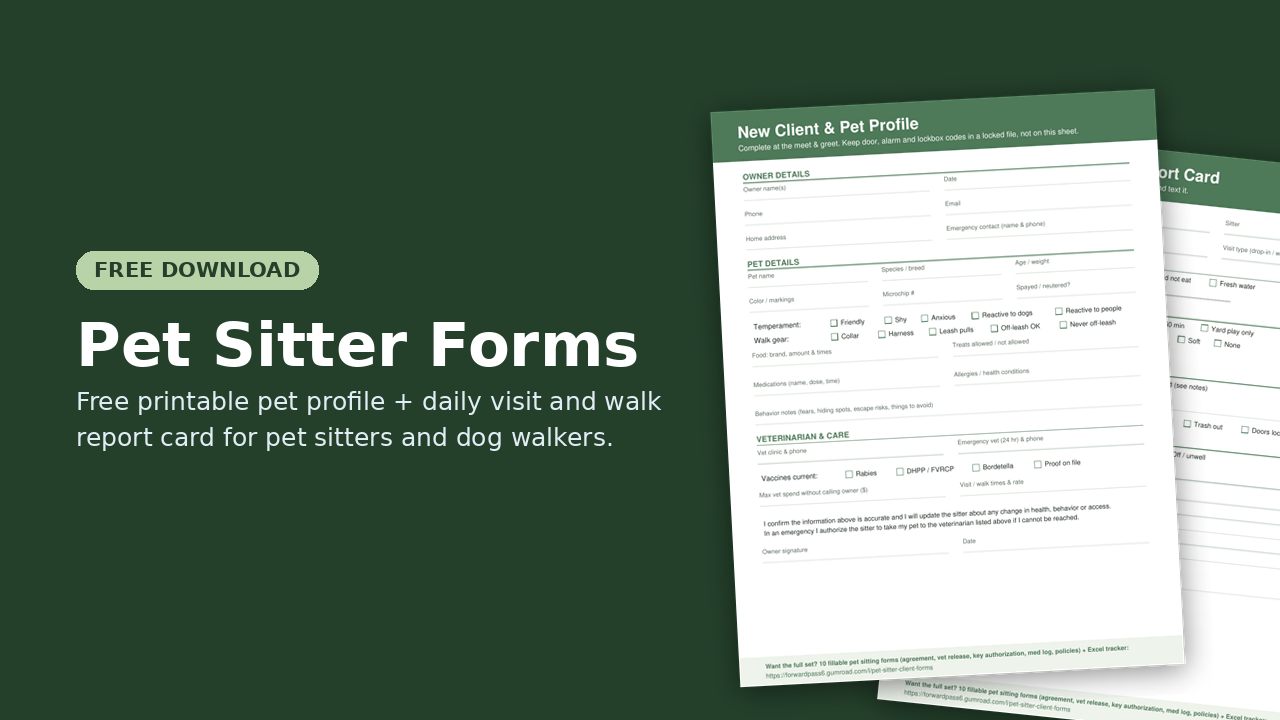
Free Pet Sitter Forms
A printable new client & pet profile plus a daily visit and walk report card for pet sitters and dog walkers.
Download free →1. Set a base nightly rate
Start with what one overnight should earn you after costs. Count travel, the hours you are on duty, and the jobs you turn down while you are booked.
- Example base rate: $50 a night for a home with no pets, including mail, trash and plants.
- Example daytime presence: add $15-30 a night if the owner wants someone home most of the day.
- Example large property: add $10-20 a night for big homes, pools or yard checks.
2. Add pet care fees
Pets are where most of the work is. Price them as add-ons so each home pays for what it needs.
| Add-on | Example fee | Notes |
|---|---|---|
| First dog | $15-25 per night | Feeding, walks, cleanup |
| Each extra dog | $8-15 per night | More walks and supervision |
| Cats or small pets | $5-10 per night each | Feeding, litter, cage cleaning |
| Medication | $3-10 per day | Pills, injections need extra care |
| Puppy or senior pet | $5-15 per night | More frequent breaks |
Ask about every pet during the meet and greet, including temperament, routines and any pets that cannot be left alone together.
3. Extra visits, chores and special requests
Some owners want more than an overnight stay. List common extras so you are not doing them for free.
- Midday visit for a dog that cannot wait 8 hours: example $15-20 per visit
- Watering a large garden or many indoor plants: example $5-10 per day
- Pool or hot tub checks: example $5-10 per day
- Light housekeeping before the owner returns: price as a flat fee
- Receiving deliveries or contractors: example $10-20 per visit
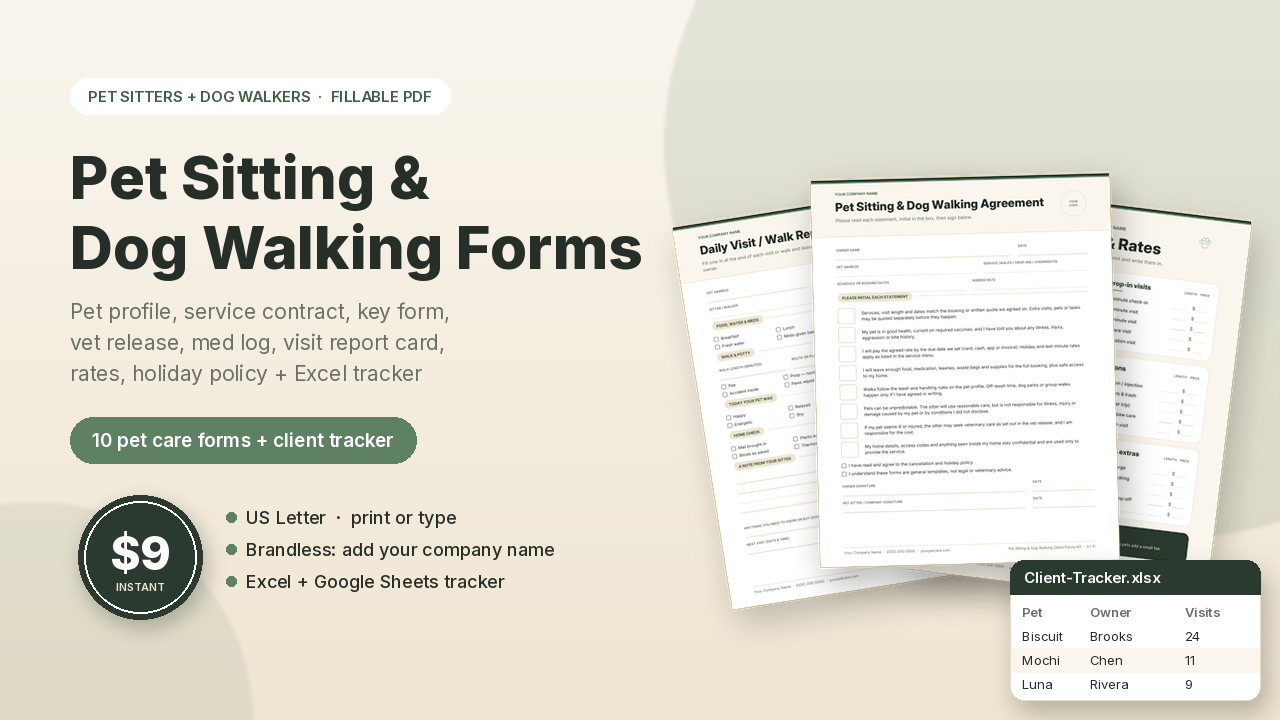
Pet Sitting & Dog Walking Client Forms Kit
10 fillable forms (client & pet profile, service agreement, key and alarm authorization, veterinary release, medication log, visit report card, meet & greet checklist, services and rates, cancellation & holiday policy, photo release) plus an Excel client and pet tracker.
Get it →4. Long stays, holidays and travel
Weekly rates suit long trips, and holiday dates are worth more because demand is high and you give up your own plans.
| Situation | Example rule |
|---|---|
| Stays of 7+ nights | 5-10% off the nightly total |
| Holiday nights (Thanksgiving, Christmas, New Year) | +25-50% per night |
| Last-minute booking (under 48 hours) | +$10-20 per night |
| Travel beyond your service area | Mileage fee or flat travel charge |
Holiday nights fill first, so many sitters ask for a deposit on those dates and limit how many homes they take at once.
5. Deposits, keys and the agreement
Before the first night, agree on key and alarm access, house rules, who to call in an emergency, the vet and a vet release, and what happens if something breaks. Take a deposit to hold the dates and collect the balance before or on the first day.
Put everything in a written agreement: dates, nightly rate, add-ons, pet care instructions, how long you can be away, cancellation terms and payment due dates. The pet sitter forms linked on this page cover the client profile, pet details, vet release and service agreement.
Worked example: one week with two dogs
Here is how the method adds up, using the example numbers above.
- Owners away for 7 nights, two dogs, no medication, one midday visit needed each workday.
- Base: $50 a night x 7 = $350.
- Dogs: first dog $20 + second dog $10 = $30 a night x 7 = $210.
- Midday visits: 5 x $15 = $75.
- Subtotal $635, less a 5% weekly discount on the nightly part ($560 x 5% = $28) = $607.
- Deposit: 25% (about $152) at booking, balance on the first day.
These are example numbers to show the math, not market rates. Use your own costs, local rates and the time each home really takes.
FAQ
How much should I charge for house sitting per night?
Work out the income you want for an overnight stay, then add separate fees for pets, extra midday visits and chores. A house sit without pets is usually priced lower than one with several pets that need feeding, walks and medication. Any rates on this page are example numbers, not market data.
Should house sitting with pets cost more?
Yes. Each pet adds feeding, cleanup, exercise and supervision time, and some need medication or set schedules. Many sitters charge a base nightly rate for the home plus a per-pet add-on.
Do I charge less for long house sits?
Some sitters offer a weekly rate that works out slightly cheaper per night, because long stays fill the calendar and cut admin time. Keep the discount small and set a payment schedule, such as half up front.
Can I leave the house during a house sit?
Agree on it in writing. Many owners expect the sitter to be home overnight and away no more than a set number of hours at a time, especially with pets. If the owner wants someone home most of the day, price it higher.
Should I take a deposit?
A deposit holds the dates, which matters for holidays and summer weeks that you could book with someone else. Many sitters take a deposit at booking and the balance before or on the first day. Say in writing whether it is refundable.
What should a house sitting agreement include?
Dates, nightly rate and add-ons, pet care instructions, vet details and release, key and alarm access, house rules, emergency contacts, what happens if something breaks, cancellation terms and payment due dates.
This page is general guidance, not legal or tax advice. Business licensing, tax and consumer rules vary by location, so check the rules where you work.
Related templates
Free Pet Sitter Forms
A printable new client & pet profile plus a daily visit and walk report card for pet sitters and dog walkers.
Download free →Pet Sitting & Dog Walking Client Forms Kit
10 fillable pet sitter and dog walker forms plus an Excel client and pet tracker.
Get it →