Pet Sitting Holiday Rates: How to Price Thanksgiving, Christmas and New Year Visits and Overnights (Plus Free Forms)
How pet sitters and dog walkers can price Thanksgiving, Christmas and New Year visits and overnights: choose a holiday surcharge, set minimum stays and a booking deadline, take deposits, write a holiday cancellation policy, and run the numbers with a worked example and free pet sitter forms.
Why holidays need their own price list
For most pet sitters, the stretch from Thanksgiving to New Year is the busiest and most tiring part of the year. Clients travel at the same time, the requests all land on the same dates, and every visit you accept means a holiday meal, a family event or a night at home you give up. Pet owners know this, and most expect to pay more. The sitters who end the season tired and underpaid usually did one of three things: they quoted their normal rates, they said yes to every request in the order it arrived, or they had no written policy when a client cancelled two days before Christmas. A separate holiday price list, a booking deadline and a deposit fix all three.
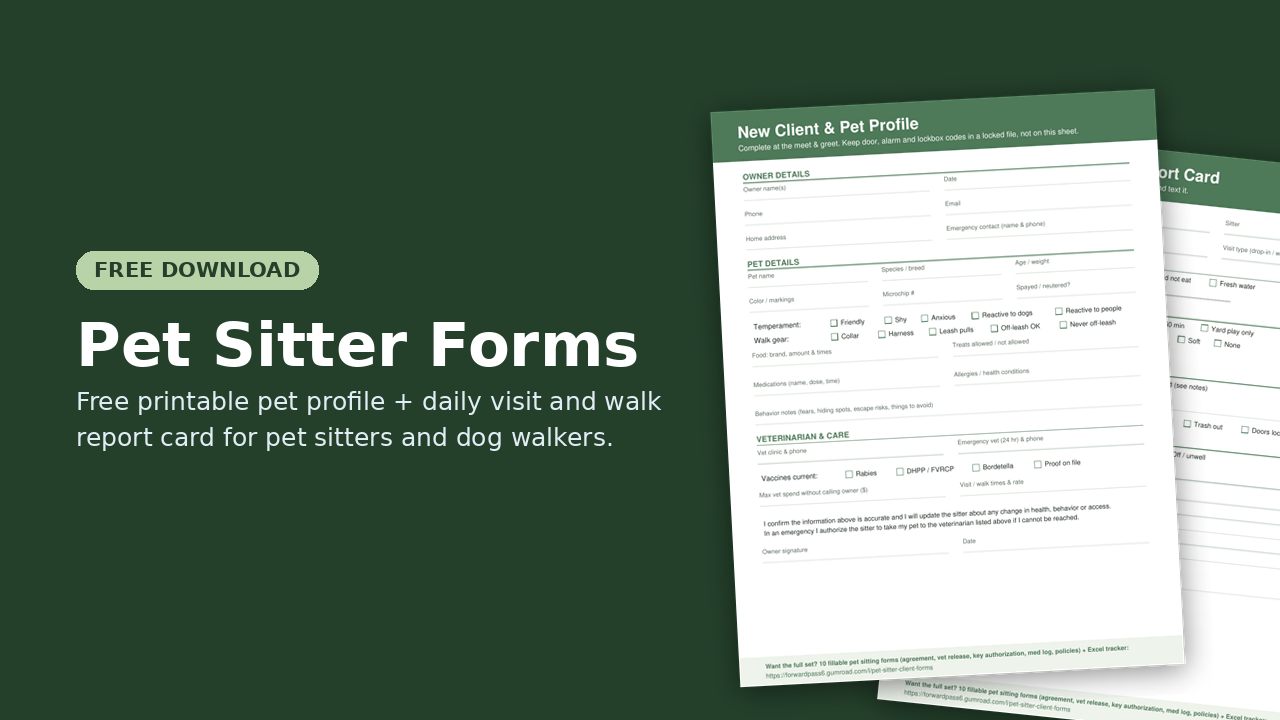
Free Pet Sitter Forms
A printable new client & pet profile plus a daily visit and walk report card for pet sitters and dog walkers.
Download free →1. Decide which dates count as holidays
Write the list down before anyone asks, and put it on your rate sheet and in your agreement. A common approach is to name the actual holidays (Thanksgiving Day, Christmas Eve, Christmas Day, New Year's Eve and New Year's Day) and then decide whether the days around them count too. Many sitters also treat the Wednesday before Thanksgiving and the Sunday after it as holiday days, because that is when travel peaks and when visits are hardest to staff. Whatever you choose, be specific: “holiday rates apply to visits on Nov 26, Dec 24, Dec 25, Dec 31 and Jan 1” prevents more arguments than “holiday rates apply during the holidays.”
2. Choose a holiday surcharge
There are two simple ways to charge more on holidays, and both work as long as you are consistent:
- A percentage on top of the normal rate. For example, 25% to 50% extra on every visit, walk or overnight that falls on a listed holiday. This scales automatically with the length of the visit and the number of pets.
- A flat fee per visit or per night. For example, an extra $10 to $20 per drop-in and $20 to $40 per overnight. Flat fees are easy for clients to understand and easy for you to add up.
These figures are examples, not market data. To set your own number, ask what it would take for you to happily work that day. Add up what you give up (a family meal, time off, a trip), any extra costs (higher fuel use, paying a backup sitter more), and the fact that you can only be in so many homes at once. If your normal 30-minute visit is $25 and a $10 holiday fee would make Christmas morning feel worth it, that is your answer.
3. Set minimum stays and visit requirements
Holiday calendars fill up with the same dates, so protect them. Many sitters set a minimum booking for the peak period, such as at least two visits a day for dogs, or at least three nights for overnight stays that include Christmas or New Year's Eve. A minimum stops one short booking from blocking a date you could have filled with a full week. Also cap overnights at one per night, since you can only sleep in one home. Write down your real capacity before you open bookings, then stop when you reach it.
4. Publish a booking deadline
A clear deadline keeps you from planning your own holidays around messages that arrive at the last minute. Pick a date for each holiday, for example “Thanksgiving bookings close Nov 10” and “Christmas and New Year bookings close Dec 1,” and announce it to your existing clients first. Returning clients who book early make the season smoother, so many sitters give them first access for a week before opening to new clients. After the deadline, you can still accept bookings if you have room, but with a late booking fee and no guarantee. New clients should also complete a meet and greet before the deadline, so you are not meeting a nervous dog for the first time on Christmas Eve.
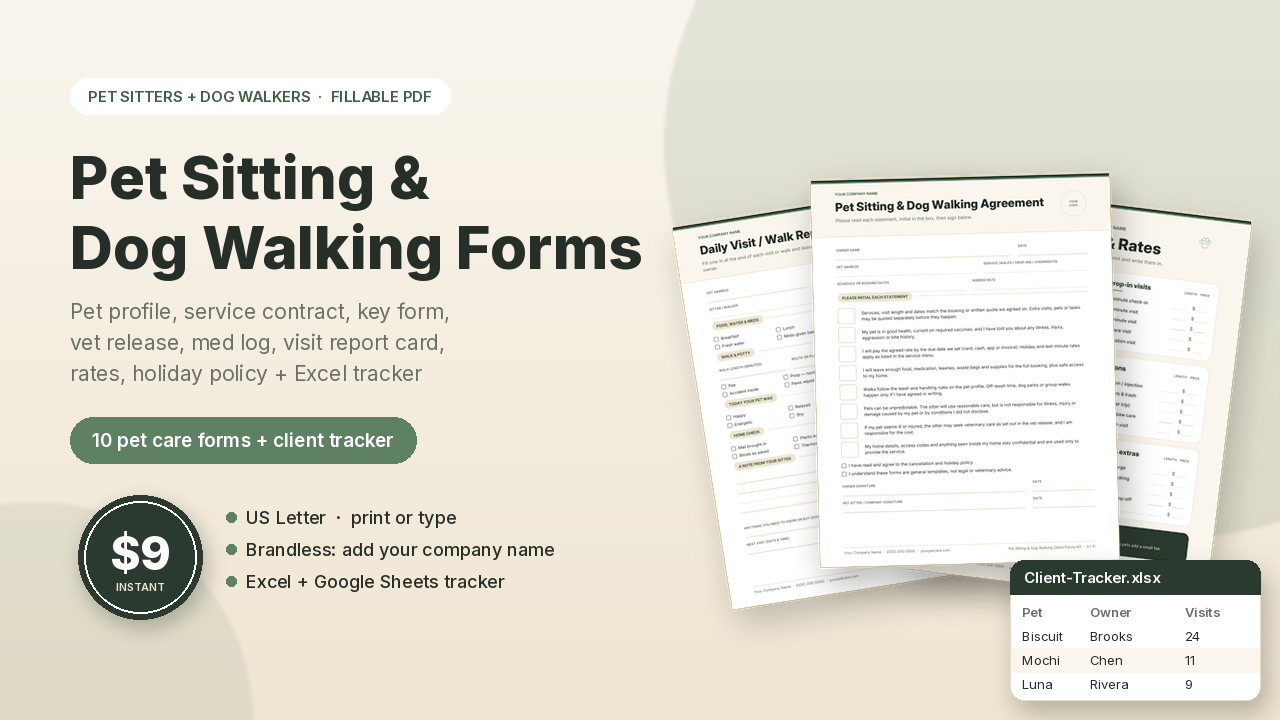
Pet Sitting & Dog Walking Client Forms Kit
10 fillable forms (client & pet profile, service agreement, key and alarm authorization, veterinary release, medication log, visit report card, meet & greet checklist, services and rates, cancellation & holiday policy, photo release) plus an Excel client and pet tracker.
Get it →5. Take a deposit to hold the dates
A booking is not confirmed until the deposit is paid. For holiday stays, sitters commonly ask for a percentage of the total (for example 25% to 50%) or the full first night, due within a few days of confirming. State in writing whether the deposit is refundable, when the balance is due (for example, before your first visit), and what happens to the booking if the deposit is not paid on time.
6. Write a holiday cancellation policy
Cancellations hurt most during the holidays because you usually turned down other clients to keep those dates free. A simple holiday policy might look like this example: cancel more than 14 days before the first visit and the deposit is refunded or moved to a future booking; cancel 7 to 14 days before and the deposit is kept; cancel less than 7 days before and 50% to 100% of the booked holiday visits are charged. Shortened trips should follow the same rules. Also cover the opposite case: what you will do if you get sick, including whether you have a backup sitter and how the client is told.
A worked example (example numbers)
Say your normal rates are $25 for a 30-minute drop-in and $75 for an overnight, and you add a 40% surcharge on listed holiday dates. A client books overnights from Dec 23 to Dec 27 (four nights) for one dog, and the nights of Dec 24 and Dec 25 count as holiday nights.
- 2 regular nights at $75 = $150
- 2 holiday nights at $75 + 40% ($105) = $210
- Total: $360
- Deposit at 50%: $180 due within 3 days to hold the dates, balance due before the first night
Run the same math for your own rates and surcharge before you quote, and put it on a written quote so the client sees exactly which nights carry the holiday rate.
Before the first holiday visit
Finish the paperwork before the rush. For every holiday client, confirm the dates and visit times in writing, collect a current pet profile, get key, lockbox and alarm instructions, check the vet details and add a signed veterinary release, and confirm emergency contacts who will actually be reachable while the client is away. Ask about anything that changes during the holidays, such as guests staying in the home, decorations or food the pet should not get into, and fireworks on New Year's Eve for anxious dogs. Send a short daily report with a photo after every visit; clients who are away for the holidays value that more than anything.
FAQ
How much extra should I charge for pet sitting on holidays?
There is no single standard. Many sitters add a percentage, such as 25% to 50%, or a flat fee per visit or overnight on listed holiday dates. Work out what it takes for the day to be worth giving up, then apply it consistently and list it on your rate sheet.
Which days should count as holidays for pet sitting?
Name them in writing. Most sitters include Thanksgiving Day, Christmas Eve, Christmas Day, New Year's Eve and New Year's Day, and some add the peak travel days around Thanksgiving.
Should I require a minimum stay over Christmas?
A minimum, such as two visits a day or three nights for overnight stays, keeps short bookings from blocking peak dates. Set it before bookings open and apply it to everyone.
When should holiday pet sitting bookings close?
Pick a date a few weeks ahead of each holiday, for example early November for Thanksgiving and around Dec 1 for Christmas and New Year, and give returning clients first access.
Do pet sitters take deposits for holiday bookings?
Many do. A deposit of part of the total or the first night, paid within a few days, confirms the dates. Say in writing whether it is refundable and when the balance is due.
What should a holiday cancellation policy say?
Set clear time windows, such as full refund more than 14 days out, deposit kept 7 to 14 days out, and part or all of the holiday visits charged inside 7 days, and apply the same rules to shortened trips.
This page is general guidance, not legal, tax or veterinary advice. Business, licensing and consumer rules vary by state and city, so check your local rules and have your agreement reviewed by an attorney or insurer.
Related templates
Free Pet Sitter Forms
A printable new client & pet profile plus a daily visit and walk report card for pet sitters and dog walkers.
Download free →Pet Sitting & Dog Walking Client Forms Kit
Holiday-ready service agreement, cancellation & holiday policy, vet release and an Excel client and pet tracker.
Get it →More free guides
- Holiday Hours Announcement Templates
- Pet Sitting Gift Certificate
- Pet Sitter Vet Release Form
- Pet Sitter Meet and Greet Checklist
- Holiday House Sitting Rates
- Pet Sitting and Dog Walking Rates
- Pet Sitting Contract Template for Holiday Bookings
- Dog Grooming Pricing
- Dog Grooming Intake Form
- House Cleaning Pricing
- Cat Sitting Rates