Holiday House Sitting Rates: What to Charge Per Night for Thanksgiving, Christmas and New Year (Plus Free Forms)
How house sitters can price holiday stays: set a base nightly rate, add fees for pets and winter duties, choose a holiday surcharge, set minimum stays and deposits, and write house rules, with a worked example and free forms.
Why house sitting needs its own holiday price
House sitting is not the same job as a pet sitting drop-in. You sleep in the home, you are responsible for it day and night, and over the holidays you are usually doing it while everyone else is with family. Clients who book a house sitter for Thanksgiving week or the stretch from Christmas to New Year are paying for presence and peace of mind: lights on, mail in, pipes checked, pets cared for and someone ready to call a plumber if the water heater fails on December 26. That is worth more than a few visits a day, and the price should show it.
The sitters who end the season underpaid usually quote one flat number with no add-ons, accept bookings that overlap or leave gaps they cannot fill, and have nothing in writing about winter duties, guests or cancellations. A simple nightly rate card, a list of holiday dates, a deposit and a written agreement solve most of that before the first booking arrives.
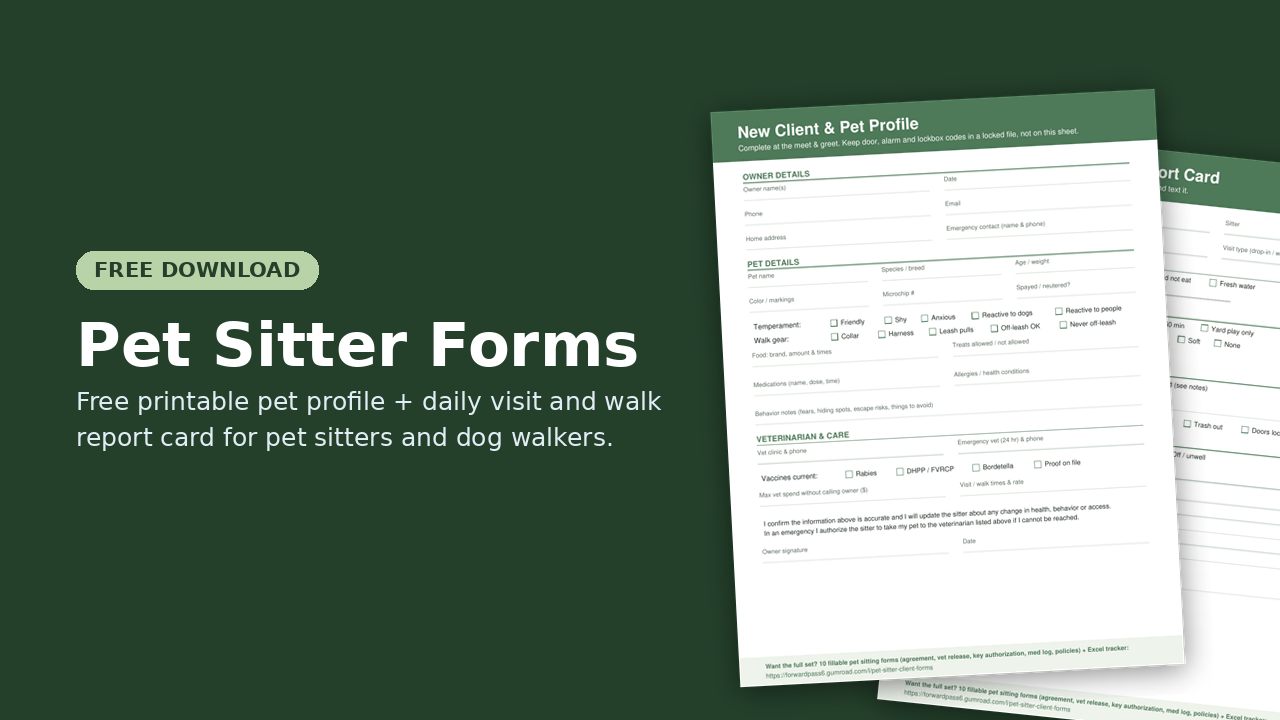
Free Pet Sitter Forms
A printable new client & pet profile plus a daily visit report card for house sitters, pet sitters and dog walkers.
Download free →1. Set a base nightly rate
Your base rate is what you charge for a standard overnight stay in a normal home with no special duties. To find it, think about the hours involved rather than copying someone else. A typical house sitting night might mean arriving in the evening, staying overnight and leaving for part of the day, with you on call the whole time. Decide what you need to earn for that commitment, then compare it with what other sitters in your area quote on local websites, community groups and sitter apps.
As an example only, a sitter who wants roughly $15 an hour for about four to five active hours of care and checks, plus a modest amount for the overnight itself, might land on a base rate of $60 to $90 a night. Your market may be higher or lower. City homes, long drives and large properties all justify a higher base, and so does experience with references.
2. Add fees for pets and extra duties
Price the base for the house, then add a fee for each extra responsibility so clients can see what they are paying for. Common add-ons include:
- Pets. An extra fee per pet per night, for example $10 to $20 for each dog and a smaller fee for cats or small animals.
- Extra daytime visits. If a dog needs a midday walk or the client wants you home at lunch, charge per added visit.
- Medication or special care. Insulin, senior pets, puppies or pets with behavior issues take more time and carry more risk.
- Plants, aquariums and gardens. A small flat fee per stay is usually enough unless there are many plants.
- Large homes or properties. More rooms, a second building or a pool add checking time.
These amounts are examples, not market data. The point is to keep the base simple and let each add-on carry its own price, so a quiet two-bedroom flat and a big house with three dogs do not cost the same.
3. Choose a holiday surcharge and name the dates
Most clients expect to pay more over the holidays. You can add a percentage to the nightly total, for example 25% to 50%, or a flat amount per holiday night, for example an extra $20 to $40. Whatever you choose, write down exactly which nights it applies to. A clear line such as “holiday rates apply to the nights of Nov 25 and 26, Dec 24, 25 and 31 and Jan 1” prevents arguments later. Some sitters apply the surcharge to the whole peak period instead, from the Wednesday before Thanksgiving through the Sunday after it and from Dec 23 to Jan 2. Pick one approach and use it for every client.
4. Price winter responsibilities, not just the stay
Winter house sitting comes with jobs that summer stays do not. Agree on each one before the client leaves and put them on the quote:
- Keep the thermostat at an agreed minimum and know where the water shut-off valve is.
- Check under sinks and in basements for frozen or leaking pipes during cold snaps, and drip taps if the client asks.
- Bring in mail and packages every day, since holiday deliveries pile up fast on doorsteps.
- Run lights and decorations on timers, and switch off indoor trees and candles when you leave.
- Clear the front steps or a short path after snow if agreed. Full driveway clearing is a separate job; price it as an add-on or leave it to the client's snow service.
Write down who to call for each problem (plumber, heating company, alarm company, a neighbor with a spare key) and a spending limit for emergency repairs, so you never have to guess on a holiday.
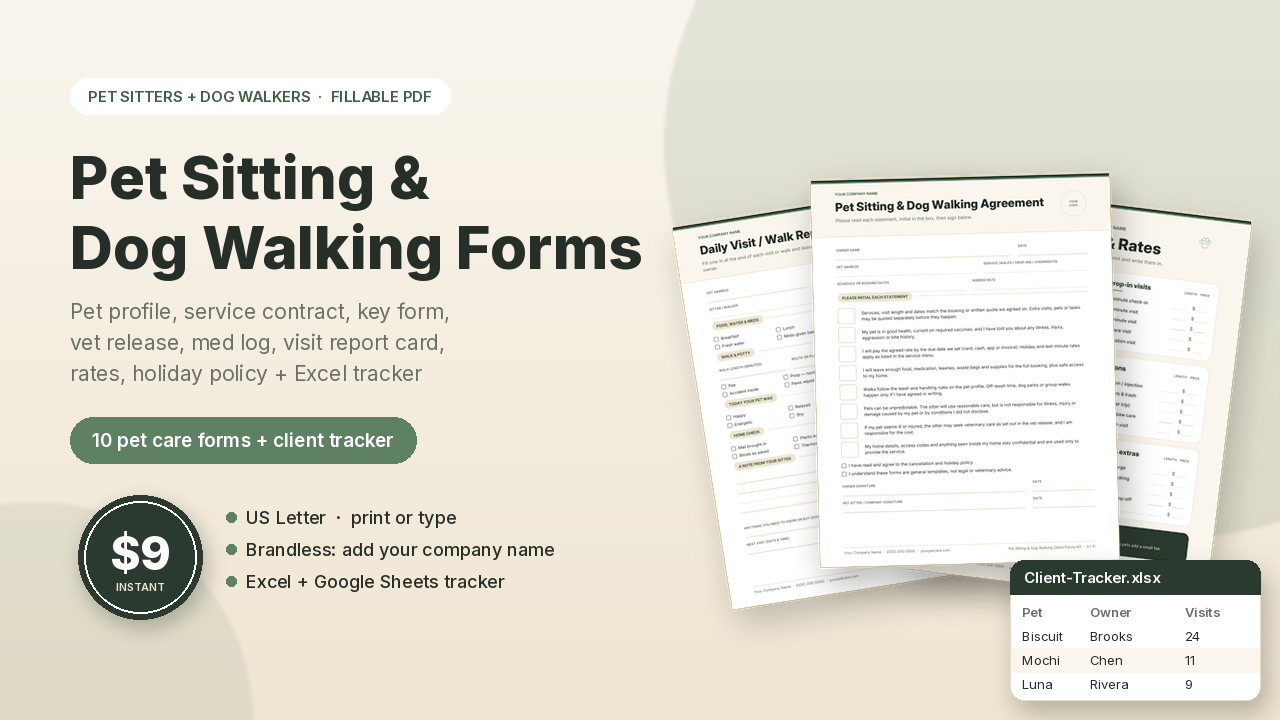
Pet Sitting & Dog Walking Client Forms Kit
10 fillable forms including a service agreement, key, home access & alarm authorization, veterinary release, daily visit report with home check, services and rates sheet and a cancellation & holiday policy, plus an Excel client tracker.
Get it →5. Set minimum stays, a deposit and a cancellation policy
Holiday dates fill first, and one two-night booking can block a full week you could have sold. Many house sitters set a minimum stay over Christmas and New Year, such as three or four nights, and a booking deadline, such as “Christmas and New Year bookings close Dec 1.” Give returning clients first access before you open to new ones.
A booking should only be confirmed once a deposit is paid, for example 25% to 50% of the total or the first two nights, due within a few days. A simple example cancellation policy: more than 14 days before the start, the deposit is refunded or moved to a future booking; 7 to 14 days before, the deposit is kept; less than 7 days before, half or all of the booked holiday nights are charged. Trips that end early should follow the same rules, and you should also say what happens if you fall ill, including whether you have a backup sitter.
6. Write down the house rules
Living in someone's home for a week raises questions that a drop-in never does. Settle them in writing: whether you may have a guest, use the kitchen and pantry, use the car, or work from the home during the day; the longest you will be away in any 24 hours (many clients expect no more than a few hours at a time, especially with pets); which rooms are off limits; and whether photos of the home or pets may be shared online. Clear rules protect you as much as the client.
A worked example (example numbers)
Say your base rate is $75 a night, you charge $15 per dog per night, and you add a 40% holiday surcharge on listed holiday nights. A client books a house sit from Dec 22 to Dec 27 (five nights) with one dog, and the nights of Dec 24 and Dec 25 are holiday nights.
- Nightly total with the dog: $75 + $15 = $90
- 3 regular nights at $90 = $270
- 2 holiday nights at $90 + 40% ($126) = $252
- Plants and mail add-on, flat: $15
- Total: $537
- Deposit at 50%: $268.50 due within 3 days, balance due before the first night
Run the same math with your own rates before quoting, and send it as a written quote that shows which nights carry the holiday rate and which add-ons are included.
Before you take the keys
Do a walk-through a week or two before the stay. Collect a client and pet profile, emergency contacts who will actually answer while the client is away, vet details with a signed veterinary release, and written key, lockbox and alarm instructions. Note the thermostat setting, the water shut-off, the breaker panel and any holiday guests or deliveries expected. Then send a short daily update with a photo. Clients who are away for the holidays remember that more than anything else, and it is how one booking turns into next year's.
FAQ
How much should I charge for house sitting over the holidays?
There is no single standard rate. Start from your normal nightly rate, add fees for pets and extra duties, then add a holiday surcharge, often a percentage such as 25% to 50% or a flat amount per night, on the dates you list in writing. Check what sitters in your area charge and apply your rates consistently.
Should house sitting be charged per night or per day?
Most house sitters quote per night, because the overnight stay is the core service. If the client also wants you home for most of the day, or extra daytime visits for pets, price that as an add-on or a higher full-day rate.
Do house sitters charge extra for pets?
Usually yes. Feeding, walks, medication and cleanup are extra work, so many sitters add a fee per pet per night or per extra visit, and a higher fee for medication, puppies or senior pets that need more care.
What winter duties should a house sitting quote cover?
List them: thermostat settings, checking for frozen or leaking pipes, bringing in mail and packages, clearing a path or steps after snow if agreed, and running lights on timers. Anything heavy, such as full driveway snow removal, should be priced separately or left to the client's snow service.
Should I take a deposit for holiday house sitting?
Many sitters do, because holiday dates are booked weeks in advance and are hard to refill. A deposit of part of the total, or the first night or two, confirms the booking. State whether it is refundable and when the balance is due.
Can a house sitter have guests or leave the house overnight?
Only if the client agrees in writing. Put your house rules in the agreement, including guests, use of the car and kitchen, and the longest time you will be away from the home in a day.
This page is general guidance, not legal, tax, insurance or veterinary advice. Business, licensing and consumer rules vary by state and city, so check your local rules and have your agreement reviewed by an attorney or insurer.
Related templates
Free Pet Sitter Forms
A printable new client & pet profile plus a daily visit and walk report card for pet sitters and dog walkers.
Download free →Pet Sitting & Dog Walking Client Forms Kit
Service agreement, key, home access & alarm authorization, holiday policy, vet release and an Excel client tracker.
Get it →