Dog Grooming Client Intake Form: What to Ask Before the First Groom
What a dog grooming intake form should include, from vaccines and health history to behavior and owner contact details, with a free printable template.
Why groomers need an intake form
A new dog arrives with a lot you can't see: a skin condition, a sore hip, a bite history or an overdue rabies shot. An intake form gets those answers in writing before the dog is on your table, so you can plan the groom, protect your staff and other pets, and point back to a signed record if an owner ever disputes something.
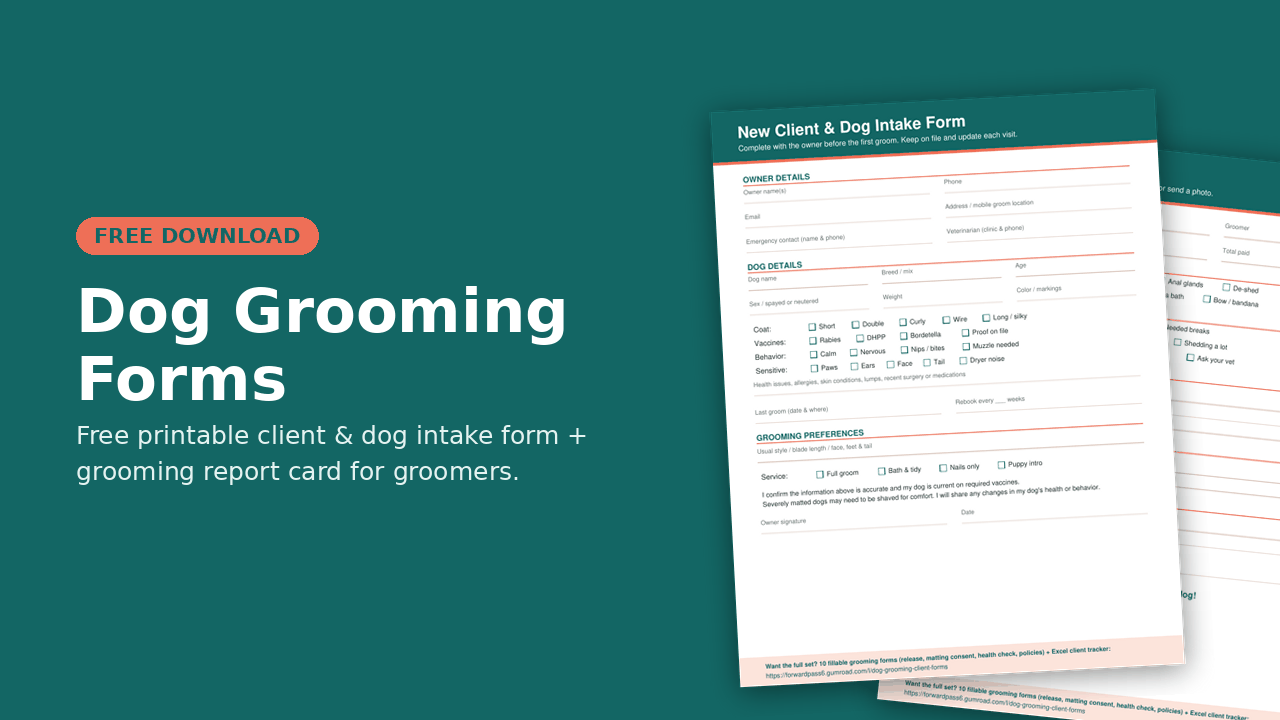
Free Dog Grooming Forms
A printable new client intake form plus a grooming release and consent form.
Download free →The questions to include
- Owner details: name, phone, email, address and an emergency contact
- Dog details: name, breed, age, weight, sex and spay or neuter status
- Vaccines: rabies, distemper and Bordetella dates, plus proof on file
- Health: allergies, skin or ear problems, seizures, heart issues, arthritis and current medication
- Behavior: biting, nipping, fear of dryers or clippers, and how the dog does with other dogs
- Grooming history: last groom, usual cut, coat condition and any matting
- Vet contact: clinic name and phone, with permission to seek care in an emergency
- Signature: confirming the information is accurate
Keep a grooming record after each visit
Log every appointment: date, services, blade lengths and cut style, shampoo used, behavior notes and price. When an owner says 'same as last time', you know exactly what that means, and notes on skin redness or nicks help you spot a pattern early. This page is general information, not legal or veterinary advice.
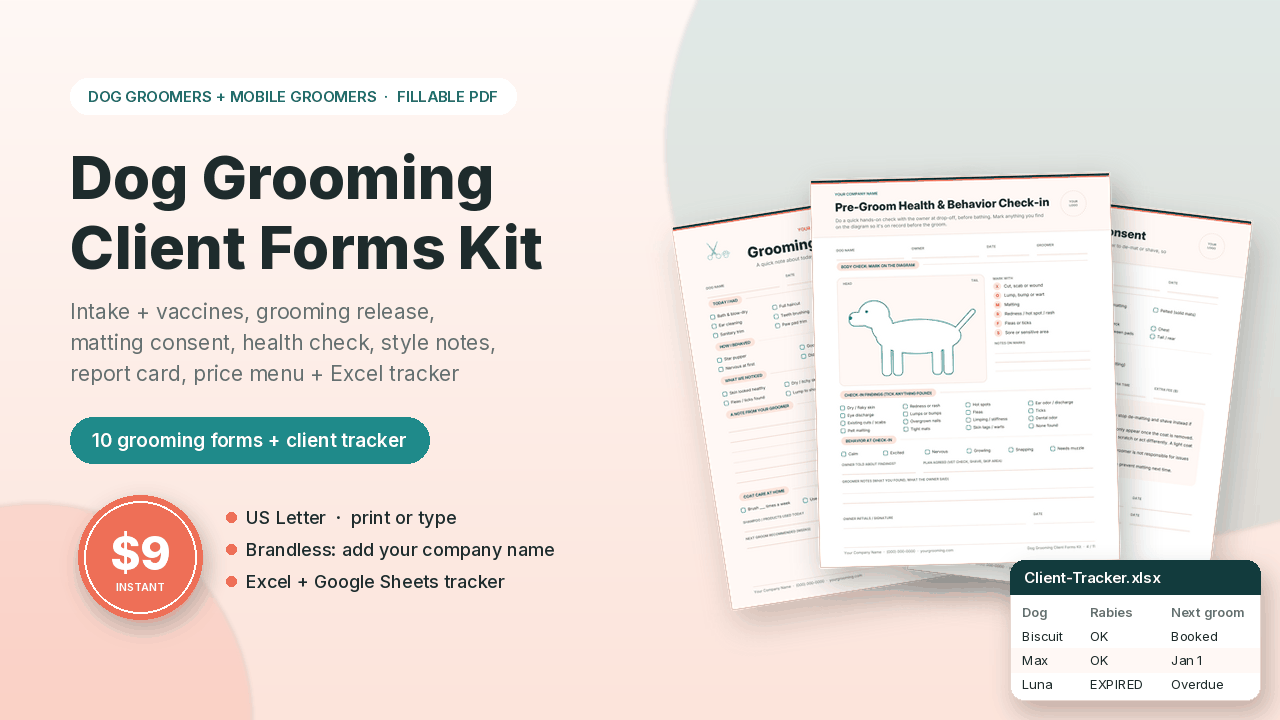
Dog Grooming Client Forms Kit
11 fillable grooming forms (intake, release, matting and senior pet waivers, report card) plus an Excel client tracker.
Get it →Red flags to check before the groom
Read the form before the dog goes on the table, not after. Some answers mean you should slow down, change the plan or reschedule:
- Overdue or missing vaccines: ask for proof first if your policy requires it, especially rabies and Bordetella
- Signs of illness: coughing, diarrhea, vomiting or lethargy in the last few days can spread to other dogs in your space
- Skin, ear or eye problems: note them before you start so nobody thinks the groom caused them
- Bite history or strong fear: plan a muzzle, a second handler or a shorter first visit
- Heavy matting: agree on a shave-down in writing before you pick up the clippers
- Seniors and dogs with heart, breathing or joint issues: shorter sessions, breaks and a release signed for higher-risk pets
A simple intake routine
Send the form with the booking confirmation so owners can fill it in at home, then spend two minutes at drop-off going over anything unclear and checking the coat and skin together with the owner. Note what you see, confirm the cut and the price, and get the signature. At pickup, add the visit to the dog's grooming record. The whole routine takes a few minutes and heads off most of the disputes groomers deal with.
FAQ
What should a dog grooming intake form ask?
Owner contact details, the dog's name, breed, age and weight, vaccination status, vet contact, health issues, behavior notes, matting and coat condition, and the services requested.
Should groomers require proof of vaccination?
Many groomers ask for a current rabies vaccination at minimum, and often bordetella and distemper too. Set your policy and note it on the form.
How often should a client update the intake form?
Review it at every visit and have the owner update it whenever the dog's health, medications, behavior or vet changes.
Can I use a digital intake form?
Yes. A fillable PDF or online form works as long as you keep a signed copy on file for each dog.
Related templates
Free Dog Grooming Forms
A printable new client intake form plus a grooming release and consent form.
Download free →Dog Grooming Client Forms Kit
11 fillable grooming forms (intake, release, matting and senior pet waivers, report card) plus an Excel client tracker.
Get it →