Lawn Care Estimate Template: How to Quote and Price Line Items
How to write a lawn care estimate or quote, from measuring the lot and pricing mowing, cleanups and treatments to discounts, deposits and approval, with free printable forms.
What a good lawn care estimate does
An estimate is often the first document a new client sees from you, and it does three jobs at once. It tells the client what they will get and what it costs, it records the assumptions behind your price, and it gives you a signed approval to start work. A clear, itemized quote also wins more jobs than a number scribbled on a business card, because the homeowner can see exactly what they are paying for and compare it fairly.
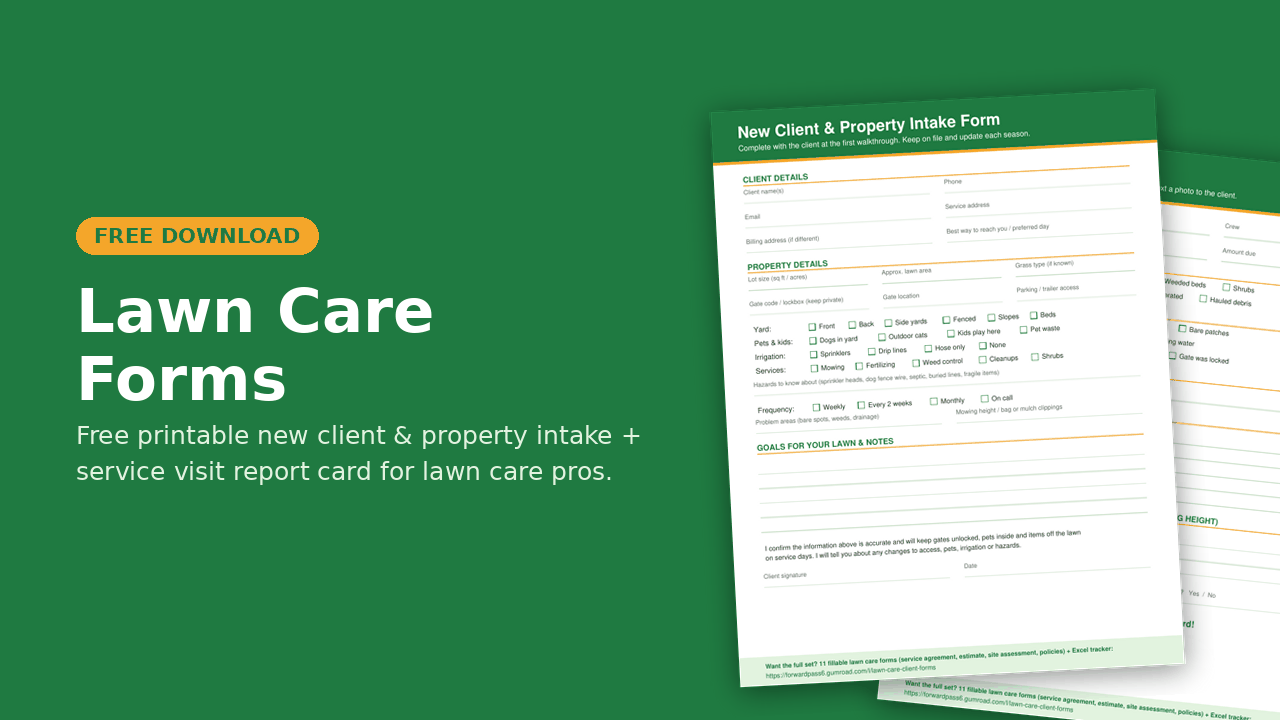
Free Lawn Care Forms
A printable new client and property intake form plus a service visit report card.
Download free →Start with the walkthrough
Accurate prices come from accurate measurements. Before you write a number, walk the property and note:
- Lot and lawn size: total lot size and the actual turf area, in square feet or acres. Online maps and measuring tools give a quick starting figure, but confirm on site.
- Terrain: slopes, ditches, hills that need a push mower or string trimmer, and soft or wet areas.
- Obstacles: trees, beds, play sets, fences, narrow gates your mower must fit through, and trim-heavy edges.
- Condition: overgrown grass, weeds, bare patches, thatch, leaves or debris that add time to the first visit.
- Access: parking for your trailer, gate codes, pets and where clippings or debris can go.
A simple yard sketch with the house, driveway, beds and gates marked saves time when you price, and it helps any crew member who services the property later.
Line items to include
Break the quote into separate lines rather than one lump sum. Each line should show the service, quantity, unit, rate and how often it happens. Typical lines look like this:
- Mowing, trimming, edging and blowing: per visit, with the frequency (weekly or every two weeks).
- First-cut or overgrowth fee: a one-time charge if the lawn is well above normal height.
- Spring or fall cleanup: per job, often priced by estimated hours or yard size.
- Leaf removal and hauling: per visit or per load, including disposal fees.
- Fertilization and weed control: per application, with the number of rounds per season (only if you are licensed where required).
- Aeration and overseeding: per job, often priced by square foot.
- Bed work: weeding, edging, mulch per cubic yard installed, shrub trimming per hour or per shrub.
- Extras: gutter cleaning, irrigation checks, snow removal per push.
How to price each line
There is no single correct rate because labor costs, competition and fuel prices differ by area. A reliable way to build your own numbers is to work backwards from your costs:
- Estimate time on site for the job, including setup, trimming and cleanup, plus drive time between properties.
- Set an hourly target that covers your wage, any crew wages, payroll costs and a profit margin.
- Add equipment and overhead: fuel, maintenance, trailer, insurance, phone, software and replacement of mowers over time. Many operators spread these as a per-hour or per-visit amount.
- Add materials at cost plus a markup for anything you supply: mulch, seed, fertilizer and disposal.
- Check the market: compare against what local competitors charge, then decide whether you compete on price, reliability or service level.
Keep a pricing menu so you quote consistently, for example mowing bands by lot size (up to a quarter acre, up to half an acre, and so on), and adjust for slopes or obstacles. Consistent pricing is easier to defend and faster to quote.
Totals, discounts and deposits
Below the line items show a subtotal, any discount (for example for a prepaid season or a bundle of services), sales tax if your state taxes lawn services, and the total. For larger jobs such as cleanups, mulch installs or seeding, ask for a deposit before you order materials, and state the balance due on completion.
If the client is signing up for recurring mowing, show both the per-visit price and an estimated monthly or seasonal total. Clients budget monthly, so that number often decides the sale.
Terms to print on the estimate
- Valid until: quotes should expire, usually in 30 days, so rising costs do not catch you out.
- Assumptions: price is based on normal growth, current condition and clear access.
- Changes: extra work requested on site will be quoted before it is done.
- Approval: client signature, date and the start date you agreed.
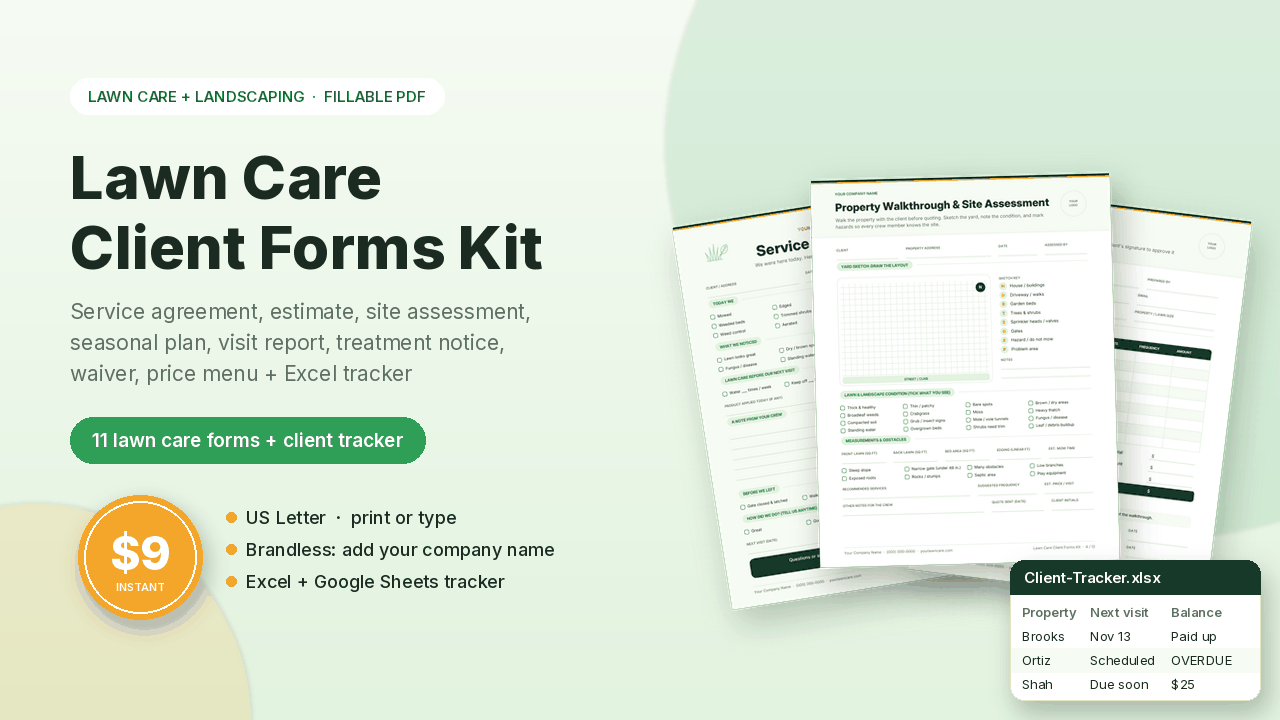
Lawn Care Client Forms Kit
11 fillable lawn care forms (service agreement, estimate, site assessment, visit report, treatment notice) plus an Excel client tracker.
Get it →Following up
Send the estimate the same day as the walkthrough while the client is still thinking about it, and follow up two or three days later with a short message. Once the client approves, move the details into a lawn care service agreement so the scope, weather, payment and access terms are in writing before the first visit. Then log the property in a client tracker so you can see when each yard is next due and who still owes a balance.
Prices and examples on this page are general guidance only. Check local tax rules and your actual costs before you set your rates.
FAQ
What should a lawn care estimate include?
The property address, lot size or measured area, each service as a line item such as mowing, edging, trimming and cleanup, the visit frequency, price per visit, total and payment terms.
How do lawn care companies price mowing?
Most price per visit based on lot size, terrain, obstacles and travel time, and some offer a lower rate for weekly service.
Should I give estimates for free?
Most lawn care businesses quote for free. A clear written estimate helps you win the job and avoid disputes later.
How long should a lawn care estimate be valid?
Thirty days is typical. Note the expiry date and when seasonal prices change.
Related templates
Free Lawn Care Forms
A printable new client and property intake form plus a service visit report card.
Download free →Lawn Care Client Forms Kit
11 fillable lawn care forms (service agreement, estimate, site assessment, visit report, treatment notice) plus an Excel client tracker.
Get it →