How to Price Leaf Removal and Fall Cleanup Jobs (Plus Free Lawn Care Forms)
How lawn care businesses can price leaf removal and fall cleanup: per hour vs per job vs per bag, cubic yard or acre, yard size and leaf volume, haul-away and disposal fees, mulching vs bagging, gutter add-ons, multi-visit fall packages, bundles with winter work, and deposits and rain dates, with a worked example and free forms.
Why leaf removal needs its own pricing
Fall cleanup is one of the busiest stretches of the year for a lawn care business. From late October through early December, customers want leaves off the lawn before the first snow, beds cleared, gutters emptied and the yard ready for winter. Every job looks different. One yard has a single maple and a light layer, the next sits under six oaks with wet, matted piles along the fence.
If you quote leaf jobs the way you quote a weekly mow, you will win the easy yards at too high a price and lose money on the heavy ones. A clear fall price list fixes that. Choose a pricing model, size up the yard and the leaf volume, price disposal separately, offer mulching and bagging options, list add-ons such as gutters, and decide how packages, deposits and rain dates work. The sections below cover each one, with a worked example at the end. All numbers on this page are example numbers, not market data.
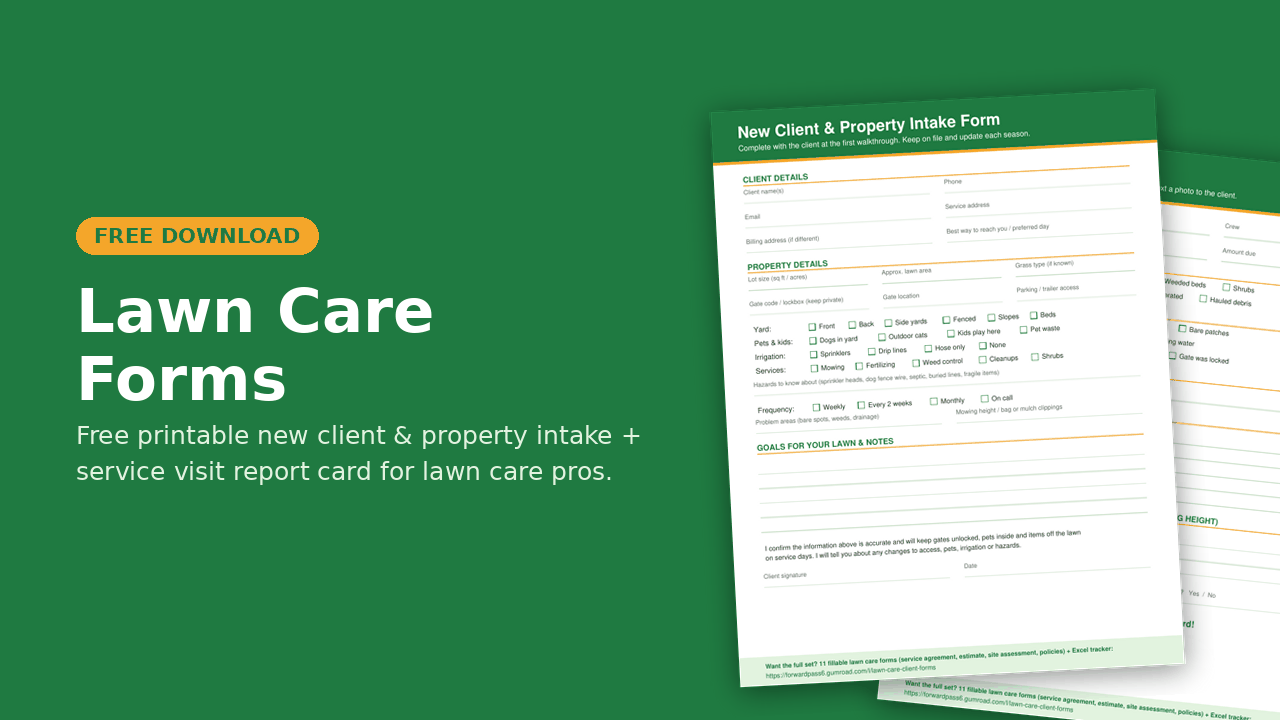
Free Lawn Care Forms
A printable new client and property intake form plus a service visit report card, handy for walk-throughs and fall cleanup visits.
Download free →1. Pricing models: per hour, per job, per bag or cubic yard, per acre
Most leaf removal businesses use one of four models, or a mix of them. Pick the one that fits your equipment and the yards you serve, then use the same model on every quote so your prices stay consistent.
- Per hour. You charge an hourly rate per worker or per crew. It is simple and protects you on unknown yards, but customers cannot easily compare quotes and may worry about slow work.
- Per job (flat rate). You look at the yard and quote one price. This is the easiest to sell. Base it on the hours you expect multiplied by your target hourly rate, plus disposal.
- Per bag or per cubic yard. You charge for the volume removed. It is fair on very heavy jobs and works well for haul-away, but you need a clear way to count bags or measure the load.
- Per acre or per square foot. Common for large properties and commercial sites. You set a base rate per acre and adjust for tree cover and obstacles.
Many businesses quote flat per-job prices for homeowners and keep an hourly or volume rate in reserve for jobs that grow beyond the original scope.
2. Yard size and leaf volume
Two things drive the time a job takes: how much ground you cover and how many leaves are on it. Measure or estimate the lawn and bed area, then rate the leaf cover as light, moderate or heavy. A light layer you can mulch in one pass takes a fraction of the time of a heavy, wet layer that needs blowing, raking, tarping and loading.
Also note what slows you down: fences and narrow gates, slopes, lots of beds and shrubs, decks and patios, steps, long distances to the truck and leaves packed against foundations. Walk-through photos help you quote accurately and explain price differences.
3. Haul-away, disposal fees and local yard-waste rules
Disposal is where many leaf jobs lose money. Hauling takes time, fuel and truck space, and some compost sites and transfer stations charge a tipping fee per load or per ton. Price disposal as its own line, such as a fee per truck or trailer load, per bag or per cubic yard, so the customer sees what they are paying for.
Yard-waste rules vary a lot from place to place. Some towns collect leaves at the curb in paper bags on set dates, some vacuum loose piles from the street, and others ban leaves from regular trash or limit where you can dump them. Check your town or county rules before you quote curbside or haul-away options, and do not leave piles in the street unless your town allows it. This page is not legal advice.
4. Mulching vs bagging
Mulching chops leaves into small pieces with a mower and leaves them on the lawn. It is fast, creates no disposal cost and is often priced lower. It works well for light to moderate cover on turf, but not for heavy, wet layers, beds or hard surfaces.
Bagging or tarping removes the leaves completely. It takes longer and usually adds a disposal or bag charge. Offer both on your estimate, such as a mulch-only cleanup and a full removal option, so the customer can choose a price that fits and you avoid long debates.
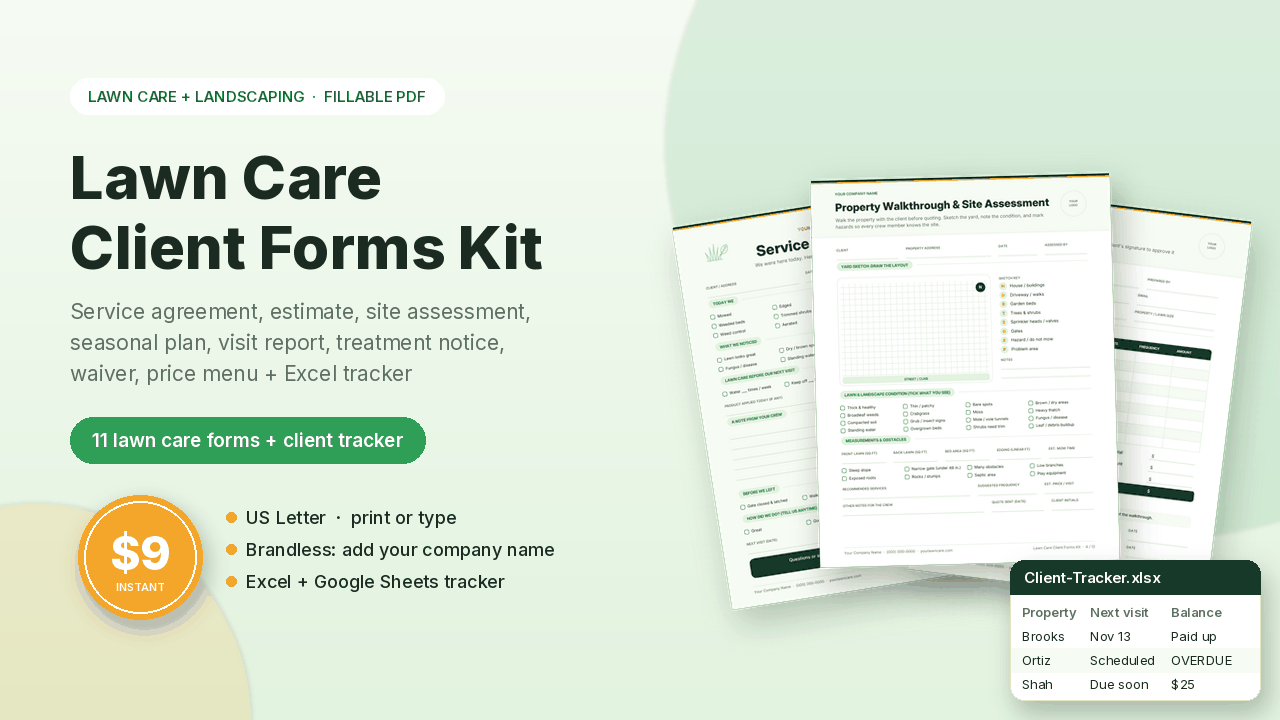
Lawn Care Client Forms Kit
11 fillable lawn care forms (service agreement, estimate, site assessment, visit report, treatment notice) plus an Excel client tracker. Want every kit? See the bundle.
Get it →5. Gutter cleaning and other add-ons
Fall cleanup is the natural time to sell add-ons. Gutter cleaning is the most common, often priced per linear foot, per story or as a flat fee by house size. Only offer work on ladders or roofs if you have the right equipment, training and insurance for it.
Other add-ons include clearing leaves from beds, cutting back perennials, a last edging pass, cleaning out window wells and drains, and blowing off roofs or decks. List each add-on with a clear price so customers can upgrade without a new quote for every item.
6. Multiple-visit fall packages
Trees rarely drop all their leaves at once. A one-time cleanup in early November can look bare again two weeks later. A fall package of two or three scheduled visits, for example one in late October, one in mid-November and a final cleanup in early December, solves that and makes your schedule easier to plan.
Price the package below the cost of booking the same visits one at a time, and take part of the payment up front. State how many visits are included, the rough date windows, what counts as an extra visit and how an unusually heavy final drop is billed.
7. Bundling with final mow, winterizing and snow removal
Fall is the bridge between your mowing season and winter work. A final cleanup can be bundled with the last mow of the year, aeration and overseeding, winter fertilizer, cutting back beds or shutting down irrigation, depending on the services you offer.
It is also the best time to sign snow removal contracts. Customers who are happy with their fall cleanup are easy to offer a seasonal snow plan. A small discount for booking fall cleanup and winter service together can lock in steady work for the cold months. For winter pricing ideas, see the guide to snow removal pricing.
8. Deposits, weather rescheduling and the written estimate
Wet leaves are heavy and slow to move, and frozen piles are worse. Say in writing that dates can move because of rain, wind or early snow, how you will let the customer know and that the quoted price stays the same when a job is rescheduled. For packages and larger jobs, a deposit to hold the slot is common, with the balance due on completion.
Put every quote in a written estimate: the property address, the areas included, the leaf cover rating, mulching or removal, disposal method and fee, add-ons, the number of visits, the price, the deposit, the payment terms and the weather policy. A signed estimate prevents arguments about what was included when the trees drop another layer the next week.
A worked example (example numbers)
Say a lawn care business targets $60 per crew hour, charges $40 per trailer load for haul-away, $1 per linear foot for single-story gutter cleaning and offers a three-visit fall package at 10% off the price of separate visits.
- Yard A: quarter-acre lot, moderate leaf cover, mulch only, about 1 crew hour: $60
- Yard B: half-acre lot, heavy cover under oaks, full removal, about 3 crew hours + 2 trailer loads: $180 + $80 = $260
- Yard B add-on: 150 feet of single-story gutters: $150
- Yard B three-visit package (2 hours + 1 load per visit on the first two visits, then the full $260 cleanup): ($160 + $160 + $260) x 0.90 = $522, with a 30% deposit of about $157
- Yard C: final mow + leaf mulch combined, about 1.5 crew hours: $90
These numbers are examples only, not market data. Use your own costs, local prices and disposal fees, and time a few cleanups so you know what you really earn per hour during the fall rush.
Before you book fall cleanups
Get ready before the calls start: a client and property intake form, an estimate with leaf cover, disposal and add-on lines, a visit report so customers see what was done, your package options and your deposit and weather policy. Contact your regular mowing customers first, then open your schedule to new clients, and you can spend the fall working instead of rewriting the same quote again and again.
FAQ
How much should I charge for leaf removal?
There is no single right price, because yard size, leaf volume, access and disposal costs change a lot from job to job and town to town. Many lawn care businesses quote a flat price per job based on a target hourly rate, plus a disposal fee. Any amounts on this page are example numbers, not market data. Work out your own costs per hour, time a few cleanups and check what local companies advertise before you set your prices.
Is it better to charge by the hour or by the job for fall cleanup?
Hourly pricing protects you on unknown or very heavy yards, but customers often find it hard to budget for. A flat per-job price is easier to sell and rewards you for working efficiently, but you carry the risk if the job takes longer. A common middle path is to quote a flat price after seeing the yard, with a written note that extra visits or extra debris are billed separately.
Should I charge extra to haul leaves away?
Many businesses do, because hauling takes time, fuel, a truck or trailer and sometimes a tipping fee at a compost site or transfer station. Some list haul-away as a separate line, priced per load, per bag or per cubic yard, so customers can choose curbside bagging instead if their town collects yard waste. Check your town's yard-waste rules first, since collection dates, bag types and dumping rules vary.
Is mulching leaves cheaper than bagging them?
Mulching leaves into the lawn with a mower is usually faster and creates no disposal cost, so it is often priced lower. It works best for light to moderate leaf cover on turf. Heavy, wet layers, beds and hard surfaces usually still need blowing, raking and removal. Offering mulching as a lower-priced option gives customers a choice and can fill your schedule with quick jobs.
Should I sell multiple-visit fall cleanup packages?
Packages can work well where trees drop leaves over several weeks. For example, you might offer two or three scheduled visits from late October to early December at one package price, paid partly up front. Packages smooth out your schedule and cash flow. Spell out how many visits are included, the rough dates, what happens with an extra-heavy final drop and how weather delays are handled.
How do I handle rain delays and deposits for leaf cleanup jobs?
Wet leaves are heavier, slower to blow and harder to haul, so many businesses reschedule rather than work in heavy rain. Say in your estimate that dates can move because of weather, how you will notify the customer and whether a rescheduled job keeps its price. For larger jobs and packages, a deposit to hold the date is common. Write the deposit amount and the cancellation terms on the estimate and get it signed.
This page is general guidance, not legal, tax or insurance advice. Yard-waste, disposal, licensing, sales tax and consumer rules vary by state, county and city, so check your local rules and have your estimates and policies reviewed by an attorney, accountant or insurer.
Related templates
Free Lawn Care Forms
A printable new client and property intake form plus a service visit report card.
Download free →