Pressure Washing Estimate Template: What to Include (Free Checklist)
What to put on a pressure washing or soft washing estimate: surfaces and square footage, method, per-square-foot pricing, add-ons, existing damage, terms and a signature line, with a free checklist.
Why a written pressure washing estimate matters
Most pressure washing jobs are sold in the driveway: you walk around the house, glance at the concrete and say a number. That works until the client remembers the price differently, asks why the rust stain is still there, or points at a crack in the siding that was there long before you arrived. A written pressure washing estimate (also called a power washing quote or soft washing proposal) fixes all three problems. It shows exactly which surfaces you will clean, how, and for how much, it sets honest expectations about results, and it gives the client something to sign. Clear, itemized estimates also close more jobs, because the client can see what they are paying for. The checklist below covers what to include.
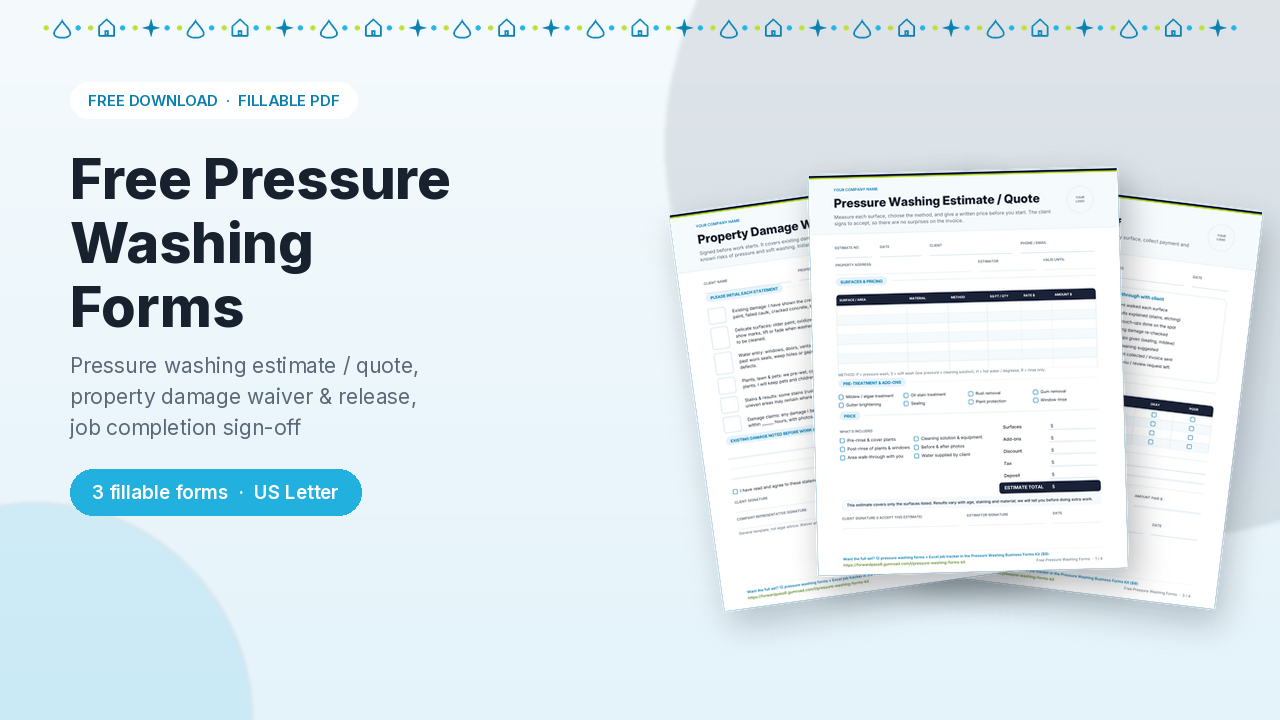
Free Pressure Washing Forms
A free fillable pressure washing estimate / quote sheet with per-sq-ft pricing rows, a property damage waiver & release and a job completion sign-off for pressure, power and soft washing jobs.
Download free →1. Your business and the client details
Start with your company name, logo, phone, email and website, plus your license or insurance details if your area requires them. Add an estimate number and date, and a "valid until" date (14 to 30 days is common, since chemical and fuel prices move). Then record the client: name, phone, email, the property address, whether they own or rent, and any HOA or gate code. If you are quoting for a property manager or HOA, note who approves the work and who pays the invoice, because they are often different people.
2. Every surface, measured
The most important part of the estimate is the surface list. Walk the whole property and write each area on its own line:
- House siding: material (vinyl, brick, stucco, wood, fiber cement) and stories. Measure the perimeter times the wall height for square footage.
- Flatwork: driveway, sidewalks, walkways, patio and pool deck, measured length times width.
- Wood: decks and fences, measured in square feet or linear feet per side.
- Roof and gutters: roof square footage for soft washing, and gutter faces in linear feet.
Note the condition next to each surface: heavy mildew, algae, oil spots, rust, gum, oxidation or peeling paint. A measured surface list is what makes per-square-foot pricing fair and easy to explain.
3. The cleaning method for each surface
Write down how each surface will be cleaned, because the method changes both the price and the risk. Concrete usually gets a surface cleaner at higher pressure. Siding, roofs and painted surfaces are usually soft washed: low pressure with a cleaning solution that does the work. Wood needs low pressure and care to avoid furring. Oil stains may need a degreaser or hot water. A simple code on each line (P for pressure wash, S for soft wash, H for hot water, R for rinse only) shows the client you have thought about their property, and protects you if they later ask why you did not "blast" a delicate surface.
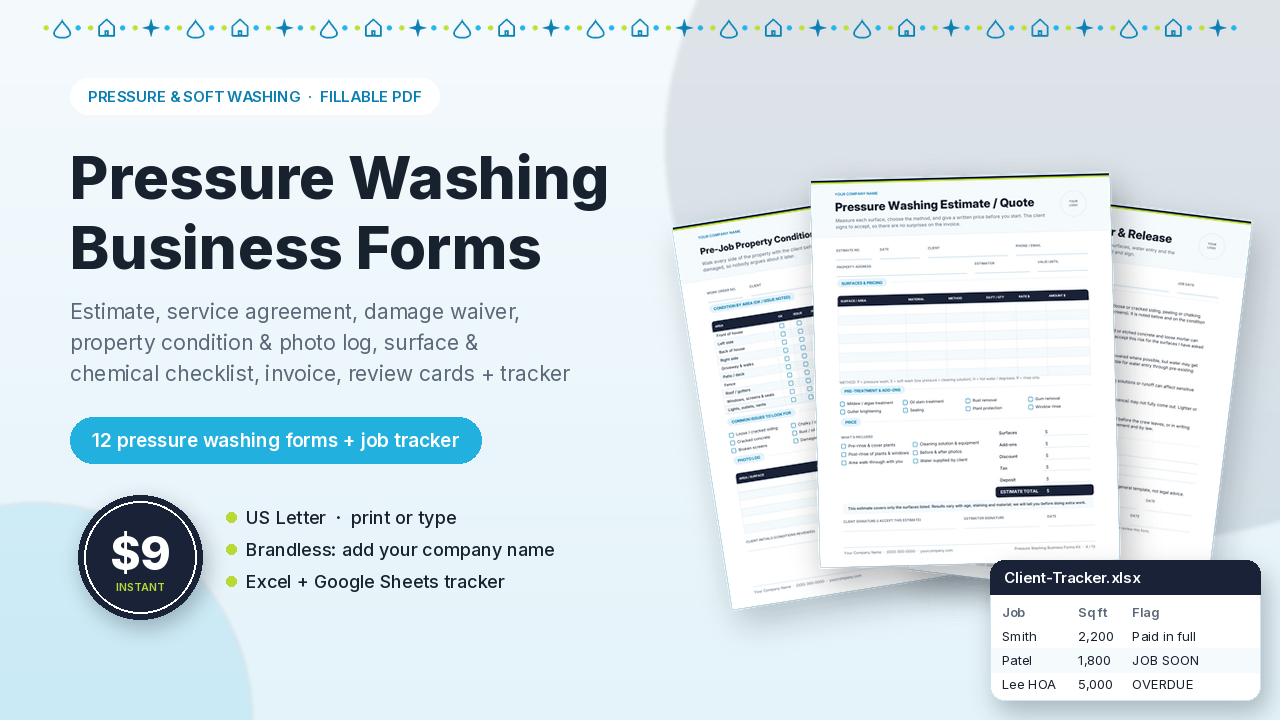
Pressure Washing Business Forms Kit
12 fillable forms (client intake and property walk-through, per-square-foot price sheet, estimate / quote, service agreement, property damage waiver, pre-job condition checklist and photo log, surface and chemical checklist, job schedule and work order, completion sign-off, invoice, seasonal flyer and review cards) plus an Excel job tracker that prices by the square foot and shows costs and profit.
Get it →4. Pricing: per square foot, per item and minimums
Most pressure washing companies price by the square foot for siding and flatwork, by the linear foot for fences and gutters, and per item for extras. On each line, show the size, your rate and the amount. Rates vary a lot by region, surface and condition, so build your own price sheet from your real costs: chemicals and supplies, fuel and equipment wear, and crew time. Then add:
- A minimum job charge, so small jobs still cover your drive and setup time.
- Package or bundle discounts, such as house wash plus driveway.
- Tax, if your state taxes cleaning services.
- A deposit, if you take one for large or commercial jobs.
Show the total clearly at the bottom, with the deposit and balance due.
5. Pre-treatments and add-ons
List extras as separate, optional lines so the client can say yes or no to each: oil and rust stain treatment, gum removal, mildew pre-treatment, gutter face brightening, deck or fence sealing, paver re-sanding, window rinsing, outdoor furniture and trash bin cleaning. Itemized add-ons raise the average job value without making the base quote look expensive, and they stop arguments about what was "supposed to be included".
6. Existing damage and realistic results
This section protects you more than any other. Before you quote, walk the property and note anything already damaged: loose or cracked siding, chalky or oxidized paint, failed caulk, broken window seals, cracked concrete, rotted wood and loose mortar. Take dated photos of each side of the house. Then set honest expectations in writing: rust, oil, paint, tannin and fertilizer stains may lighten but not disappear, old etching or "zebra stripes" from a previous cleaner will not wash out, and oxidized siding can look uneven once it is clean. Many pros pair the estimate with a short property damage waiver and a pre-job condition checklist signed by the client.
7. What is included and what the client provides
Spell out what the price covers: pre-wetting and covering plants, the cleaning solution and equipment, rinsing plants and windows afterward, before and after photos and a final walk-through. Then list what the client is responsible for: working outdoor water (and how much you will use), closing windows and doors, moving cars, grills, furniture and fragile decor, and keeping pets and children inside. If you bring your own water tank, say so.
8. Terms: weather, scheduling, payment and cancellations
Add a few short terms under the price. Weather: you may reschedule for rain, freezing temperatures or high wind at no charge. Scheduling: the arrival window and roughly how long the job takes. Payment: when the balance is due (often on completion), accepted payment methods and any late fee. Cancellations: how much notice you need and whether a lock-out or late cancellation is charged. Photos: whether you may use before and after photos in your marketing without the address.
9. Acceptance and the next step
Finish with a signature line: "I accept this estimate," with the client's signature, printed name and date, plus yours. A signed estimate becomes the basis for the work order, the invoice and, if you offer one, a recurring maintenance plan (for example, spring and fall visits at a set price). Keep a copy with your before photos for every job.
A note on the law, insurance and runoff
This checklist is educational, not legal advice. Contractor licensing, business insurance, contract and waiver wording, sales tax on services, and rules about wastewater and chemical runoff into storm drains vary by state, county and city. Follow every cleaning product label, check your local rules, and have an attorney or your insurer review your agreement and waiver before you use them.
FAQ
What should a pressure washing estimate include?
Your business and the client details, an estimate number and expiry date, each surface with its material, size and condition, the cleaning method, your rate and line amount, optional add-ons, existing damage notes, what is included and what the client provides, weather, payment and cancellation terms, the total and a signature line.
How do you price a pressure washing job?
Most companies price siding and flatwork by the square foot, fences and gutters by the linear foot and extras per item, then apply a minimum job charge. Build your rates from your real costs (chemicals, fuel, equipment and labor) and local market prices, since rates vary widely by region and surface.
What is the difference between pressure washing and soft washing?
Pressure washing uses high water pressure to clean hard surfaces like concrete. Soft washing uses low pressure with a cleaning solution, and is usually used on siding, roofs and painted or delicate surfaces. Your estimate should say which method you will use on each surface.
Do I need a waiver for pressure washing?
Many pros use a short property damage waiver or release along with the estimate. It covers existing damage, delicate or oxidized surfaces, water entry through old seals, plants and stains that may not fully come out. Waiver rules vary by state, so have an attorney or insurer review your wording.
This page is general guidance, not legal advice. Licensing, insurance, waiver, sales tax and runoff rules vary by state and city and change over time, so check yours before you quote or sign.
Related templates
Free Pressure Washing Forms
A free fillable pressure washing estimate / quote sheet with per-sq-ft pricing rows, a property damage waiver & release and a job completion sign-off for pressure, power and soft washing jobs.
Download free →Pressure Washing Business Forms Kit
Fillable estimate, service agreement, damage waiver, condition photo log and invoice plus an Excel sq-ft job tracker.
Get it →