Snow Removal Contract Template: Trigger Depth, Pricing and Liability (Free Forms)
What to put in a snow plowing or snow removal contract: trigger depth, per-push vs seasonal vs per-inch pricing, salting, marker stakes, damage terms and payment, with free printable forms.
Why snow removal needs a written contract
Snow work is unpredictable. You do not know how many storms are coming, when they will hit, or whether the client expects the driveway clear by 6 AM or just sometime that day. Most disputes in snow removal come from unwritten expectations: the client thought you would come at one inch, you planned to come at two; they expected the walkway salted, you only plowed; a marker stake was missing and the plow clipped the lawn edge. A short written agreement settles these points before the first flake and protects you when you are out on a route at 3 AM.
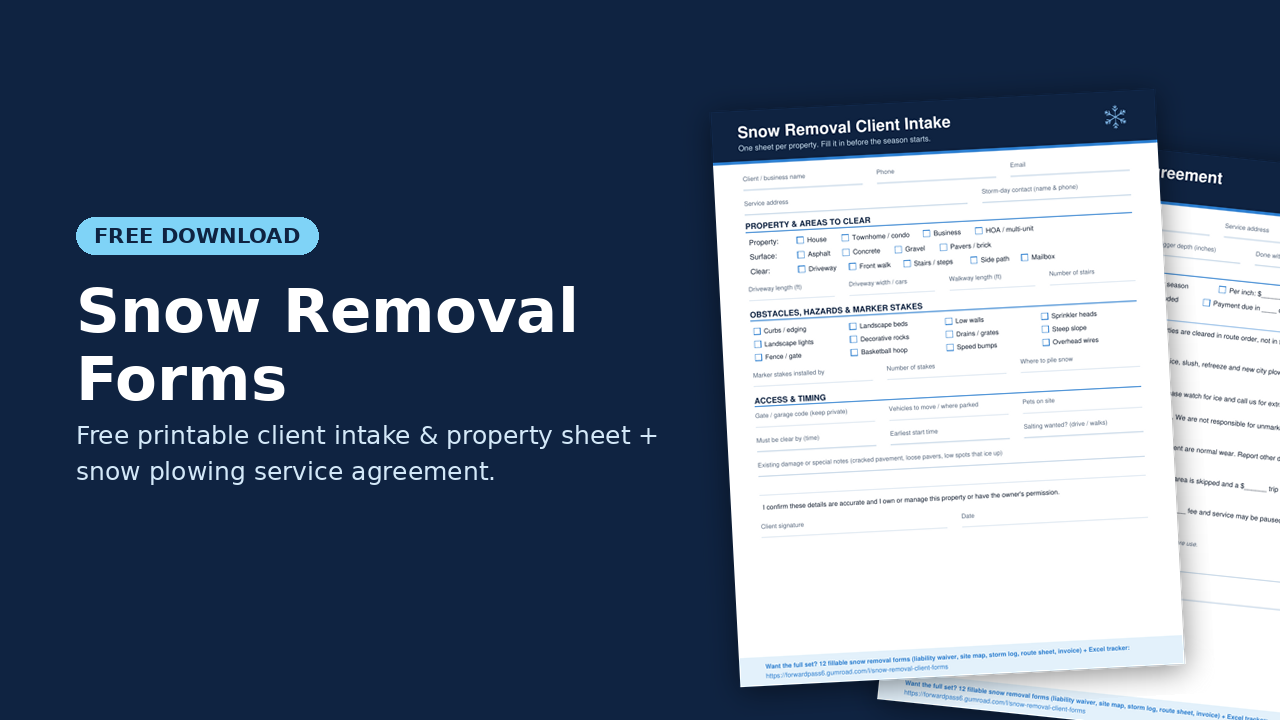
Free Snow Removal Forms
A printable client intake & property sheet plus a simple snow plowing service agreement for plowing and shoveling businesses.
Download free →Start with a property intake
Before you quote, record what you are clearing and what can go wrong:
- Contact details, including a storm-day phone number and who to call if a car blocks the drive.
- Surfaces and sizes: driveway length and width, walkways, steps, patios, mailbox approach, and whether it is asphalt, concrete, gravel or pavers.
- Obstacles and hazards: curbs, drains, sprinkler heads, landscape edging, low walls, raised pavers and anything hidden under snow.
- Where snow goes: approved pile areas so you are not burying shrubs or blocking sight lines.
- Access: gate codes, pets, parked vehicles and any clear-by time the client needs.
A quick site map with stakes marked is the single best tool for avoiding damage claims.
Set the trigger depth and service standard
The trigger is the snowfall depth that starts service, commonly one, two or three inches. Put it in writing, say how it is measured, and say whether you will make more than one push during a long storm. Then describe the clearing standard: plowed to pavement where possible, a reasonable width, walkways shoveled, and how soon after the snow stops you will finish. Be clear that clearing during an active storm does not mean the surface stays clear, and that refreezing and ice after you leave are not guaranteed unless the client buys salting or ice-melt service.
Choose a pricing model
There are three common ways to price residential and small commercial snow removal:
- Per push or per visit: a set price each time you clear. Simple and fair, but income drops in a light winter.
- Seasonal flat rate: one price for the season, often paid in installments. Predictable for both sides; spell out a storm cap or a per-inch surcharge for extreme seasons.
- Per inch or tiered by depth: higher prices for deeper storms, for example 2 to 6 inches, 6 to 12 inches and over 12.
List salting and ice-melt as a separate add-on with its own price per application. Say whether materials are included.
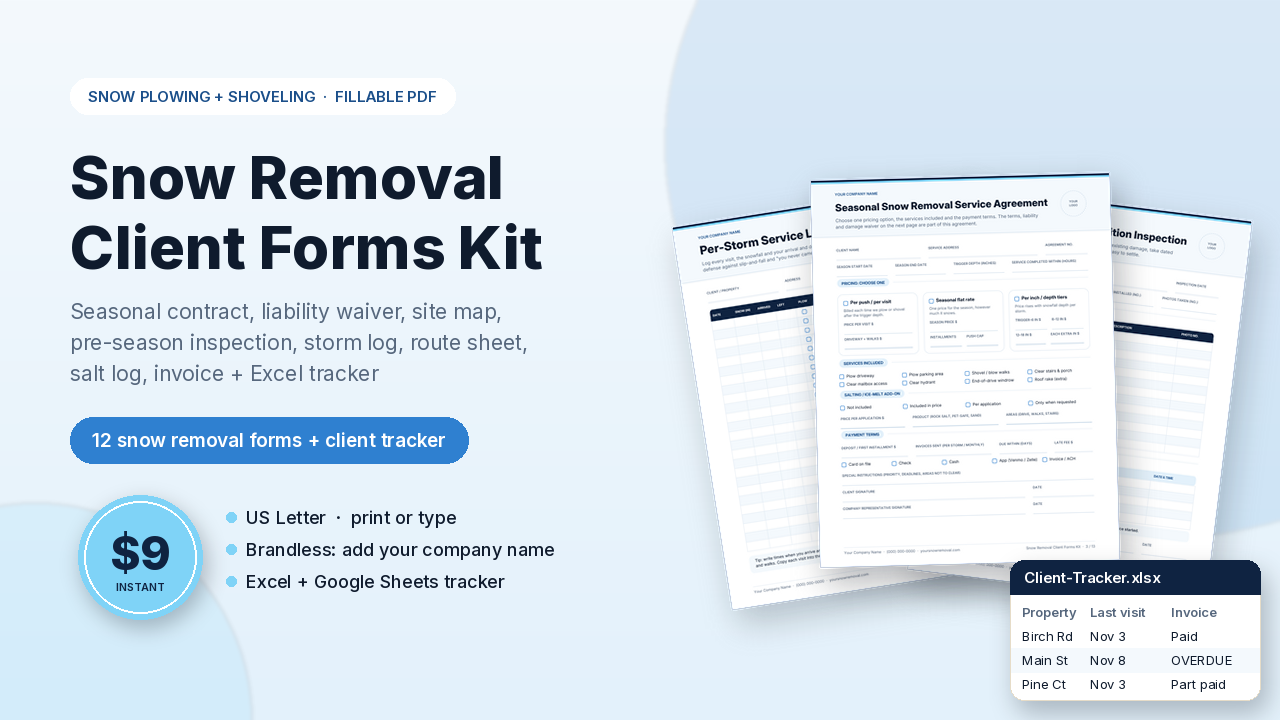
Snow Removal Client Forms Kit
12 fillable forms (intake & property info, seasonal service agreement, liability & damage waiver, site map, pre-season inspection, quote, per-storm service log, route sheet, salt & ice-melt log, invoice, damage report, renewal) plus an Excel client tracker.
Get it →Liability, damage and access terms
Plowing involves heavy equipment near property that is hidden under snow, so cover these points in short, initialed terms:
- Marker stakes: the client or you install them before the season; you are not responsible for unmarked items.
- Normal wear: minor turf scraping, gravel displacement and edge damage are a normal part of plowing; set a deadline for reporting real damage, such as 48 hours or before the next storm.
- Slip and fall: make clear you are not responsible for ice that forms after service, and that the client is responsible for ongoing maintenance between visits.
- Blocked access: if vehicles or gates block the drive, you may skip or charge a trip fee.
- Route order: you clear in route order, not by request time, unless the client pays for priority.
Back these terms with a per-storm service log that records arrival time, depth, what was cleared and whether salt was applied. If a claim comes up, your log is your evidence.
Payment and renewals
For per-push clients, invoice weekly or after each storm and state your due date and late fee. For seasonal contracts, collect a first installment before the season starts and schedule the rest monthly. Track every visit and invoice in one place so nothing slips during a busy stretch. At the end of the season, send a renewal form with next year's price so you lock in your route early.
FAQ
What trigger depth is standard for snow plowing?
Two inches is common for residential driveways, with one inch often used for commercial lots and walkways. Choose what you can reliably deliver and put it in the agreement.
Is a seasonal snow removal contract better than per push?
Seasonal contracts give steady income and are easy for clients to budget, while per-push pricing tracks real workload. Many operators offer both and let the client choose.
Do I need insurance for snow removal?
Most commercial clients require general liability insurance, and many residential operators carry it too because of slip-and-fall and property damage risk. Ask a local insurance agent.
Should salting be included in the price?
Usually not. List salting or ice melt as a separate add-on per application so the client knows what they are buying.
This page is general guidance, not legal advice. Contract, liability and licensing rules vary by state and city, so review any agreement with a local professional.
Related templates
Free Snow Removal Forms
A printable client intake & property sheet plus a simple snow plowing service agreement for plowing and shoveling businesses.
Download free →Snow Removal Client Forms Kit
Fillable snow removal forms plus an Excel client tracker with storm visits, invoices, balances and OVERDUE flags.
Get it →