Lawn Care Service Agreement Template: What to Include in Your Contract
What a lawn care service agreement should cover, from scope, frequency and weather delays to payment terms, pets, access and damage, with a free printable form set.
Why a written agreement beats a handshake
Most lawn care disputes are not about the mowing. They start with a question nobody answered at the walkthrough: does weekly mean every seven days or roughly every week? Is edging included? Who pays when a sprinkler head hidden in tall grass gets clipped? What happens when it rains on Tuesday, your route day? A one or two page service agreement answers those questions before the first cut, so you and the client are working from the same page when something unusual happens.
An agreement also makes a small operation look established. Homeowners comparing three quotes tend to trust the crew that shows up with clear written terms, and commercial clients such as HOAs and property managers will often ask for one anyway.
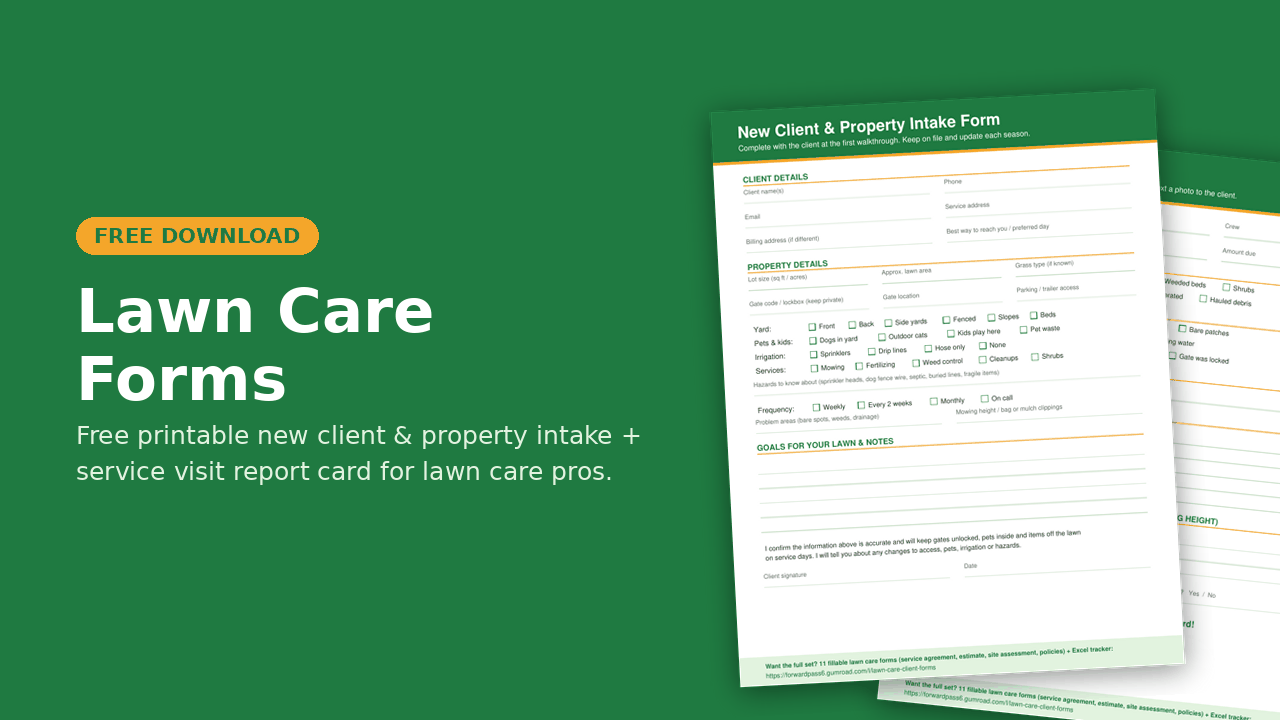
Free Lawn Care Forms
A printable new client and property intake form plus a service visit report card.
Download free →The core sections of a lawn care contract
- Parties and property: your business name and contact details, the client's name, billing address and the service address if it is different.
- Scope of services: list exactly what is included, for example mowing, string trimming, edging walks and drives, and blowing clippings off hard surfaces. Name anything that is not included, such as bed weeding, leaf removal or hauling, so it can be quoted separately.
- Frequency and season: weekly, every two weeks or on call, plus the season start and end dates. Note whether frequency changes in peak growth or drought.
- Price and what it is based on: price per visit, per month or per season, and what assumptions it rests on (lot size, normal growth, no overgrown first cut).
- Term and renewal: how long the agreement runs, whether it renews automatically next season, and how much notice either side gives to end it.
- Signatures and date: both parties, with a line for the client to initial key terms.
Weather and rain-delay terms
Weather is the clause you will lean on most. Spell out that visits may be moved a day or two when rain, lightning, extreme heat or wet ground would damage the turf or make the work unsafe. Say whether a skipped visit is credited, rescheduled or simply not billed, and how you handle drought when the grass barely grows. If you charge a flat monthly rate, explain that it already averages out weather variations so clients do not expect a refund for every rainy week.
If you offer snow removal or leaf cleanup, give those their own short terms: trigger depth for plowing, whether the price is per push or per season, and the date leaf service ends.
Payment terms that get you paid
- When you bill: after each visit, monthly in advance or monthly in arrears.
- When payment is due: on receipt, or within a set number of days such as 7 or 15.
- How clients can pay: card on file, bank transfer, payment app or check.
- Late payments: a late fee if your state allows it, and the right to pause service when an account is past due.
- Trip fees: what you charge when you arrive and cannot work because a gate is locked or a dog is loose in the yard.
- Price changes: how much notice you give before raising rates for the next season.
Access, pets and children
Your crew needs to get in and out safely. Ask the client to confirm gate codes and lock arrangements, and to keep gates unlocked on service days. Include a clause asking them to keep dogs indoors while you work and to pick up pet waste beforehand, since mowers throw it and trimmers spread it. Ask that children and pets stay off the lawn during mowing and for the re-entry period after any treatment. These requests protect the client's family as much as your crew.
Hidden items and damage
Irrigation heads, invisible dog fence wire, low-voltage lighting cable, septic lids, toys and stakes all hide in grass. A fair agreement asks the client to mark or tell you about these items and says you are not responsible for damage to items that were unmarked or not disclosed. In return, commit to reporting any damage you cause within a set time, for example 24 or 48 hours, and say how you will handle repairs. It helps to note existing conditions such as bare patches, broken edging or a damaged fence at the first walkthrough, ideally with dated photos, so nobody argues later about what was there before you started.
Add a short line on flying debris: mowers and trimmers can throw small stones, and you will take reasonable care around windows and cars. Keep the wording simple and fair; a clause that sounds like you are dodging all responsibility can put clients off.
Fertilizer, weed control and treatments
If you apply fertilizer or herbicides, state which services include treatments, that results depend on weather, watering and soil, and that you follow product label directions. Many states require a licensed applicator for pesticides or weed control applied for hire, and some require notice to the client or neighbors after an application, so check your state rules before you offer it. A separate application notice that records the product, area treated, re-entry time and watering instructions is a good habit even where it is not required.
Ending service
Finish with how either side can end the agreement: written notice by email or text, a notice period such as 14 days, and what happens to prepaid or unpaid amounts. Clear exit terms make clients more willing to sign in the first place.
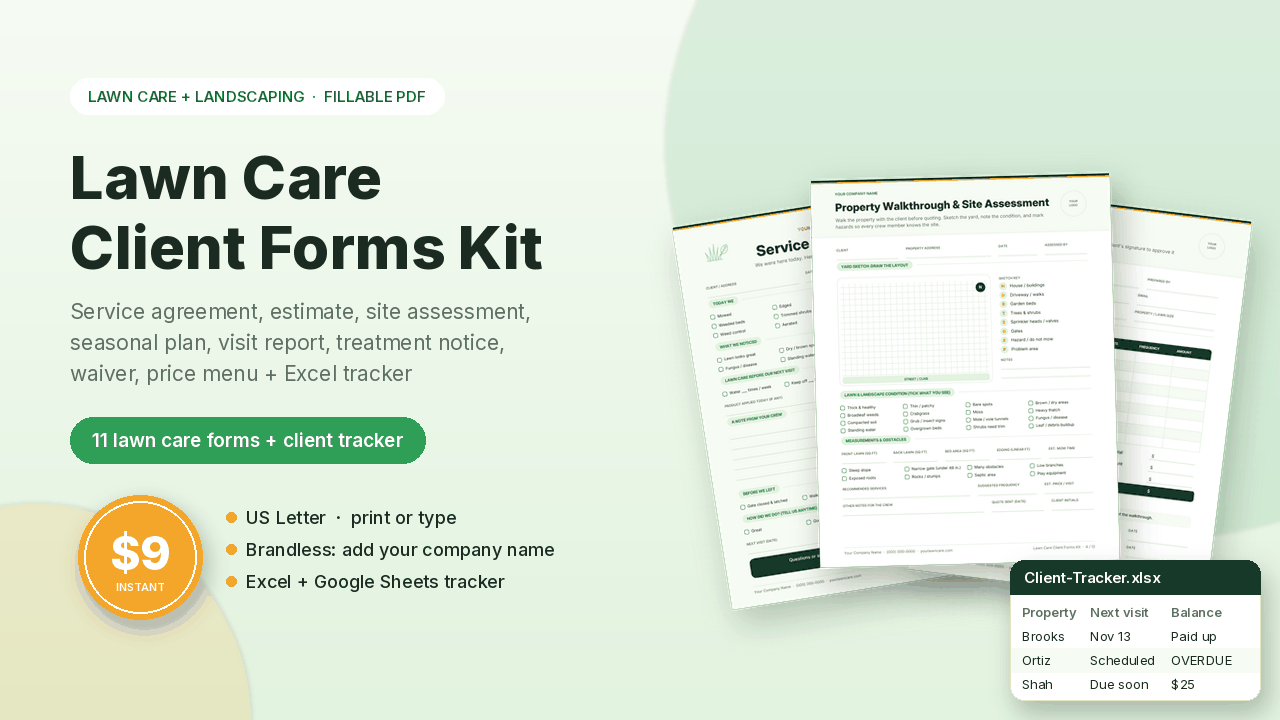
Lawn Care Client Forms Kit
11 fillable lawn care forms (service agreement, estimate, site assessment, visit report, treatment notice) plus an Excel client tracker.
Get it →Tips for using your agreement
- Walk the property with the client before you sign, and fill in the site details together.
- Ask the client to initial the weather, access and damage clauses so they are noticed, not skimmed.
- Give the client a copy and keep yours with the property profile and estimate.
- Review your template every season and update prices, dates and anything that caused confusion last year.
Pricing the job comes first, so see our guide to the lawn care estimate template for how to quote line items before you send the agreement.
Please note: this page is general information, not legal advice. Contract, licensing, insurance and pesticide application rules vary by state and city. Review your wording and check your local regulations, and ask a local attorney if you are unsure.
FAQ
What should a lawn care service agreement include?
The services and frequency, the service season, price and billing schedule, weather and rain-delay rules, property access, cancellation terms and signatures from both sides.
Do lawn care companies need a contract?
A written agreement is not always required, but it protects you on recurring work by setting price, schedule and cancellation terms up front.
How should the agreement handle rain delays?
State that weather delays move the visit to the next available day and do not reduce the seasonal price unless a visit is skipped.
How much notice should a client give to cancel?
Many agreements ask for 14 to 30 days of written notice. Pick a period and write it into the contract.
Related templates
Free Lawn Care Forms
A printable new client and property intake form plus a service visit report card.
Download free →Lawn Care Client Forms Kit
11 fillable lawn care forms (service agreement, estimate, site assessment, visit report, treatment notice) plus an Excel client tracker.
Get it →