How to Price Lawn Mowing and Lawn Care: Per Cut, Per Hour, Per Square Foot and Seasonal Contracts (Plus Free Forms)
How much to charge for lawn mowing and lawn care: per cut vs hourly vs per square foot vs seasonal contracts, measuring the lawn, obstacles and slopes, trimming, edging and cleanup, add-on services, weekly vs biweekly pricing, minimums and payment terms, with a worked quote example and free printable forms.
Why lawn care pricing goes wrong
New lawn care operators often quote by eyeballing the yard or matching the cheapest flyer in the neighborhood. Then the job turns out to have a steep bank, a dozen flower beds to trim around, a locked gate and a dog that has to be brought in, and the "easy" lawn eats an hour. A repeatable pricing method fixes that: know what an hour of your time has to earn, measure the lawn, estimate time honestly, adjust for what slows you down, price extras separately and protect yourself with minimums and clear payment terms.
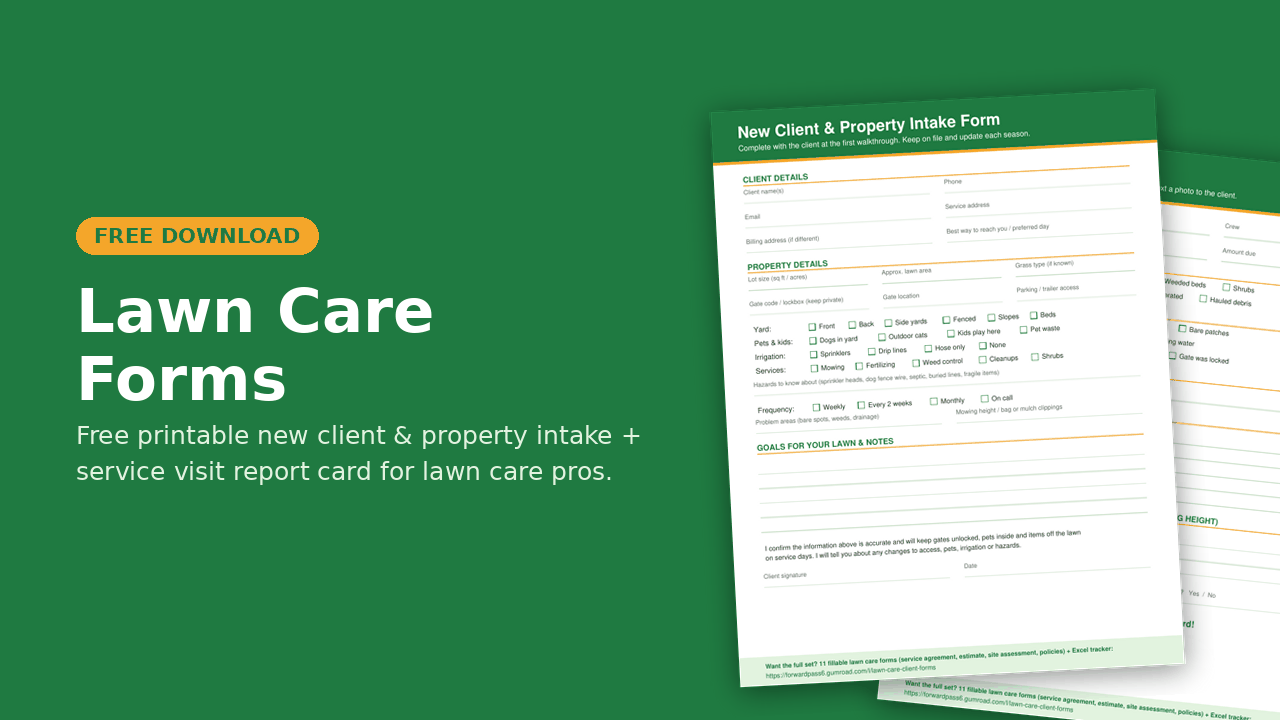
Free Lawn Care Forms
A printable new client and property intake form plus a service visit report card.
Download free →1. Know your costs and target hourly rate
Every price you quote is an hourly rate in disguise. Add up what your business costs to run: your pay, any helper wages, fuel, mower and trimmer maintenance, blades, equipment replacement, trailer and truck costs, insurance, licensing, software, marketing and taxes. Count unpaid time too, like driving between properties, loading and unloading and answering messages. Divide by the hours you can realistically bill in a season and you have the hourly number every quote must clear.
2. Choose a pricing model: per cut, hourly, per square foot or seasonal
- Per cut (flat rate per visit): the most common model for residential mowing. Clients like a fixed price and you earn more as your route gets efficient.
- Hourly: fair for cleanups, overgrown lawns and jobs you cannot predict, but clients cannot see the final cost in advance.
- Per square foot or per acre: useful for large properties and fertilizer or seeding work, where materials scale with area.
- Seasonal or monthly contract: one price for a set number of visits, often billed monthly. It smooths cash flow for you and budgeting for the client.
Many operators measure and time the first visit, then convert recurring clients to a flat per-cut or monthly price.
3. Measure the lawn, not just the lot
Lot size is a starting point, but you mow lawn, not house, driveway and garden beds. Measure the mowable area with a measuring wheel or an online satellite map tool, and note front, back and side yards separately. Record grass type, how tall it usually gets between visits and where clippings go. Keep these numbers on a site assessment form so you can re-quote quickly and spot when a property is taking longer than you priced.
4. Adjust for obstacles, slopes and access
Two lawns with the same square footage can take very different amounts of time. Adjust your estimate for:
- Obstacles: trees, beds, play sets, fences, sprinkler heads and anything you have to trim around
- Slopes and banks: steep areas that need a push mower or string trimmer
- Access: narrow gates that keep a riding mower out, locked gates, pets that must be put away
- Condition: overgrown first cuts, wet or thick grass, heavy leaf cover
- Travel: properties far outside your route
5. Decide what a standard visit includes
Write down exactly what one visit covers so the client knows what they pay for. A typical standard visit is mowing, string trimming around edges and obstacles, edging along sidewalks and driveways, and blowing clippings off hard surfaces. If bagging clippings or edging beds is not included, say so. A clear scope prevents the slow creep of free extras that kills your hourly rate.
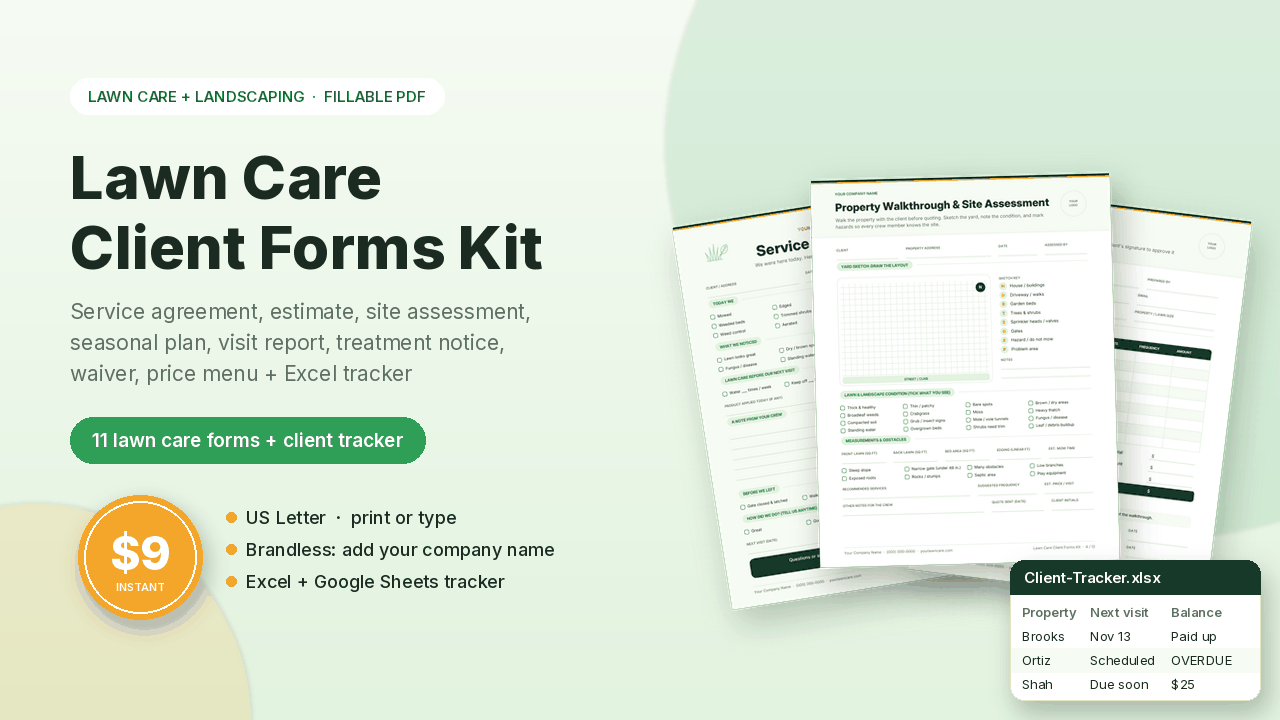
Lawn Care Client Forms Kit
11 fillable lawn care forms (service agreement, estimate, site assessment, visit report, treatment notice) plus an Excel client tracker.
Get it →6. Price add-on services separately
Keep the per-cut price focused on the standard visit and list extras on your service menu:
- Bagging and hauling clippings
- Spring and fall cleanups
- Leaf removal
- Hedge and shrub trimming
- Weeding and mulching beds
- Aeration and overseeding
- Fertilizer and weed control (check your state licensing rules for applying products)
- Gutter cleaning and small yard debris haul-away
Price add-ons by time and materials, or as flat rates once you know how long they take you.
7. Weekly vs biweekly pricing
Grass cut every week is shorter and faster to mow than grass cut every two weeks, and a weekly client fills your route more reliably. That is why many operators charge a slightly higher per-visit price for biweekly service than for weekly, and more again for one-time or on-call cuts. Explain this up front so a client choosing biweekly understands the price difference, and note in your agreement that overgrown lawns may be charged extra.
8. Set a minimum, payment terms and a rain policy
Every stop has fixed costs: driving, unloading and setup. A minimum charge per visit keeps small yards worthwhile. Decide how you get paid, such as after each visit, monthly in advance or autopay on file, and state late fees. Add a weather policy explaining how rain delays are rescheduled, and a skip policy for drought or dormant grass if you bill monthly. Put all of it in a written service agreement.
9. Worked example (example numbers only)
Here is how a per-cut quote comes together. The rates below are example numbers to show the math, not recommended prices for your market:
- Front and back lawn, about 6,000 sq ft of mowable area, estimated 40 minutes for one person including trimming, edging and blowing
- Example target rate $60 per hour, so 40 minutes = $40
- Several beds and a steep side bank, example obstacle adjustment = $8
- Biweekly instead of weekly, example adjustment = $5
- Example per-cut price: $40 + $8 + $5 = $53, above an example $35 minimum
- Add-on quoted separately: fall leaf cleanup, estimated 2 hours at $60 = $120
Swap in your own costs, times and local rates. The point is that every number comes from your time estimate and target rate, not a guess.
10. Put it in writing
A written estimate and service agreement protect both you and the client. Include the property address and mowable area, what a standard visit includes, frequency and price per visit or per month, add-ons, minimum charge, payment terms and late fees, weather and skip policy, gate and pet access notes, any product applications with keep-off times, and how either side can cancel. Leave a short visit report after each service so the client sees what was done and what you noticed.
Common pricing mistakes
- Quoting without knowing your target hourly rate
- Pricing by lot size instead of mowable area
- Ignoring slopes, beds and gates that slow you down
- Charging the same for biweekly as weekly
- Giving cleanups, bagging and hedge trimming away for free
- No minimum, payment terms or rain policy in writing
- Never raising prices when fuel and equipment costs go up
FAQ
How do you price lawn mowing?
Work out the hourly rate you need to cover pay, fuel, equipment, insurance and taxes, measure the mowable area, estimate how long a full visit takes including trimming and edging, then turn that into a per-cut price. Adjust for obstacles, slopes, access and frequency, and apply a minimum charge.
Should I charge per cut or by the hour for lawn care?
Per cut is the most common for recurring residential mowing because clients like a fixed price and you are rewarded for efficiency. Hourly works better for cleanups, overgrown lawns and unpredictable jobs.
Why do lawn care companies charge more for biweekly mowing?
Grass cut every two weeks is taller and thicker, so each visit takes longer, and weekly clients fill a route more reliably. A slightly higher per-visit price for biweekly reflects that extra time.
What does a standard lawn mowing visit include?
Usually mowing, string trimming around edges and obstacles, edging along sidewalks and driveways, and blowing clippings off hard surfaces. Bagging, bed edging, cleanups and hedge trimming are often priced as add-ons.
Should lawn care be billed monthly or per visit?
Both work. Per-visit billing is simple for small operators, while monthly or seasonal billing smooths cash flow. If you bill monthly, explain how rain delays, skipped weeks and dormant grass are handled.
Do I need a contract for lawn care clients?
A written service agreement is strongly recommended. It sets the scope, price, frequency, payment terms, weather policy and cancellation terms, and prevents disputes over what was included.
This page is general guidance, not legal, tax or insurance advice. Business licensing, pesticide and fertilizer application rules, insurance, employment and contract rules vary by state and city and change over time, so check yours before you take jobs.
Related templates
Free Lawn Care Forms
A printable new client and property intake form plus a service visit report card.
Download free →