Holiday Party Catering Checklist: A Planning Timeline for Personal Chefs and Small Caterers (Free Forms)
A step-by-step holiday party catering checklist for personal chefs and small caterers: what to confirm at booking, final guest count and allergy deadlines, menu and grocery planning, kitchen and venue checks, staffing and equipment, an event-day run sheet and follow-up, with a sample timeline and free catering forms.
Why holiday parties need a checklist
Between Thanksgiving and New Year, small caterers and personal chefs often book more events in six weeks than in the rest of the fall combined: office parties, family dinners, open houses, cookie exchanges and New Year's Eve. Each one has its own guest count, menu, kitchen and timing, and the events overlap. Most problems at holiday parties are not cooking problems. They are planning gaps: a guest count that grew by twenty, an allergy nobody mentioned, an oven that does not fit two hotel pans, a forgotten chafing fuel, or a client who expected staff to stay for cleanup. A written checklist, used the same way for every event, closes those gaps.
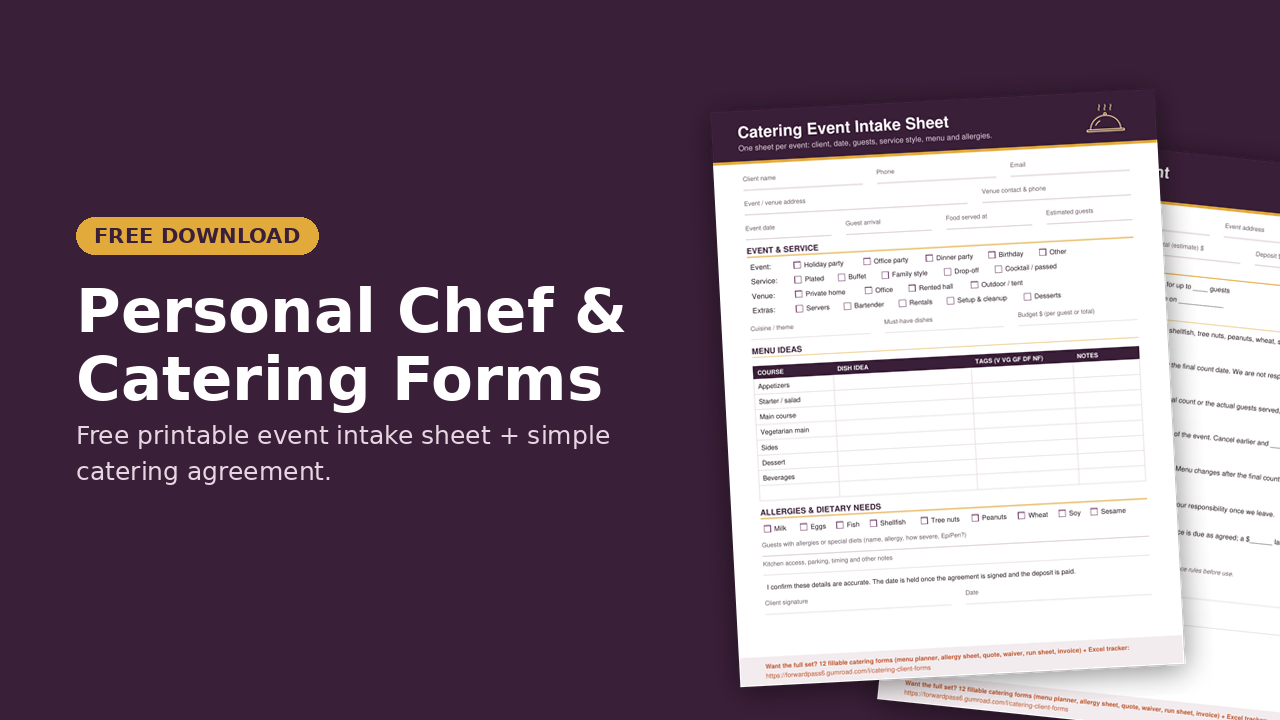
Free Personal Chef & Catering Forms
A printable catering event intake sheet plus a simple catering agreement for personal chefs and small caterers.
Download free →At booking (4 or more weeks out)
- Event basics: date, start and end times, address, host contact and a day-of contact.
- Event type and style of service: plated, buffet, family style, passed appetizers or drop-off.
- Estimated guest count and the date the final count is due.
- Budget and pricing: per person or flat rate, plus staffing, rentals, travel and service charge.
- Menu direction: cuisine, must-have dishes, holiday traditions and anything the host does not want.
- Dietary needs and allergies known so far.
- Extras: bartender, desserts, rentals, decor, cleanup.
- Written agreement and deposit: do not hold a December date without both. Holiday dates are the first to fill.
Two to three weeks out: menu, allergies and final count
- Send the menu for approval, with dietary tags (vegetarian, vegan, gluten-free, dairy-free, nut-free) on each dish.
- Collect a guest allergy list: name, allergy, severity and whether the guest carries an epinephrine pen. Plan a labeled substitute meal for each guest who needs one.
- Confirm the final guest count deadline in writing, usually 7 to 14 days before the event, and what happens if the count goes up or down after it.
- Book staff and rentals, and confirm delivery and pickup times for anything rented.
- Plan a tasting if it is included in your package.
One week out: kitchen, venue and logistics
- Kitchen or venue check: number and size of ovens, burners, fridge space, hot water, counter space, outlets, and whether open flames or chafing fuel are allowed.
- Load-in: parking, entrance, stairs or elevator, and the earliest time you can arrive.
- Service area: where the buffet or bar goes, where guests will eat, where trash and dirty dishes go.
- Weather plan for outdoor or porch setups in December.
- Final count received: lock the menu quantities and send the final invoice or balance reminder.
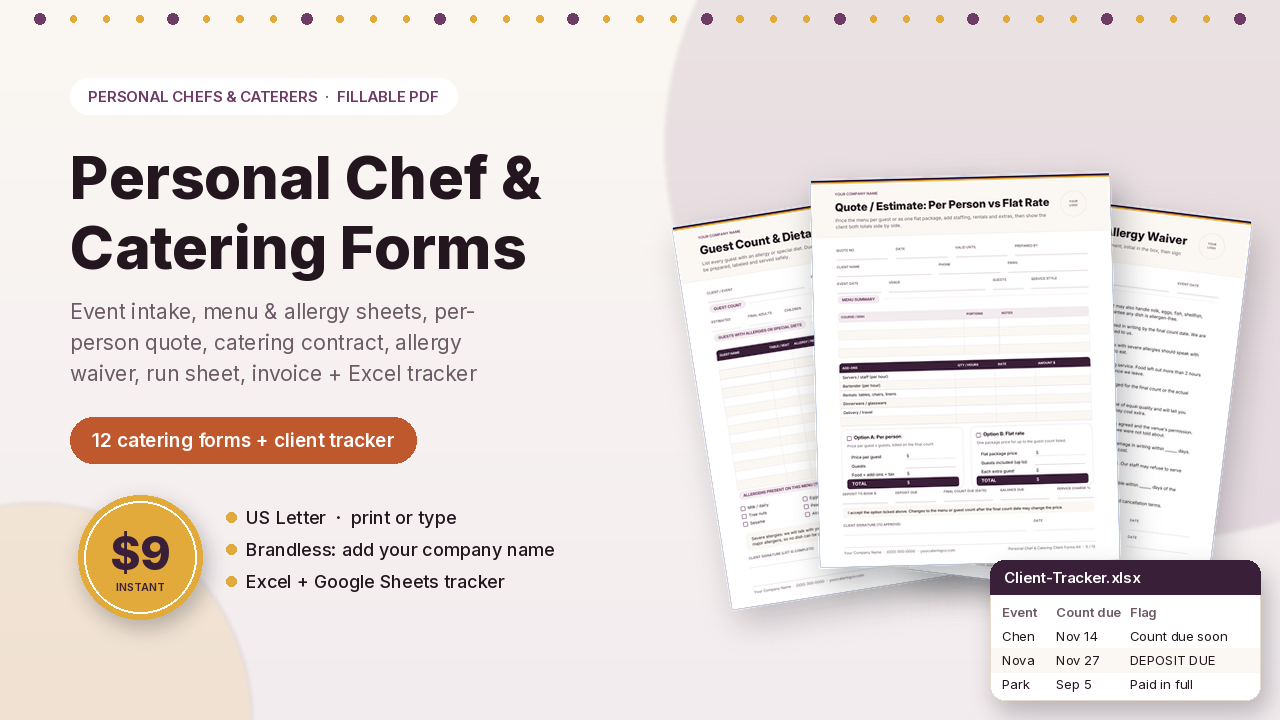
Personal Chef & Catering Client Forms Kit
12 fillable forms including an event intake, guest count & allergy sheet, menu planning worksheet, event run sheet, grocery & prep list, kitchen / venue checklist, staffing & equipment checklist, catering agreement and invoice, plus an Excel client tracker with final count deadlines and balances.
Get it →Two to three days out: groceries and prep
- Build a grocery list by store section from the final count, with quantities, store and estimated cost. Holiday shopping runs take longer, so shop early and order specialty items (roasts, seafood, cakes) ahead.
- Write a prep plan: what can be made two days ahead, one day ahead and on the day.
- Check food cost per guest against your quote so you know the margin before the event, not after.
- Prepare and label containers, especially for allergy-safe dishes.
- Confirm arrival times with staff and send them the run sheet.
Equipment checklist
Pack from a written list and check items out and back in, so nothing is left behind at the venue. Common items: chafing dishes and fuel, hotel pans and lids, serving utensils, cutting boards and knives, thermometers, insulated carriers, sheet pans, aprons and gloves, extension cords, trash bags, labels and markers, allergy cards, cleaning supplies, a first aid kit and, if you provide them, linens, plates, glassware and flatware. For holiday parties, add extra serving spoons, warming trays and a backup lighter. A missing item at 6 p.m. on a December Saturday is hard to replace.
Event day: run sheet
A run sheet turns the day into a timed list with who does what and where. A typical holiday party run sheet covers: load-out from your kitchen, arrival and load-in, oven preheat and setup, buffet or table setup, staff briefing (menu, allergens, service style, timeline), appetizers out, main service, desserts and coffee, breakdown, cleanup and load-out. Add key contacts at the top: the host, the venue contact and each staff member. Check off each line as it happens, and note anything that changed so you can bill for it or plan better next time.
Sample timeline (example)
An example of the format, not a fixed schedule. An office holiday party for 40 guests, buffet service from 6:00 to 9:00 p.m. Four weeks out: intake, quote, signed agreement and deposit. Two weeks out: menu approved, allergy list received (one nut allergy, two vegetarians, one gluten-free guest), final count due in seven days. One week out: venue check confirms one oven and no open flames, so the plan switches to electric warmers. Final count arrives at 44 guests, and the invoice is updated. Two days out: groceries bought, desserts and sauces made. Event day: arrive 3:30 p.m., set up by 5:30, staff briefing at 5:40, buffet opens at 6:00, desserts at 7:45, breakdown at 9:00, out by 10:00. Next day: thank-you message, final invoice for the balance and a request for feedback.
After the party: follow-up and rebooking
Within a day or two, send a thank-you, the final invoice for any balance or added guests, and a short feedback request. Holiday clients often book again for New Year, birthdays or next year's party, so ask while the event is fresh, and offer to hold their date for next December. Record the final guest count, food cost and anything you would change, so next season's quotes are faster and more accurate.
FAQ
What should be on a catering checklist for a holiday party?
Event details and contacts, style of service, guest count and final count deadline, menu and dietary tags, guest allergy list, kitchen and venue checks, staffing, rentals, a grocery and prep plan, an equipment list, an event-day run sheet, and the deposit, balance and follow-up.
How far in advance should I book holiday catering clients?
Many caterers start taking holiday bookings in September or October, and popular December weekends fill first. Hold a date only with a signed agreement and a deposit, and set the final guest count deadline at booking.
When should the final guest count be due?
Many small caterers ask for the final count 7 to 14 days before the event, so they can order food and book staff. State in the agreement whether the count can go up after the deadline and that the price is based on the final count or a minimum guarantee.
How do I handle food allergies at a holiday party?
Collect a guest allergy list before the event, plan and label substitute meals, keep allergy-safe dishes separate, brief staff on the allergens in each dish, and ask the host to confirm that the list is complete.
What equipment do caterers forget most often?
Chafing fuel, serving utensils, thermometers, extension cords, trash bags, labels and lighters are common misses. Packing from a written list and checking items out and back in prevents most of them.
Do personal chefs need a run sheet for small dinner parties?
Yes. Even for 8 to 12 guests, a simple timed list of prep, courses and cleanup keeps service on time and makes it easy to spot problems early, especially when you cook in an unfamiliar home kitchen.
This page is general guidance, not legal, food safety or tax advice. Food handler, catering license, cottage food, alcohol service and insurance rules vary by state and city, so check your local rules and have your agreement and waiver wording reviewed by an attorney or insurer.
Related templates
Free Personal Chef & Catering Forms
A printable catering event intake sheet plus a simple catering agreement for personal chefs and small caterers.
Download free →Personal Chef & Catering Client Forms Kit
Run sheet, grocery & prep list, venue and equipment checklists, allergy sheet and an Excel event tracker.
Get it →