Catering Contract Template: What Personal Chefs and Small Caterers Should Include
How to write a catering contract, from event intake, menus and allergies to per-person vs flat-rate pricing, deposits, final guest count deadlines and cancellation terms, with free printable forms.
Why a catering contract matters, even for small events
Food is personal, and events are emotional. A birthday dinner for twelve or a holiday party for sixty can go sideways over a single misunderstanding: the client expected servers, the guest count doubled the week before, or someone at the table had an allergy nobody mentioned. A catering contract puts the menu, the numbers, the money and the responsibilities in writing so you can focus on cooking. It also gives you a clear basis for charging when the client changes the plan late.
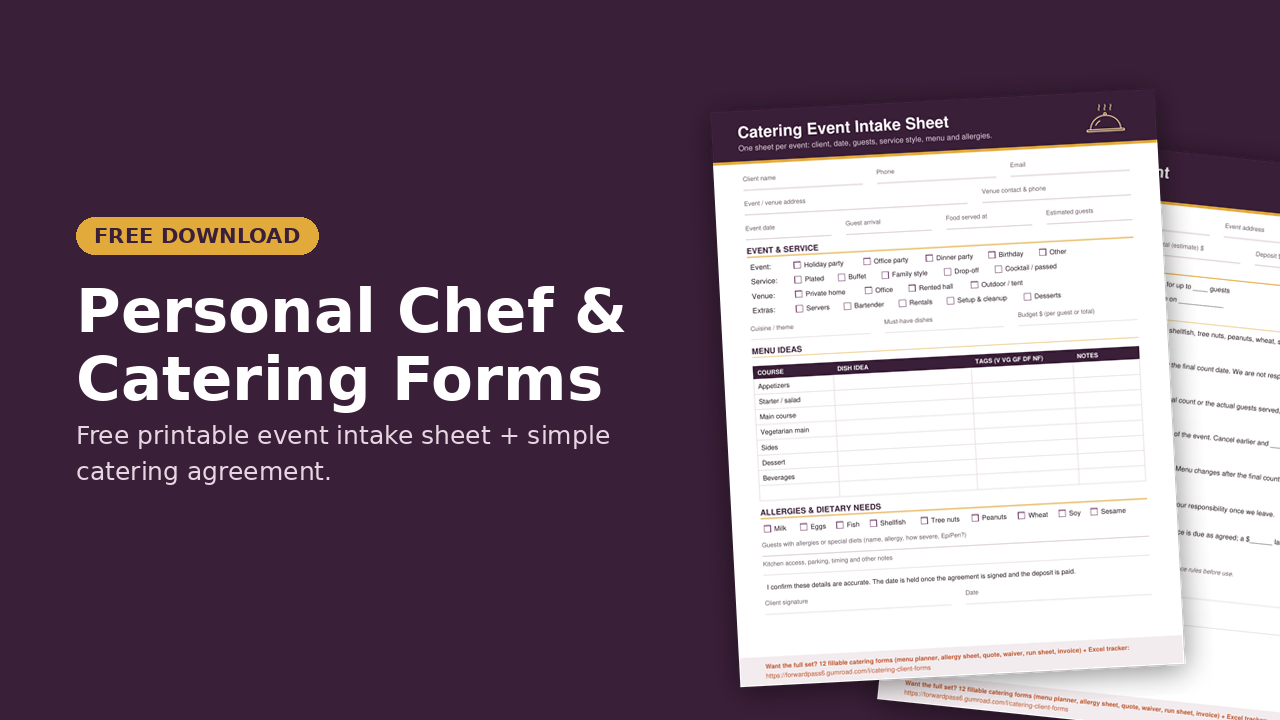
Free Personal Chef & Catering Forms
A printable catering event intake sheet plus a simple catering agreement for personal chefs and small caterers.
Download free →Capture everything on the event intake
Before you quote, collect the details that drive cost and logistics:
- Event basics: date, guest arrival time, food service time, event type and estimated guest count.
- Venue: address, venue contact, kitchen access, power, water, parking and load-in rules.
- Service style: plated, buffet, family style, drop-off or cocktail. Each one changes staffing and equipment.
- Menu direction: cuisine, must-have dishes, foods to avoid and the client's budget.
- Extras: servers, bartender, rentals, setup and cleanup, desserts.
- Dietary needs and allergies: a checklist of major allergens plus notes on specific guests. In the US the major allergens are milk, eggs, fish, shellfish, tree nuts, peanuts, wheat, soybeans and sesame.
Per-person or flat-rate pricing?
Most caterers use one of two models:
- Per person: a price per guest based on the menu. It scales cleanly with headcount and is easy for clients to understand. Set a minimum guest count so small events still cover your time.
- Flat rate: one price for the whole event. Common for personal chefs cooking an intimate dinner or a fixed menu, where food cost is a small share and your time is the main cost.
Either way, build your number from food cost, prep and cooking hours, shopping time, travel, staffing, rentals, disposables, insurance and a margin. List staffing, rentals and other add-ons as separate lines so the client sees what they are paying for, and so you can adjust them without reworking the whole quote.
Deposits and the final guest count deadline
A deposit reserves the date and covers early grocery and rental costs. State the amount, when it is due, and whether it is refundable. Then set a final guest count deadline, often several days to a couple of weeks before the event, after which the count can go up (if you can accommodate it) but not down. Bill the final count, not the original estimate, and put the balance due date in writing.
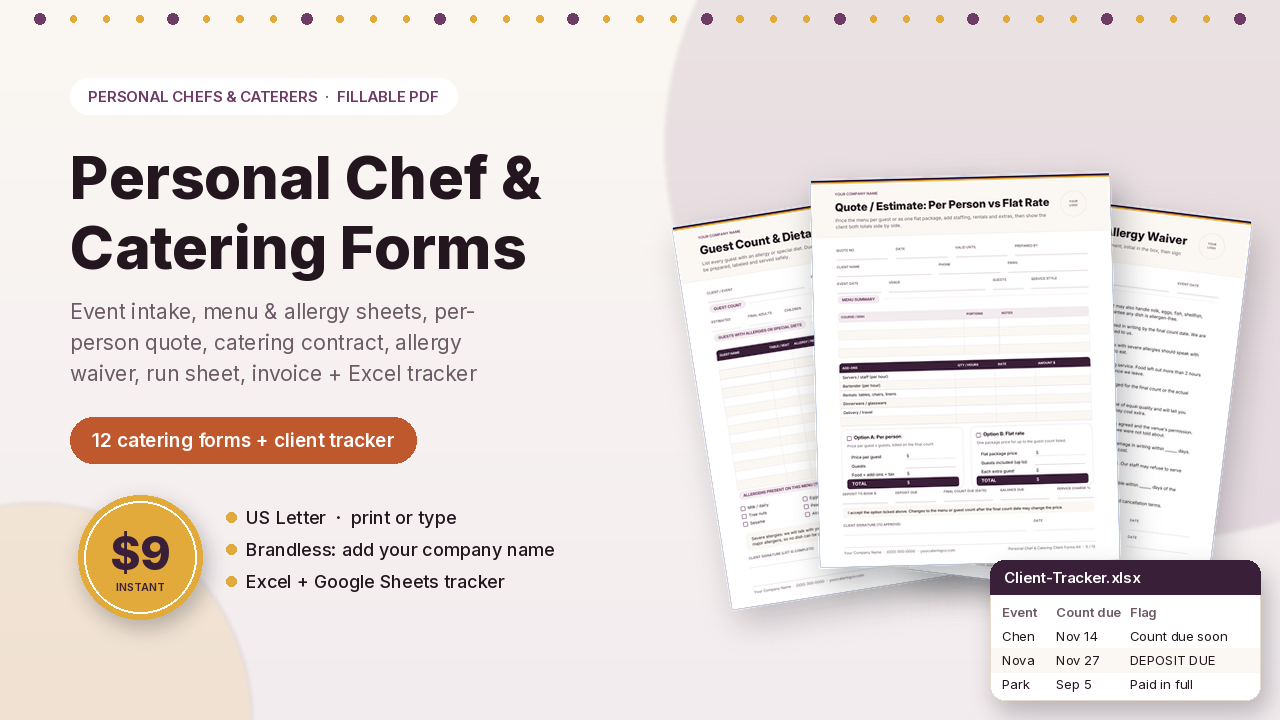
Personal Chef & Catering Client Forms Kit
12 fillable forms (event intake, menu planning & tasting worksheet, guest count & allergy sheet, per-person vs flat-rate quote, catering service agreement, food allergy waiver, run sheet, grocery & prep list, invoice and more) plus an Excel client tracker.
Get it →Key terms for your catering agreement
- Allergens and cross-contact: you will take reasonable care, but unless you work in an allergen-free kitchen you cannot guarantee food is free of trace allergens.
- Allergy disclosure: the client is responsible for telling you about guest allergies and dietary needs by a set date.
- Substitutions: you may substitute ingredients of equal quality if something is unavailable.
- Cancellation: what portion of the deposit or total is kept at different points before the event.
- Food safety and leftovers: how long food can sit out, and your policy on packaging leftovers.
- Kitchen and venue access: the client provides the access, equipment and time agreed, and is responsible for venue rules and fees.
- Overtime: an hourly rate if the event runs past the agreed service time.
Plan the day with a run sheet
Once the contract is signed, turn it into an event run sheet: shopping and prep schedule, load-in time, service times, staff roles and breakdown. A grocery and prep list keeps quantities tied to the final guest count, and a kitchen or venue checklist confirms ovens, outlets, refrigeration and water before you arrive. After the event, send the invoice for any balance and ask for feedback while the meal is still fresh in the client's mind.
FAQ
What is a typical catering deposit?
There is no single standard. Many small caterers take a meaningful share of the total at booking to hold the date and cover early costs, with the balance due before or on the event day.
Do personal chefs need a different contract than caterers?
The core terms are the same: menu, price, deposit, allergies, cancellation and kitchen access. Personal chefs often work in the client's kitchen, so kitchen access and cleanup terms matter more.
Can I cook catering food at home?
It depends on your state and local health department. Many places require a licensed commercial kitchen and a food handler or manager certification for catering. Check before you take paid events.
Should the contract mention leftovers?
Yes. Leftover rules vary by health code and venue, so state whether you package leftovers, who takes them, and that you are not responsible for food after it leaves your control.
This page is general guidance, not legal advice. Review your contract wording and check your local health department, licensing, insurance and contract rules before you use it.
Related templates
Free Personal Chef & Catering Forms
A printable catering event intake sheet plus a simple catering agreement for personal chefs and small caterers.
Download free →Personal Chef & Catering Client Forms Kit
Fillable personal chef and catering forms plus an Excel client tracker with guest counts, deposits and OVERDUE flags.
Get it →