How Much to Charge for Catering: Per-Person, Hourly and Food Cost Pricing (Plus Free Catering Forms)
How personal chefs and small caterers can price events: choose per-person or hourly pricing, hit a target food cost percentage, bill staffing, rentals and travel, and take deposits under a written contract, with a worked example and free printable catering forms.
Why catering quotes go wrong
New caterers and personal chefs often quote a price per plate based on what the groceries cost and a rough guess at the rest. Then the event needs extra servers, rented chafing dishes, a long drive, two days of prep and a guest count that grows the week before. A clear pricing method protects your margin: price the food from a target food cost percentage, bill labor, rentals and travel as their own lines, and lock everything in with a deposit and a written contract.
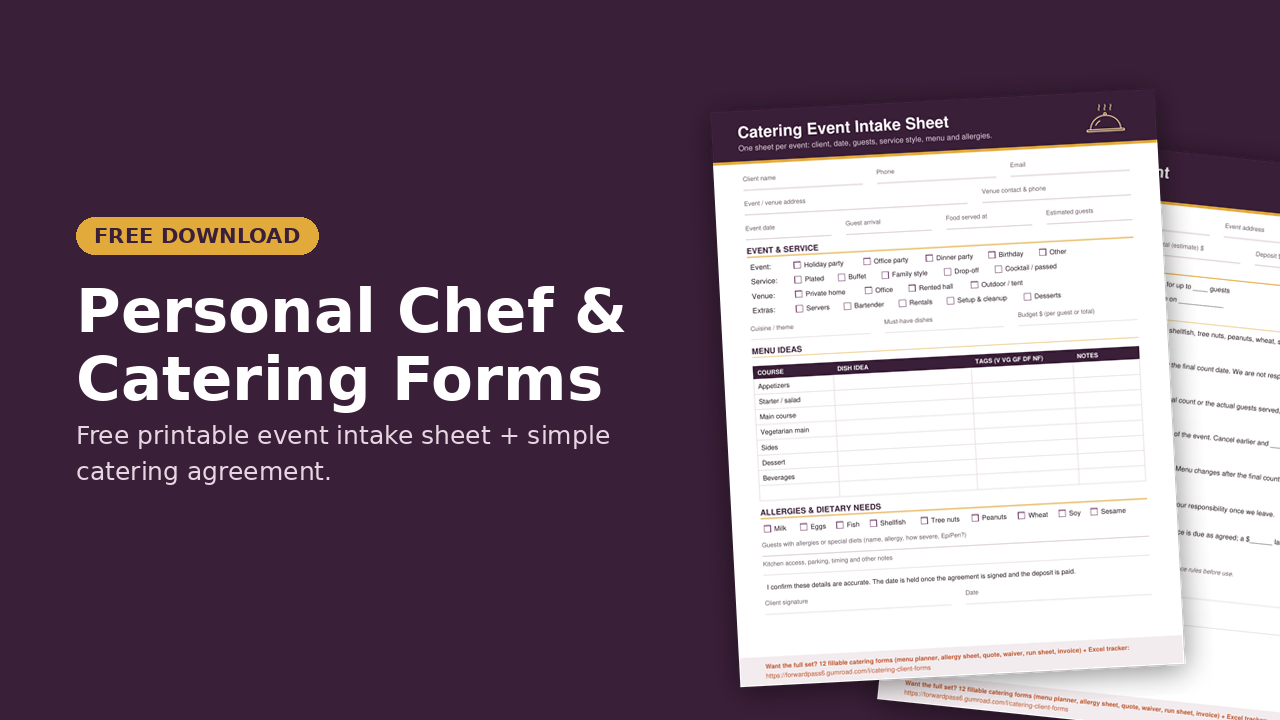
Free Personal Chef & Catering Forms
A printable catering event intake sheet plus a simple catering agreement for personal chefs and small caterers.
Download free →1. Choose per-person, hourly or flat pricing
Per-person pricing is a natural default for catering because it scales with the guest count and is easy for clients to compare. Drop-off trays and buffets need less labor, so they can sit at the low end, family-style in the middle, and plated, multi-course service at the top. Hourly pricing suits personal chefs who cook in the client's home, private cooking classes and staffing-only jobs, usually with groceries billed separately at cost or with a small markup. A flat package price works for repeat formats such as a weekly meal prep service or a set holiday menu. Many caterers combine them: a per-person menu price plus hourly charges for service staff.
- Per person: weddings, parties, corporate lunches and buffets
- Hourly plus groceries: in-home dinners, private chef nights, classes
- Flat package: meal prep plans, set menus, small drop-off orders
2. Price the food from a target food cost percentage
Cost every menu item from your recipes: ingredients per portion, including garnish, sauces, bread, butter and a waste allowance. Then decide on a target food cost percentage: the share of the menu price that goes to ingredients. The lower it is, the more of each price is left for labor, overhead and profit, so pick a number that covers your own costs rather than copying someone else's. To find a per-person menu price, divide your food cost per guest by your target percentage. For example, $12 of food per guest at a 30 percent target (an example figure, not a benchmark) gives a menu price of $40 per guest. Review menu costs often, since meat, seafood, dairy and produce prices move quickly, and set a minimum guest count or minimum spend so small events stay worthwhile.
3. Bill staffing separately
Your menu price should cover your own cooking and prep, but on-site service staff are easier to quote as a separate line. Estimate how many servers, bartenders or kitchen helpers the event needs based on guest count and service style, then multiply by hours, including setup, service and breakdown. Bill each staff hour at more than you pay so it covers payroll costs, insurance and scheduling time, and add a minimum shift length so short events are not unprofitable. Plated dinners need far more staff per guest than a drop-off buffet.
4. Add rentals, travel and other extras
- Rentals: tables, linens, chafing dishes, china, glassware and flatware, either passed through at cost plus a handling fee or included in a package
- Disposables: plates, napkins, cutlery, containers and serving utensils for drop-off orders
- Travel: a free delivery radius, then a per-mile or flat zone fee, plus parking and tolls
- Tastings: a tasting fee that is credited toward the booking if the client signs
- Peak dates: higher minimums for Saturdays in wedding season and the December holidays
- Service charge, gratuity and sales tax: show each clearly on the quote and check how local rules treat them
5. Take a deposit and use a written catering contract
Put every event in writing: date, times, venue, guest count, menu, service style, staffing, rentals, allergies and dietary needs, and the full price breakdown. Decide on a deposit to hold the date and whether it is refundable: a percentage of the total or a flat amount (the worked example below uses 50 percent as an example), with the balance due a set number of days before the event. Set a final guest count deadline (for example, 7 to 14 days out), and state that the client pays for the final count even if fewer guests attend. Include your cancellation terms, what happens if the venue changes, a food allergy disclaimer, and how leftovers are handled. Clear paperwork helps prevent disputes and makes a small catering business look established.
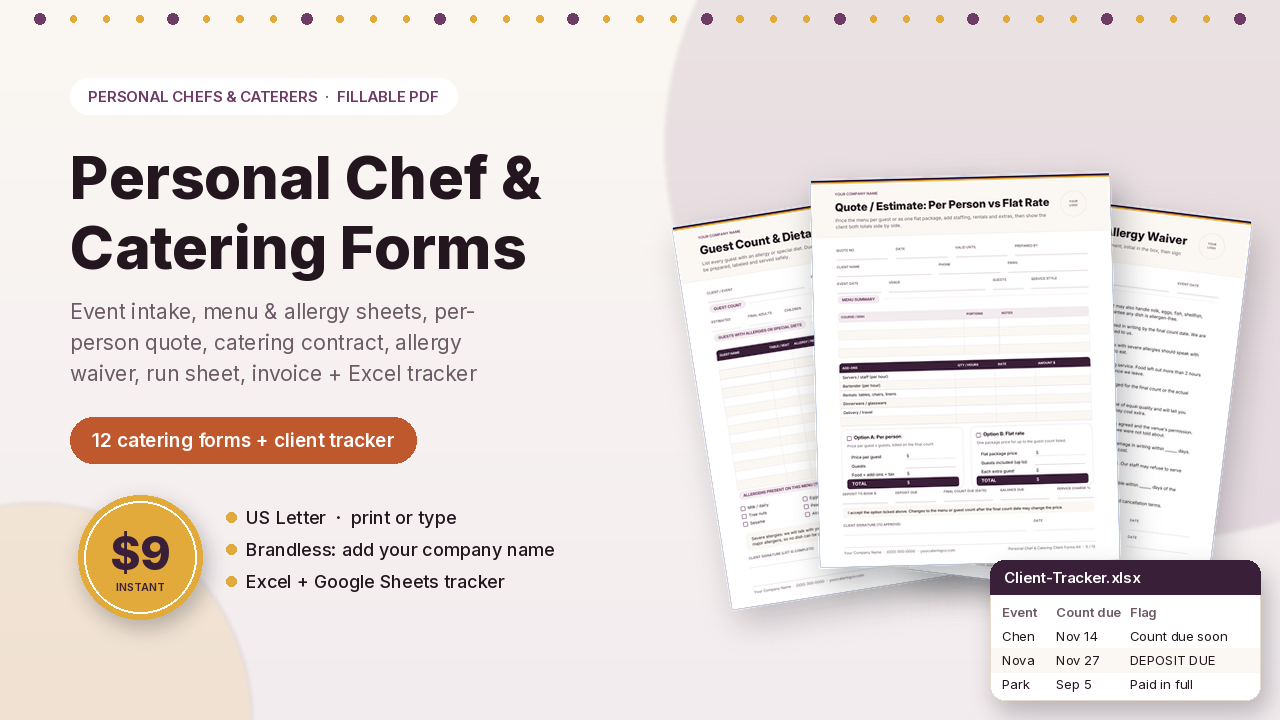
Personal Chef & Catering Client Forms Kit
12 fillable forms (event intake, menu planning & tasting worksheet, guest count & allergy sheet, per-person vs flat-rate quote, catering service agreement, food allergy waiver, run sheet, grocery & prep list, invoice and more) plus an Excel client tracker.
Get it →Worked example (example numbers only)
Say a small caterer is quoting a buffet dinner for 40 guests. The menu costs about $14 of food per guest, or $560. At a 30 percent food cost target, the menu price is $14 divided by 0.30, about $46.67 per guest, which the caterer rounds to $47, or $1,880 for 40 guests. Two servers for 6 hours each, billed at $25 per hour, add $300. Rented chafing dishes and linens cost $240, plus a 15 percent handling fee, for $276. The venue is outside the free delivery radius, so a $50 travel fee applies. The quote totals $2,506 before any local tax or service charge. The caterer asks for a 50 percent deposit of $1,253 to hold the date, with the balance and final guest count due 7 days before the event. Use your own costs, wages and local prices.
Common catering pricing mistakes
- Pricing per plate from grocery cost alone and ignoring prep time and overhead
- Burying staffing, rentals and travel inside the menu price, so large events lose money
- No minimum guest count or minimum spend for small parties
- No final guest count deadline, so headcounts change the day before
- Booking dates without a deposit or signed contract
- Forgetting allergy and dietary details until the menu is already bought
FAQ
How much should I charge per person for catering?
Cost your menu per guest, then divide by the food cost percentage you choose as your target (the worked example on this page uses 30 percent, as an example rather than a benchmark). Compare the result with other caterers near you, and charge more for plated or multi-course service than for drop-off or buffet.
How do I choose a food cost percentage for catering?
There is no single right number. The lower the food share of your price, the more is left for labor, overhead and profit. Decide on a target that covers your own costs for your menu, service style and local market, then compare the resulting price with what similar caterers near you charge.
How much do personal chefs charge per hour?
Personal chefs often charge an hourly or per-event fee for cooking and cleanup, with groceries billed separately. Rates vary widely by city and experience, so check what local chefs charge and make sure your rate covers shopping, prep and travel time.
How much deposit should a caterer take?
Decide what fits your business: a percentage of the total or a flat amount, whether it is refundable, and when the balance is due. The worked example on this page uses a 50 percent deposit with the balance due 7 days before the event; that is an example, not a standard. Weddings and large events may justify a bigger deposit.
How do I charge for catering staff?
Estimate how many servers or helpers the event needs, multiply by the hours including setup and breakdown, and bill each hour at more than you pay staff so it covers payroll costs and insurance. Set a minimum shift length for short events.
Do I need a license to start a catering business?
Many places require a business license and a food permit, and some also require a licensed commercial kitchen, food handler certification and insurance. Rules differ widely, so check with your local health department before you cater.
This page is general guidance, not legal, tax or business advice. Food permits, licensing, sales tax, service charge and gratuity rules vary by location, so check the rules where you operate.
Related templates
Free Personal Chef & Catering Forms
A printable catering event intake sheet plus a simple catering agreement for personal chefs and small caterers.
Download free →Personal Chef & Catering Client Forms Kit
Event intake, per-person vs flat-rate quote, catering service agreement, allergy waiver, run sheet and invoice plus an Excel client tracker.
Get it →