Holiday Party Bartender Pricing: How Mobile Bartenders Price Office and Home Parties (Plus Free Forms)
How mobile bartenders can price office and home holiday parties: choose per-hour or per-guest pricing, staff the right number of bartenders, charge for travel, take deposits on peak dates, decide who supplies the alcohol and who carries liability, and add the contract clauses that protect a busy December, with a worked example and free bartender forms.
Why holiday parties need their own quote
December is peak season for mobile bartenders. Office parties, neighbourhood open houses and family gatherings all compete for the same Friday and Saturday nights, and many clients book late. Holiday events also differ from weddings: office parties come with company rules and a manager who wants a fixed budget, while home parties often mean tight kitchens, guests arriving over several hours and a host who is not sure how much alcohol to buy. A clear holiday quote helps you fill the calendar with events that are worth your time.
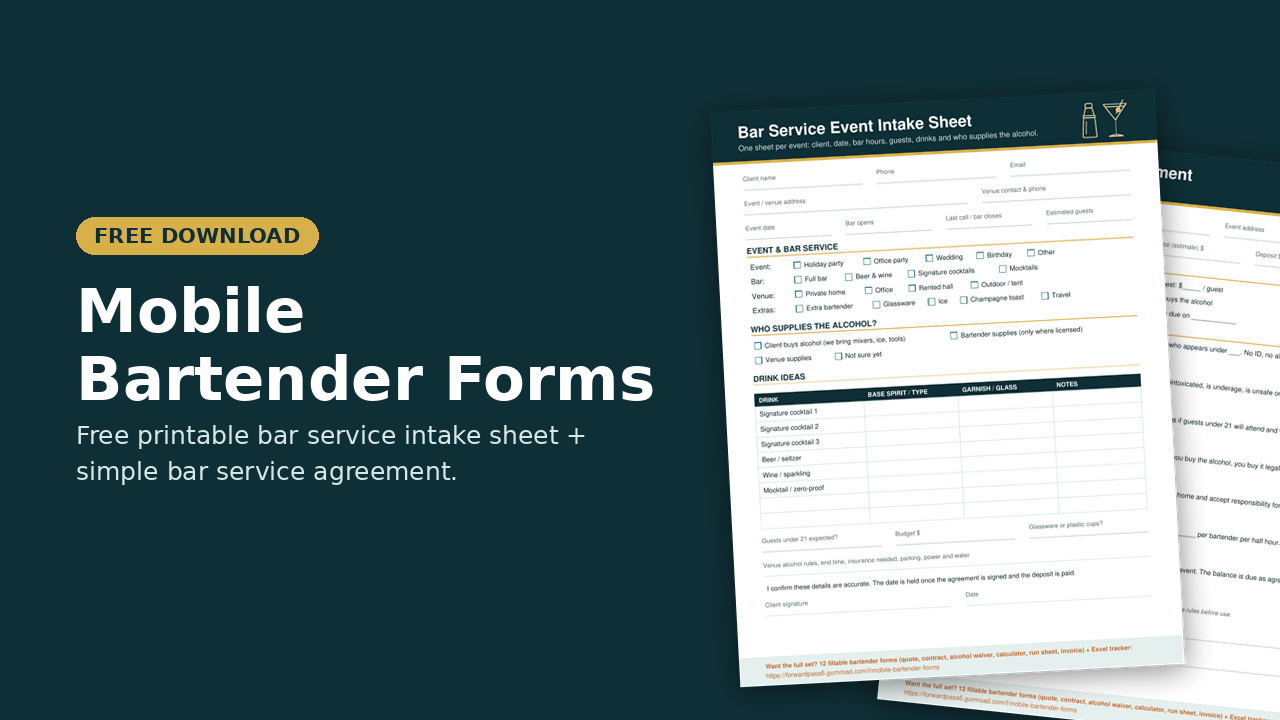
Free Mobile Bartender Forms
A printable bar service event intake sheet plus a simple bar service agreement for mobile bartenders and small bar services.
Download free →1. Per hour or per guest?
Both models work; the trick is matching the model to the event.
- Per hour, per bartender. Simple and easy to explain for small home parties and short office mixers. Set a minimum number of hours, and decide whether setup and breakdown time is billed or included.
- Per guest. Easier for large office parties, where the organiser has a headcount and a budget. Build your labour, supplies and travel into the per-guest figure and set a minimum guest count.
- Packages. Many bartenders combine the two: a package for a set number of hours and guests, with an hourly rate for overtime and a per-guest rate for extra guests.
Whichever you use, put the overtime rate in the quote. Holiday parties often run late, and agreeing on the extra hour in advance avoids awkward conversations at the end of the night.
2. Staff the right number of bartenders
One bartender can only pour so fast. The right ratio depends on the drink menu, how guests arrive and whether there is a rush, such as a toast or the moment an office party opens. Beer and wine service moves faster than a full cocktail menu, and a signature cocktail batched ahead is quicker than made-to-order drinks. Decide on your own staffing rule from experience, write it in your quote, and explain it to the client: under-staffing creates long lines and unhappy guests, and that reflects on you. Add a barback for large events or full bars, and price each extra staff member per hour.
3. Travel and setup
Holiday traffic and winter weather make travel slower. Common ways to charge for it:
- A service area included in your price, with a per-mile or flat travel fee beyond it.
- Parking and load-in costs for office buildings, which may require a loading dock booking, a certificate of insurance or a security sign-in.
- Setup and breakdown time, either built into the minimum hours or billed separately.
Ask about stairs, elevators, kitchen access, ice storage and power at the intake stage, especially for apartments and offices, so you can plan the setup and include any extra time in the quote.
4. Deposits for peak dates
The first three weekends of December can book out fast. Protect them with a deposit that holds the date, often a flat amount or a share of the total, with the balance due a set number of days before the event. Say whether the deposit is refundable, what happens if the client cancels or the headcount drops, and the date the final guest count is due. For office clients, ask early who approves payment and whether they need an invoice, a W-9 or a certificate of insurance before paying.
A worked example (example numbers)
These numbers are invented to show the math, not market rates. Say a bartender quotes a 60-guest office party for four hours, with beer, wine and one batched cocktail. The bartender decides two bartenders are needed. At an example rate of $50 per bartender per hour, labour is 2 × 4 × $50 = $400. Setup and breakdown add one hour per bartender, another $100. Ice, cups, garnishes and mixers are estimated at $120, and travel is $30. The total is $650, or about $10.80 per guest; the bartender might quote $11 per guest with a 50-guest minimum and $60 per bartender for each overtime hour. The client buys the alcohol separately.
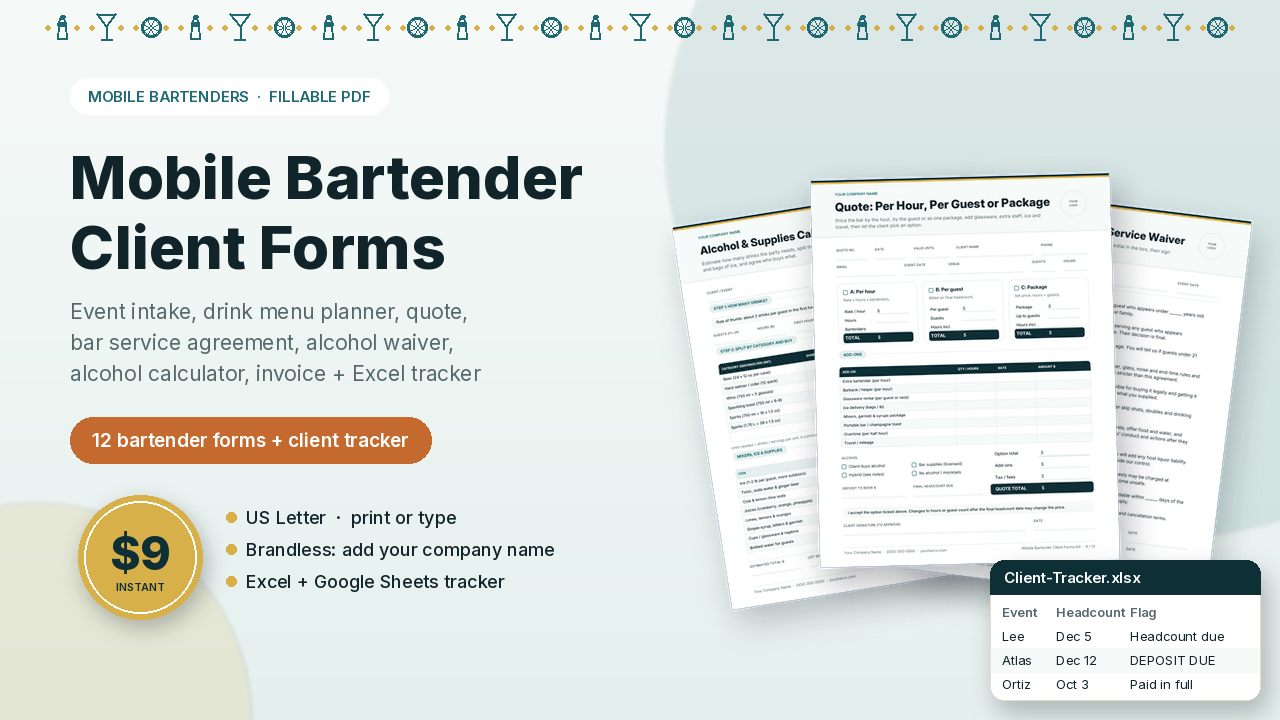
Mobile Bartender Client Forms Kit
12 fillable forms (event intake, drink menu & signature cocktail planner, quote with per-hour, per-guest and package pricing, bar service agreement, alcohol service waiver, alcohol & supplies calculator, incident & refusal of service log, invoice and more) plus an Excel client tracker.
Get it →5. Who supplies the alcohol, and who carries the liability?
This is the most important question on a holiday quote. There are two common setups:
- Client supplies the alcohol. You provide service, mixers and supplies, and the host buys the alcohol. Many mobile bartenders work this way because selling alcohol usually requires a licence. Give the client a shopping list based on headcount and menu.
- You supply the alcohol. In many places this requires a liquor licence or catering permit and changes your insurance needs. Check your state and local rules before offering it.
Either way, carry general and liquor liability insurance, and confirm whether an office or venue needs to be named on your certificate. Rules on serving, permits and liability vary widely by state and city, so check locally rather than assuming.
6. Contract clauses for holiday parties
A short bar service agreement saves arguments on the night. Useful clauses include:
- Services and hours: start and end times, staff count, setup and breakdown, and the overtime rate.
- Alcohol: who supplies it, what happens to leftover bottles, and that only legal-age guests will be served.
- Right to refuse service: bartenders can refuse anyone who appears intoxicated or cannot show ID, and can stop service if safety is at risk.
- Guest count and changes: the final count deadline and how increases are charged.
- Payment and cancellation: deposit, balance due date, and refunds if the event is cancelled or moved, including for weather.
- Venue requirements: access, ice, power, a place to set up, and any building rules.
Before December fills up
Get your holiday paperwork ready in November: an event intake form, a quote with your per-hour, per-guest and package options, a bar service agreement, an alcohol shopping calculator and an invoice. Follow up quickly on inquiries, since many holiday hosts book the first bartender who sends a clear quote.
FAQ
How much should a bartender charge for a holiday party?
Work out the labour hours, including setup and breakdown, add supplies and travel, then quote per hour, per guest or as a package. Check local bartending services so your price fits your market, and include an overtime rate.
Is it better to charge per hour or per guest for an office party?
Per-guest pricing is often easier for office organisers with a fixed headcount and budget, while hourly pricing suits small home parties. Many bartenders offer packages with an hourly overtime rate.
How many bartenders does a holiday party need?
It depends on headcount, the drink menu and how guests arrive. Beer and wine service is faster than a full cocktail bar. Set your own staffing rule from experience, write it in your quote, and add a barback for large events.
Can a mobile bartender supply the alcohol?
In many places selling alcohol requires a liquor licence or catering permit, so many mobile bartenders have the client buy the alcohol and provide service only. Check your state and local rules and your insurance.
What should a holiday party bartender contract include?
Hours and staffing, overtime rate, who supplies alcohol, legal-age service and the right to refuse service, final guest count deadline, deposit and cancellation terms, and venue requirements.
This page is general guidance, not legal, tax or insurance advice. Alcohol service, licensing and liability rules vary widely by state and city, so check your local rules and have your agreement reviewed by an attorney or insurer.
Related templates
Free Mobile Bartender Forms
A printable bar service event intake sheet plus a simple bar service agreement for mobile bartenders and small bar services.
Download free →Mobile Bartender Client Forms Kit
Quote with per-hour and per-guest pricing, bar service agreement, alcohol calculator and an Excel tracker.
Get it →