Mobile Bartender Contract: What to Include in a Bar Service Agreement
What to put in a mobile bartender contract, from event intake and drink menus to per-hour, per-guest and package pricing, deposits, client-supplied alcohol, ID checks and refusal of service, with free printable forms.
Why mobile bartenders need a signed agreement
A mobile bar is a fun service with serious responsibilities. You are serving alcohol at someone else's event, often at a venue with its own rules, to guests you have never met. If a guest is underage, overserved or upset that you cut them off, you want the host to have agreed in advance that you check IDs and can refuse service. A bar service agreement also locks in the hours, the headcount, who buys the alcohol and what happens if the party runs late.
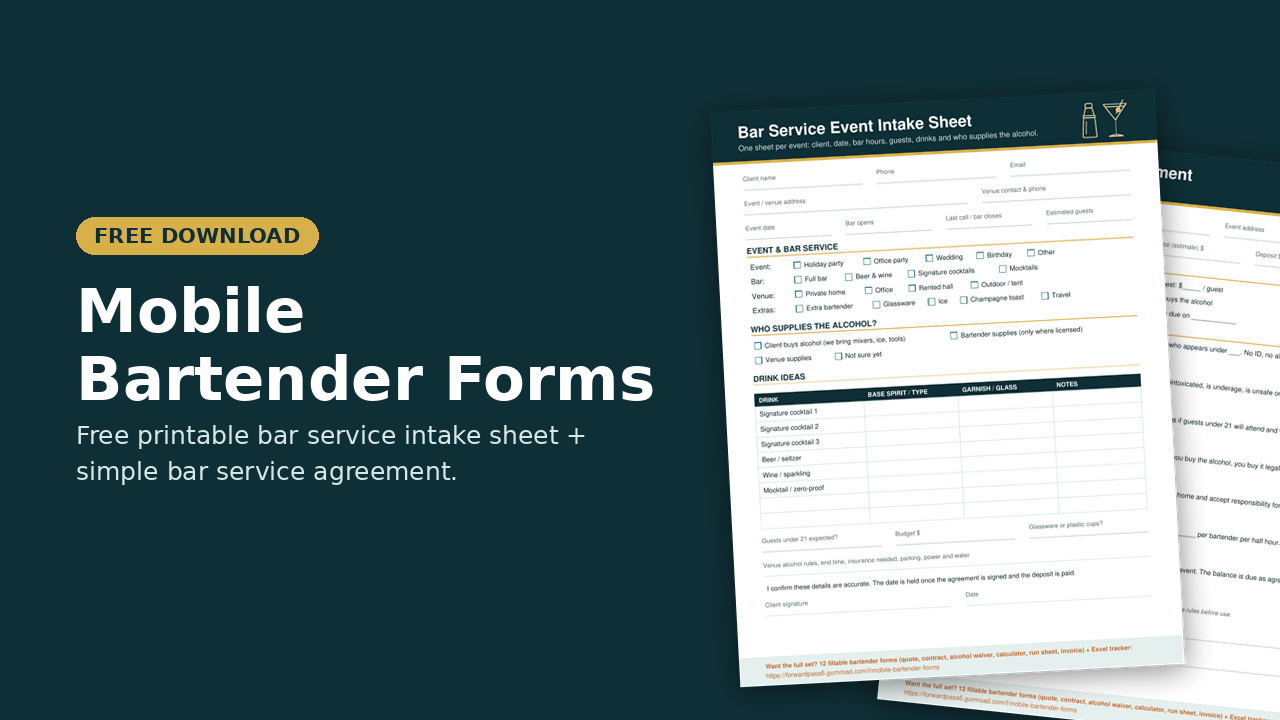
Free Mobile Bartender Forms
A printable bar service event intake sheet plus a simple bar service agreement for mobile bartenders and small bar services.
Download free →What to ask on the event intake
- Event details: date, venue address and contact, event type, estimated guests and how many are under 21.
- Bar hours: bar open, last call and close. These drive your staffing and your price.
- Bar type: full bar, beer and wine, signature cocktails or mocktails.
- Who supplies the alcohol: the client, or you (only where you are licensed to sell it).
- Extras: additional bartenders, glassware, ice, a champagne toast, travel beyond your base area.
- Venue rules: required insurance, licensed-bartender rules, power and water access, setup space and cleanup expectations.
Per hour, per guest or package pricing
Mobile bartenders usually price in one of three ways:
- Per hour: a rate per bartender per hour, with a minimum number of hours. Simple and common for client-supplied alcohol.
- Per guest: a price per head, useful when you supply mixers, garnishes, ice and disposables, because those scale with guest count.
- Packages: bundles like beer and wine, signature cocktails or full bar, with set hours and a guest range. Packages make choosing easy and raise the average order.
Add setup and breakdown time to your hours, then list add-ons as their own lines: extra bartenders, glassware, ice, travel and overtime. A common staffing rule of thumb is one bartender for every 50 to 100 guests, depending on the drink menu, but your own speed and the menu complexity matter most.
Deposits, headcount and balance due
Ask for a deposit to hold the date and state whether it is refundable. Set a final headcount deadline before the event so you can plan staff, ice and supplies, and put the balance due date in writing. If you provide alcohol or mixers, the headcount deadline also protects you from buying for 150 guests when 80 show up.
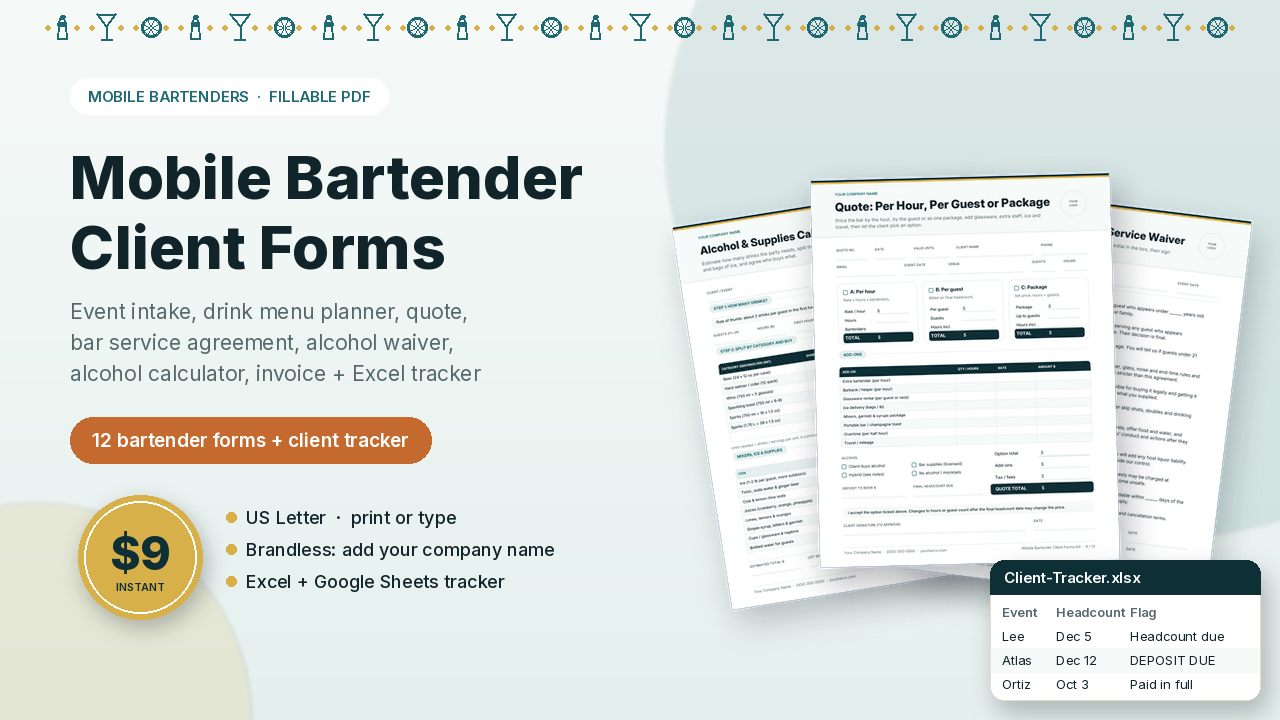
Mobile Bartender Client Forms Kit
12 fillable forms (event intake, drink menu & signature cocktail planner, quote with per-hour, per-guest and package pricing, bar service agreement, alcohol service waiver, alcohol & supplies calculator, incident & refusal of service log, invoice and more) plus an Excel client tracker.
Get it →Terms to include in a bar service contract
- ID checks: you will check identification for anyone who appears under a set age.
- Right to refuse service: you can refuse or stop service to anyone who is underage, visibly intoxicated or behaving unsafely, and close the bar early if needed.
- No minors: minors will not be served, and the host will not provide alcohol to minors.
- Client-supplied alcohol: if the client buys it, they own it and take any leftovers, and the venue's rules apply.
- Host responsibility: the host is responsible for guests' conduct and safe transportation.
- Overtime: the hourly rate if the client extends the bar.
- Glassware and equipment: replacement charges for broken or missing rentals.
- Cancellation: how much of the deposit or total is kept at different points before the event.
Estimating alcohol and supplies
Even when the client buys the alcohol, they will ask you how much to get. A common starting point is about one drink per guest per hour, with a little more in the first hour. Then split that number by what the crowd drinks, such as beer, wine, spirits and non-alcoholic options. Do not forget ice, which is often underestimated: plan for serving ice and chilling ice separately. Put your estimate on paper, note that it is a guideline, and make it clear who is responsible for buying and bringing each item.
On the day: setup, service and incident log
Use a venue and bar setup checklist so you arrive with the right tools, coolers, ice and backup supplies. An alcohol and supplies calculator helps estimate quantities from guest count and hours. During service, keep a short incident and refusal of service log: time, what happened and who was involved. If a dispute ever comes up, notes written on the night are far more useful than memory. Finish with an invoice for any balance and ask the host for a review.
FAQ
Do I need a liquor license to be a mobile bartender?
It depends on your state and whether you sell alcohol or only serve alcohol the client bought. Many bartenders serve client-supplied alcohol only. Check your state alcohol agency and the venue's rules.
Do mobile bartenders need insurance?
Many venues require general liability and liquor liability insurance, and some require you to be listed with a certificate before the event. Ask a local insurance agent.
Should I get alcohol server certification?
Responsible service training is required in some states and expected by many venues. It also helps you handle ID checks and refusals with confidence.
What if the party wants to keep the bar open longer?
Put an overtime rate in the contract and get the host's approval, ideally in writing or a text, before extending service.
This page is general guidance, not legal advice. Alcohol rules vary widely, so check your state alcohol laws, venue requirements and insurance before using any contract.
Related templates
Free Mobile Bartender Forms
A printable bar service event intake sheet plus a simple bar service agreement for mobile bartenders and small bar services.
Download free →Mobile Bartender Client Forms Kit
Fillable mobile bartender forms plus an Excel client tracker with deposits, headcount deadlines and an alcohol calculator.
Get it →