How Much to Charge for Bounce House and Party Rentals: Pricing, Delivery Fees and Deposits (Plus Free Party Rental Forms)
How bounce house and party rental businesses can set rental prices: work out cost per unit and payback, price by rental period, add delivery, setup, attendant and cleaning fees, take deposits and use a written rental agreement, with a worked example and free printable party rental forms.
Why party rental prices go wrong
Many new rental owners copy the cheapest competitor, then find that a single Saturday booking ate up two hours of driving, an hour of setup in a backyard with no nearby outlet, a late pickup and an evening of cleaning a muddy inflatable. A rental is not just the item: it is equipment wear, insurance, fuel, labor and the weekends you can only rent each unit once. A clear method keeps every booking profitable: know your cost per unit, price by rental period, bill delivery and extras separately, and protect the gear with a deposit and a written agreement.
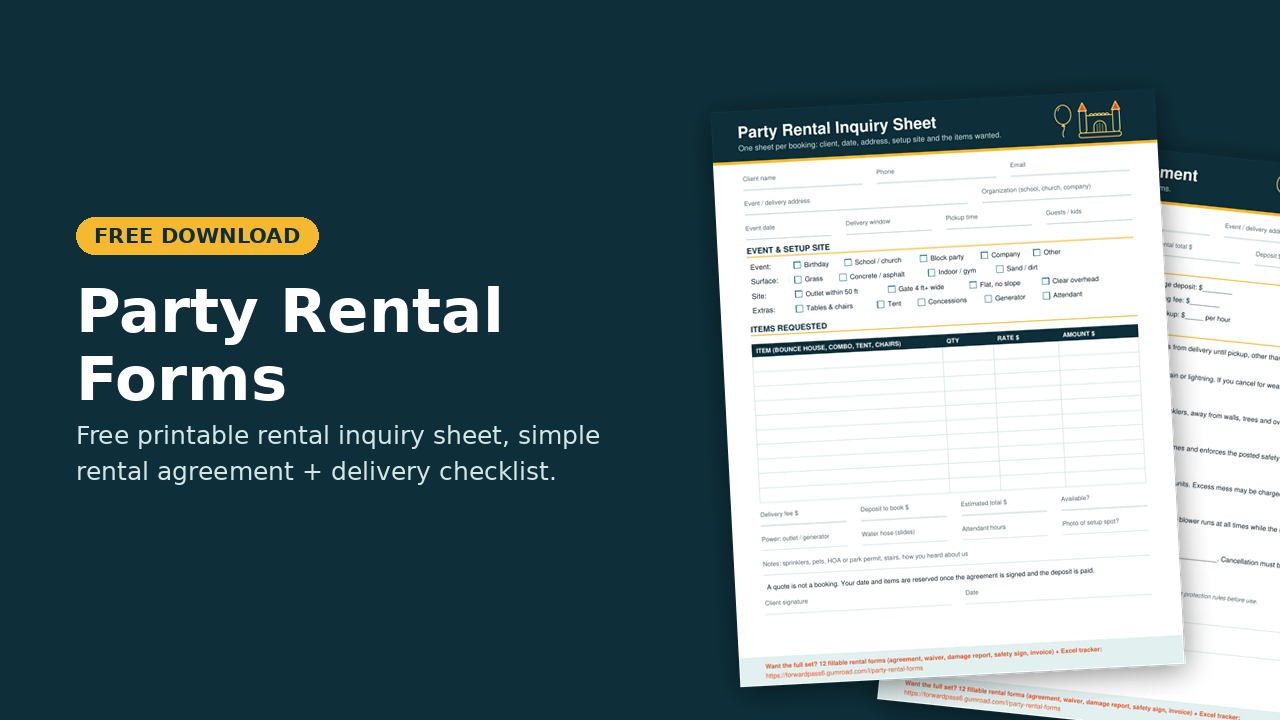
Free Party Rental Forms
A printable party rental inquiry sheet, a simple rental agreement and a delivery, setup & pickup checklist for bounce house and party rental businesses.
Download free →1. Know your cost per unit and payback
Start with what each unit really costs you: purchase price, blower and stakes or sandbags, tarps, replacement parts, storage, and your share of liability insurance, which most venues and parks will ask to see. Estimate how many paid rentals you can realistically get per unit each season, remembering that most demand lands on weekends and some dates are lost to weather. Divide your yearly costs by that number of rentals to get a cost per rental, then decide how many seasons you want the unit to pay for itself in. Your price has to clear that number before labor and profit.
2. Price by rental period
Most rental businesses price by a standard rental period, such as a set number of hours on the event day, with an added rate for extra hours and a higher rate for overnight or multi-day rentals. Bigger and more popular units, such as combo bouncers, water slides and obstacle courses, earn a higher rate than a basic bounce house. Weekday, school and corporate events can be offered at a different rate from peak Saturdays and holidays, which helps fill the calendar on quieter days.
3. Charge delivery, setup and extras separately
Keep the rental price clean and list extras on their own lines. Common ones include delivery fees by distance zone, setup on difficult surfaces such as concrete or stairs that need extra weights, generator rental when there is no outlet close enough, attendants billed per hour for schools, churches and corporate events, early drop-off or late pickup, cleaning fees for excessive mess, and add-ons such as tables, chairs, tents and concession machines. Bundles of a bouncer plus tables and chairs make the order bigger without a discount on each part.
4. Take a deposit and put it in writing
A booking deposit reserves the date, since you cannot rent the same unit to anyone else that day. Many businesses also take a separate damage or security deposit or keep a card on file. Your written rental agreement should list the items, rental period, delivery window, total, deposit and balance due, the weather and wind policy (most operators do not set up inflatables in high wind or rain), the cancellation and rain-check policy, rules for safe use and adult supervision, a liability waiver, and charges for damage, loss, late return or extra cleaning. Have the client initial the key terms and sign before delivery.
5. Check the site before you quote
Many surprise costs come from the setup site. Ask about the surface, slope, gate width, overhead branches or wires, distance to an outlet, stairs and parking before you confirm the price. A good inquiry sheet captures all of this so you can add a generator, extra weights or a longer delivery time to the quote up front instead of arguing about it on the event day.
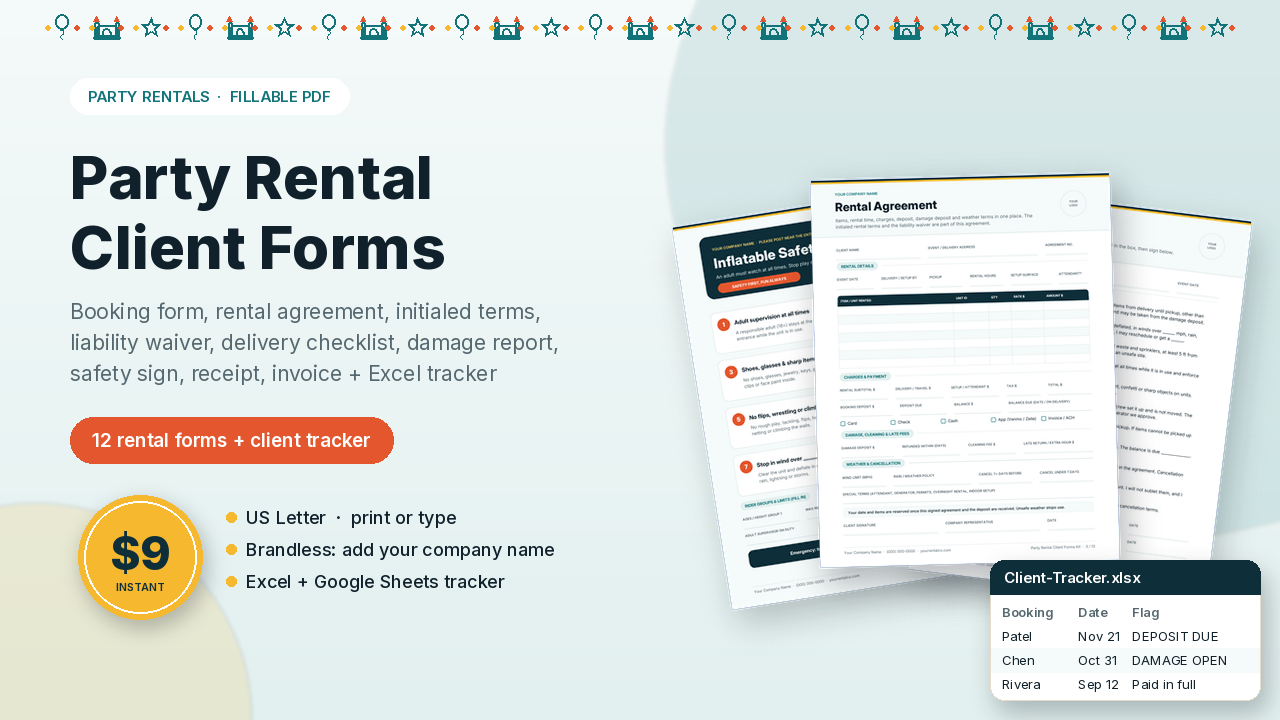
Party Rental Client Forms Kit
12 fillable forms (rental inquiry & booking, rental agreement, 10 initialed rental terms, liability waiver & release, delivery & pickup checklist, inventory check-out / check-in, damage report, inflatable safety rules sign, invoice and more) plus an Excel client tracker.
Get it →6. A worked example (example numbers only)
Say a combo bouncer cost $3,000 with its blower and accessories, insurance and storage add $1,000 a year, and you expect about 40 rentals a season. Spreading the unit over two seasons gives $1,500 a year plus $1,000 in costs, or about $62 per rental before labor. Delivery, setup, pickup and cleaning take about 3 hours, and at $30 an hour that adds $90, so the true cost is about $152. A rental price of $200 plus a $25 to $50 delivery fee beyond your base zone leaves room for profit, fuel and repairs. These are example numbers to show the math, not a recommendation; your costs, demand and local market will differ.
Use forms so the price holds
Most rental disputes start with missing paperwork. An inquiry and booking sheet captures the date, site and items before you quote. A rental agreement with initialed terms and a liability waiver protects you if something goes wrong. Delivery and inventory check-out and check-in sheets and a damage report document the condition of every unit, so a deposit deduction is backed by a record. The free forms above cover the basics, and the full kit adds the rest.
FAQ
How much should I charge for a bounce house rental?
Work out your cost per rental (unit price spread over its expected rentals plus insurance, storage and repairs), add labor for delivery, setup, pickup and cleaning, then compare with rental businesses near you. Bigger combo units and water slides usually rent for more than a basic bounce house.
How do bounce house companies charge for delivery?
Most include delivery within a base zone and charge an added fee by distance beyond it. Some also charge for difficult setups, stairs, early drop-off or late pickup.
Should I take a deposit for party rentals?
Yes. A booking deposit reserves the date, and many businesses also take a damage or security deposit or keep a card on file. State the amounts and refund rules in a written rental agreement.
What happens if it rains or is too windy?
Most operators will not set up or will take down inflatables in rain or high wind for safety. Spell out your weather policy, whether you offer a rain check or refund, and who decides, in your rental agreement.
Do I need insurance to rent bounce houses?
Most rental businesses carry liability insurance, and many parks, schools and venues require proof of it. Check with an insurance provider and your local rules before you start renting.
What should a party rental agreement include?
The items rented, rental period, delivery window, total, deposit and balance due, weather and cancellation policy, safety and supervision rules, a liability waiver, and fees for damage, loss, late return or cleaning, with initials on the key terms.
This page is general guidance, not legal, tax, insurance or business advice. Licensing, inflatable safety and inspection rules, sales tax and contract rules vary by location, so check the rules where you operate and have important contracts reviewed locally.
Related templates
Free Party Rental Forms
A printable party rental inquiry sheet, a simple rental agreement and a delivery, setup & pickup checklist for bounce house and party rental businesses.
Download free →Party Rental Client Forms Kit
Fillable bounce house and party rental forms plus an Excel tracker for bookings, inventory, deposits and damage charges.
Get it →