Personal Chef Client Questionnaire: Questions to Ask Before You Quote
A practical guide for personal and private chefs: the questions to ask every new client before the first consultation, how to turn the answers into a menu, schedule and quote, and the forms to collect before you cook.
Why every personal chef inquiry needs a questionnaire
Most problems in private chef work start before the first meal: a quote based on "dinner for four" that turns into six people with three different diets, a kitchen with one working burner, or a client who expected groceries to be included in the rate. A short client questionnaire, sent before the consultation, collects the details that decide your menu, prep time and price. It also shows new clients that you run a careful, professional service, which matters a lot when you cook in someone's home.
Below are the sections to include, the questions in each, and how to use the answers to build an accurate quote.
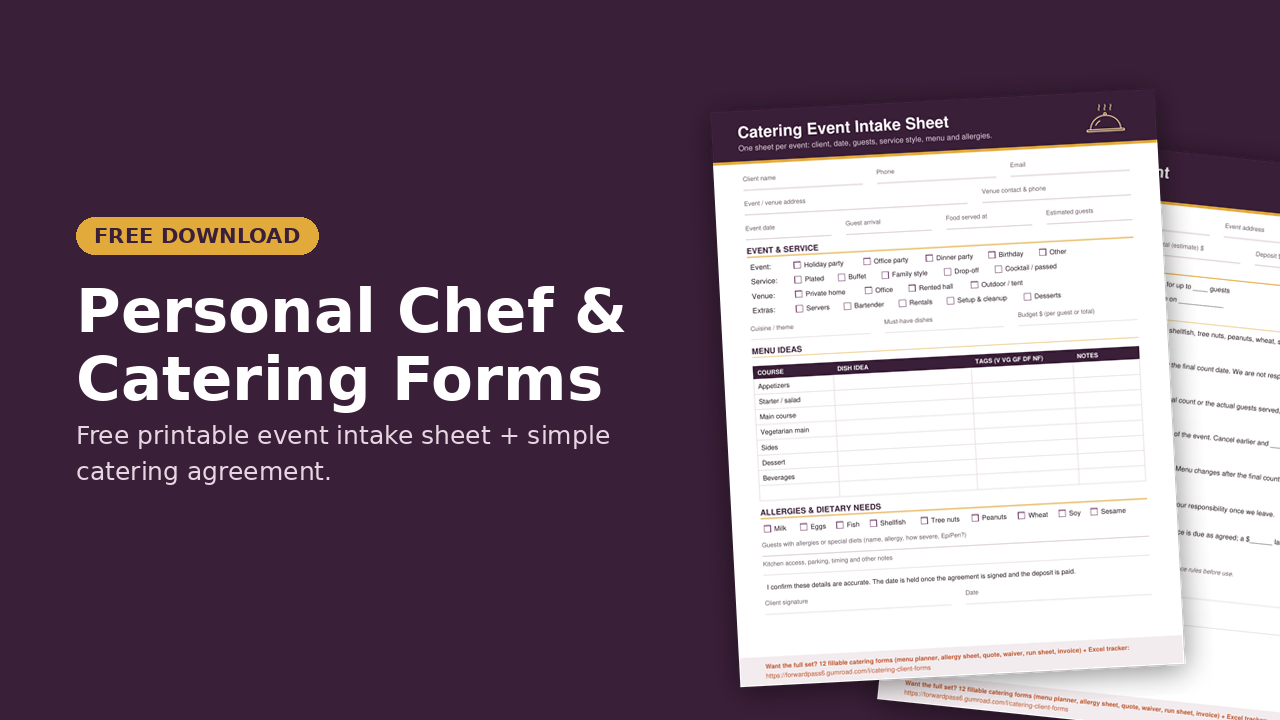
Free Personal Chef & Catering Forms
A printable event intake sheet plus a simple catering agreement for personal chefs and small caterers.
Download free →Section 1: Contact and household details
- Full name, phone, email and preferred contact method
- Service address, parking and building access notes
- Number of adults and children in the household, and ages of children
- Who makes food decisions and who approves menus
- Who is paying, and the billing contact if different
- How they heard about you
Household size and who approves the menu are the two answers that save the most back-and-forth later.
Section 2: Type of service
- Weekly or recurring meal prep (how many meals, portions and days)
- In-home dinners or dinner parties (date, guest count, courses)
- Special occasions: holidays, birthdays, anniversaries, date nights
- Cooking classes or demonstrations
- Short-term help: postpartum, recovery, travel or vacation rental stays
- Drop-off meals vs cooking on site
Ask clients to pick one main service. Recurring meal prep and a one-off dinner party are priced and scheduled very differently.
Section 3: Allergies, intolerances and medical diets
- Any food allergies for anyone eating, and how severe (including airborne or cross-contact sensitivity)
- Whether an epinephrine auto-injector is kept in the home
- Intolerances (lactose, gluten, FODMAP and so on)
- Medically directed diets (low sodium, diabetic-friendly, renal, soft foods) and whether a dietitian is involved
- Medications that interact with foods, if the client chooses to share
Put this section near the top and make it required. Ask the client to confirm in writing, and repeat the question before every event. If a diet is medical, follow the plan the client's healthcare provider gave them rather than making nutrition claims yourself.
Section 4: Food preferences and dislikes
| Question | Why it matters |
|---|---|
| Diet style (vegetarian, vegan, pescatarian, keto, halal, kosher-style, etc.) | Sets the whole menu direction |
| Favorite cuisines and dishes | Gives you easy early wins |
| Foods they dislike or never eat | Avoids wasted meals and returns |
| Spice level and portion size | Controls repeat satisfaction |
| Kids' preferences, if any | Often a separate mini-menu |
| Organic, local or sustainable sourcing preferences | Affects grocery cost and where you shop |
| Leftovers: wanted or not | Changes portion planning |
A short "top five likes, top five dislikes" list is often more useful than a long open question.
Section 5: Kitchen, equipment and storage
- Stove type (gas, electric, induction) and number of working burners
- Oven, microwave, grill, air fryer or other appliances you may use
- Pots, pans, knives and small appliances available, or whether you bring your own
- Fridge and freezer space for prepared meals
- Food storage containers: client-supplied, chef-supplied or billed
- Pets in the home and where they will be while you cook
- Any kitchen rules (no-shoe policy, cleaning products to avoid)
A quick photo of the kitchen and fridge, sent before the consultation, can answer half of these questions at once.
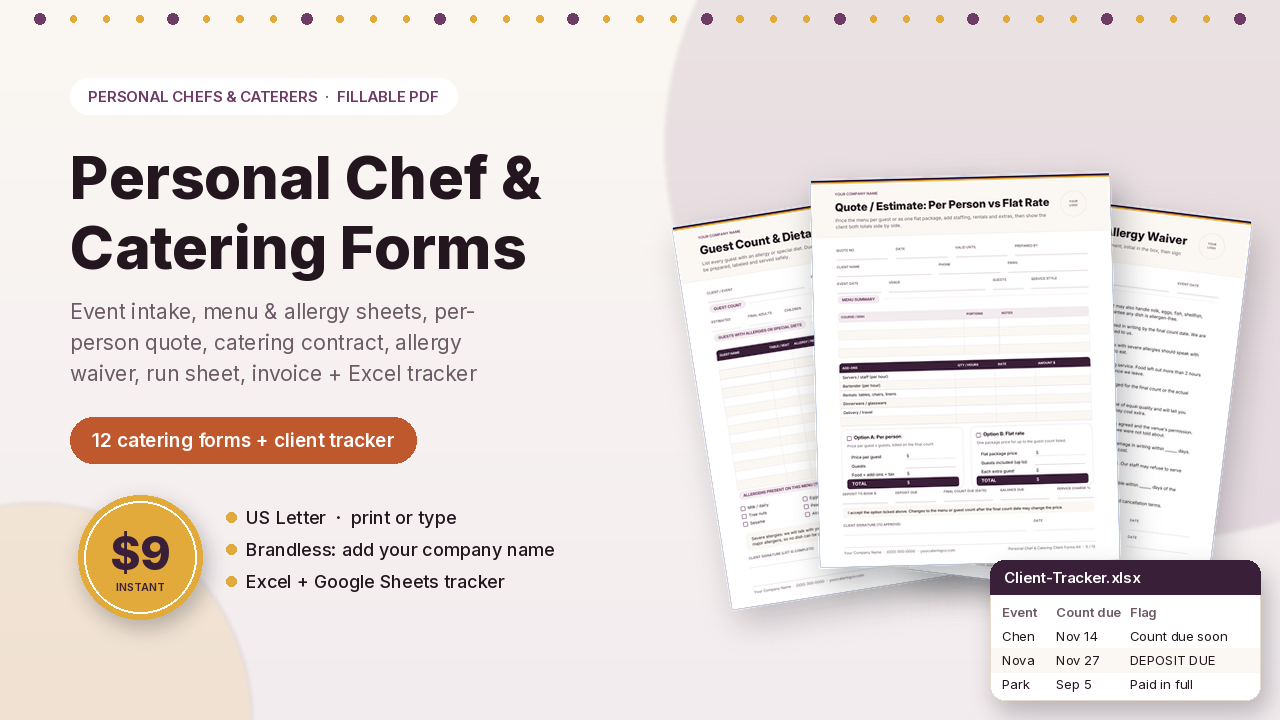
Personal Chef & Catering Client Forms Kit
12 fillable forms (client intake, menu planning & tasting worksheet, guest count & allergy sheet, per-person vs flat-rate quote, service agreement, food allergy waiver, run sheet, grocery & prep list, invoice and more) plus an Excel client tracker.
Get it →Section 6: Schedule and access
- Preferred cook days and time windows
- Start date and how long the service should run
- Whether someone will be home, or how you get in (key, lockbox, code)
- Meal delivery or serving times for dinners and events
- Holiday dates or busy weeks they already know about
Holidays fill quickly for private chefs. Ask about them early and confirm those dates in your agreement.
Section 7: Groceries and shopping
| Option | How it usually works |
|---|---|
| Chef shops, groceries billed at cost | Receipts attached to the invoice; some chefs add a shopping fee |
| Chef shops, groceries included in price | Simpler for clients, but you carry price risk |
| Client shops from your list | Lower cost for the client, more coordination for you |
| Client card or grocery account | Common for recurring households |
Write down the option the client chose, and any grocery budget limit, before you give a final quote.
Section 8: Budget and pricing questions
- Rough budget per week, per meal or per event
- Whether the budget includes groceries
- Preferred billing: per session, per person, flat weekly rate or package
- Gratuity and payment method preferences
For guidance on rates, see the personal chef pricing guide. A budget range lets you offer two or three menu levels instead of one take-it-or-leave-it price.
Section 9: Events and dinner parties
- Occasion, date and start time
- Guest count range and guest allergies
- Number of courses and serving style (plated, family style, buffet, stations)
- Service staff, bartending or rentals needed
- Table setting, plating or cleanup expectations
- Tasting before the event: wanted or not, and whether it is billed
For larger events, also review the holiday party catering checklist.
Section 10: Policies preview
End the questionnaire with a short preview of your policies so nothing in the agreement is a surprise. Example placeholder wording only; write your own terms and have them reviewed for your location.
| Policy | Placeholder wording |
|---|---|
| Deposit | [A deposit of ___ reserves your date and is applied to the final invoice.] |
| Cancellation | [Cancellations within ___ days of service are billed ___.] |
| Groceries | [Groceries are billed at cost with receipts / included in the rate.] |
| Allergies | [You agree to share all known allergies and update me before each service.] |
| Cleanup | [Kitchen cleanup is / is not included.] |
The full terms belong in your personal chef contract.
Turning the answers into a quote (example only)
| Answer | What it changes in the quote |
|---|---|
| Household of 5, two diets | More prep time; possibly two menus |
| Severe nut allergy | Stricter sourcing and cleaning; possibly your own equipment |
| Chef shops, billed at cost | Add a shopping time line item |
| Weekly prep, 4 meals x 5 portions | Base session rate plus containers |
| Dinner party for 12, plated | Per-person rate, service staff and cleanup |
These rows are illustrations, not suggested prices. Use your own costs and local rates.
Common mistakes and a one-page checklist
- Quoting before allergies and household size are confirmed
- Not asking about kitchen equipment until the first cook day
- Leaving the grocery arrangement vague
- Skipping a written agreement for recurring clients
- Not re-confirming allergies and guest counts before each event
Checklist before the first service: questionnaire returned; allergies confirmed in writing; menu approved; grocery option and budget set; kitchen access confirmed; agreement signed; deposit received.
FAQ
What should a personal chef client questionnaire include?
Contact and household details, service type, allergies and medical diets, food preferences and dislikes, kitchen and equipment, schedule and access, grocery arrangement, budget, event details if any, and a short preview of your policies.
When should I send the questionnaire?
Before the first consultation or tasting, so you can come prepared with menu ideas and a realistic quote.
How do I handle allergies on the form?
Make the allergy question required, ask about severity and cross-contact, get the answer in writing, and confirm again before each service or event.
Should groceries be included in my rate?
Either works. Many personal chefs bill groceries at cost with receipts, which protects you from price swings. Whatever you choose, state it on the questionnaire and in your agreement.
Is a questionnaire the same as a contract?
No. The questionnaire collects information. Your terms, deposit, cancellation and liability wording belong in a separate signed agreement.
Can I use one questionnaire for meal prep and events?
Yes, if it has a short section for each. Many chefs ask the client to choose a service type first and skip sections that do not apply.
This page is general information for personal and private chefs, not legal, tax, medical or insurance advice. Food safety, licensing, allergy and insurance requirements vary by location, so check local rules and have your own forms reviewed.
Related templates
Free Personal Chef & Catering Forms
A printable event intake sheet plus a simple catering agreement for personal chefs and small caterers.
Download free →Personal Chef & Catering Client Forms Kit
Client intake, menu planning, allergy sheet, per-person vs flat-rate quote, service agreement, grocery & prep list and invoice plus an Excel client tracker.
Get it →