Personal Training Liability Waiver: What to Include (With a Clause Checklist)
A practical guide for independent personal trainers, coaches and small studios: what a liability waiver is for, the clauses most trainers include, how it fits with health screening and medical clearance, in-home, outdoor and online sessions, minors, signing and storing waivers, and the mistakes that leave trainers exposed.
What a personal training waiver is (and is not)
A personal training liability waiver is a short document a client signs before their first session. In plain language it explains that exercise carries real risks, confirms the client has told you about their health, and records that they agree to take part knowing those risks. Most versions also include a release, where the client agrees not to hold the trainer responsible for ordinary injuries that can happen in training.
What a waiver is not: a shield against everything. In many places a waiver will not protect a trainer from gross negligence, reckless behavior or ignoring an obvious danger, and how much a waiver protects you depends on where you work. Think of it as one part of a system, alongside a health screening, sensible programming, clean equipment, professional liability insurance and good session notes. It also sets expectations, which is half its value: clients who read a clear waiver understand that soreness, effort and some risk come with training.
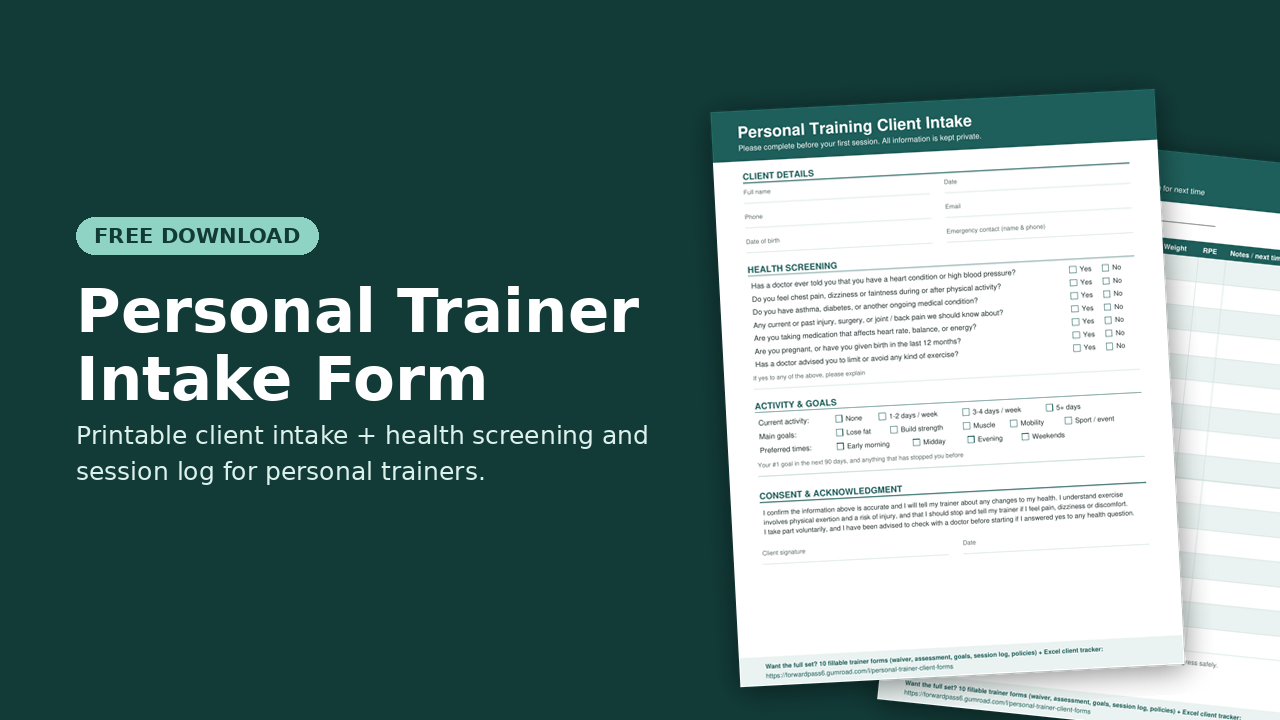
Free Personal Trainer Intake Form
A printable client intake and 7-question health screening plus a training session log for trainers and coaches.
Download free →Who needs one
If you train people for money, you should have a signed waiver on file. That includes:
- Independent trainers who rent space in a gym or studio (the gym's membership waiver usually covers the gym, not you).
- In-home and mobile trainers working in client homes, apartment gyms or parks.
- Online and hybrid coaches whose clients train alone with your program.
- Small group and boot camp coaches, where every participant signs their own waiver.
- Studios with a few trainers, who usually use one studio waiver for every client.
If you work as an employee at a big gym, check whether the gym's paperwork already covers your sessions before adding your own.
The clause checklist
Most personal training waivers include the same building blocks. Use this as a checklist when you write or review yours:
| Clause | What it says in plain language | Why it matters |
|---|---|---|
| Parties and services | Your business name, the client's name, and the services covered (one-on-one, small group, online programs) | Makes clear who and what the waiver applies to |
| Description of activities | Strength training, cardio, mobility, use of weights and equipment, outdoor sessions if you offer them | A client can only accept risks they were told about |
| Assumption of risk | Lists common risks (muscle strain, sprains, falls, dizziness, and in rare cases serious heart events) and says the client understands them | The heart of the waiver; keep it specific and readable |
| Health disclosure | The client confirms they completed the health screening honestly and will tell you about changes | Links the waiver to your screening form |
| Medical clearance | The client agrees to get clearance from a doctor if the screening flags a concern, or chooses to train without it at their own risk | Protects clients with heart, blood pressure, pregnancy or injury issues |
| Client responsibilities | Stop and tell the trainer about pain, dizziness or shortness of breath; wear suitable shoes; follow instructions; train within limits | Shared responsibility; clients know when to speak up |
| Release | The client agrees not to hold the trainer responsible for ordinary injuries from normal training | Wording and enforceability vary by location, so have it reviewed |
| Emergency contact and consent | Name and phone number, plus permission to call emergency services if needed | You need this on the day something goes wrong |
| Photo or video consent (optional) | Separate checkbox for using progress photos or clips | Keep it optional and separate from the waiver itself |
| Signature and date | Client signature, printed name, date; parent or guardian for minors | Shows when the client agreed |
Health screening and medical clearance
A waiver works best when it sits on top of a real health screening. Before the first session, have every client complete a short questionnaire covering heart conditions, chest pain, dizziness, blood pressure, joint or back problems, recent surgery, pregnancy, medications and anything their doctor has told them about exercise. Widely used screening tools ask a handful of yes or no questions; any yes is a cue to slow down and talk.
Build a simple rule into your onboarding: if the screening flags a concern, ask for clearance from a doctor before training, or adapt the plan. Note in the client record what you asked for and what they provided. Do not diagnose, and do not tell a client they are fine to train when their screening raises a medical question; that is outside a trainer's scope of practice. Re-screen every 6 to 12 months (example interval) or whenever a client tells you their health has changed.
In-home, outdoor and online sessions
Where you train changes the risks, so mention it in the waiver:
- In-home sessions: note that the client is responsible for a safe, clear training space in their home and for any of their own equipment you use.
- Outdoor sessions: mention uneven ground, weather, heat and cold, traffic and other park users.
- Online coaching: the client trains without you there, so say clearly that they are responsible for their space, equipment, form checks they send you and stopping if something hurts. Add a line that video calls and programs are not medical advice.
- Small group and boot camps: each person signs their own waiver; one waiver per group is not enough.
Minors and teen athletes
If you train clients under 18, the waiver should be signed by a parent or legal guardian, and the rules for minors can be stricter than for adults. Many trainers add a short parent section with the guardian's name, relationship, phone number and signature, plus a note about whether a parent will be present at sessions. Keep a parent's emergency contact on every session sheet.
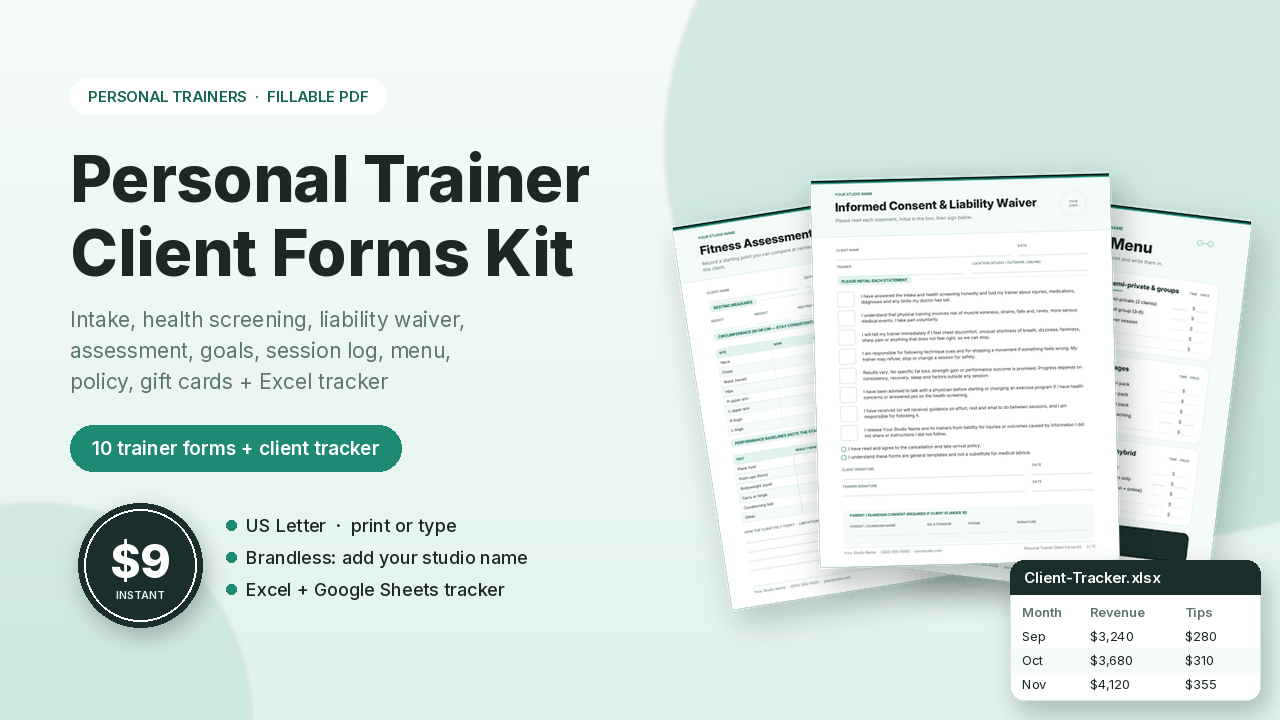
Personal Trainer Client Forms Kit
10 fillable forms (intake and lifestyle questionnaire, health screening, informed consent and liability waiver, fitness assessment, goal setting and training plan, session log, training menu, cancellation policy, photo release, gift certificates) plus an Excel client tracker. The waiver, screening and intake are designed to be signed together at onboarding.
Get it →How to get it signed and stored
The best waiver is useless if you cannot find it. A simple process most trainers can run:
- Send the intake, screening and waiver together as soon as a client books, so nobody signs in a rush at the gym door.
- Ask the client to read before signing. A line such as "I have read this waiver, had the chance to ask questions and sign it voluntarily" helps show they understood it.
- No session until it is signed. Make it a firm rule, including free trial sessions.
- Store it with the client record (paper file or a secure digital folder) and note the date signed in your client tracker.
- Keep records for years, not months. How long depends on local rules; ask a local professional for a retention period.
- Re-sign when things change: new services such as outdoor or online training, a big health change, or a yearly refresh.
| Moment | What to send or update |
|---|---|
| Booking confirmed | Intake form, health screening, waiver, cancellation policy |
| Screening flags a concern | Request for clearance from a doctor; adapt or pause the plan |
| Client starts online or outdoor training | Updated waiver covering the new setting |
| Every 6 to 12 months (example) | Fresh health screening and re-signed waiver |
Common mistakes trainers make
- Relying on the gym's waiver. It usually covers the gym, not an independent trainer renting space.
- Copying a waiver from another country or state without checking it fits where you work.
- Hiding the release in tiny print. Clear headings and plain words help clients understand what they sign.
- Skipping the health screening because the client "looks fit".
- Mixing photo consent into the waiver so the client cannot say no to photos without refusing the whole form.
- No insurance. A waiver does not replace professional liability insurance.
- Losing the paperwork. Keep a dated record for every client, including trial sessions.
A simple one-page layout
Clients are more likely to read a waiver that fits on one or two pages. A layout that works well:
- Title and your business name
- Short description of services and where they happen
- Assumption of risk (a short list of real risks)
- Health disclosure and medical clearance
- Client responsibilities
- Release (clear heading, plain words)
- Emergency contact and consent to call emergency services
- Optional photo or video checkbox
- Signature, printed name, date (plus guardian section for minors)
Pair it with your intake form, health screening and cancellation policy so every new client gets one onboarding pack.
FAQ
Do personal trainers need a liability waiver?
Most independent trainers use one. It records that the client understood the risks of exercise and disclosed their health. It is not a substitute for insurance or safe training, and how much it protects you depends on where you work.
Does a waiver protect a trainer from being sued?
Not completely. In many places a waiver will not cover gross negligence or reckless behavior, and enforceability varies by location. Have a local legal professional review your waiver and carry professional liability insurance.
What should a personal training waiver include?
Usually the parties and services, a description of activities, assumption of risk, health disclosure, medical clearance, client responsibilities, a release, emergency contact, signature and date, plus a guardian section for minors.
Is a gym membership waiver enough for an independent trainer?
Usually not. A gym's waiver normally protects the gym. Independent trainers who rent space generally use their own waiver and their own insurance.
Do online coaching clients need to sign a waiver?
Yes, most online coaches use one. Online clients train without you present, so the waiver should state that they are responsible for their space, equipment and stopping if something hurts.
How often should clients re-sign a waiver?
Many trainers refresh the health screening and waiver every 6 to 12 months, and whenever services or the client's health change. These are example intervals; follow local guidance.
This page is general information for personal trainers, coaches and small studios, not legal, medical or insurance advice. Waiver rules and enforceability vary by country, state and province. Have your waiver reviewed by a qualified local professional, carry appropriate insurance, and follow your certification's scope of practice. Intervals and examples shown are for illustration only.
Related templates
Free Personal Trainer Intake Form
A printable client intake and 7-question health screening plus a training session log for trainers and coaches.
Download free →Personal Trainer Client Forms Kit
Fillable personal trainer forms, including an informed consent and liability waiver, plus an Excel client tracker.
Get it →