Makeup Artist Contract Template: Bridal Booking, Deposits and Consent (Free Form)
What to include in a makeup artist contract for bridal and event clients: party headcount, deposits, travel fees, timelines, trials, cancellations and allergy consent, with a free makeup consent form.
Why makeup artists need a written contract
Bridal and event bookings are planned months ahead, involve several people and depend on one fixed date. Without a written agreement it is easy to end up arguing about a shrinking bridal party, a late start, travel and parking costs, or a deposit after a cancellation. A short makeup artist contract signed at booking sets expectations for everyone, and it is the first thing most brides ask for during engagement season, between Christmas and Valentine's Day.
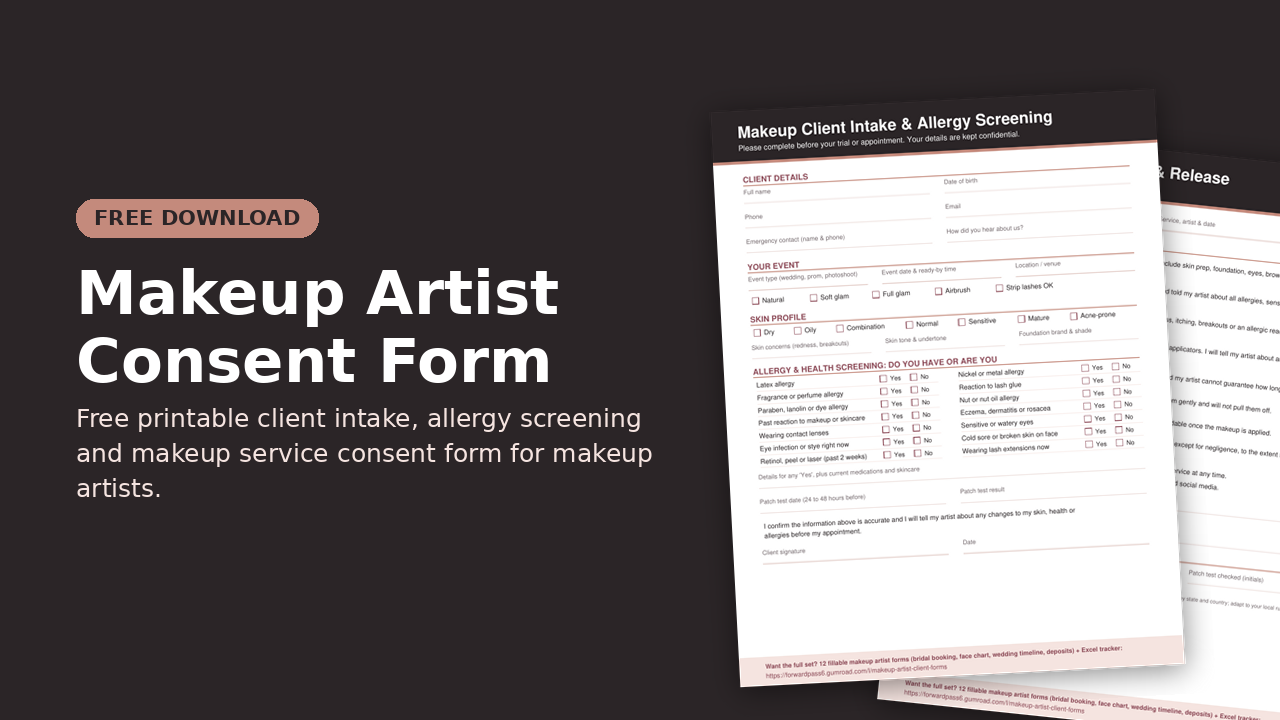
Free Makeup Artist Consent Form
A fillable, printable makeup consent form with client intake, skin profile and allergy and patch test screening, for bridal, event and freelance makeup artists.
Download free →Booking details and the bridal party
List the event date, getting-ready address, ready-by time, photographer arrival and ceremony start. For weddings, add a party table with each person's name, role, service, lashes and price, and set a minimum number of faces. Say when the final headcount is due and that the total will not drop below the minimum after that date.
Deposits, balance and cancellations
Most artists take a non-refundable retainer to hold the date, often 25 to 50 percent, with the balance due before or on the day. State what happens if the client cancels, changes the date or reduces the party, and what you will do if you have to cancel, such as a full refund or finding a replacement artist.
Travel fees, early starts and waiting time
On-location work costs time. Spell out travel zones or a per-mile rate, parking, early start fees before a set hour, hotel costs for distant venues, and a charge for waiting time or for staying on for touch-ups. A clear fee sheet avoids surprises on the invoice.
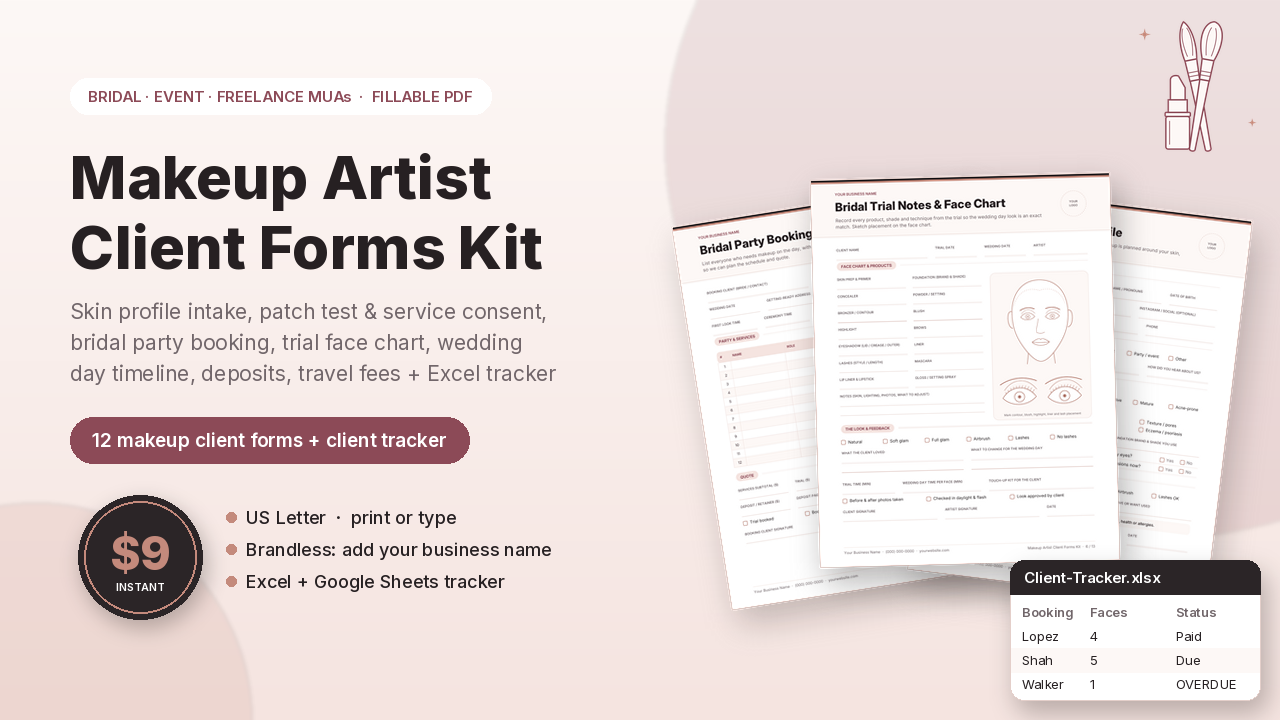
Makeup Artist Client Forms Kit
12 fillable forms (client intake and skin profile, allergy and patch test consent, bridal party booking form, trial face chart, wedding day timeline, booking agreement with deposit and cancellation policy, travel fee sheet, kit hygiene log and more) plus an Excel tracker with bridal party pricing and deposit status.
Get it →Trials, allergy screening and patch tests
A trial lets the bride settle on a look and gives you time to record products and shades on a face chart. Use a short allergy and skin screening for every client (latex, fragrance, lash glue, nickel, past reactions, eczema, contact lenses, recent retinol or peels) and offer a patch test for anyone with sensitive skin. A signed service consent confirms the client shared their allergies and understands reactions are possible.
Hygiene, photos and the wedding day timeline
Keep a simple kit hygiene log and note when products were opened so expired items get replaced. Get written permission before posting client photos, and build a getting-ready schedule that works back from the photographer's first shot, with a buffer of 15 to 30 minutes for the bride.
FAQ
What should a makeup artist contract include?
Event details, services and party list, pricing, deposit and balance terms, cancellation and date change rules, travel and extra fees, trial details, allergy consent, photo permission and signatures.
How much deposit do bridal makeup artists take?
Many take 25 to 50 percent of the total as a non-refundable retainer to hold the date, with the balance due before or on the wedding day.
Do makeup artists need a consent form?
Yes, it is good practice. A short allergy screening and service consent shows you asked about allergies and the client agreed to the service.
Should I charge for a bridal trial?
Most artists charge for trials, and some credit part of the fee to the wedding day booking.
This page is general guidance, not legal advice. Contract, consent and hygiene rules vary by state and country.
Related templates
Free Makeup Artist Consent Form
A fillable, printable makeup consent form with client intake, skin profile and allergy and patch test screening, for bridal, event and freelance makeup artists.
Download free →Makeup Artist Client Forms Kit
Fillable bridal and event makeup forms plus an Excel booking tracker.
Get it →