Massage Aftercare Instructions: A Printable Client Handout for Massage Therapists
A practical guide to written massage aftercare for massage therapists, solo practices and spas: what clients should do in the first few hours, what soreness is normal, heat and ice, what to avoid and for how long, notes for deep tissue, cupping and hot stone sessions, warning signs, rebooking wording and a one-page handout clients actually keep.
Why every massage client needs written aftercare
Most clients leave a massage feeling relaxed, a little sleepy and ready to get on with the day. That is the goal. But the hours after a session matter more than many clients realize. Someone who goes straight from a deep tissue session to a heavy leg workout, a long hot tub soak and a few drinks may wake up the next day far more sore than expected. When that happens, she usually blames the massage, not the workout or the hot tub, and she may not book again.
Verbal advice given while the client is putting her shoes back on is easy to forget. A short printed aftercare sheet, plus the same text sent by message or email after the session, is what clients actually follow at home. It sets expectations about normal soreness, tells clients what to avoid and for how long, and explains clearly when to call a doctor instead of waiting it out.
Written aftercare also protects your practice. When your informed consent form states that the client agrees to follow aftercare, and the client initials that she received the sheet, you have a clear record if she later reports pain, bruising or another concern. Written instructions also keep advice consistent when several therapists work in the same studio or spa, so clients hear the same thing no matter who they booked with.
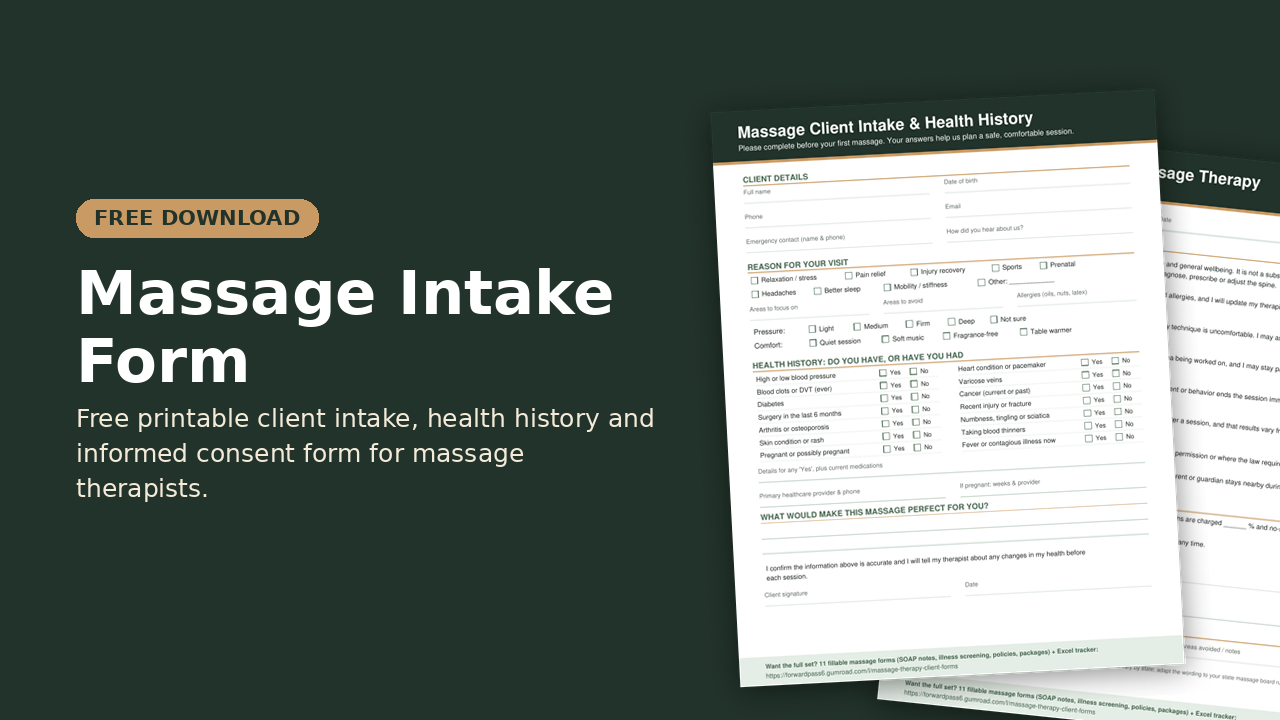
Free Massage Intake Form
A printable massage client intake and health history form plus an informed consent form for massage therapists and solo practices.
Download free →What a massage aftercare sheet should cover
A good sheet is short enough to read in two minutes and specific enough that the client never has to message you with basic questions. Most massage aftercare handouts cover the same core sections:
- The first few hours: drink water, take it easy, get up slowly and notice how the body feels.
- What is normal: mild soreness or tenderness for a day or two, especially after deep tissue or focused work, plus feeling tired or relaxed.
- Heat and ice: simple guidance on when each may help, written in plain language.
- What to avoid, and for how long: intense exercise, alcohol, very hot baths or saunas after certain services, and other treatments on the same area.
- Service notes: extra lines for deep tissue, sports massage, cupping, hot stone or prenatal sessions.
- Gentle self-care: light stretching, walking and posture reminders that support the session.
- Warning signs: what to do if pain, swelling, numbness or other symptoms appear or get worse.
- Rebooking: when to book the next session, written as a typical range rather than a promise.
- Your contact details and a line the client initials or signs to confirm she received the instructions.
Keep it to one page. The more you add, the less clients read. If you offer many specialty services, use one core sheet and add a short fill-in line or a stamped note for the service used that day.
Before the session: what to send at booking
Aftercare goes better when the session starts well. A short prep message, sent when the booking is confirmed, sets the client up for a comfortable appointment and gives you a chance to catch anything that needs attention first. A simple prep section might say:
- Please complete the intake and health history form before your first visit, and tell us about any changes before later visits.
- Tell us about injuries, surgeries, medical conditions, pregnancy, medications (including blood thinners) and any areas you would like us to avoid.
- If you feel unwell, have a fever or a contagious illness, please reschedule. Example: we ask for at least 24 hours notice where possible.
- Avoid a large meal right before your session. A light snack is fine.
- Arrive a few minutes early so you can settle in and talk through your goals.
Your intake form should ask the same questions in writing so the client confirms her answers with a signature. A pre-session check for illness and contraindications, done at every visit, is a simple habit that protects both the client and the therapist. If a client reports a recent injury, a new medical condition or a symptom you are not sure about, many therapists adjust the session or ask the client to check with her doctor first. Put your own rules on this in writing so every therapist makes the same call.
The first few hours and the next day: what to tell clients
This is the most important part of the sheet. Keep the instructions plain and specific, and include a fill-in line for the service type and any focus areas, because a relaxation session and a focused deep tissue session lead to very different next days.
| Time after session | What to tell clients | Why |
|---|---|---|
| Right after | Get up slowly from the table. Sit for a moment before standing. Take your time in the room and on the way out. | Some people feel light-headed or very relaxed after lying down for a long time. |
| First few hours | Drink water and have a light snack if you are hungry. Keep the rest of the day calm if you can. Example: a gentle walk is fine; save hard training for later. | Staying hydrated and moving gently helps many clients feel comfortable after a session. |
| Evening of the session | A warm (not very hot) shower or bath is fine for most clients. Light stretching of the areas we worked can feel good. Go to bed at a normal time. | Rest supports the relaxation and recovery most clients are looking for. |
| Next 24 to 48 hours | Mild soreness or tenderness in worked areas is common, especially after deep tissue or sports massage. Example: it usually eases within a day or two. | Focused pressure can leave muscles feeling like they had a workout. |
| Service used today | Fill-in line: ______________ (for example, deep tissue on shoulders, cupping on upper back, hot stone). Follow any extra notes written here. | Different services need slightly different aftercare. |
Address the “flush out toxins” idea carefully if clients ask. Many therapists recommend drinking water after a massage simply because staying hydrated helps people feel good, not because massage releases toxins that need to be flushed. Keeping the sheet factual builds trust with clients who read up on these topics.
Normal soreness, heat and ice
Clients worry less when they know in advance what is normal. A short “What to expect” block heads off most worried messages the next morning:
- Mild soreness or tenderness: common for a day or two after deep tissue, trigger point or sports work, similar to the feeling after a new workout.
- Tiredness or deep relaxation: many clients feel sleepy for the rest of the day.
- Light pinkness of the skin: normal right after the session from pressure and friction, and it fades quickly.
- Circular marks after cupping: expected, and they usually fade over several days. Example: often within a week, but it varies.
For heat and ice, keep the wording general and leave room for the client's own doctor or physical therapist. Example wording: “If you feel general muscle soreness, a warm shower or a warm (not hot) compress may feel soothing. If an area feels tender and slightly swollen, a cold pack wrapped in a thin cloth for short periods may help. Do not put ice or heat directly on bare skin, and stop if it feels uncomfortable. If you have a medical condition that affects circulation or sensation, ask your doctor before using heat or ice.”
Do not promise specific results, such as how long pain relief or relaxation will last, or that a certain number of sessions will fix a problem. Results vary between clients. Say that many clients find regular sessions helpful and that following aftercare helps them get the most out of each visit.
What to avoid, and for how long
Clients follow rules more closely when each one comes with a time frame. A simple table works well on a printed sheet. The numbers below are examples only. Replace them with the times you recommend for your services and clients.
| Avoid | For how long (example) | Notes |
|---|---|---|
| Intense exercise or heavy lifting | Rest of the day, or 24 hours after deep tissue | Gentle walking and light stretching are usually fine. |
| Alcohol | Rest of the day | Many therapists suggest water instead, especially after a long session. |
| Very hot baths, saunas and hot tubs | Rest of the day after deep tissue or cupping | A warm shower is fine for most clients. |
| Sun exposure on cupping marks | Until marks fade | Cover the area or use sunscreen. |
| Another deep tissue session on the same area | 2 to 3 days | Give worked areas time to settle. |
| Driving a long distance right away | Until you feel alert | Sit for a few minutes before driving if you feel sleepy. |
Keep the language friendly. “Please avoid” reads better than “Do not” for every line. Bold only the rules that matter most, usually the exercise and heat guidance after deep tissue work, so the sheet does not feel like a list of warnings.
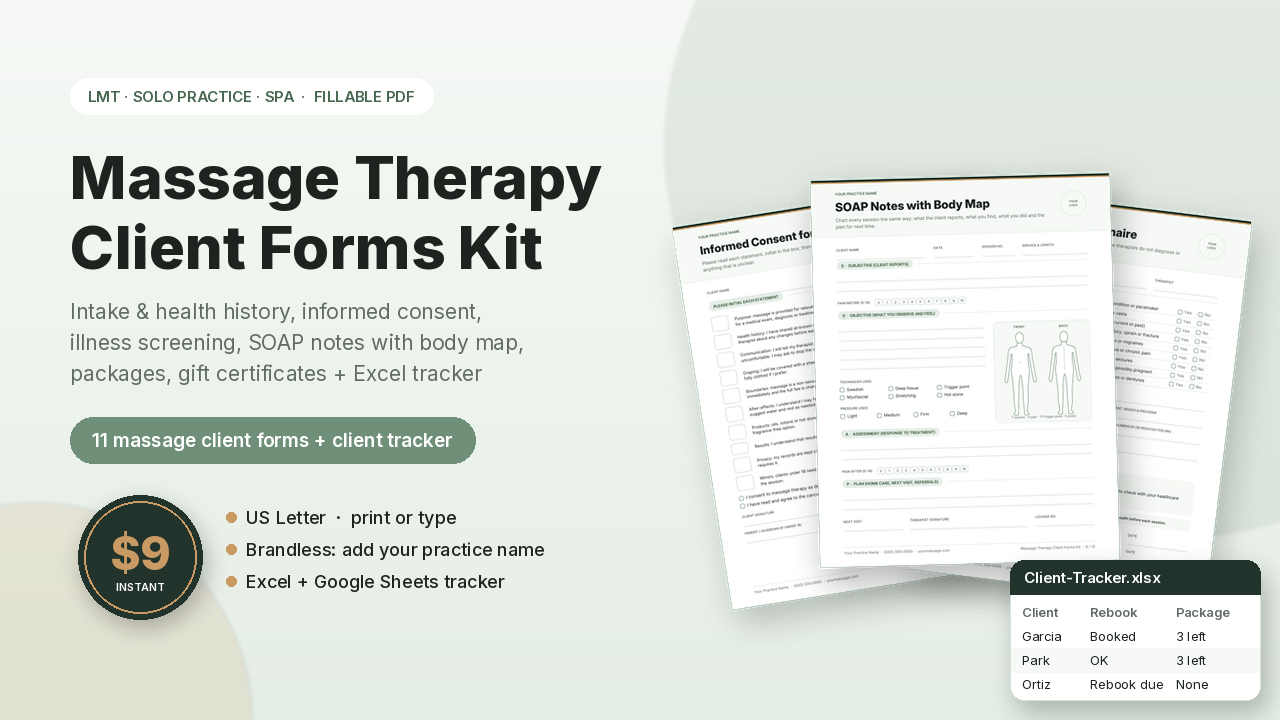
Massage Therapy Client Forms Kit
11 fillable forms (new client intake, health history questionnaire, informed consent, pre-session illness and contraindication check, SOAP notes with body map, treatment session log, cancellation and no-show policy and more) plus an Excel client tracker with rebook reminders. Pairs naturally with a written aftercare sheet, so intake, consent, session notes and aftercare all match.
Get it →Notes for deep tissue, sports, cupping, hot stone and prenatal sessions
One core sheet works for most clients. Add short service notes for specialty sessions, either as a small section at the bottom or as a separate half-page insert:
- Deep tissue and sports massage: soreness for a day or two is more likely. Suggest rest, water and light movement, and skip hard training on the worked muscles for a short time. Example: 24 hours.
- Cupping: circular marks are expected and usually fade over several days. They are not bruises in the usual sense, but if the area becomes very painful, blistered or broken, the client should contact a doctor.
- Hot stone: skin may look slightly pink for a short time. Ask clients to report any area that stays red, painful or blistered.
- Prenatal massage: remind clients to get up slowly, stay hydrated and contact their doctor or midwife with any pregnancy-related concerns. Your intake should record pregnancy and any guidance from the client's provider.
- Aromatherapy or topical products: note what was used. If a client notices itching or a rash, she should wash the area and stop using any similar product.
Record the service and any products used in your session notes every time. If a client reports a concern, you can tell her doctor exactly what was done and where. SOAP notes with a simple body map make this quick and consistent.
Gentle self-care between sessions
A short self-care list helps clients feel looked after and keeps the benefits of the session going. Keep it general and safe:
- Move gently: a short walk on the day of the session and on the next day.
- Light stretching: slow, comfortable stretches for the areas worked. Never stretch into pain.
- Posture breaks: stand up and move every hour if you sit at a desk.
- Sleep and hydration: a good night of sleep and regular water through the day.
- Notice patterns: jot down what makes tension better or worse and tell your therapist at your next visit.
If you are not licensed to give specific exercise or rehabilitation advice where you work, keep this section general and refer clients to their doctor or physical therapist for injury-specific guidance. The goal is to support the session, not to replace medical care.
Warning signs: when to see a doctor
Every aftercare sheet should tell the client what is normal and what is not. Mild soreness that eases within a day or two is common. These signs are different and need a clear instruction:
- Pain that is severe, sharp, or getting worse instead of better after a couple of days.
- Swelling, warmth, redness or tenderness in one leg or calf.
- New numbness, tingling or weakness.
- Bruising that is large, spreading or appears without a clear reason.
- Dizziness, fainting, chest pain or shortness of breath.
- Blistering, broken skin or a rash after cupping, hot stone or a topical product.
Suggested wording: “Mild soreness for a day or two is normal. If you have severe or worsening pain, swelling in one leg, new numbness or weakness, a rash or blistering, contact a doctor. If you have chest pain, trouble breathing or fainting, call emergency services right away. Please also let us know so we can note it in your client record.”
Keep this section calm and factual. It is not there to worry clients. It is there so a client who does have an unusual symptom knows not to wait for her next appointment to mention it.
Rebooking and policy wording
A clear rebooking section brings clients back on a regular schedule and avoids awkward conversations about results. Keep it short and written as typical ranges, not promises. Example wording (replace the numbers with your own):
- “Many clients book every 2 to 4 weeks for ongoing tension, or monthly for general relaxation. Your therapist can suggest a schedule that fits your goals.”
- “Results vary from person to person. Following this aftercare sheet helps you get the most from each session.”
- “Please tell us about any new injuries, medications, pregnancy or health changes before your next appointment.”
- “We ask for 24 hours notice to cancel or reschedule. Late cancellations may be charged as set out in our cancellation policy.” (Example numbers only.)
If you take deposits or charge for late cancellations, put a one-line reminder on the aftercare sheet and point to your full policy. A short cancellation and no-show policy, agreed in writing at booking, prevents most disputes. A client tracker with rebook dates makes it easy to send a friendly reminder when a regular client is due.
One-page handout layout
The easiest format for clients is a single page, front only, with clear headings. A layout that works for most practices:
- Header: practice name, therapist name, date of session, service type and focus areas (fill-in lines).
- First few hours and the next day: five or six bullet points.
- What to expect: normal soreness, tiredness and cupping marks in three or four lines.
- Avoid table: the time frames above, adjusted for your services.
- Service notes: one or two lines for the service used today.
- Warning signs: the short list plus the suggested wording.
- Rebooking: one or two lines and a reminder of your cancellation policy.
- Footer: contact details and a line: “I received and understand these aftercare instructions,” with a space for the client's initials and date.
Hand it over with a glass of water at the end of the session, then send the same text by message or email so the client has it on her phone. For regular clients, a short reminder text after deep tissue sessions is often enough.
Common mistakes on massage aftercare sheets
- No time frames: “take it easy” without a time frame means clients guess, and many head straight to the gym.
- Unsupported claims: avoid promising that massage flushes toxins, cures conditions or fixes pain in a set number of sessions.
- No normal-soreness note: clients who are not told that mild soreness is common may assume something went wrong.
- No service fill-in line: a client who had deep tissue and cupping needs different notes from one who had a relaxation session.
- No warning-sign wording: clients need to know when to call a doctor rather than wait.
- No signed receipt: without the client's initials, you cannot show she received the instructions.
- Mismatched paperwork: aftercare that contradicts your intake, consent or session notes creates confusion. Keep intake, consent, SOAP notes and aftercare in one matching set.
FAQ
What should you not do after a massage?
Many therapists ask clients to avoid intense exercise, alcohol and very hot baths, saunas or hot tubs for the rest of the day, especially after deep tissue work or cupping. Always follow the time frames on your therapist's aftercare sheet.
Is it normal to be sore after a massage?
Yes, mild soreness or tenderness for a day or two is common, especially after deep tissue or sports massage. Severe or worsening pain, swelling in one leg, new numbness or weakness are not normal, and you should contact a doctor.
Why should you drink water after a massage?
Staying hydrated helps many people feel comfortable after a session. Massage does not release toxins that need to be flushed out, but water is a simple, sensible part of aftercare.
Can you shower after a massage?
For most clients a warm shower later the same day is fine. Many therapists suggest avoiding very hot baths, saunas and hot tubs after deep tissue work or cupping for the rest of the day.
Can you work out after a massage?
Gentle walking and light stretching are usually fine. Many therapists suggest skipping hard training on the worked muscles for the rest of the day or about 24 hours after deep tissue work. Follow your therapist's advice.
How often should you get a massage?
It depends on your goals. Many clients book every 2 to 4 weeks for ongoing tension or monthly for general relaxation, but schedules vary. Your therapist can suggest what fits you.
This page is general guidance for massage therapists, solo practices and spas, not medical or legal advice. Recovery, soreness and results vary by person, service and health history. Always follow your training, the scope of practice and the regulations that apply where you work. Clients with severe pain, swelling, numbness or other concerning symptoms should contact a doctor, and emergency symptoms need emergency care. Time frames, rebooking intervals and policy wording shown are example numbers for illustration only.
Related templates
Free Massage Intake Form
A printable massage client intake and health history form plus an informed consent form for massage therapists and solo practices.
Download free →Massage Therapy Client Forms Kit
Fillable massage therapy client forms plus an Excel client tracker.
Get it →