How Much to Charge for Massage: Session Rates, Mobile and Add-On Fees, Packages, Memberships and No-Show Policies (Plus a Free Massage Intake Form)
How massage therapists can set prices: work out your costs and hourly floor, compare local rates, price 30, 60 and 90 minute sessions, add mobile, add-on and specialty fees, build packages and memberships, and protect your schedule with a no-show policy, with a worked example and a free printable massage intake form.
Why massage pricing goes wrong
Many massage therapists set a rate by matching the spa down the street, then find that the numbers do not work for a solo practice: the room, linens, oils, insurance and booking software all come out of their pocket, and only a limited number of hands-on hours fit in a week without injury. Add no-shows, unpaid turnover time between clients and long drives for mobile sessions, and a busy calendar can still lose money. A clear method fixes this: know your costs and hourly floor, price each session length by the time it really blocks, charge for travel and extras, and protect your schedule with a written cancellation and no-show policy.
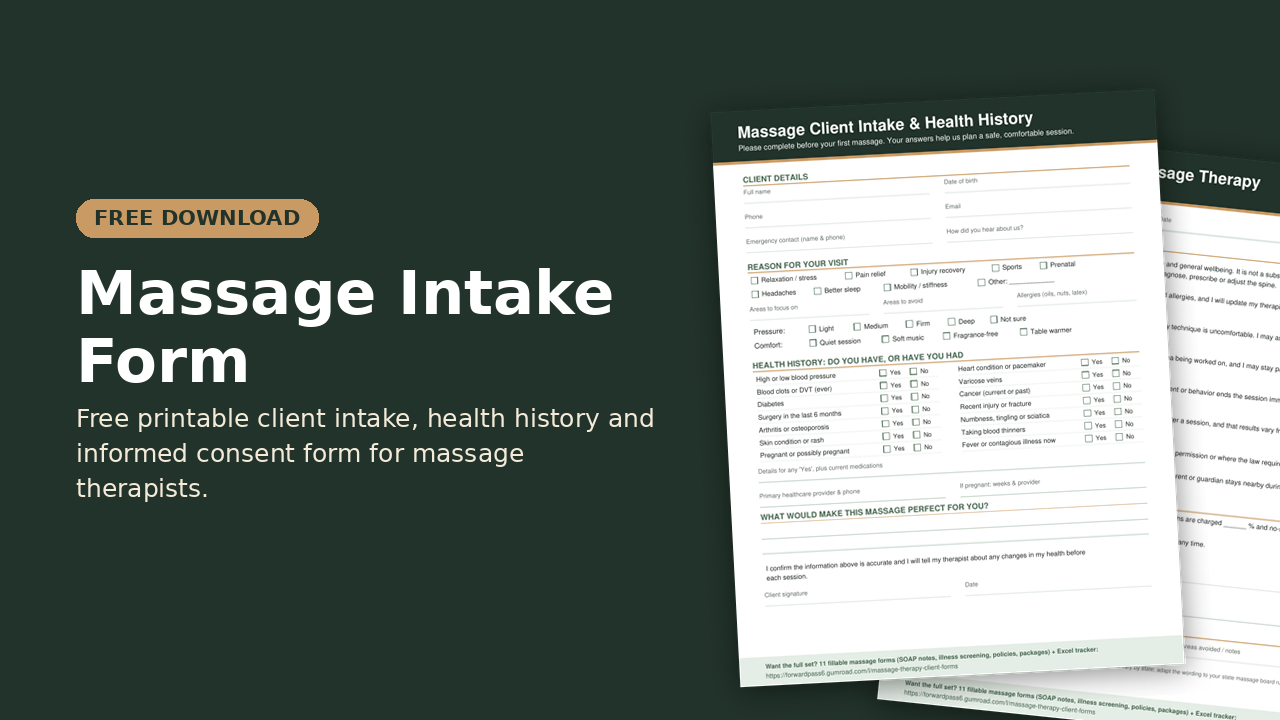
Free Massage Intake Form
A printable massage client intake and health history form plus an informed consent form for massage therapists and solo practices.
Download free →1. Work out your costs and hourly floor
Add up your yearly rent or room fee, table, bolsters and equipment, linens and laundry, oils, lotions and supplies, liability insurance, license renewals and continuing education, booking software, website and card fees, marketing, car costs for mobile work, and self-employment taxes where they apply. Add the income you want, then divide by the hands-on hours you can realistically sustain in a year. Massage is physical work, so be honest: many therapists cap their weekly sessions to avoid burnout and injury. That is your hourly floor. Count turnover time too: a 60 minute massage often blocks 75 to 90 minutes once you include intake, changing linens and notes.
2. Compare local rates
Look at what spas, clinics, chains and independent therapists near you list on their websites and booking pages. Note what each price includes: session length (some "hour" sessions are 50 minutes on the table), hot stones, aromatherapy, CBD or cupping, and whether gratuity is expected. Compare like with like. You can price toward the top of your area for specialized training such as sports, prenatal, lymphatic or medical massage, strong reviews, or a private, calm space.
3. Price 30, 60 and 90 minute sessions
Multiply the time each session blocks (including turnover) by your hourly floor, add supply cost, and round to a clean menu price. Longer sessions are often priced at a slightly lower rate per minute than short ones because turnover time is spread over more table time, but do not discount them so much that a 90 minute session pays less per hour than a 60. Keep a short add-on list, such as hot stones, cupping, aromatherapy, scalp or foot treatment and CBD oil, so extras are charged instead of given away. Price specialty work such as prenatal, sports or lymphatic drainage separately when it takes extra training, positioning or equipment.
4. Add mobile, in-home and event fees
Mobile massage costs you drive time, parking and carrying a table, so many therapists charge a higher rate for in-home sessions, include travel within a set distance and add a per-mile or zone fee beyond it, and set a minimum booking such as 60 minutes or two clients at one address. For chair massage at offices and events, a common approach is an hourly rate per therapist with a minimum number of hours, plus travel and setup time.
5. Build packages and memberships
Packages and memberships turn one-off clients into regulars and smooth out your income. A package is a set of prepaid sessions at a small discount, with a clear expiry date and rules on sharing and refunds. A monthly membership charges a fixed amount for one session a month, often with a member price on extra sessions. Keep discounts modest so each session still clears your hourly floor, and track how many prepaid sessions each client has left so nothing is forgotten or used twice.
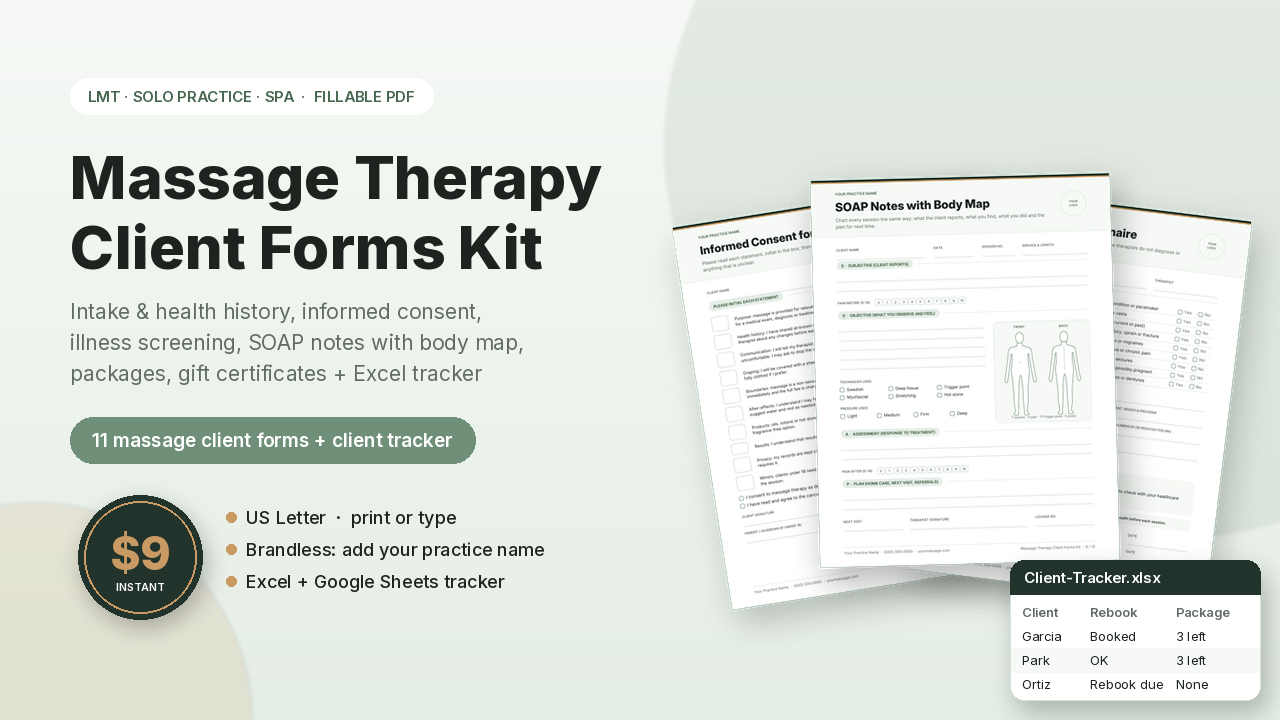
Massage Therapy Client Forms Kit
11 fillable forms (new client intake, health history questionnaire, informed consent, pre-session illness and contraindication check, SOAP notes with body map, treatment session log, cancellation and no-show policy and more) plus an Excel client tracker with rebook reminders.
Get it →6. Set cancellation and no-show rules
Many massage therapists require a set amount of notice to cancel or reschedule, often 24 or 48 hours, and charge a late cancellation fee or the full session price for no-shows. Some take a card on file or a deposit for new clients, first-time bookings or long sessions. State the rule at booking, have clients sign it on the intake form, and apply it consistently.
7. Raise prices without losing regulars
Review your prices at least once a year, or sooner when rent, insurance or supply costs go up. Give regular clients notice before a change, honor prepaid packages at the price they paid, and consider keeping members on their current rate for a few months. If your calendar is full weeks ahead and you are turning people away, that is usually a sign your prices are too low.
Worked example (example numbers)
These are example numbers to show the method, not a recommended price. Say your yearly costs come to $14,000 and you want to earn $46,000, so you need $60,000. If you can sustain about 1,000 hands-on hours a year, your floor is about $60 an hour of blocked time. A 60 minute massage that blocks 80 minutes (1.33 hours) with $4 in supplies: 1.33 x $60 + $4 = about $84, so roughly $84 is the lowest price that covers your costs and income goal. A 90 minute massage that blocks 110 minutes (1.83 hours) with $5 in supplies: 1.83 x $60 + $5 = about $115. Treat these as floors, not menu prices: compare them with local rates and price at or above the market where your training and reviews support it.
Put your prices and policies in writing
Most massage disputes and risks start with nothing on paper: a client who says no one told them about the no-show fee, a package that was "supposed to" last forever, or a health condition that was never recorded. A signed intake and health history form records conditions, medications and contraindications. An informed consent form sets expectations and boundaries. SOAP notes and a session log track what you did and how the client responded, and a written cancellation policy makes fees easy to apply.
FAQ
How much should a massage therapist charge per hour?
Work out your hourly floor from your costs and income goal, multiply by how long each session blocks on your schedule including intake and turnover, add supply cost, then compare with local rates for the same session length and type.
Should a 90 minute massage cost more per minute than a 60?
Usually not. Many therapists charge slightly less per minute for longer sessions because turnover is spread over more table time, but the longer session should still pay at least your hourly floor.
How should I price mobile massage?
Many mobile therapists charge more than in-studio rates, include travel within a set distance, add a per-mile or zone fee beyond it, and set a minimum session length or number of clients per visit.
Should massage therapists offer packages or memberships?
They can help keep regular clients and steady income. Keep discounts modest, set expiry and refund rules in writing, and track remaining prepaid sessions for each client.
Should I charge for no-shows?
Many therapists charge a late cancellation or no-show fee, often after a 24 or 48 hour notice window. Tell clients the rule at booking and have them agree to it in writing.
Do I need a massage intake form?
A signed intake and health history form records medical conditions, medications and contraindications plus the client's consent, which helps you work safely and protects you and the client. Check your local licensing requirements.
This page is general guidance, not legal, tax, medical or licensing advice. Rules on massage licensing, insurance, deposits and fees vary by location, so check the rules where you work.
Related templates
Free Massage Intake Form
A printable massage client intake and health history form plus an informed consent form for massage therapists and solo practices.
Download free →Massage Therapy Client Forms Kit
Fillable massage therapy client forms plus an Excel client tracker.
Get it →