Tattoo Consent Form: What to Include, Plus a Free Printable Release Form
What a tattoo consent and release form should cover: ID and age checks, health screening, design approval, risks, aftercare, deposits and ink lot records, with a free fillable tattoo consent form.
Why every tattoo needs a signed consent form
A tattoo is permanent, and most disputes come from things nobody wrote down: a client who was under age, a health condition that was not mentioned, a spelling that was approved and then regretted, or a deposit that was "supposed to be refundable". A signed tattoo consent and release form, completed before the stencil goes on, protects the client and the artist, and many local health departments expect studios to keep one on file for every procedure.
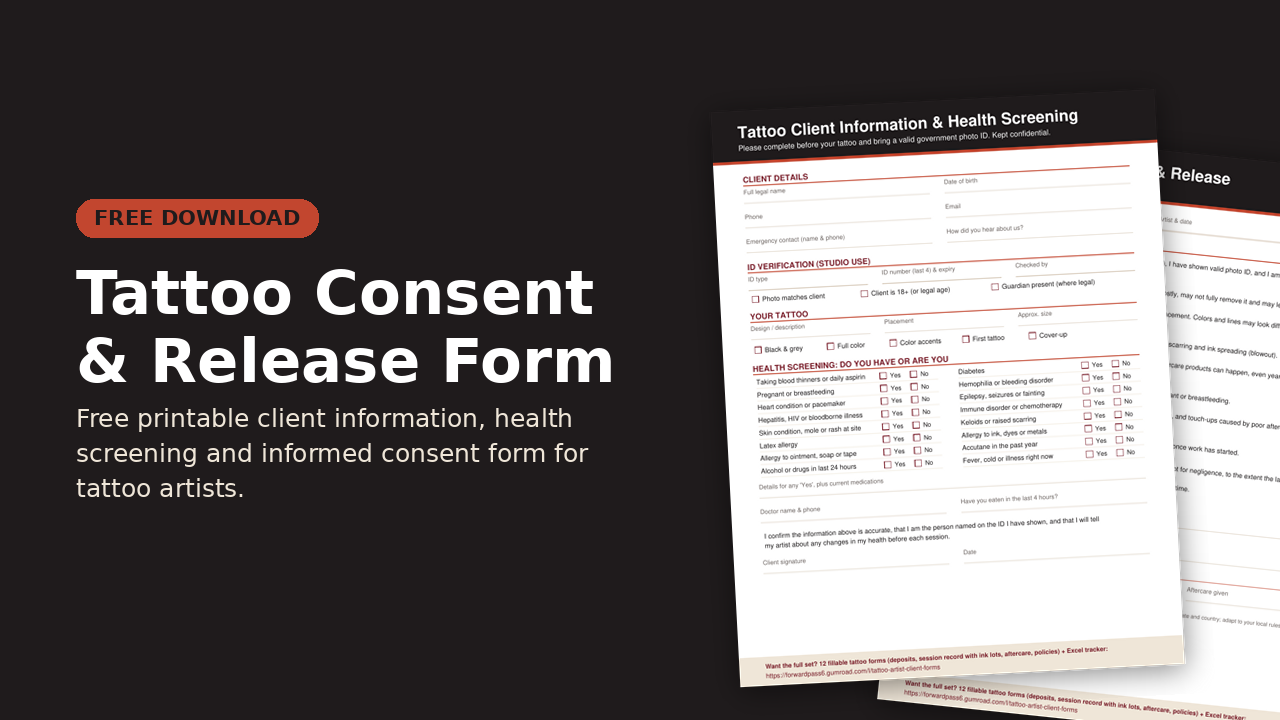
Free Tattoo Consent & Release Form
A fillable, printable tattoo consent and release form with client information, ID verification and a health screening, for tattoo artists and studios.
Download free →Client information and ID verification
Start with the basics: full name, date of birth, phone, email, address and an emergency contact. Then record the ID check: ID type, the last 4 digits, expiry date and who checked it. Most US states set 18 as the minimum age, and some allow minors only with a present parent or guardian and their own ID. Check your state rules and write the age policy into the form so it is applied the same way every time.
Health screening questions
A short yes or no health check helps you decide whether to go ahead, reschedule or ask the client to check with a doctor first. Common questions cover:
- Blood thinners, aspirin or bleeding disorders
- Diabetes, heart conditions or a weakened immune system
- Pregnancy or breastfeeding
- Skin conditions at the site, keloids or scarring
- Allergies to latex, pigments, metals or aftercare products
- Accutane or similar medication in the last year
- Alcohol or drugs in the last 24 hours and current illness
Add a line for medications and a signature confirming the answers are true.
The consent and release statements
Keep each statement short and plain, with an initial box next to it, so the client actually reads it. The usual points are: the client is of age and sober, understands the tattoo is permanent, has approved the design, spelling and placement, understands that results and healing vary, knows the risks of infection and allergic reaction, will follow aftercare, and understands the deposit and touch-up policy. Finish with client, guardian (if any) and artist signatures and an optional photo permission checkbox for your portfolio.
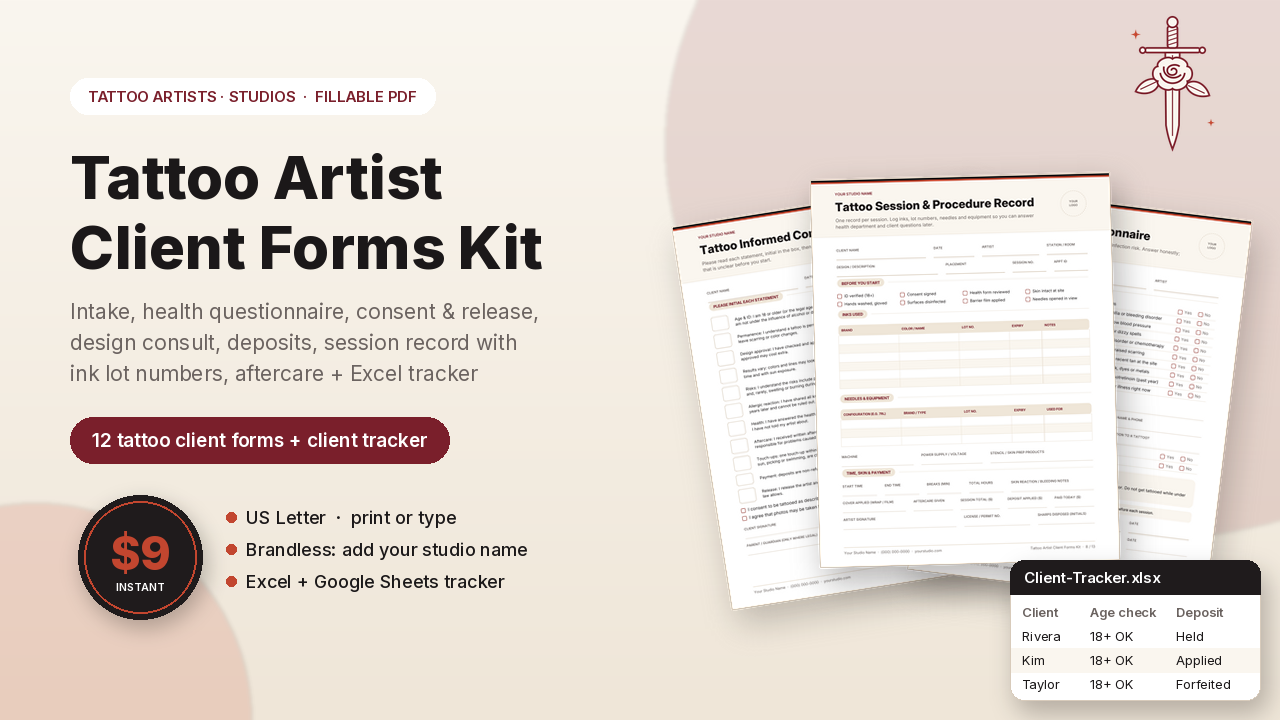
Tattoo Artist Client Forms Kit
12 fillable forms (new client intake, health questionnaire, consent and release, design and placement consultation with body outline, deposit and booking agreement, session record with ink lot numbers, aftercare and more) plus an Excel client tracker with 18+ age checks, deposit status and an ink lot log.
Get it →Deposits, rescheduling and no-shows
Custom work takes drawing time, so most artists take a non-refundable deposit that is applied to the final session. Say how much notice is needed to reschedule, when a deposit is forfeited, how long it stays valid, and what happens if you have to cancel. A separate deposit and booking agreement makes this clear before any drawing starts.
Session records and ink lot numbers
Record each session: date, placement, needles, ink brands and colors, lot numbers and expiry dates, and any reaction. If a client later reports a problem, lot numbers let you trace exactly what was used, and many health codes expect records to be kept for several years.
Aftercare and touch-ups
Hand every client written aftercare instructions and tell them how long free touch-ups are offered, usually within a set number of months when aftercare was followed. Holiday gift certificates for flash or a set dollar amount are also an easy way to fill January books.
FAQ
What should a tattoo consent form include?
Client details, ID and age verification, a health screening, initialed consent and release statements, deposit terms, photo permission and signatures from the client, any guardian and the artist.
How long should tattoo studios keep consent forms?
It depends on your state or local health department. Many require records to be kept for several years, so check your local rules.
Can a minor get a tattoo with parental consent?
Some states allow it with a present parent or guardian and ID; others ban tattoos for minors entirely. Follow your state law and write the rule into your form.
Is a tattoo consent form legally binding?
A signed form is strong evidence that the client was informed and agreed, but it does not cover negligence. Have the wording reviewed for your state if you are unsure.
This page is general guidance, not legal or medical advice. Age, consent, health and record retention rules vary by state and country.
Related templates
Free Tattoo Consent & Release Form
A fillable, printable tattoo consent and release form with client information, ID verification and a health screening, for tattoo artists and studios.
Download free →Tattoo Artist Client Forms Kit
Fillable tattoo client forms plus an Excel client and deposit tracker.
Get it →