Dog Grooming Holiday Pricing: How to Handle the Thanksgiving to Christmas Rush (Plus Free Grooming Forms)
How dog groomers can handle the Thanksgiving to Christmas rush: decide whether to add a holiday surcharge, open pre-booking for regulars, take deposits and set no-show fees, price matted coats fairly, and build simple holiday add-on packages, with a worked example and free dog grooming forms.
Why the holiday rush needs a plan
For many groomers, the weeks between mid-November and Christmas are the busiest of the year. Owners want their dogs clean for family visits, holiday photos and travel, and they all want the same few Saturdays. At the same time, many dogs arrive longer and more tangled than usual because owners skipped an appointment in the autumn. Without a plan, the season turns into overbooked days, long hours, last-minute cancellations and a stack of matted coats priced as normal grooms. A few written policies, set before the rush starts, keep the season busy and profitable instead of exhausting.
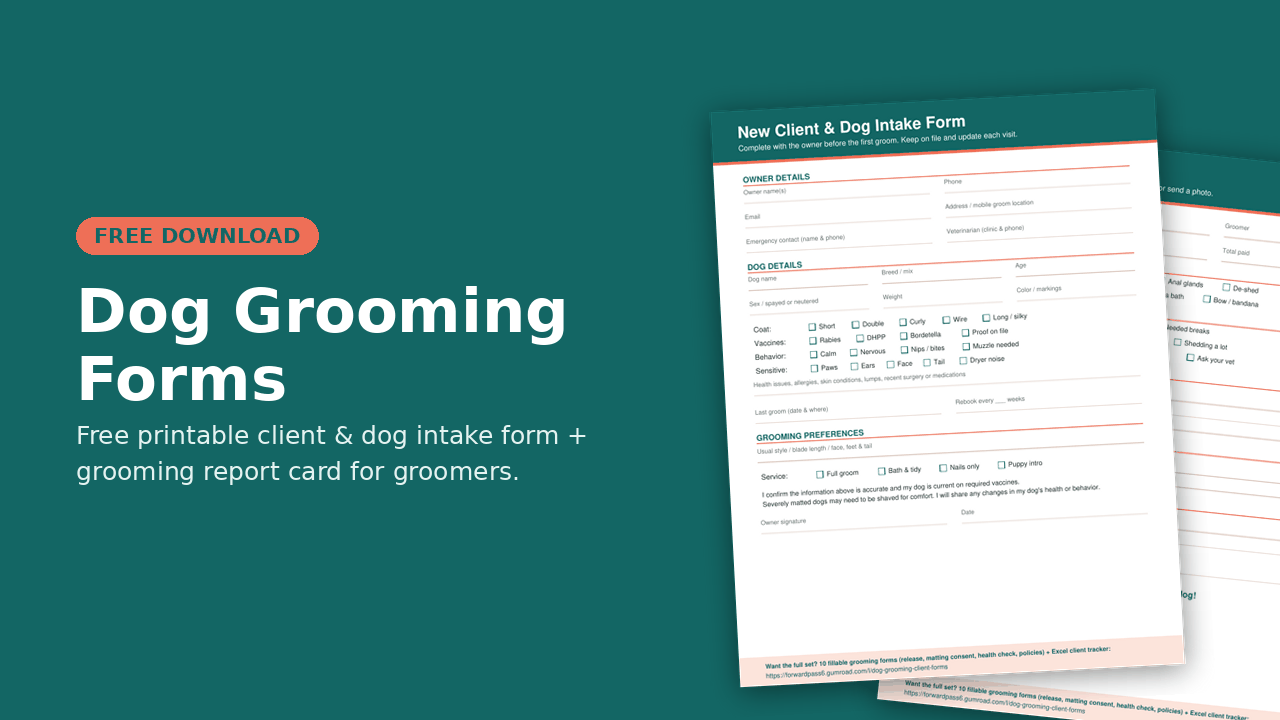
Free Dog Grooming Forms
A printable new client intake form plus a grooming release and consent form.
Download free →1. Holiday surcharge or not?
Groomers are split on this, and both approaches can work.
- No surcharge, but firm policies. Your regular prices stay the same, and you protect your time with pre-booking, deposits and no-show fees instead. This suits groomers whose clients are mostly regulars and who would rather reward loyalty than charge extra.
- A holiday surcharge on peak days. A flat fee or a percentage added to grooms on your busiest dates, such as the week before Thanksgiving and the two weeks before Christmas. This suits groomers who are fully booked anyway and want to be paid more for longer days, or who want to nudge flexible clients toward quieter dates.
- A middle path. No surcharge for clients on a regular rebooking schedule, and a surcharge for one-off holiday grooms or for dogs not seen in a long time.
If you add a surcharge, list the exact dates and the amount on your price list and booking page well before the season, and tell clients when they book. A surprise fee at pickup does more damage to the relationship than it earns.
2. Open pre-booking for regulars first
Your regulars keep you busy the other ten months, so give them first access to the holiday calendar. A simple approach: send regular clients a message in late October or early November with the dates you have open and a deadline to claim one, then open the remaining slots to everyone else. Many groomers also let clients book their holiday groom at the end of their autumn appointment. Set a limit on how many grooms you will do per day during the rush, based on how many you can do well, and stop when you reach it. A waitlist for cancellations fills gaps without overbooking.
3. Deposits and no-show fees
A no-show on a normal Tuesday is annoying. A no-show on the Saturday before Christmas is a slot you could have filled three times over. Common ways to protect peak dates:
- A booking deposit for holiday dates, either a flat amount or a share of the groom price, applied to the final bill.
- A card on file with written consent to charge a no-show or late cancellation fee.
- A clear cancellation window, such as 48 or 72 hours for holiday appointments, after which the deposit is kept or a fee applies.
- A late arrival rule, for example appointments more than 15 minutes late may need to be shortened or rebooked.
Write the policy on your booking form or agreement, have the client agree to it, and send a reminder a day or two before. Reminders cut no-shows more gently than fees do.
4. Price matted coats fairly
Holiday grooms bring more matted dogs, and matting takes extra time, extra blades and extra care for the dog's skin. Set your matting policy in writing before the rush:
- A dematting fee charged per 15 minutes or as a flat tier (light, moderate, heavy), so the price follows the real time it takes.
- A shave-down option when dematting would be painful or unsafe, with the owner's signed consent, because the dog may look very different at pickup.
- A pre-groom check at drop-off, where you look at the coat with the owner and agree on the fee and the plan before you start.
A matting consent form, signed at drop-off, protects you if the owner is unhappy with a short clip or if the skin underneath shows irritation once the mats are removed. Explain kindly that comfort comes first and that regular appointments prevent it next time.
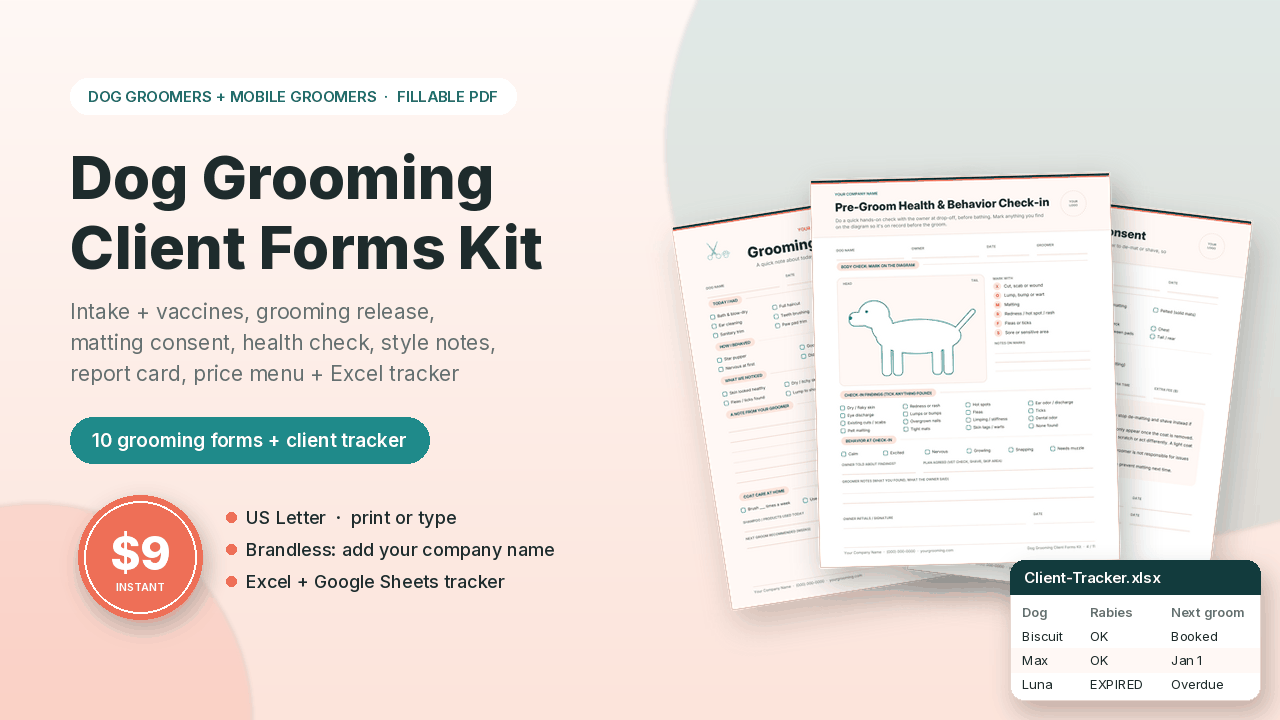
Dog Grooming Client Forms Kit
Fillable grooming forms (client & dog profile with vaccine record, grooming agreement & release, pre-groom health check, matting consent, style notes, report card and more) plus an Excel client tracker with next-groom-due dates and vaccine expiry alerts.
Get it →5. Holiday add-ons and packages
Add-ons are a gentler way to raise the average ticket than a surcharge, because the client chooses them. Ideas that fit the season:
- A holiday finishing touch: a seasonal bandana or bow, a light cologne spritz and an extra brush-out.
- A photo-ready package: blueberry facial, teeth brushing, paw balm and a quick photo against a simple backdrop.
- A travel prep add-on: nail trim and grind, ear cleaning and paw pad tidy for dogs going on a trip or staying with family.
- A gift card or pre-paid groom that owners can give to friends and family.
Keep the menu short (two or three options) so check-in stays quick on busy days, and price each add-on based on the extra minutes and supplies it takes.
A worked example (example numbers)
These numbers are made up to show the math, not market rates. Say your full groom for a medium doodle is $85. You add a $10 holiday fee on peak dates for clients who are not on a regular schedule, charge $15 per 15 minutes of dematting, and offer a $20 photo-ready package. A one-off client books the Saturday before Christmas, the dog needs 30 minutes of dematting, and the owner adds the package.
- Full groom: $85
- Holiday fee: $10
- Dematting: 2 x $15 = $30
- Photo-ready package: $20
- Total: $145, with a $30 deposit taken at booking and applied to the bill
Run the same math with your own prices before the season, and show the matting fee range at booking so the total is not a surprise.
Before the rush starts
Get the paperwork ready in early November. Update your price list with any holiday dates, fees and add-ons. Check that every client has an up-to-date profile with vaccine records, since you do not want to turn a dog away on a fully booked day. Prepare intake, release and matting consent forms so check-in is fast, and plan your own breaks, because long days with tired dogs and tired groomers are when accidents happen. After the season, rebook every holiday client for their next appointment before they leave; the January lull is much easier with a full book.
FAQ
Should dog groomers charge a holiday surcharge?
It is a business choice. Some groomers keep regular prices and protect peak days with pre-booking, deposits and no-show fees; others add a flat fee or percentage on listed peak dates. If you charge one, publish the dates and amount in advance.
How far ahead should clients book holiday grooms?
Many groomers open holiday dates to regular clients first, often in late October or early November, with a deadline to claim a slot, then open the rest to new clients. Booking the holiday groom at the autumn appointment also works well.
Should I take a deposit for holiday grooming appointments?
A deposit or card on file for peak dates helps reduce no-shows. State the cancellation window, whether the deposit is applied to the bill, and when it is kept, and have the client agree in writing.
How should I price a matted dog during the holidays?
Charge for the extra time, either per 15 minutes or in tiers, and offer a shave-down with signed consent when dematting would be uncomfortable for the dog. Agree on the fee at drop-off after checking the coat with the owner.
What holiday add-ons can groomers offer?
Short, simple options work best, such as a seasonal bandana and finishing touch, a photo-ready package, a travel prep add-on, or gift cards. Price each one on the extra time and supplies it needs.
This page is general guidance, not legal, tax or veterinary advice. Business, licensing and consumer rules vary by state and city, so check your local rules and have your agreement reviewed by an attorney or insurer.
Related templates
Free Dog Grooming Forms
A printable new client intake form plus a grooming release and consent form.
Download free →Dog Grooming Client Forms Kit
Matting consent, grooming agreement, pre-groom health check and an Excel tracker with rebooking dates.
Get it →