Dog Grooming Report Card: What to Tell Owners at Pickup (+ Free Forms)
A practical guide for salon, mobile and home-based dog groomers: what a grooming report card should say after each appointment, how to write about coat, skin and behavior without diagnosing, and how to use it to rebook the next groom.
Why a report card at pickup matters
When an owner collects their dog, they usually see the finished cut and little else. They do not see the mat you worked out behind the ear, the redness you spotted on the belly, the nail that was too close to the quick to take shorter, or the fact that their dog stood beautifully for the dryer this time. A grooming report card tells them, in a minute of reading, what you did and what you noticed.
A short written card does several jobs at once. It shows the owner the value of the groom beyond the haircut. It gives them a calm, written heads-up about anything they may want to ask their vet about. It records what you saw on that date, which helps if a question comes up later about a nick, a skin issue or a change in coat condition. And it is the natural place to recommend the next appointment, which keeps coats in better shape and your calendar fuller.
This guide is about that one form, the card the owner takes home. The questions a new client answers before the first visit are covered in our dog grooming intake form and client questionnaire guides, your terms and releases are in the dog grooming contract template guide, and setting your prices is covered in dog grooming pricing.
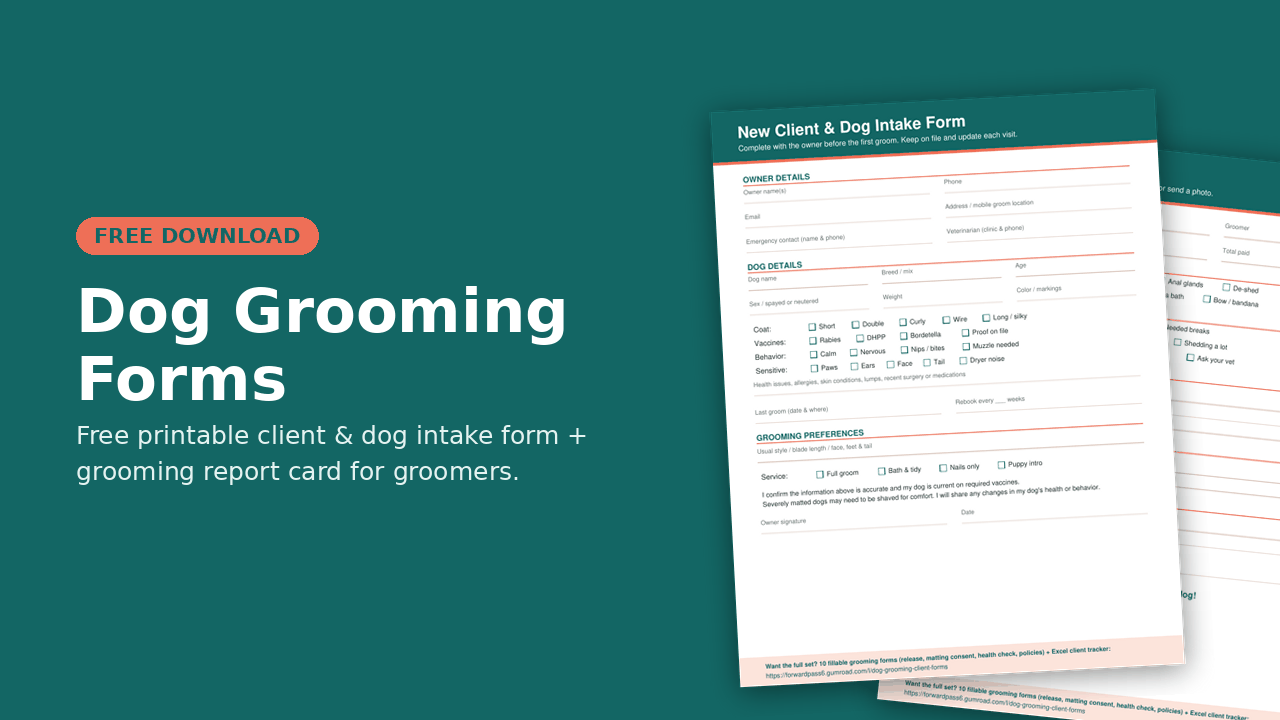
Free Dog Grooming Forms
A printable new client intake form plus a grooming release and consent form.
Download free →Report card vs grooming record vs intake form
Groomers often keep three different kinds of paperwork, and it helps to keep them separate:
| Form | When | Who it is for | What it holds |
|---|---|---|---|
| Intake form / questionnaire | Before the first groom, updated when things change | You | Owner contact details, vet, vaccines, health history, behavior, style preferences, signed release |
| Internal grooming record | After every groom | You and your team | Blade and comb lengths, products, handling notes, time taken, price charged |
| Report card | At pickup, after every groom | The owner | What was done, what you noticed, how the dog behaved, what you recommend next |
The report card is the friendly, owner-facing summary. Technical notes such as “#7F body, 1” comb on legs” belong on your internal record, although some groomers like to copy the style details onto the card so the owner can ask for “the same as last time”.
1. The basics at the top
Start every card with the same details so it makes sense on its own, even months later:
- Dog’s name and, if useful, breed
- Owner’s name
- Date of the groom
- Groomer’s name (and bather’s name if a different person did the bath)
- Salon name and phone number, or your mobile business details
- Service booked (for example full groom, bath and tidy, de-shed, puppy intro, nail trim only)
A preprinted card or a saved template means you only fill in the parts that change, which keeps the card quick to complete during a busy day.
2. Services completed
A tick-box list is the fastest way to show everything that was included. Common items:
- Bath and blow dry, with shampoo or conditioner type if the owner chose one
- Brush out and de-shed
- Haircut or trim, with the style name or length
- Nail trim or nail grind
- Ear cleaning, and ear hair removal if your salon offers it and the owner agreed
- Paw pad and sanitary trim
- Face and eye tidy
- Teeth brushing, if offered
- Add-ons such as blueberry facial, paw balm or bandana
If something on the booking was not done, say so and why: “Nails filed only, as Buddy was very stressed by the clippers today” is much better than an owner discovering long nails at home. If you added a charge (for example a de-matting fee), list it here so it matches the invoice.
3. Coat condition and matting
Coat notes are where a report card earns its keep, especially for doodles, poodle mixes and other coats that mat easily. Describe what you found and what you did, in plain words:
| Instead of | Write something like |
|---|---|
| “Coat was a mess.” | “Tight mats behind both ears, in both armpits and on the back legs. Shaved these areas short to keep Bella comfortable; the rest of the coat was brushed out.” |
| “Owner needs to brush more.” | “Brushing two or three times a week with a slicker and comb, right down to the skin, will help keep this length. Happy to show you how at your next pickup.” |
| “Had to shave.” | “Matting was close to the skin all over, so we did a short shave-down as discussed at drop-off. The coat will grow back; a shorter style may be easier to maintain over winter.” |
| “Coat is fine.” | “Coat in good condition with only small tangles behind the ears. Current brushing routine is working well.” |
Example only. Use your own wording and follow your salon’s policies.
If you shaved out matting, your card should match what the owner agreed to at drop-off on your matting consent or release form. Keep the tone helpful rather than critical; the goal is a better-kept coat next time, not a guilty owner.
4. Skin, ears, eyes, nails and teeth: observations, not diagnoses
Groomers see parts of a dog that owners rarely look at closely. A report card is a good place to mention anything unusual, as long as you describe what you saw and leave diagnosis to the vet.
- Skin: redness, flaking, scabs, bald patches, hot spots, lumps or bumps, and where they are (for example “small raised lump, about pea-sized, on left side of chest”)
- Parasites: fleas, flea dirt or ticks seen, and what you did according to your salon policy
- Ears: redness, odor, dark discharge, or the dog shaking its head or reacting when ears were handled
- Eyes: discharge, tear staining, redness or cloudiness
- Nails and paws: overgrown nails, a split or broken nail, cracked pads, redness between toes, a nail that bled
- Teeth and mouth: heavy tartar or bad breath, if you noticed it
| Instead of | Write something like |
|---|---|
| “Has an ear infection.” | “Both ears were red inside with a dark discharge and a strong smell; Max shook his head a lot. You may want to have your vet take a look.” |
| “Found a tumor.” | “Noticed a soft lump about the size of a grape on the right side, behind the front leg. Worth pointing out to your vet.” |
| “Allergies.” | “Red, flaky skin on the belly and inside the back legs. Used the gentle shampoo you approved.” |
Example only. Use your own wording and follow your salon’s policies.
Only mention a vet visit as a suggestion. You are not diagnosing; you are passing on what you saw so the owner can decide what to do.
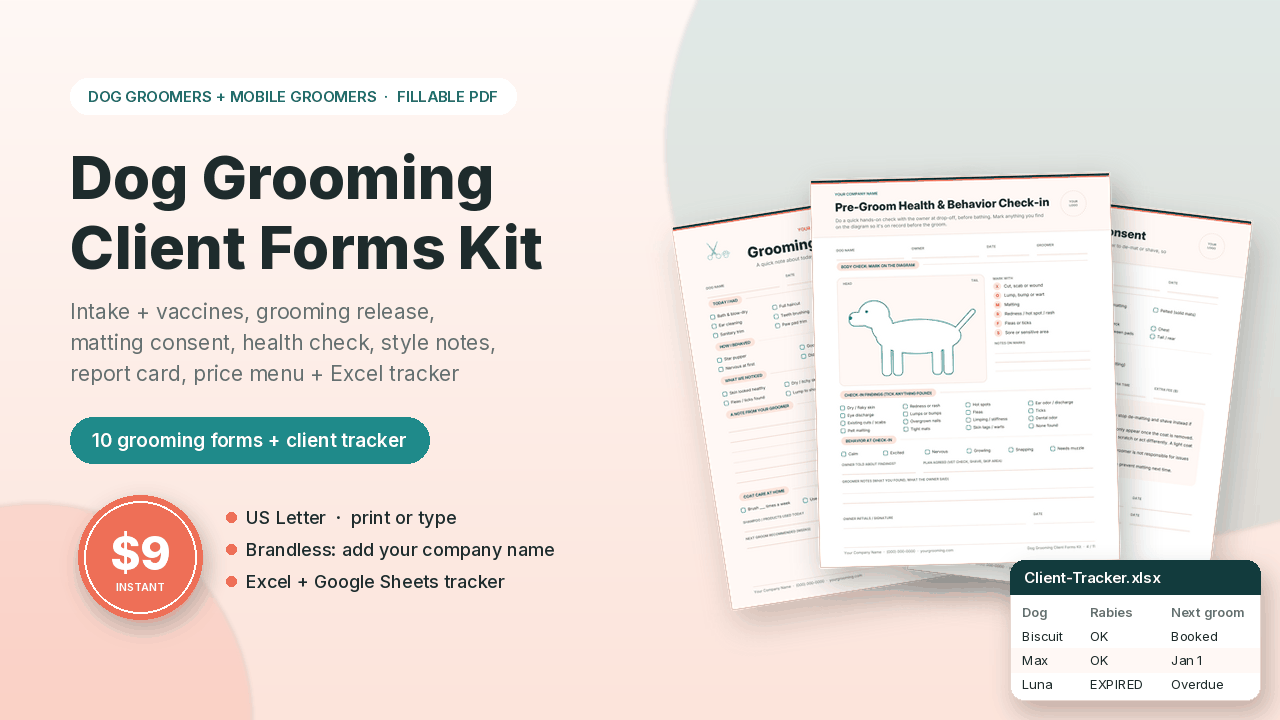
Dog Grooming Client Forms Kit
Fillable grooming forms (client & dog profile with vaccine record, grooming agreement & release, pre-groom health check, matting consent, style notes, report card and more) plus an Excel client tracker with next-groom-due dates and vaccine expiry alerts.
Get it →5. Behavior and handling
Owners love hearing how their dog did, and an honest behavior note helps you plan the next appointment. Keep it factual and kind:
- How the dog settled: “relaxed on the table”, “nervous at first, calmer after the bath”
- What the dog found hard: dryer, nail trim, feet, face, being lifted
- Any handling aids you used under your salon policy and the owner’s agreement, such as a muzzle for nails, a grooming loop or breaks
- Any snapping, growling or attempts to bite, stated plainly and without labels
- Small wins: “stood for the whole face trim for the first time”
Avoid words like “bad”, “aggressive” or “naughty”. “Tried to mouth my hand twice during the nail trim, so we used a muzzle for that part as agreed at drop-off” tells the owner exactly what happened. If a dog is becoming harder to handle over several visits, the card can suggest shorter appointments, a quieter time slot, or a chat with their vet or a trainer.
6. Any nicks, injuries or incidents
Even careful groomers occasionally nick skin, quick a nail, or have a dog slip on the table. If anything like that happens, the report card (or a separate incident note attached to it) should say so clearly:
- What happened and where on the body
- What you did straight away (for example styptic powder on the nail, cleaned the nick, applied pressure until bleeding stopped)
- Whether you called the owner before pickup, and when
- Anything the owner should watch for at home, and a suggestion to contact their vet if they are worried
Telling the owner yourself, calmly and in writing, is always better than them finding a small cut at home and wondering why nobody mentioned it. For anything more than a minor nick, call the owner during the groom and follow the emergency vet authorization on your agreement. Many groomers keep a separate incident log as well; check what your insurer expects.
7. Recommendations and next groom
Finish with practical, specific advice the owner can act on:
- Next groom: a recommended interval based on coat type and today’s condition (for example “every 4 to 6 weeks keeps this length tangle-free”) and, ideally, a booked date and time
- Home care: the brush or comb that suits the coat, how often to brush, keeping ears dry after swimming
- Style notes: what you did this time and anything to try next time (“could go slightly longer on the face for winter”)
- Products used: especially if the owner wants to buy the same shampoo or the dog has sensitive skin
- Follow-up: anything you suggested they mention to their vet
Booking the next appointment from the report card, before the owner leaves, is one of the simplest ways to keep a steady calendar. A short line such as “Next groom booked: [date] at [time]” turns the card into a reminder as well.
A complete example report card
Here is what a filled-in card might look like for a regular client:
| Section | Example entry |
|---|---|
| Basics | Dog: [Name], Cavapoo. Owner: [Name]. Date: [date]. Groomer: [Name]. Service: full groom. |
| Services | Bath with oatmeal shampoo, blow dry, brush out, teddy face, body clipped short, nails trimmed, ears cleaned, sanitary and paw pad trim. |
| Coat | Small mats behind both ears and in the armpits, clipped out. Rest of coat brushed out well. |
| Skin, ears, nails | Light redness inside right ear, no smell. Nails were long; trimmed, one close to the quick so left slightly longer. |
| Behavior | A little wriggly for the feet, great for the dryer. Took two short breaks. |
| Incidents | None. |
| Recommendations | Brush behind ears and armpits twice a week. Mention the right ear to your vet if it stays red or your dog keeps scratching it. |
| Next groom | Recommended in 5 to 6 weeks. Booked: [date] at [time]. |
Example only. Use your own wording and follow your salon’s policies.
Salon, mobile and home-based groomers: what changes
| Setting | What to add or change on the card |
|---|---|
| Salon with several groomers | Name of bather and groomer, kennel or drying notes, time in and time out, front desk can read it to the owner at pickup |
| Mobile van | Arrival and finish time, notes on where the dog was handed back, a photo of the card or a text summary if the owner was not home |
| Home-based salon | Simple one-page card, same layout every time, booking line for the next appointment |
| Puppy intro visits | What the puppy experienced (bath, dryer sounds, nail touch), how they coped, plan for gradually adding services |
Example only. Use your own wording and follow your salon’s policies.
Whatever your setup, the same rule applies: the card should make sense to an owner who was not there and did not see the groom.
Paper card, text or app?
There is no single right format. A printed card in a branded half-page format feels personal and is easy to hand over with the dog. A text or email with a quick summary and a before-and-after photo suits mobile groomers and owners who do not come to the door. Grooming software can store cards with each pet’s profile and send them automatically.
Choose the format you will actually complete every time. If you use photos, check your photo release before posting any of them publicly, and keep client contact details and notes private. Rules on storing customer information vary by location, so keep cards and records secure and only for as long as you need them.
Keep it quick: a two-minute routine
- Fill in the basics when the dog is checked in
- Tick services as you go, rather than from memory at the end
- Jot coat, skin and ear notes while the dog is on the table, when you are looking closely anyway
- Write the behavior note and recommendations just before pickup
- Copy the style and any important notes onto your internal grooming record
- Hand over the card and book the next appointment while the owner is there
With a preprinted card, most of the work is ticking boxes and writing two or three short sentences.
Common report card mistakes
- Leaving it blank or generic: “Good dog!” every time tells the owner nothing
- Diagnosing: naming conditions instead of describing what you saw
- Blaming the owner: criticism about matting or nails puts people off rebooking
- Hiding problems: not mentioning a nick, a quicked nail or a service you could not finish
- Card and invoice disagree: extra fees not explained on the card
- No next step: no rebooking recommendation or booked date
- Jargon: blade numbers and grooming terms the owner does not understand
- No copy kept: the owner has the only record of what you noticed
One-page dog grooming report card checklist
- Dog name, owner name, date, groomer (and bather)
- Service booked and services completed, with any items not done and why
- Extra charges explained (de-matting, handling, add-ons)
- Coat condition and matting, and what you did
- Skin, ears, eyes, nails, paws and teeth: observations only
- Fleas or ticks seen and action taken under your policy
- Behavior and handling, including any aids used
- Any nicks or incidents, first aid given and whether the owner was called
- Home care tips and products used
- Recommended interval and next booked appointment
- Copy or photo kept with the dog’s record
FAQ
What should a dog grooming report card include?
The dog and owner names, the date and groomer, the services completed, notes on coat condition and matting, anything you noticed on the skin, ears, eyes, nails or paws, how the dog behaved, any nicks or incidents, home care tips and a recommended or booked next appointment.
Should groomers tell owners about lumps or skin problems?
Many groomers do, because they see areas owners rarely check closely. Describe what you saw and where, such as “pea-sized lump on left side of chest”, and suggest the owner mention it to their vet. Avoid naming a condition, since only a vet can diagnose.
What is the difference between a grooming report card and an intake form?
The intake form is completed before the first groom and holds the owner’s details, vet and vaccine information, health history and signed release. The report card is filled in after every groom and tells the owner what was done and what you noticed that day.
How do I write about matting without upsetting the owner?
Describe where the mats were, what you did and why, and give one or two practical home-care tips. Keep the tone helpful, avoid blame, and make sure the card matches what the owner agreed to on your matting consent at drop-off.
Should I mention it on the report card if I nicked the dog?
Yes. Note what happened, where, the first aid you gave, and whether you called the owner, and tell them in person at pickup as well. For anything more than a minor nick, call the owner during the groom and follow your emergency vet authorization.
Do mobile groomers need a report card?
A report card is just as useful for mobile groomers, especially when the owner is not home or is busy at handover. A short text or email summary with photos, or a photo of a paper card, gives the owner the same information.
This page is general information for dog groomers, not legal, veterinary or insurance advice. Groomers should not diagnose medical conditions; refer owners to a veterinarian when appropriate, and in an emergency contact a vet straight away. Rules on business records, customer data and photos vary by location, so follow the requirements that apply where you work and check what your insurer expects.
Related templates
Free Dog Grooming Forms
A printable new client intake form plus a grooming release and consent form.
Download free →Dog Grooming Client Forms Kit
Fillable intake, release, pre-groom health check, matting consent, style notes and report card forms plus an Excel client tracker.
Get it →