Dog Grooming Release Form: What a Groomer's Waiver Should Cover
What to put in a dog grooming release and consent form, including matted coats, senior and anxious pets, emergency vet care and photo permission, with a free template.
What a grooming release does
A grooming release is a short, signed agreement that the owner understands the normal risks of grooming and has told you about the dog's health. It sets expectations before anything goes wrong, which is the moment most disputes start. It works alongside your intake form, not instead of it.
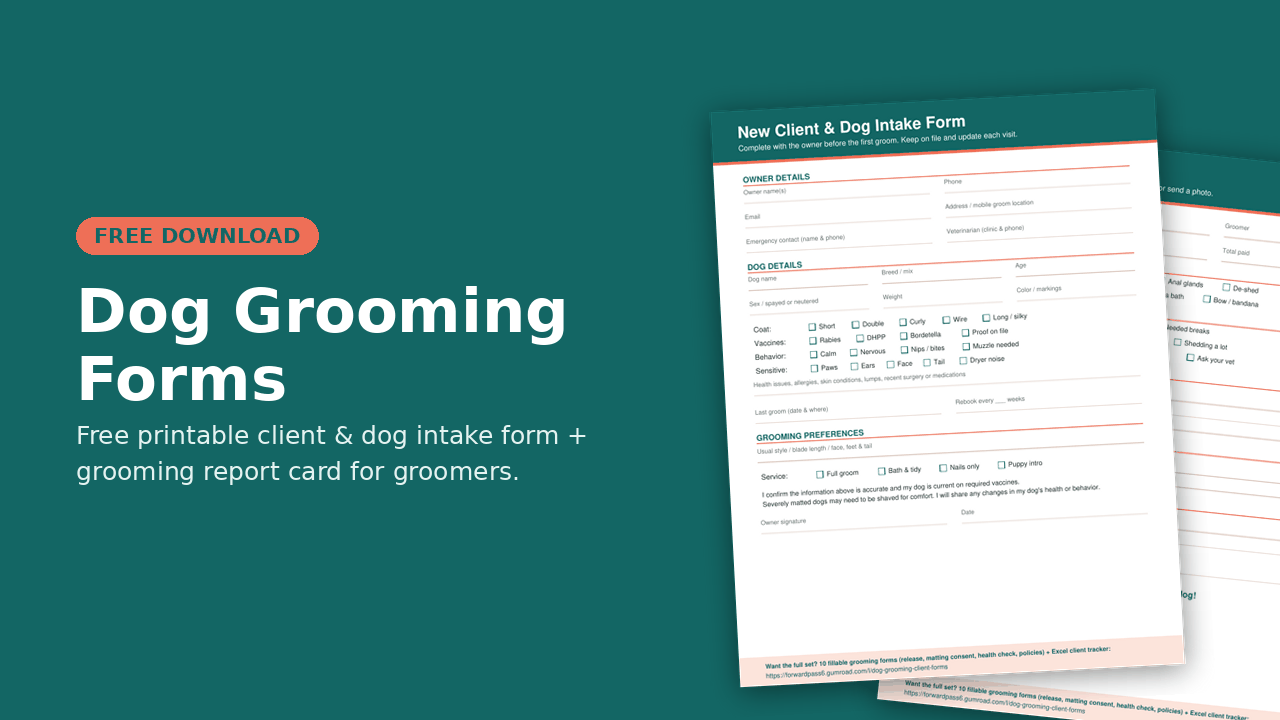
Free Dog Grooming Forms
A printable new client intake form plus a grooming release and consent form.
Download free →Clauses most groomers include
- Matted coats: permission to shave down a badly matted coat, and an explanation that this can reveal skin irritation or nicks
- Senior and medically fragile pets: an acknowledgment that grooming can be stressful for older or ill dogs
- Behavior: the right to stop a groom or use a muzzle if the dog becomes aggressive or distressed
- Parasites: what happens and what it costs if fleas or ticks are found
- Emergency vet care: consent to take the dog to a vet and who pays
- Pick-up and late fees: when the dog must be collected
- Photo permission: whether you can post before and after photos
Keep it clear and keep a copy
Use plain language, have the owner sign and date it at the first visit, and update it if the dog's health changes. Store it with the intake form so everything about that dog is in one place. Requirements differ by state, so treat any template as a starting point. This page is general information, not legal advice.
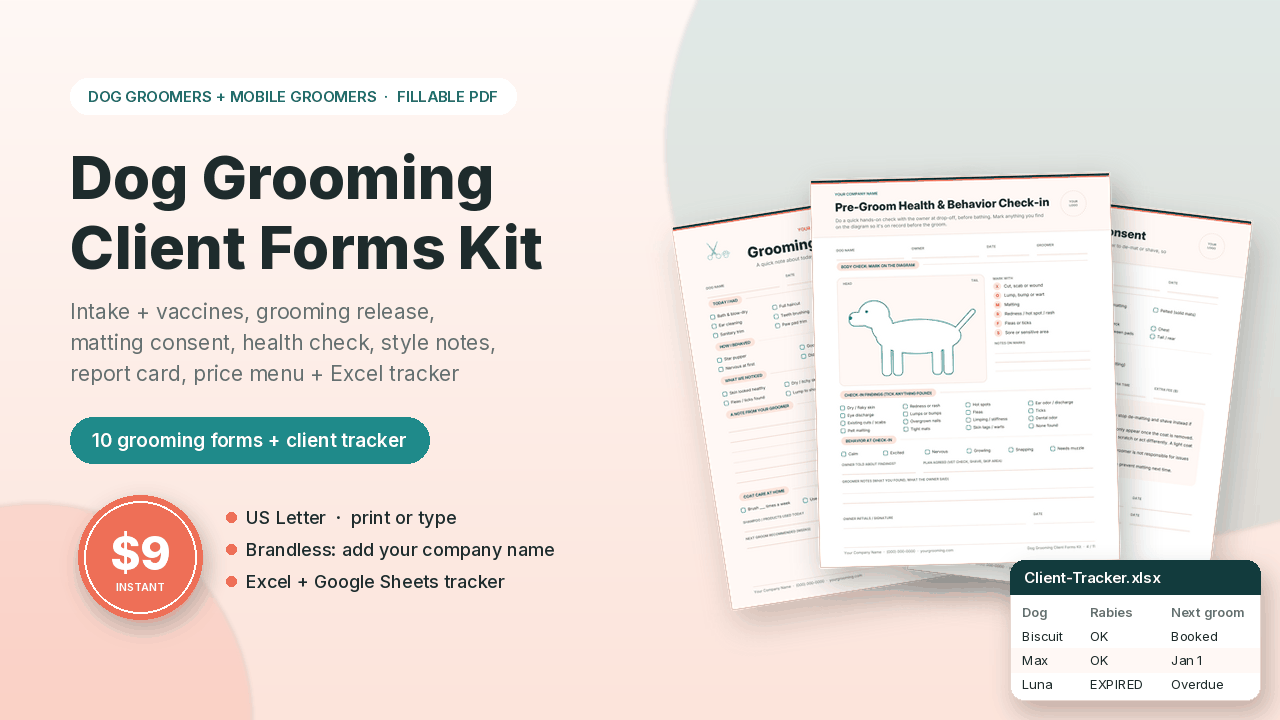
Dog Grooming Client Forms Kit
11 fillable grooming forms (intake, release, matting and senior pet waivers, report card) plus an Excel client tracker.
Get it →How to explain the release to owners
Owners sign more easily when you explain the release in one or two sentences instead of handing over a page of fine print. Keep it friendly and specific: "This covers what happens if we find mats close to the skin, if your dog gets too stressed to finish, or if we ever need to call a vet." If the dog is matted, show the owner where the mats are, explain that a shave-down is the kindest option, and mention that the skin underneath may look red or irritated for a few days.
When to get a new signature
- At the first visit, together with the intake form
- Before any shave-down of a matted coat, often per visit
- When the dog's health changes: a new diagnosis, surgery, pregnancy or new medication
- When the dog becomes a senior or starts to struggle with standing or the dryer
- When your policies change, such as new late pickup or parasite fees
Keep every signed version with the dog's record so you can show which terms applied on which date.
FAQ
What does a dog grooming release form cover?
Consent to groom, known risks such as nicks or stress, the matted coat and shave-down policy, senior or health-risk pets, emergency vet authorization and payment terms.
Why do groomers need a matted dog release?
Dematting or shaving a heavily matted coat can reveal skin problems or cause irritation, so a signed release shows the owner understood and agreed.
Does a release form protect a groomer from every claim?
No. It shows the owner was informed and agreed, but it does not cover negligence. Have the wording checked for your state if you are unsure.
Should the release be signed every visit?
Most groomers get it signed once and again whenever the dog's health or the service changes. A shave-down release is often signed per visit.
Related templates
Free Dog Grooming Forms
A printable new client intake form plus a grooming release and consent form.
Download free →Dog Grooming Client Forms Kit
11 fillable grooming forms (intake, release, matting and senior pet waivers, report card) plus an Excel client tracker.
Get it →