How Much to Charge for Home Daycare: Weekly Tuition, Infant Rates, Late Pickup Fees and Policies (Plus Free Daycare Forms)
How in-home and small daycare providers can set tuition: work out your costs and income goal, compare local rates, price by age and schedule, add registration, late pickup and late payment fees, decide on holiday and vacation policy, and put it in a written tuition agreement, with a worked example and free printable daycare forms.
Why daycare pricing goes wrong
Many home daycare providers copy the rate of the center down the road, then discover that food, supplies, insurance and unpaid sick weeks eat most of it. Others charge by the day and lose income every time a child stays home, even though the spot is still held. Late pickups stretch the day, payments arrive a week late and holidays turn into arguments. A clear method fixes this: know your costs, set weekly tuition by age and schedule, add a few simple fees, and write every policy into a tuition agreement parents sign before the first day.
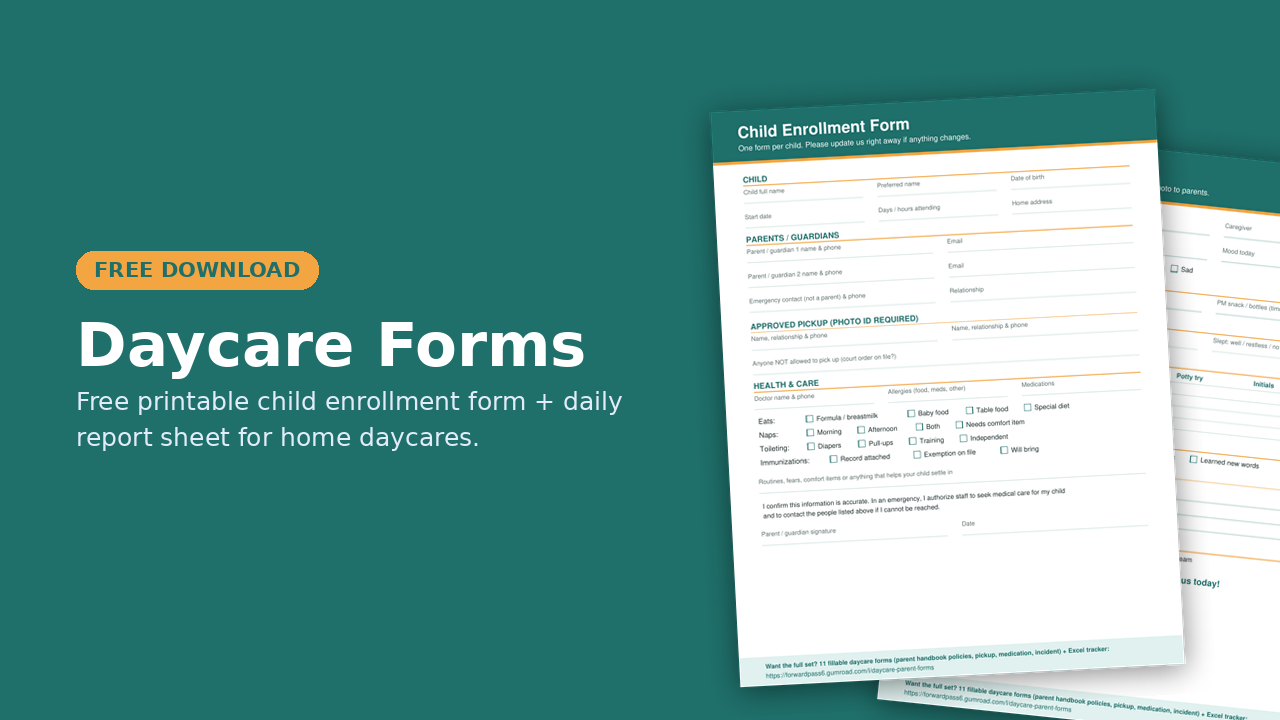
Free Daycare Forms
A printable child enrollment form plus a daily report sheet for parents.
Download free →1. Work out your costs and income goal
List what it costs to run the program for a year: food and snacks, supplies and toys, insurance, licensing and training fees, extra utilities, any assistant wages, and wear on your home. Add the income you want to take home, then divide by the number of weeks you are open and the number of spots you can fill. That gives a floor: the weekly rate per child below which the business does not pay you. Remember to plan for some weeks with an open spot.
2. Compare local rates
Check what licensed home providers and centers near you charge: local provider groups, childcare referral agencies, parent groups and daycare listing sites are good sources. Home daycares often sit somewhat below centers but can charge more for small group size, long hours, meals included, preschool activities or a strong reputation. Use the local range to check your floor. If your floor is above what the area pays, look at your costs, hours or group mix rather than quietly charging too little.
3. Price by age and schedule
Most providers charge a weekly or monthly tuition, not a daily rate, because a spot is held whether the child attends or not. Infants and toddlers usually cost more than preschoolers because they need more hands-on care and often count more toward ratio limits. Part-time spots (for example 2 or 3 days a week) are often priced a little higher per day than full time, since the unused days are hard to fill. School-age before and after care and summer care can have their own rates.
4. Add registration, late pickup and late payment fees
A one-time registration or enrollment fee covers paperwork and supplies, and some providers ask for a deposit such as the last week of tuition. A late pickup fee (often charged per few minutes past closing) protects your evening. A late payment fee after a short grace period keeps tuition on time. Some providers also charge for returned payments or extra hours outside the agreed schedule. Keep the list short and state every fee in writing.
5. Decide on holidays, vacations and sick days
Decide in advance whether tuition is due for closed holidays, your vacation weeks, the family's vacation and sick days. Many home providers charge full tuition for holidays and child absences, since the spot is held, and offer reduced or no tuition for weeks the provider closes. Also set a notice period for leaving the program (two to four weeks is common) and an annual rate review so increases never come as a surprise.
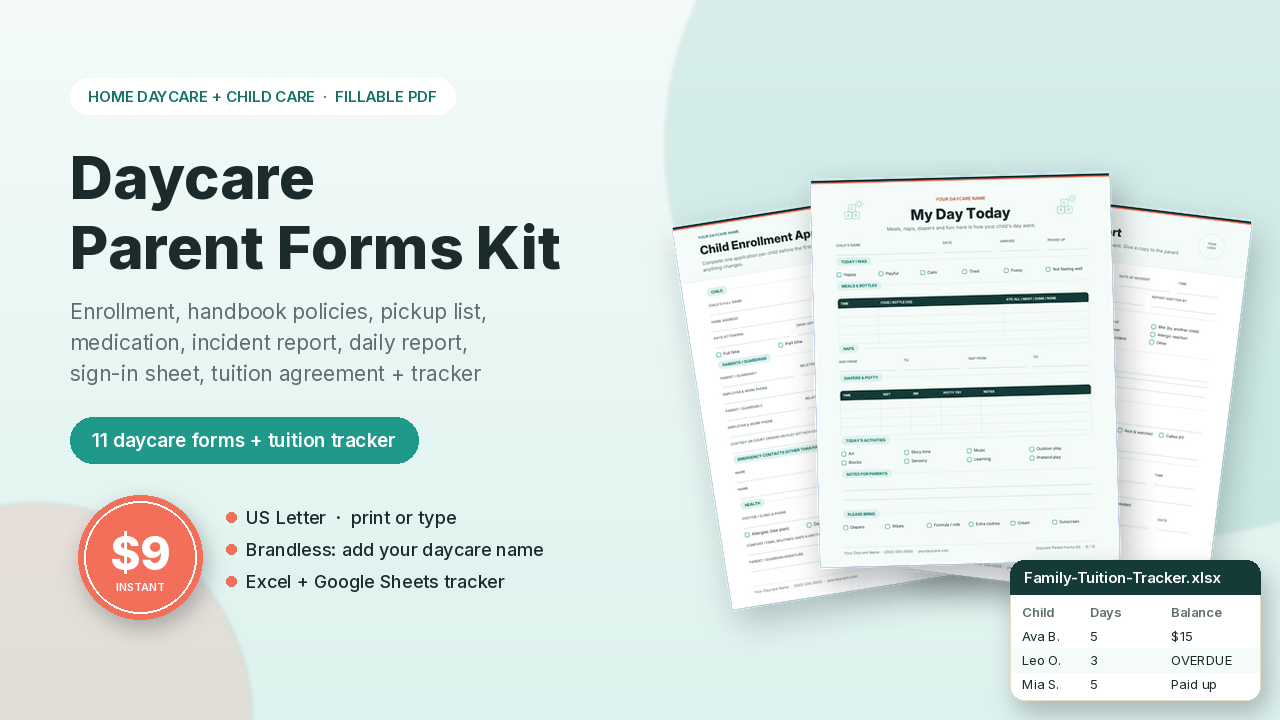
Daycare Parent Forms Kit
12 pages of fillable daycare forms (enrollment, authorized pickup, medication log, allergy plan, incident report, tuition agreement and more) plus an Excel tuition and attendance tracker.
Get it →A worked example
Say your yearly costs are $9,000, you want to take home $36,000, you are open 50 weeks and you plan for 5 enrolled children. ($9,000 + $36,000) ÷ 50 weeks ÷ 5 children = $180 per child per week as your floor. You might set toddlers at $190, an infant at $220 and a 3-day part-time preschooler at $130 a week, with a $75 registration fee and a late pickup fee of $1 per minute after closing. These are example numbers to show the math, not a recommendation; rates vary a lot by city, licensing rules, hours and the ages you serve.
Use forms so your policies hold
Most tuition disputes start with nothing in writing. A tuition agreement lists the rate, due date, fees, holiday and absence policy and notice period. An enrollment form, authorized pickup list, medication log, allergy plan and incident report keep every child safe and every parent informed. An attendance and tuition tracker shows who has paid and who is late, so you never have to guess. The free forms above cover the basics, and the full kit adds the rest.
FAQ
How much should I charge for home daycare?
Add up your yearly costs and the income you want, divide by the weeks you are open and the spots you can fill, then compare the result with what licensed providers near you charge. Adjust for age, hours, meals and group size.
Should daycare be charged weekly or daily?
Most providers charge weekly or monthly tuition because a spot is held whether or not the child attends. Daily rates are usually reserved for drop-in care, if it is offered at all.
Why do infants cost more in daycare?
Infants need more hands-on care, such as feeding, diapering and holding, and often count more toward ratio limits, so a provider can care for fewer children at once.
Do parents pay daycare when the child is sick or on vacation?
Many home providers charge full tuition for child absences and closed holidays because the spot is held, and offer reduced or no tuition for weeks the provider closes. State the policy in the tuition agreement.
How much is a typical daycare late pickup fee?
Many providers charge a set amount per minute or per few minutes after closing, sometimes after a short grace period. Pick an amount that discourages late pickups and write it into your policies.
Do I need a contract for my home daycare?
A written tuition agreement and parent handbook covering rates, fees, hours, absences, illness and notice period help avoid disputes. Check your local licensing rules for any required forms.
This page is general guidance, not legal, tax or licensing advice. Childcare licensing, ratio, insurance and tax rules vary by location, so check the rules where you operate.
Related templates
Free Daycare Forms
A printable child enrollment form plus a daily report sheet for parents.
Download free →Daycare Parent Forms Kit
Fillable enrollment, pickup, medication, incident and tuition agreement forms plus an Excel tuition and attendance tracker.
Get it →