How Much to Charge for Babysitting or Nanny Work: Hourly Rates, Extra Kids, Overtime and Late Fees (Plus Free Sitter Forms)
How babysitters and nannies can set their rates: start from local rates and experience, add for extra children, overnights, holidays and last-minute bookings, set overtime, late pickup and cancellation rules, and put it in writing, with a worked example and free printable sitter forms.
Why babysitting rates go wrong
Many sitters name a number on the spot, then find that the "quick evening" ran two hours late, a third child joined the booking, dinner and bath time were expected, and the family cancelled the next booking an hour before it started. Rates feel awkward to talk about, so they are often left vague until there is a problem. A clear method keeps it simple and fair for both sides: start from a base hourly rate, add for the things that make a job harder, set rules for overtime, late pickup and cancellations, and write it all on a short rate sheet the family sees before the first booking.
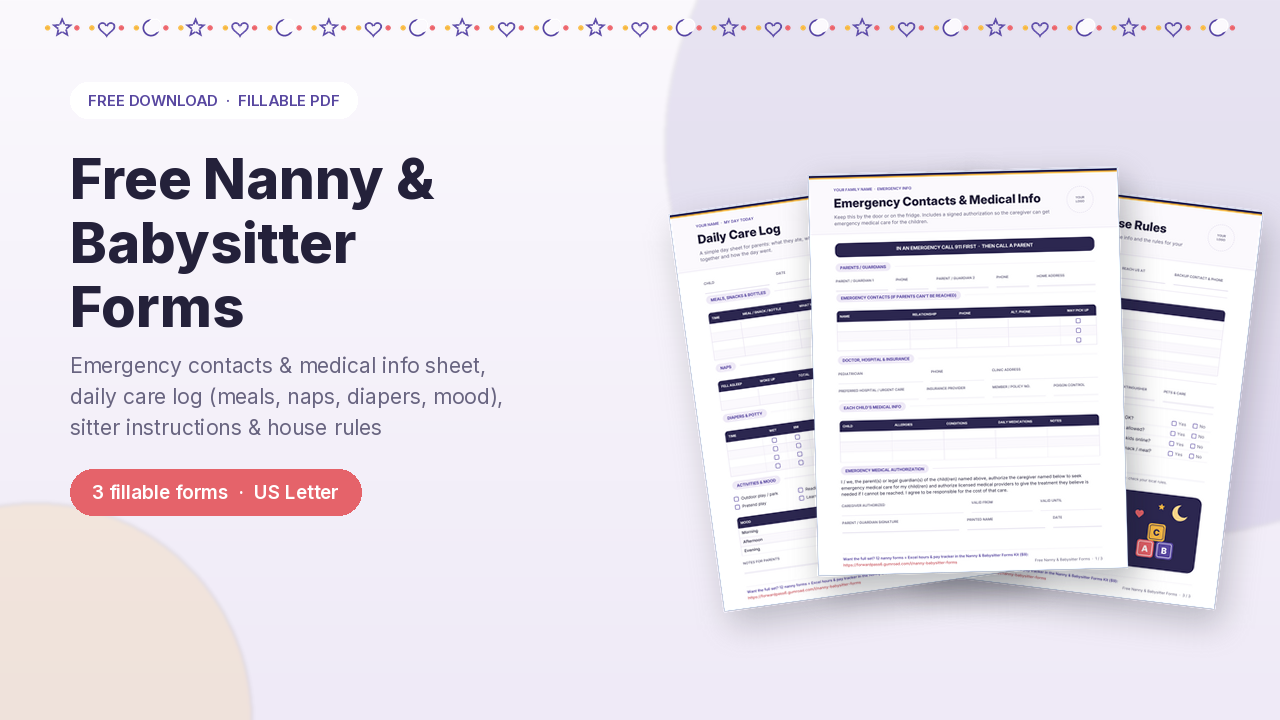
Free Nanny & Babysitter Forms
A fillable emergency contacts & medical info sheet, a daily care log and a sitter instructions & house rules page.
Download free →1. Set a base hourly rate
Look at what sitters and nannies with similar experience charge in your area: local parent groups, childcare listing sites and friends who hire sitters are good guides. Rates usually go up with experience, CPR and first aid certification, early childhood or teaching training, a clean driving record and your own car, and special skills such as caring for infants, twins or children with extra needs. Pick a base rate for one child during normal hours and treat everything else as an add-on.
2. Add for extra children and extra duties
Caring for more children is more work, so most sitters add a set amount per hour for each extra child. Infants and toddlers often carry a higher rate than school-age kids. Duties beyond watching the children can be priced too: cooking full meals, homework help or tutoring, driving to activities (plus mileage if you use your car), light housework beyond tidying up after the kids, and pet care. Agree in advance which duties are included in the base rate so nothing comes as a surprise.
3. Charge more for nights, holidays and short notice
Some bookings cost you more in time and flexibility. Common premiums include late-night hours after a set time, overnights (often a flat overnight rate rather than hourly), holidays such as New Year’s Eve, which many sitters bill at time and a half or double, and last-minute bookings made the same day. Many sitters also set a minimum booking, such as three hours, so a short job is still worth the travel.
4. Set overtime, late pickup and cancellation rules
Write down what happens when plans change. A late return fee or a higher rate for time past the agreed end covers parents who run late. A cancellation policy (for example, a full or partial charge for cancellations inside 24 hours) protects nights you turned other families down for. Regular nannies often ask for guaranteed hours, paid even if the family does not need them that week, plus overtime for hours above the agreed schedule. Rules on paid time off, sick days and household employment taxes vary, so check local and federal guidance if you work for one family on a regular basis.
5. Raise your rates the right way
Review your rates once or twice a year and when you add a new certification or skill. Give regular families notice in writing, such as a month ahead, and apply new rates to new families right away. A written rate sheet makes this easy: update the numbers and share the new version instead of having an awkward conversation each time.
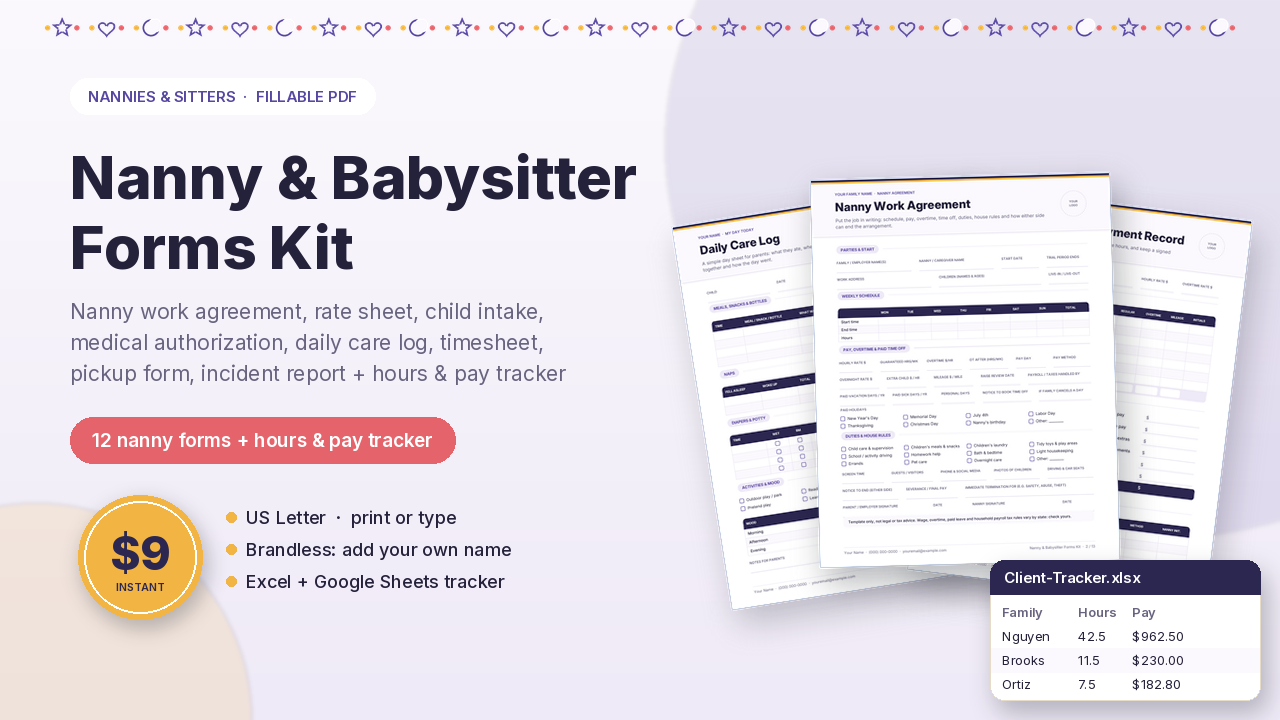
Nanny & Babysitter Forms Kit
12 fillable forms (nanny work agreement, babysitter rate sheet, child information form, emergency contacts and medical authorization, allergy and medication log, daily care log, weekly timesheet, pickup authorization, incident report and more) plus an Excel tracker for hours, overtime and pay.
Get it →6. A worked example (example numbers only)
Say your base rate is $18 an hour for one child, you add $3 an hour per extra child, and you charge time and a half after midnight. A family books you for two children from 6 pm to 1 am: six hours at $21 is $126, plus one hour after midnight at $31.50, for $157.50. If they return 30 minutes late and your late rate is $10 per 15 minutes, add $20, for $177.50. These are example numbers to show the math, not a recommendation; rates vary a lot by city, experience and the number and ages of the children.
Use forms so your rates hold
Most rate disputes start with nothing in writing. A babysitter rate sheet lists your base rate, add-ons, overtime, late and cancellation fees. A child information form, emergency contacts and medical authorization, and a sitter instructions and house rules page make every booking safer. Regular nannies also benefit from a written work agreement and a weekly timesheet that tracks hours and overtime, so pay is never a guess. The free forms above cover the basics, and the full kit adds the rest.
FAQ
How much should I charge for babysitting?
Start with what sitters with similar experience charge in your area, then add for extra children, infants, extra duties, late nights, holidays and short-notice bookings. Certifications like CPR and first aid and years of experience usually justify a higher rate.
How much more should I charge for each extra child?
Many sitters add a set amount per hour for each additional child rather than doubling the rate. Infants and toddlers often carry a higher add-on because they need more hands-on care.
Should babysitters charge a cancellation fee?
Many do, especially for cancellations within 24 hours, since the sitter often turned down other work for that time. State the fee clearly on your rate sheet before the first booking.
How do babysitters charge for overnights?
Overnights are often billed at a flat rate for the night rather than hourly, with a separate hourly rate for awake time in the evening and morning. Agree on the hours and what counts as overnight in advance.
What is the difference between a babysitter and a nanny rate?
Babysitters usually work occasional bookings at an hourly rate. Nannies work a regular schedule for one family and often agree on guaranteed hours, overtime, paid time off and a written work agreement.
Do I need a contract to babysit?
For occasional babysitting, a simple rate sheet and an emergency info form are usually enough. For regular nanny work, a written agreement covering pay, hours, duties and time off helps avoid misunderstandings.
This page is general guidance, not legal, tax or employment advice. Minimum wage, overtime, household employment tax and childcare licensing rules vary by location, so check the rules where you live and work.
Related templates
Free Nanny & Babysitter Forms
A fillable emergency contacts & medical info sheet, a daily care log and a sitter instructions & house rules page.
Download free →Nanny & Babysitter Forms Kit
Fillable nanny agreement, babysitter rate sheet, logs and timesheet plus an Excel hours and pay tracker.
Get it →