How Much to Charge as a Private Caregiver: Hourly Rates, Overnight and Live-In Pay, Overtime and Policies (Plus Free Caregiver Forms)
How independent and private in-home caregivers can set their rates: work out costs and income goal, compare local agency and private rates, price by care level, add overnight, live-in, holiday and mileage rates, plan for minimum shifts and cancellations, and put it all in a written caregiver agreement, with a worked example and free printable caregiver forms.
Why caregiver pricing goes wrong
Many private caregivers pick a number that sounds fair, then find that driving between clients, short visits, cancelled shifts and nights on call quietly cut their real hourly pay. Others agree on a flat rate for live-in care that turns into 24-hour work. Families, meanwhile, are often comparing you with agency prices without knowing what agencies add on top. A clear method fixes this: know your costs, set a base hourly rate by care level, price overnight and live-in work separately, add a few simple policies, and write everything into a caregiver agreement both sides sign before the first shift.
Free Caregiver Forms
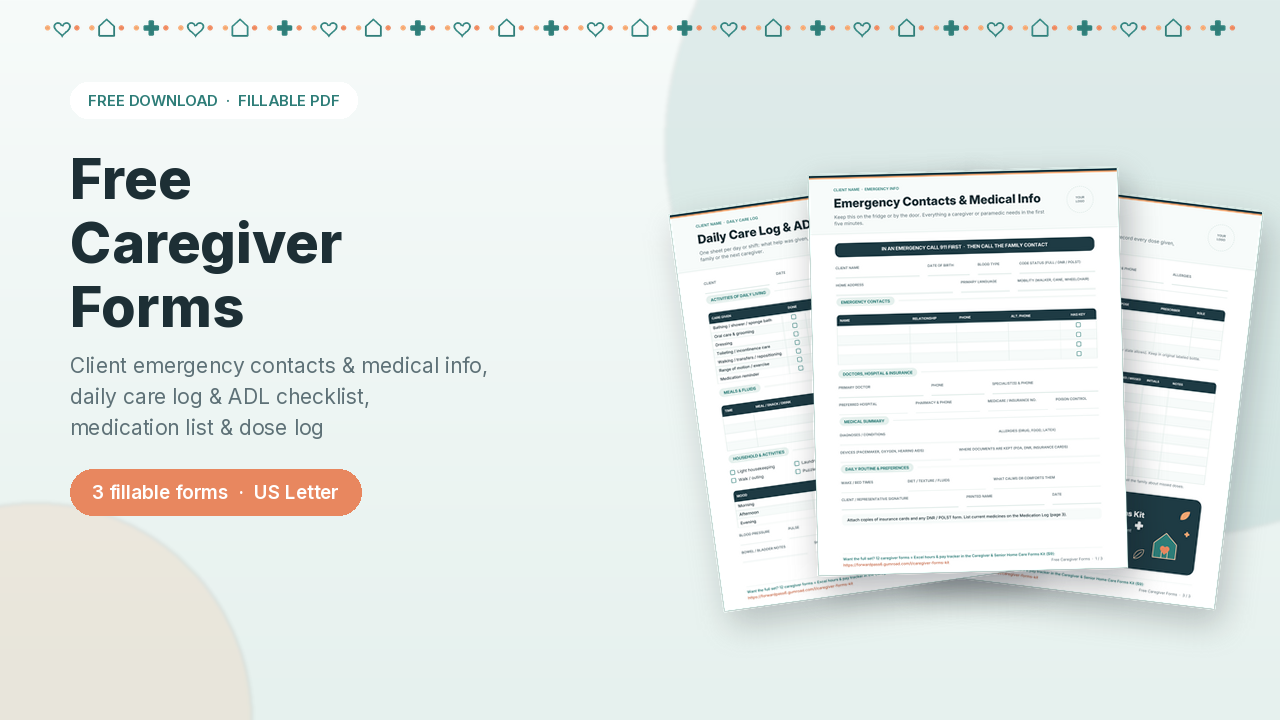
A fillable emergency contacts and medical info sheet, a daily care log with ADL checklist, and a medication list and dose log.
Download free →1. Work out your costs and income goal
As an independent caregiver you cover costs an agency would normally pay: liability insurance, certifications and training (CPR, first aid, CNA or HHA renewals), background checks, mileage and car costs, phone, supplies such as gloves, and self-employment taxes where they apply. Add the yearly income you want, then divide by the number of hours you can realistically bill. That gives a floor: the hourly rate below which the work does not pay you. Plan for some unbilled time between clients and for weeks when a client is in the hospital.
2. Compare local agency and private rates
Check what home care agencies near you charge families and what private caregivers ask: local caregiver groups, community boards, care-finding sites and calling a couple of agencies for quotes are good sources. Private caregivers often charge less than agencies but take home more per hour, because there is no agency cut. You can charge toward the top of the private range for certifications, dementia or hospice experience, transfers and mobility help, a second language, or flexible last-minute availability. If your floor is above what the area pays, look at your schedule and travel rather than quietly charging too little.
3. Price by care level
Many caregivers use tiers. Companion care (conversation, light housekeeping, errands, meal prep) usually sits at the base rate. Personal care (bathing, toileting, dressing, transfers) often costs more because it is physically demanding and needs more skill. Specialized care such as dementia, post-surgery, hospice support or care needing medical training can carry a higher rate again. Write down exactly which tasks are included at each level so the rate never drifts into work you did not price.
4. Price overnight, live-in, holidays and extras
Overnight shifts can be priced as a flat night rate if you can sleep, or at the full hourly rate if you are awake and working. Live-in care is often a daily rate that assumes a set number of working hours, a private room and protected break and sleep time; extra hours beyond that should be paid. Many caregivers charge time and a half on major holidays, add mileage when they drive the client to appointments, and set a minimum shift length (for example 3 or 4 hours) so short visits still cover the travel. If a family hires you directly as an employee, overtime and tax rules may apply, so check what applies where you work.
5. Set cancellation, payment and notice policies
Decide in advance what happens when a family cancels a shift at short notice (many caregivers charge some or all of the shift inside 24 hours), when a client goes into the hospital, and how you handle your own vacation. Set how and when you are paid (weekly is common), a late payment policy, a notice period for ending the arrangement on either side, and an annual rate review so increases never come as a surprise.
Caregiver & Senior Home Care Forms Kit
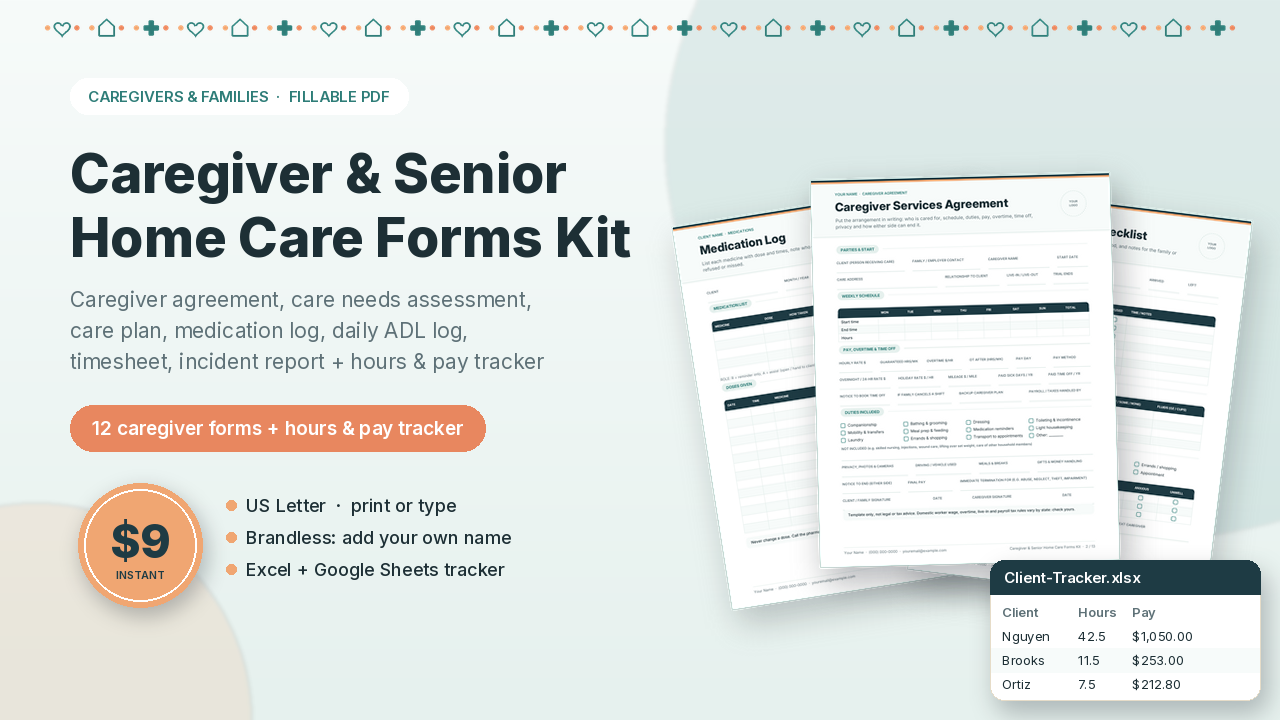
12 fillable forms (caregiver services agreement, rate sheet, client intake and care needs assessment, care plan, medication log, daily care log and ADL checklist, timesheet, incident report and more) plus an Excel tracker for hours, overtime and pay.
Get it →A worked example
Say your yearly costs are $4,000, you want to take home $40,000, and you can bill about 30 hours a week for 48 weeks (1,440 hours). ($4,000 + $40,000) ÷ 1,440 hours = about $30.50 an hour as your floor. You might set companion care at $31, personal care at $34 and dementia care at $37 an hour, with a 4-hour minimum shift, time and a half on major holidays, a $220 flat rate for a sleeping overnight, and mileage for driving the client. These are example numbers to show the math, not a recommendation; rates vary a lot by city, experience, certifications and care needs.
Use forms so your rates and policies hold
Most disputes with families start with nothing in writing. A caregiver agreement and rate sheet list the rates by care level, minimum shift, overnight and holiday rates, cancellation and notice policy and how you are paid. A client intake and care needs assessment, care plan, medication log and daily care log keep the client safe and the family informed. A timesheet and hours tracker show exactly what was worked and what is owed, so you never have to argue about hours. The free forms above cover the basics, and the full kit adds the rest.
FAQ
How much should I charge as a private caregiver?
Add up your yearly costs and the income you want, divide by the hours you can realistically bill, then compare the result with what agencies and private caregivers near you charge. Adjust for care level, certifications and experience.
Do private caregivers charge less than agencies?
Often yes. Agencies add overhead on top of what they pay caregivers, so a private caregiver can charge families less per hour while still earning more than an agency wage.
How do caregivers charge for overnight shifts?
Many use a flat night rate when they can sleep, and the full hourly rate when they must stay awake and work. Agree on which applies, and what happens if the client needs help often during the night, before the first shift.
How is live-in caregiver pay calculated?
Live-in care is usually a daily rate that assumes a set number of working hours plus a private room and protected break and sleep time. Hours beyond that should be paid extra. Employment and overtime rules may apply, so check local law.
Should caregivers charge more on holidays?
Many charge time and a half on major holidays. List the holidays and the rate in your agreement so families know in advance.
Do I need a contract as a private caregiver?
A written caregiver agreement covering duties, rates, schedule, cancellations, payment and notice period helps avoid disputes. Check local rules on employment, taxes and any licensing for the care you provide.
This page is general guidance, not legal, tax or employment advice. Rules on caregiver employment, overtime, taxes, licensing and insurance vary by location, so check the rules where you work.
Related templates
Free Caregiver Forms
A fillable emergency contacts and medical info sheet, a daily care log with ADL checklist, and a medication list and dose log.
Download free →Caregiver & Senior Home Care Forms Kit
Fillable caregiver agreement, rate sheet, intake, care plan, medication and daily care logs, timesheet plus an Excel hours and pay tracker.
Get it →