Caregiver Agreement Template: What to Include (Free Checklist)
What to put in a caregiver agreement for private home care or senior care: duties, schedule, pay and overtime, time off, medications, privacy, emergencies and termination, with a free checklist.
Why a caregiver agreement matters
Many private care arrangements start with a phone call and a handshake: "Can you come Monday to Friday, nine to three, to help Mom? We can pay $24 an hour." That feels fine until the first hospital stay, the first week of overtime, the first time a shift is cancelled at the last minute, or the first disagreement about what the job includes. A caregiver agreement (also called a home care agreement, personal care agreement or caregiver contract) puts the answers in writing before anyone needs them. It protects the person receiving care, the family and the caregiver, and it makes an emotional situation a little easier for everyone. The checklist below covers what families and independent caregivers most often forget to agree on.
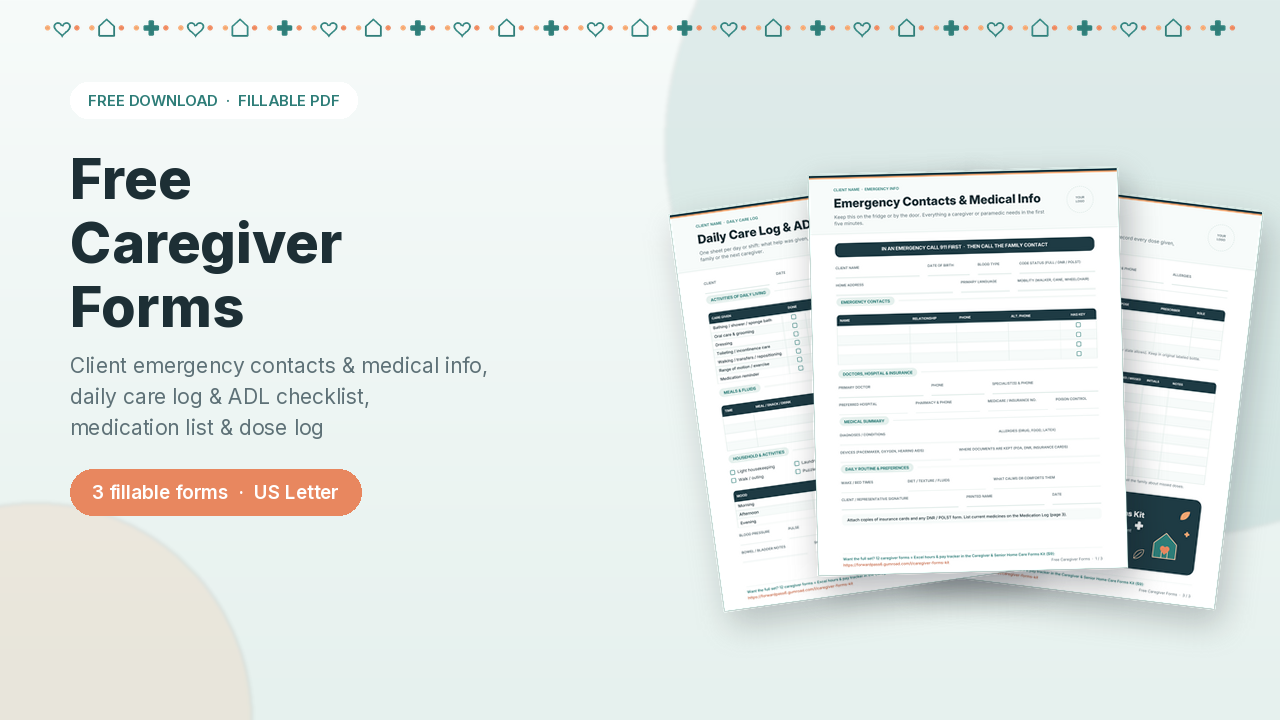
Free Caregiver Forms
A free fillable client emergency contacts & medical info sheet, a daily care log with an ADL checklist, and a medication list & dose log for in-home caregivers.
Download free →1. The basics: who, where and when care starts
Name the client (the person receiving care), the family member or representative who hires and pays the caregiver, and the caregiver. Add the care address, the start date, and whether the role is live-in or live-out, full time, part time, respite or overnight. Many families agree on a short trial period, often two to four weeks, so both sides can make sure it is a good fit. If someone holds a health care power of attorney or is the client's guardian, note who that is, because they may need to make decisions about care.
2. Care duties: what is and is not included
This is the heart of the agreement. List the help the caregiver will give, often grouped around activities of daily living (ADLs):
- Personal care: bathing, grooming, dressing, toileting and incontinence care.
- Mobility: walking, transfers, repositioning and simple exercises the care team has recommended.
- Meals: planning, cooking, feeding help and tracking food and fluids.
- Household: light housekeeping, laundry, dishes, errands and grocery shopping.
- Companionship and transport: conversation, activities, outings and rides to appointments.
Then list what is not included. Non-licensed caregivers usually should not give injections, do wound care or perform other skilled nursing tasks, and some heavy lifting may need two people or equipment. Writing this down avoids "job creep" and keeps the client safe.
3. Schedule, pay and overtime
Put the regular days and hours in a simple weekly grid, then be specific about money:
- Hourly rate, plus any different rate for evenings, weekends, holidays, overnights (awake or asleep) or 24-hour and live-in care.
- Overtime: the threshold (for example, hours over 40 in a workweek), the overtime rate and whether extra hours must be approved first. Many states cover home care workers under overtime rules, and live-in and 24-hour shifts can follow special rules.
- Pay day and method: weekly or every two weeks, by direct deposit, check or payment app, and who handles payroll and taxes.
- Extras: mileage when the caregiver drives the client, reimbursement for groceries or prescriptions, and how receipts are handled.
- Cancellations: how much notice the family gives to cancel a shift and whether a short-notice cancellation is paid.
A weekly timesheet signed by both sides is the easiest way to avoid arguments about hours.
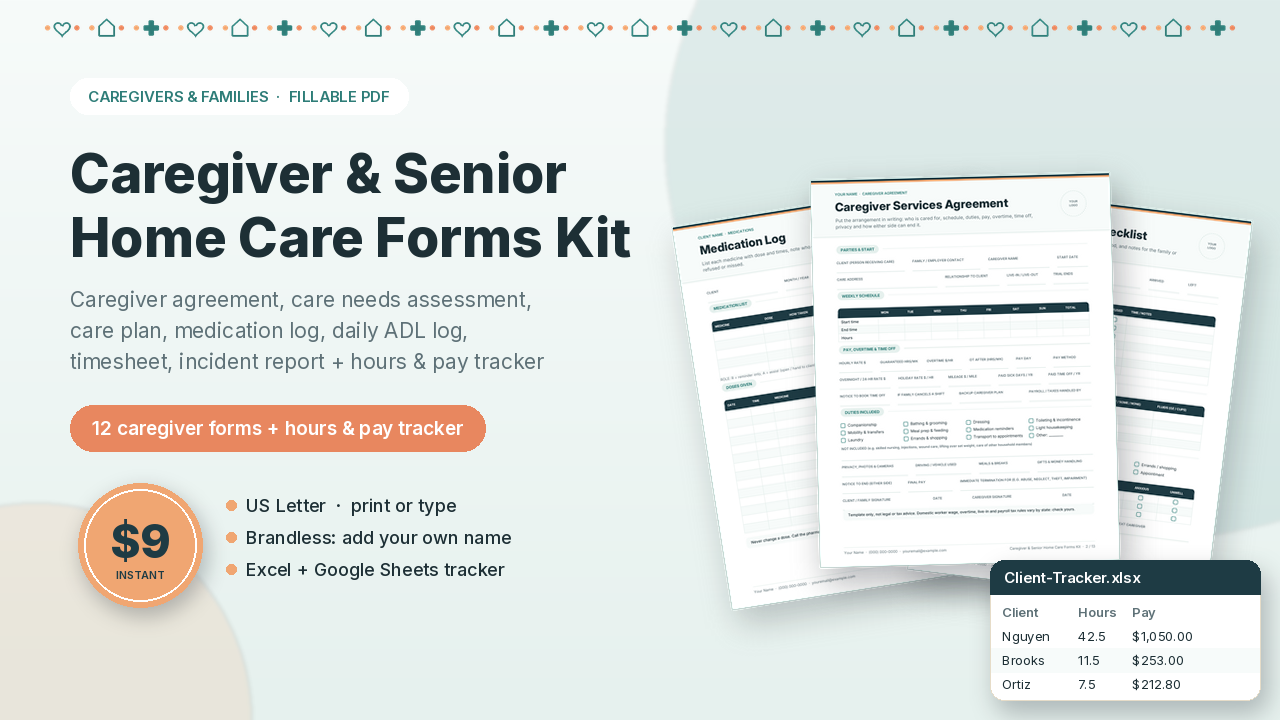
Caregiver & Senior Home Care Forms Kit
12 fillable forms (caregiver services agreement, rate sheet, client intake and care needs assessment, emergency and medical info, care plan, medication log, daily care log and ADL checklist, timesheet, visitor and appointment log, family communication sheet, incident report and notice of termination) plus an Excel tracker for hours, overtime and pay.
Get it →4. Time off, backup care and hospital stays
Agree how many paid days off and sick days the caregiver gets and how far ahead time off must be requested. Because the client cannot simply go without care, write down the backup plan: another family member, a second caregiver or an agency for respite. Also decide what happens to the schedule and pay if the client goes into the hospital or a rehab facility for a while. Is the job paused? Is any pay guaranteed? These questions come up more often than families expect.
5. Medications and health information
Medication help is one of the most important parts of the agreement. Spell out whether the caregiver only gives reminders, assists (opening containers or handing the client their pills) or gives medications, and check your state's rules on what non-licensed caregivers may do. Keep medicines in their original pharmacy-labeled containers, never change a dose, and record every dose given, refused or missed on a medication log. The family should share a current medication list, allergies, diagnoses, the doctors' and pharmacy's numbers, and where documents like a DNR, POLST or advance directive are kept.
6. Care plan and daily records
A one-page care plan turns the agreement into daily practice: goals of care, the daily routine, how to help with each task, tips for memory loss or hearing loss, and changes to watch for and report, such as new confusion, a fall, skin redness, not eating or shortness of breath. Pair it with a daily care log or ADL checklist so the family, doctors and any backup caregiver can see what happened each shift. A short weekly family update sheet and a visitor and appointment log keep everyone in the loop without a stream of texts.
7. Privacy, money and house rules
Add a confidentiality clause: the caregiver keeps the client's health and family information private and does not post about them online. Be open about cameras in the home. Agree on how money is handled (for example, the caregiver never uses the client's cards or accepts large gifts or loans), and keep receipts for every purchase. Cover meals and breaks, phone use, visitors, pets and smoking, and if the caregiver drives the client, whose car is used and what insurance applies.
8. Emergencies and incidents
Keep an emergency contacts and medical info sheet on the fridge: 911 first, then the family contact, plus doctors, pharmacy, insurance, allergies, current medications and code status. Agree on what the caregiver does after a fall or injury, and use a written incident report for falls, skin tears, medication errors and wandering, so the family always gets the full story the same day.
9. Ending or changing the arrangement
Agree how much notice each side gives to end care (two weeks is common), what happens to final pay, and which actions mean immediate termination, such as abuse, neglect, theft or working while impaired. Care needs change, so also say how the schedule, duties or rate can be updated, in writing and signed by both sides. When care ends, a simple close-out checklist covers final pay, returned keys, care records handed to the family and a reference letter.
A note on the law, taxes and medical care
This checklist is educational, not legal, tax or medical advice. In the US, a family that hires a caregiver directly may be a household employer, which can mean payroll taxes, a W-2, state registration and minimum wage, overtime and paid sick leave rules that vary by state and city. Rules on medication help by non-licensed caregivers also vary. Check your state's labor and health departments and IRS household employer guidance, or talk to a professional, and always follow the client's doctors and pharmacist on medical care.
FAQ
What should a caregiver agreement include?
The client, family contact and caregiver, start date and schedule, care duties and what is not included, pay, overtime and payment method, time off and backup care, medication help, privacy and money handling, emergency information, termination and notice, and signatures from both sides.
Is a caregiver agreement the same as a personal care agreement?
They are closely related. A caregiver agreement or home care contract usually covers an outside caregiver hired by the family. A personal care agreement often refers to paying a family member for care, which can have extra tax and benefits implications, so get professional advice for that case.
Do private caregivers get overtime?
In many states, yes. Home care workers hired directly by a family are often covered by overtime rules for hours over 40 in a workweek, and live-in or 24-hour shifts can follow special rules. Check your state before agreeing on pay.
Can a private caregiver give medications?
It depends on the state and the caregiver's training. Many non-licensed caregivers may give reminders or assist with self-administered medicine, but not give injections or make dosing decisions. Check your state's rules and follow the client's doctor and pharmacist.
This page is general guidance, not legal, tax or medical advice. Wage, overtime, household employer tax and medication rules vary by state and city and change over time, so check yours before you sign or pay.
Related templates
Free Caregiver Forms
A free fillable client emergency contacts & medical info sheet, a daily care log with an ADL checklist, and a medication list & dose log for in-home caregivers.
Download free →Caregiver & Senior Home Care Forms Kit
Fillable caregiver agreement, care plan, medication and daily logs plus an Excel hours and pay tracker.
Get it →