How Much to Charge for a Cake: Pricing Custom Cakes per Serving (Plus a Free Cake Order Form)
How home bakers can price custom cakes: work out ingredient and packaging costs, value your time, price per serving, add design, delivery and rush fees, and take deposits, with a worked example and a free printable cake order form.
Why custom cakes are so often underpriced
Many home bakers price a cake by adding up the flour, butter and sugar and doubling it. That leaves out the hours of baking, cooling, leveling, filling, crumb coating, decorating and cleanup, plus boxes, boards, dowels, electricity and the time spent messaging the client. A clear method protects your time: know your real costs, decide what each hour must earn, price by serving, and charge separately for design work and extras.
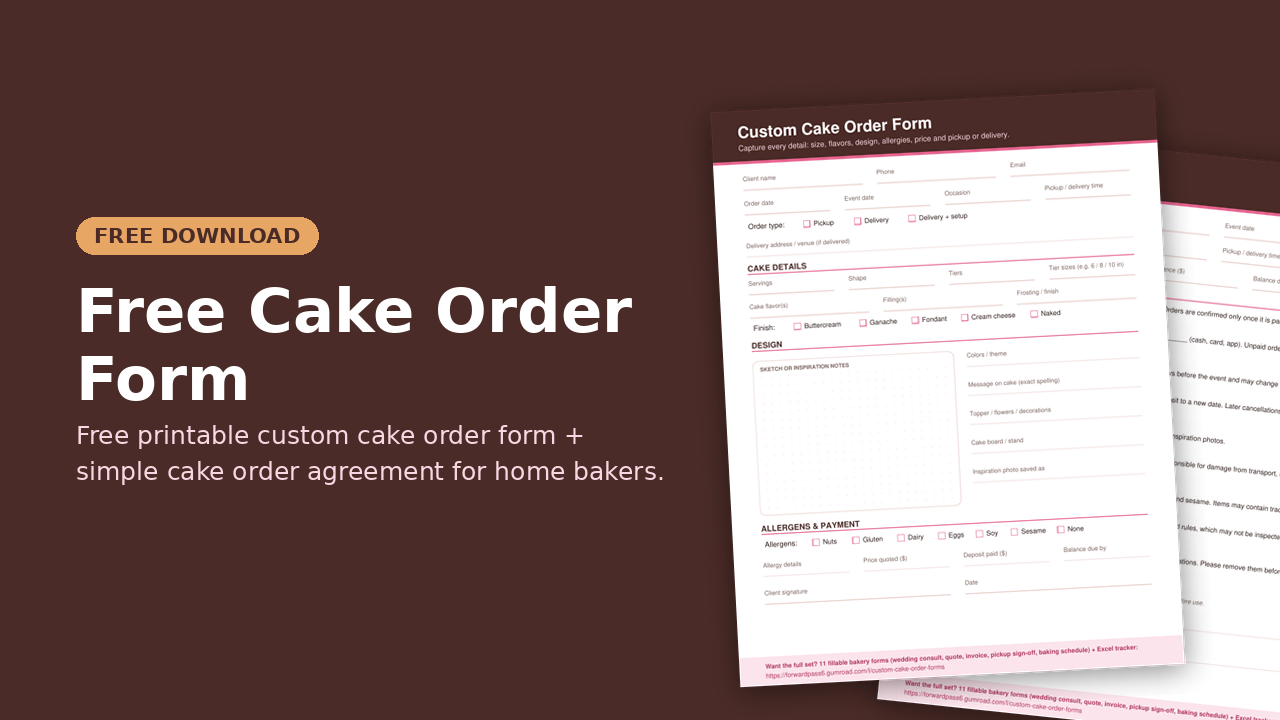
Free Cake Order Form
A free printable custom cake order form with a design sketch box, servings, tiers, flavors, allergens, deposit and balance fields, plus a simple cake order agreement with 9 initialed terms.
Download free →1. Cost out ingredients and supplies
Make a simple cost sheet for your standard recipes. For each one, list every ingredient with what you paid and how much the recipe uses, then add the cost of a batch. Do the same for frostings and fillings. On top of that, add supplies used per order: cake boards, boxes, dowels and supports, piping bags, liners, toppers, fondant, sprinkles and food coloring. Update the sheet when grocery prices change, because butter, eggs and chocolate can move quickly.
2. Decide what your time is worth
Track how long a typical order really takes from first message to pickup: consultation, shopping, baking, cooling, decorating, packaging and cleanup. Pick an hourly rate that covers the pay you want plus overhead such as equipment, utilities, any cottage food or business license fees, insurance, marketing, card fees and money set aside for taxes. A cake that takes 6 hours is a 6-hour job, even if it only costs $20 in ingredients.
3. Price per serving
Most custom cake makers quote a price per serving because it scales cleanly from a small 6-inch cake to a tiered wedding cake. Set a base per-serving price for a simple buttercream cake that covers ingredients and your time, then add tiers of pricing:
- Base cake: standard flavors, buttercream finish, simple piping
- Premium flavors and fillings: fruit compotes, ganache, cream cheese, liqueurs or specialty ingredients
- Design level: fondant, hand-painted details, sugar flowers, sculpted or gravity-defying designs priced per serving or as a flat add-on
- Cupcakes, cookies and dessert tables: priced per dozen or per piece
Use a serving chart for each pan size and shape so every quote is consistent.
4. Add delivery, rush and extras
Charge delivery by distance, with a higher fee for tiered cakes that need setup on site. Add a rush fee for orders placed with short notice, and price toppers, stands you rent out, extra tasting boxes and special packaging as separate lines. Ask about allergies and dietary needs on the order form, and note clearly that a home kitchen may not be allergen free. Weekend and holiday dates fill fast, so many bakers set a higher minimum order for peak dates.
5. Take deposits and put the order in writing
Use a written order form for every cake that lists the date, servings, flavors, design notes, allergens, delivery or pickup time and the total price. A non-refundable deposit to hold the date is common, with the balance due a set number of days before the event. State your change deadline, cancellation terms, how long the cake can be left out, and that the client is responsible once the cake is picked up. Clear paperwork prevents most disputes and makes a small bakery look established.
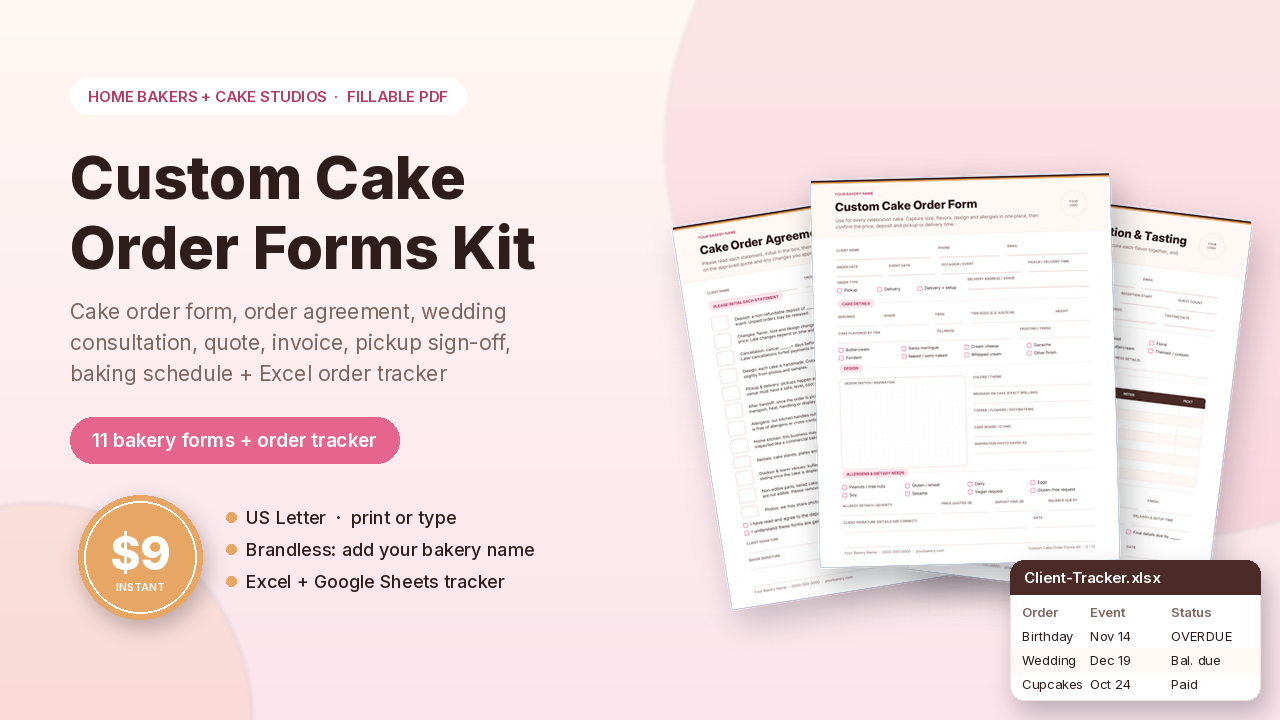
Custom Cake Order Forms Kit for Home Bakers
A fillable PDF with 11 bakery forms (custom cake order form with sketch box, cupcake, cookie and dessert table order, wedding cake consultation and tasting, quote and price sheet by servings, order agreement and policies, delivery and setup checklist, pickup sign-off, allergy sheet, invoice, weekly baking schedule and client feedback) plus an Excel order tracker with deposit, balance and overdue flags.
Get it →Worked example (example numbers only)
Say a home baker wants $25 per hour. A two-tier buttercream birthday cake for 30 servings uses about $28 of ingredients and $9 of boards, box and dowels, so $37 in costs. It takes about 5.5 hours from baking to boxing, which is $137.50 in time. Adding a 10 percent buffer for overhead brings the total to roughly $192, or about $6.40 per serving. The baker rounds to $6.50 per serving, quotes $195, adds $25 for local delivery, and takes a 50 percent deposit to book the date. Use your own costs, time and local prices.
Common cake pricing mistakes
- Pricing from ingredient cost alone and ignoring your hours
- Not using a serving chart, so similar cakes get very different quotes
- Giving away design upgrades, sugar flowers or fondant work for free
- Forgetting boards, boxes, dowels and packaging
- Booking dates without a deposit or written order form
- Accepting last-minute changes without a change deadline or rush fee
FAQ
How much should I charge per serving for a cake?
Add up your ingredient and supply costs plus the hours the cake takes at your hourly rate, then divide by the number of servings. Compare with other custom bakers near you so your per-serving price fits your market, and charge more for premium flavors and detailed designs.
How do I price a cake for beginners?
Start with a simple cost sheet for your recipes, track how long each order really takes, and set a base per-serving price for a simple buttercream cake. Add design and flavor upgrades on top rather than discounting your base price.
Should I charge for cake tastings?
Many bakers charge for tasting boxes or consultations, especially for weddings, and credit the fee toward the order if the client books. Free tastings can take a lot of time and ingredients.
How much deposit should a baker take for a custom cake?
A non-refundable deposit to hold the date is common, often 25 to 50 percent, with the balance due a few days before the event. Larger or wedding orders may need a bigger deposit.
Do I need a license to sell cakes from home?
Many places allow home baking under cottage food rules, while others require a permit, inspection or labeling. Rules differ widely, so check with your local health department before you sell.
How do I charge for cake delivery?
Set a base delivery fee for a nearby area and add a per-mile charge beyond it. Tiered cakes that need setup on site usually carry a higher fee than boxed cakes left at the door.
This page is general guidance, not legal, tax or business advice. Cottage food, licensing, labeling and tax rules vary by location, so check the rules where you sell.
Related templates
Free Cake Order Form
A free printable custom cake order form with a design sketch box, servings, tiers, flavors, allergens, deposit and balance fields, plus a simple cake order agreement with 9 initialed terms.
Download free →Custom Cake Order Forms Kit for Home Bakers
Fillable cake order form, quote and price sheet by servings, order agreement, delivery checklist and invoice plus an Excel order tracker.
Get it →