Year-End Checklist for Freelancers: 10 Things to Do Before December 31
A practical year-end checklist for freelancers: chase unpaid invoices, tidy client records, review rates and set up next year's tracker.
The last weeks of the year are a good time to collect what you are owed, get your records in order and set up a clean start for January. This guide walks through 10 year-end tasks for freelancers, then gives you a copy-ready checklist, common mistakes with fixes and an FAQ.
This is general information, not tax, legal or accounting advice. Tax rules, deadlines and what counts as a business expense depend on where you live and how your business is set up. Check with a qualified tax professional or your tax authority before making tax decisions.
When to do it
Block two hours in early December for this list, or split it into two shorter sessions: one for money and records, one for clients and next year. Starting early gives clients time to pay before the holiday slowdown and gives you time to ask questions before any year-end deadlines.
1. Chase unpaid invoices
- List every unpaid invoice and send polite reminders now, before the holiday slowdown
- Note the invoice number, amount, due date and who processes payment at each client
- Follow up on anything overdue with a short, friendly message and the invoice attached
Wording for each stage is in the late payment email templates.
2. Send final invoices and match payments
- Send final invoices for any work finished this year
- Invoice any agreed deposits for January projects
- Match every payment received against your invoice list, and check payment app and bank statements for anything you missed
For what to put on each invoice, see the free freelance invoice template guide.

Free 1-Page Invoice Template
A 1-page invoice for Excel or Google Sheets that totals line items, discount and tax, plus a printable PDF.
Download free →3. Total your income by client
- Total your income by client so you know who your best clients were
- Note which clients paid on time and which needed chasing
- Compare income with time spent, roughly, to spot work that was not worth the hours
4. Gather receipts and sort expenses
- Gather receipts for business expenses in one folder, paper or digital
- Put each expense in a category and flag anything you are unsure about for your tax professional
- Review subscriptions and software and cancel what you no longer use
- If you mix business and personal spending, mark the business items now while you still remember them
See small business expense categories and the business expenses checklist for what to collect.
Free Monthly Business Expense Log
A 3-page printable PDF: a monthly expense log, a profit and tax set-aside summary, and an expense categories cheat sheet.
Download free →5. Check your tax set-aside and paperwork
- Compare what you set aside for taxes with what you earned this year
- Check whether you have made any estimated tax payments that apply where you live, and note the next due dates
- Make a list of forms clients or payment platforms may send you early next year, so you can tick them off as they arrive
- If you paid contractors, ask your tax professional what paperwork you need for them
- Book time with your tax professional early if you use one, and ask before making large year-end purchases for tax reasons
6. Close out projects and back up files
- Close out finished projects and archive their files
- Back up client files, contracts and invoices in a second place
- Check that you have signed contracts for ongoing work
7. Ask for testimonials and note lead sources
- Ask two happy clients for a short testimonial
- Note which lead sources brought paying work, and which took time without results
- Send a short thank-you to your best clients; see year-end client thank-you notes
8. Review your rates
- Decide on a rate increase and tell clients in writing with notice (for example, 30 days)
- Recheck your hourly rate against your costs, time off and the taxes you set aside
Use the freelance rate calculator guide to work out a number and the price increase letter for the wording.
9. Set up next year's invoicing and tracker
- Start a fresh invoice numbering sequence, such as 2027-001 (see invoice number format)
- Copy a clean client tracker for January, keeping this year's file as a record
- Set an income goal and a simple monthly habit for logging income and expenses
For setting this up in one spreadsheet, see how to track freelance clients and freelancer income and expense tracking.
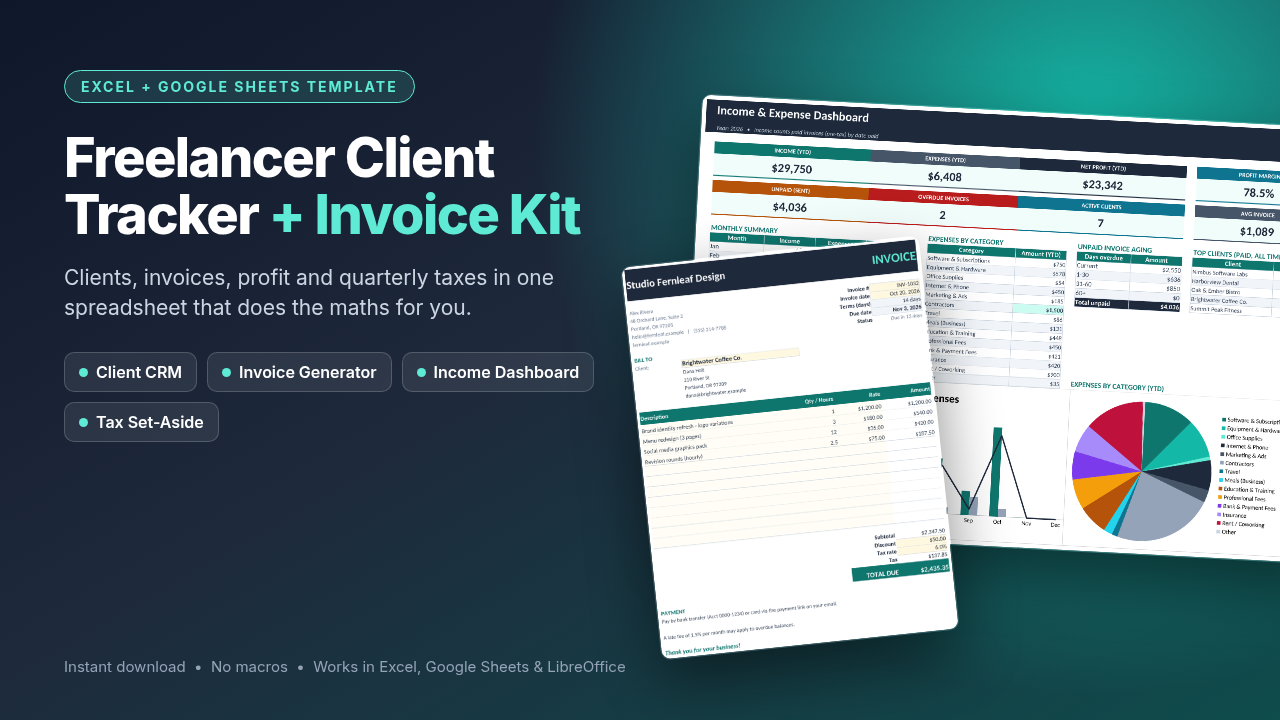
Freelancer Client Tracker + Invoice Kit
A client list, invoice template, invoice log with overdue tracking, expense log, income dashboard and quarterly set-aside estimate in one spreadsheet.
Get it →10. Plan your holiday hours and January
- Tell clients when you are off and when you will reply; see holiday hours announcement templates
- Line up January work or an offer for a slow start; see January slow season promo ideas
- Schedule a short monthly money check for next year
Copy-ready year-end checklist
Copy this into your notes or task app and tick items off.
YEAR-END FREELANCE CHECKLIST [year]
Money
[ ] List unpaid invoices and send reminders
[ ] Send final invoices for finished work
[ ] Invoice deposits for January projects
[ ] Match payments to invoices and statements
[ ] Total income by clientRecords
[ ] Gather receipts in one folder
[ ] Categorize expenses; flag questions
[ ] Cancel unused subscriptions
[ ] Mark business items in mixed accountsTaxes (ask a professional)
[ ] Compare tax set-aside with income
[ ] Check estimated payments and next due dates
[ ] List forms to expect early next year
[ ] Ask about paperwork for contractors I paid
[ ] Book time with my tax professionalClients
[ ] Close and archive finished projects
[ ] Back up files, contracts and invoices
[ ] Ask two clients for testimonials
[ ] Note best lead sources
[ ] Send thank-you notesNext year
[ ] Decide rates; send notice in writing
[ ] Start invoice numbers at [2027-001]
[ ] Set up a clean client tracker
[ ] Announce holiday hours
[ ] Plan January work and a monthly money check
Common mistakes and how to fix them
- Leaving reminders until January. Fix: send them in early December, when client offices are still open.
- Hunting for receipts at tax time. Fix: gather them now and keep one folder going all year.
- Guessing what is a business expense. Fix: flag anything unclear and ask your tax professional.
- Raising rates without notice. Fix: tell clients in writing before the new rate applies.
- Reusing invoice numbers. Fix: start a clear new sequence and keep one log.
- Overwriting last year's tracker. Fix: save a copy as a record and start a clean file.
What is in the templates
| Template | What you get |
|---|---|
| Free 1-Page Invoice Template ($0+) | A 1-page invoice for Excel or Google Sheets that totals line items, discount and tax, plus a printable PDF. |
| Free Monthly Business Expense Log ($0+) | A 3-page printable PDF: monthly expense log, profit and tax set-aside summary, and expense categories cheat sheet. |
| Freelancer Client Tracker + Invoice Kit ($5+) | An Excel and Google Sheets spreadsheet with tabs for settings, clients, an invoice, an invoice log with overdue tracking, expenses, a dashboard and a quarterly tax set-aside estimate, plus a blank and a sample version and a quick-start PDF guide. |
None of these files send reminders or file taxes for you; they help you keep the records in one place.
FAQ
What should freelancers do before the end of the year?
Chase unpaid invoices, send final invoices, total income by client, gather receipts, check your tax set-aside, close out projects, review your rates and set up a clean tracker and invoice numbering for next year.
When should I start my year-end checklist?
Early December works well. Clients still have time to pay before the holiday slowdown, and you have time to ask your tax professional questions before any year-end deadlines.
Should I restart invoice numbers in January?
You can. A year-based sequence such as 2027-001 keeps numbers unique and easy to sort. Whatever format you choose, never reuse a number, and check any local rules on invoice numbering.
Should I buy equipment before December 31 for tax reasons?
That depends on your situation and local tax rules. Ask a qualified tax professional before buying anything for tax reasons; buy what your business actually needs.
How do I tell clients about a rate increase for next year?
Tell them in writing, with notice before the new rate applies (for example, 30 days), say when it starts and what it applies to, and thank them for their work this year. The price increase letter guide has sample wording.
Related templates
Free 1-Page Invoice Template
A 1-page invoice for Excel or Google Sheets that totals line items, discount and tax, plus a printable PDF.
Download free →Freelancer Client Tracker + Invoice Kit
A client list, invoice template, invoice log with overdue tracking, expense log, income dashboard and quarterly set-aside estimate in one spreadsheet.
Get it →More free guides
- Holiday Hours Announcement Templates
- Year-End Client Thank-You Notes
- January Slow Season Promo Ideas
- Price Increase Letter to Clients
- How to Calculate Your Freelance Hourly Rate (Simple Formula)
- How to Track Freelance Clients, Projects and Payments in One Spreadsheet
- Free Freelance Invoice Template (and What to Put on It)
- Late Payment Email Templates for Freelancers (Polite to Firm)