Tattoo Aftercare Instructions: A Printable Client Handout for Tattoo Artists
A practical guide to written tattoo aftercare instructions for artists and studios: what to cover in the first 24 hours, washing and moisturizing steps, a healing timeline by week, what clients should avoid, warning signs that need a doctor, touch-up policy wording and how to lay out a one-page handout clients actually keep.
Why every client should leave with written aftercare
The session is only part of the result. The two to four weeks after it, when the client is on their own, matter too. A tattoo that was picked, soaked in a pool, over-moisturized or left in the sun can heal patchy, blurry or faded, and the client will usually blame the artist. Verbal instructions at the end of a long session are forgotten by the time the client gets home. A printed sheet, plus the same text sent by message or email, is what they actually follow.
Written tattoo aftercare instructions also protect the studio. When your consent form says the client agrees to follow aftercare, and the client signs that they received the aftercare sheet, you have a clear record if a healing problem or a touch-up dispute comes up later. This guide walks through what to put on that sheet, in plain language a client can follow at 11 PM with a fresh tattoo.
One important note before the steps: aftercare methods vary between artists (traditional wrap, adhesive film, different ointments), and healing depends on the person, placement and size. Use this as a framework and adapt it to the method you trust. It is not medical advice, and your sheet should always tell clients to contact a doctor if they are worried.
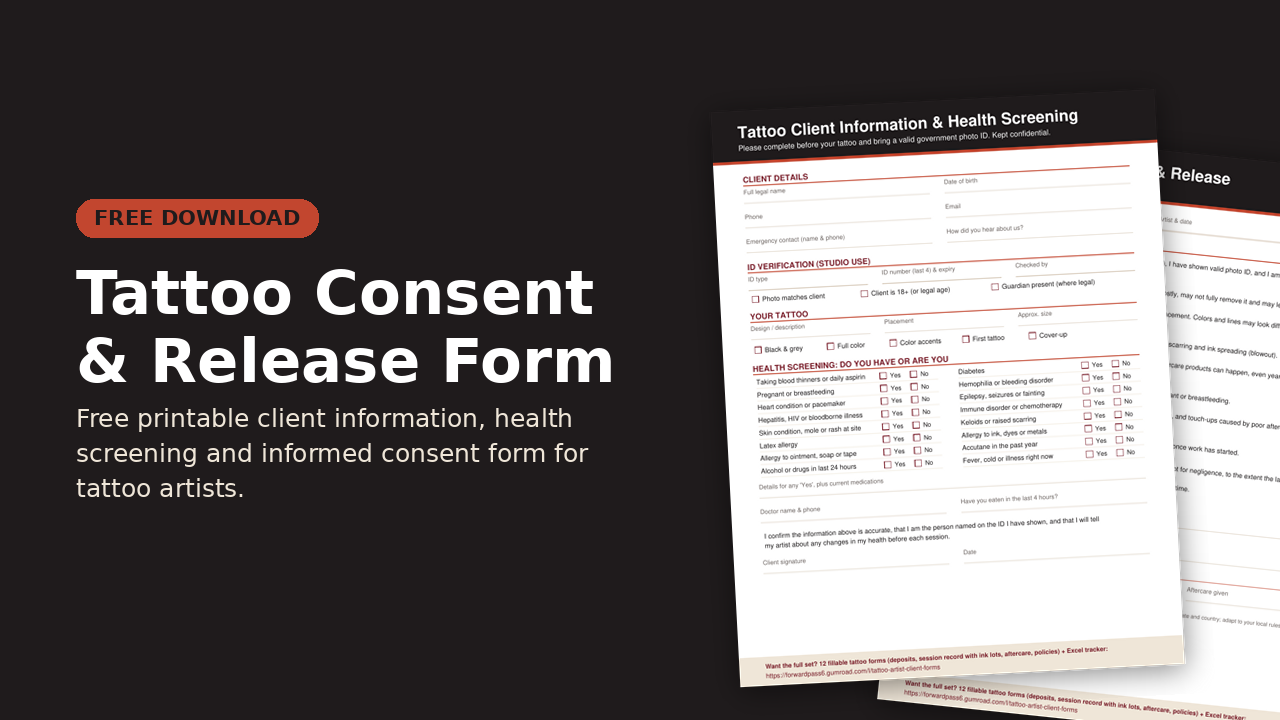
Free Tattoo Consent & Release Form
A fillable, printable tattoo consent and release form with client information, ID verification and a health screening, for tattoo artists and studios.
Download free →What tattoo aftercare instructions should cover
A complete aftercare handout answers every question a client would otherwise text you about. Keep each part short and use headings so it is easy to scan:
- Bandage or film: what you put on, and exactly when and how to remove it.
- First wash: how to wash the tattoo for the first time, with what, and how to dry it.
- Daily routine: how often to wash and moisturize, and how much product to use.
- Healing timeline: what is normal in week one, week two and weeks three to four, so peeling and itching do not cause panic.
- What to avoid: soaking, sun, picking, tight clothing, gym friction and so on, with how long for each.
- Warning signs: symptoms that mean the client should contact a doctor, not just the studio.
- Long-term care: sunscreen and moisturizing once healed.
- Touch-ups: your touch-up policy and the time window it applies to.
- Contact details: how to reach the studio with questions, and the date and artist for their session.
The first 24 hours
This is the part clients most need written down, because they are tired and the skin is fresh. Typical instructions look like this, adjusted to your method:
- Leave the covering on for the time your artist told you. Traditional wraps are usually removed after a few hours. Adhesive second-skin films are often left on longer, commonly a few days, unless they leak or lift. Write the exact time on the sheet for each client.
- Wash your hands first before touching the tattoo, every time.
- Remove the covering gently, ideally under lukewarm running water so it does not pull on the skin.
- Wash the tattoo with lukewarm water and a mild, fragrance-free soap, using clean fingertips only. No washcloths, sponges or loofahs.
- Pat dry with a clean paper towel. Do not rub, and avoid shared bath towels, which can carry bacteria.
- Let it air dry for a few minutes, then apply a very thin layer of the aftercare product your artist recommends.
- Sleep on clean sheets and wear loose, clean clothing over the area. Some plasma or ink on the sheets the first night is normal.
Leave a blank line on the handout for "Remove covering on: ____ at ____" and fill it in before the client leaves. That one line prevents most first-night questions.
Daily washing and moisturizing
After the first wash, most artists recommend washing the tattoo gently two to three times a day while it heals, and always after sweating. Clients should then pat dry and apply a thin layer of moisturizer or ointment. The most common mistake is too much product: a thick, shiny layer suffocates the skin and can lead to bumps and a gummy scab. Tell clients the tattoo should look slightly matte, not greasy, after moisturizing.
Spell out the product type on your sheet: for example, an unscented lotion, a tattoo-specific balm or the ointment you sell in the studio. Tell clients to avoid scented lotions, products with heavy fragrance or alcohol, and anything not meant for broken skin. If you use adhesive film, explain how to wash around it, what to do if fluid builds up underneath, and when to switch to the regular washing and moisturizing routine after it comes off.
Tattoo healing timeline (what is normal)
Clients panic about normal healing stages. A simple week-by-week table on the handout heads off a lot of worried messages. Healing time varies with size, placement, color work and the person, so keep the wording general:
| Stage | What is normal | What to do |
|---|---|---|
| Day 1–3 | Redness, warmth, mild swelling, some oozing of plasma and ink, tenderness like a sunburn. | Wash gently, pat dry, thin layer of product. Loose clothing. Rest the area. |
| Day 4–7 | Redness fades. Skin feels tight. Light flaking or thin scabs may start to form. | Keep washing and moisturizing lightly. Do not pick or peel. |
| Week 2 | Peeling like a sunburn, itching, colored flakes. Tattoo can look cloudy or dull. | Do not scratch. Light tap or a cool compress for itching. Keep moisturizing thinly. |
| Week 3–4 | Flaking ends. A shiny or milky layer may remain while the deeper skin heals. | Keep moisturizing. Still avoid long sun exposure and soaking until fully healed. |
| After about 1 month | Surface usually healed. Deeper layers can take longer; colors settle. | Daily sunscreen on the tattoo outdoors. Book a touch-up check if needed. |
Add a line under the table: "Every tattoo heals a little differently. If you are not sure whether something is normal, message the studio, and see a doctor for any of the warning signs below."
What to avoid while the tattoo heals
Give clients a short list with a time frame for each item, so "avoid" does not mean forever. Common items:
- Soaking: no baths, pools, hot tubs, lakes or the ocean until the tattoo is fully healed, commonly at least two to four weeks. Short showers are fine.
- Sun and tanning: keep the tattoo covered with loose clothing and out of direct sun. No tanning beds. Do not put sunscreen on a fresh, open tattoo; start once it is healed.
- Picking and scratching: let flakes and scabs fall off on their own. Pulling them can lift ink and leave light patches.
- Friction and tight clothing: waistbands, straps, shoes and gym equipment rubbing the area slow healing.
- Heavy sweating and dirty gyms: keep workouts light for the first days, avoid exercises that stretch or rub the area, and wash after sweating.
- Pets and dirty surfaces: keep pets off fresh tattoos and bedding clean.
- Shaving and hair removal over the tattoo until it has healed.
- Unapproved products: no petroleum-heavy layers, scented creams, home remedies or numbing creams on healing skin unless your artist approves.
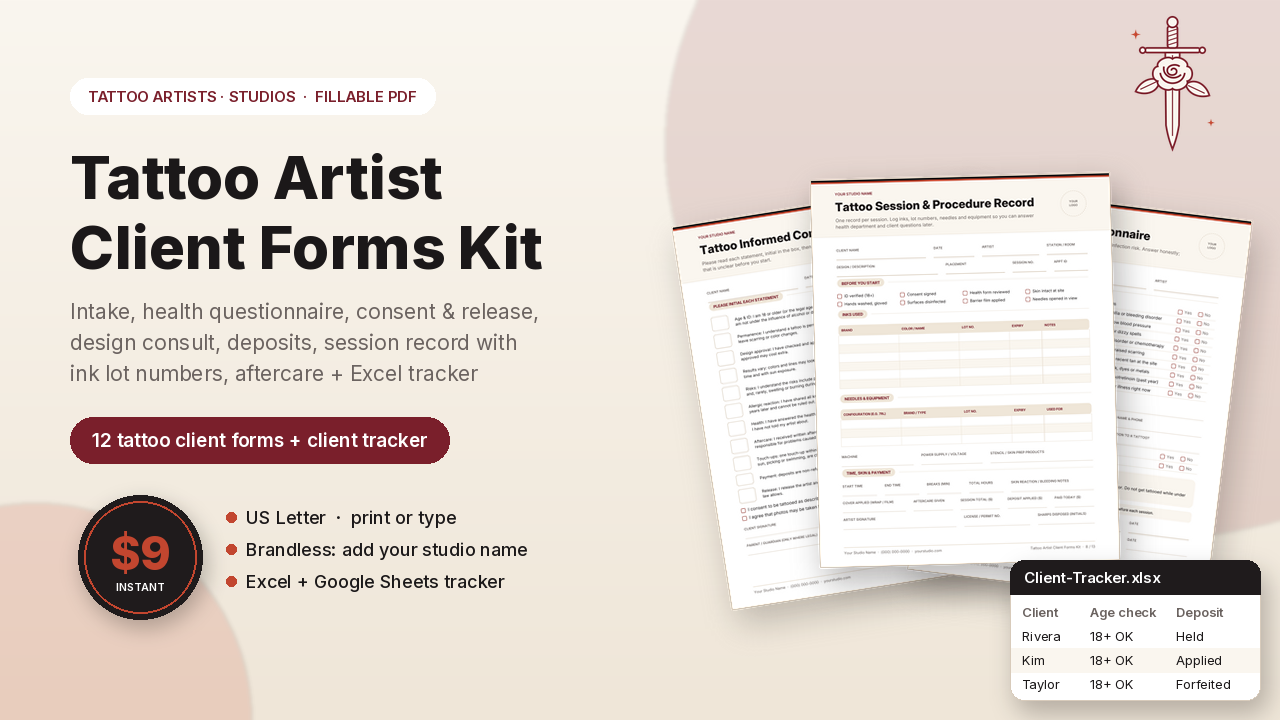
Tattoo Artist Client Forms Kit
12 fillable forms (new client intake, health questionnaire, consent and release, design and placement consultation with body outline, deposit and booking agreement, session record with ink lot numbers, aftercare and more) plus an Excel client tracker with 18+ age checks, deposit status and an ink lot log.
Get it →Warning signs that need a doctor
Your handout should make it clear that some symptoms are not a studio question. Tell clients to contact a doctor or seek medical care if they notice:
- Redness, swelling or pain that keeps getting worse after the first two to three days instead of improving.
- Red streaks spreading from the tattoo.
- Thick yellow or green discharge, or a bad smell.
- Fever, chills or feeling unwell.
- Hives, severe itching, raised bumps or a rash, which can point to a reaction to an ink color or a product.
Ask clients to let the studio know as well, so you can record it on their client file along with the ink lot numbers used in the session. That record is useful if a doctor asks what ink was used, and it is one reason a session record with ink lot numbers is worth keeping for every client.
Long-term care once it is healed
Aftercare does not end when the flaking stops. Add a short section for the long run: use a broad-spectrum sunscreen on the tattoo whenever it is in the sun, because UV exposure is one of the main reasons tattoos fade and blur over the years. Keep the skin moisturized, especially in winter. Remind clients that color work, white ink and fine-line pieces tend to need more sun protection to stay crisp. A healthy, well-protected tattoo is also your best advertising, since clients show it off for years.
Touch-up policy wording for your aftercare sheet
Put your touch-up policy right on the aftercare handout, because that is when it matters. Clear wording avoids arguments about who pays when a tattoo heals unevenly. A simple version:
"Some areas may need a small touch-up after healing. Free touch-ups are offered within [number] months of your session if aftercare instructions were followed. Touch-ups needed because of sun exposure, picking, soaking or other aftercare issues, or on hands, feet, fingers and other high-wear areas, may be charged. Please wait until your tattoo is fully healed, usually at least 4–6 weeks, before booking a touch-up."
Example numbers only: a studio might offer one free touch-up within 3 months, and charge its shop minimum for touch-ups after that or on high-wear areas. Set your own window and price, keep them consistent, and make sure the same terms appear in your deposit and booking agreement and your consent form.
How to lay out a one-page aftercare handout
The best aftercare sheet fits on one page and can be read in two minutes. A layout that works well:
- Top: studio name, phone or message link, client name, artist, session date and a "remove covering on" line.
- First 24 hours as numbered steps.
- Daily routine in two or three short lines.
- Healing timeline as a small table.
- Avoid list with time frames.
- Warning signs in a highlighted box.
- Touch-up policy and long-term sunscreen reminder at the bottom.
- Client signature line (or a matching line on your consent form) confirming they received the instructions.
Hand the printed copy over while you go through it out loud, then send the same content by email or text so it is on their phone. Keep a copy, or the signed receipt line, in the client file with their consent form and session record.
Common aftercare mistakes artists see
- Only giving verbal instructions at the end of a long session.
- Different artists in the same studio giving conflicting advice. Use one shared sheet.
- No removal time written down for the bandage or film.
- Not mentioning pools, beaches and holidays, which is how many tattoos get ruined, especially before a trip.
- No touch-up window, so clients ask for free reworks a year later.
- No record that the client received the instructions.
FAQ
How long should you leave a tattoo bandage on?
It depends on the covering. Traditional wraps are usually removed after a few hours, while adhesive second-skin films are often left on for a few days unless they leak or lift. Follow the time your artist writes on your aftercare sheet.
How often should you wash a new tattoo?
Most artists recommend gently washing a healing tattoo two to three times a day with lukewarm water and a mild fragrance-free soap, and after sweating, then patting it dry and applying a thin layer of moisturizer.
When can you swim after getting a tattoo?
Wait until the tattoo is fully healed, commonly at least two to four weeks and sometimes longer for large pieces. Pools, hot tubs, lakes and the ocean can carry bacteria and soaking can pull ink out.
Is it normal for a new tattoo to peel and itch?
Yes. Peeling, light flaking and itching are normal in the first couple of weeks. Do not pick or scratch; let flakes fall off on their own and keep moisturizing lightly.
Should tattoo artists give written aftercare instructions?
Yes. A printed handout plus a digital copy is what clients actually follow, it keeps advice consistent across artists, and a signed receipt line gives the studio a record if a healing or touch-up dispute comes up.
What should a tattoo touch-up policy say?
State whether touch-ups are free, the time window (for example, within a set number of months), that aftercare must have been followed, which areas or causes are excluded, and that clients must wait until the tattoo is fully healed before booking.
This page is general guidance for tattoo artists and studios, not medical or legal advice. Aftercare methods and healing times vary by artist, product, placement and person. Clients with signs of infection or an allergic reaction should contact a doctor. Touch-up windows and prices shown are example numbers for illustration only.
Related templates
Free Tattoo Consent & Release Form
A fillable, printable tattoo consent and release form with client information, ID verification and a health screening, for tattoo artists and studios.
Download free →Tattoo Artist Client Forms Kit
Intake, health questionnaire, consent and release, design consultation, deposit agreement, session record, aftercare sheet and more, plus an Excel client tracker.
Get it →