How to Price Junk Removal Jobs: Load Pricing, Minimums and Estimates (Free Forms)
A practical junk removal pricing guide: truck-load fraction pricing, minimum charges, dump fees, heavy item surcharges, on-site estimates, waivers and invoices, with a free estimate form.
Why pricing is the hardest part of junk removal
Junk removal looks simple: show up, load the truck, haul it away. The hard part is the price. Charge too little and dump fees, fuel and labor eat the profit. Charge too much, or give a vague number, and the customer calls the next company. Most established haulers solve this with a clear, repeatable system: a price sheet based on how much of the truck the job fills, a minimum charge, a few standard surcharges and a written estimate the customer signs before loading starts.
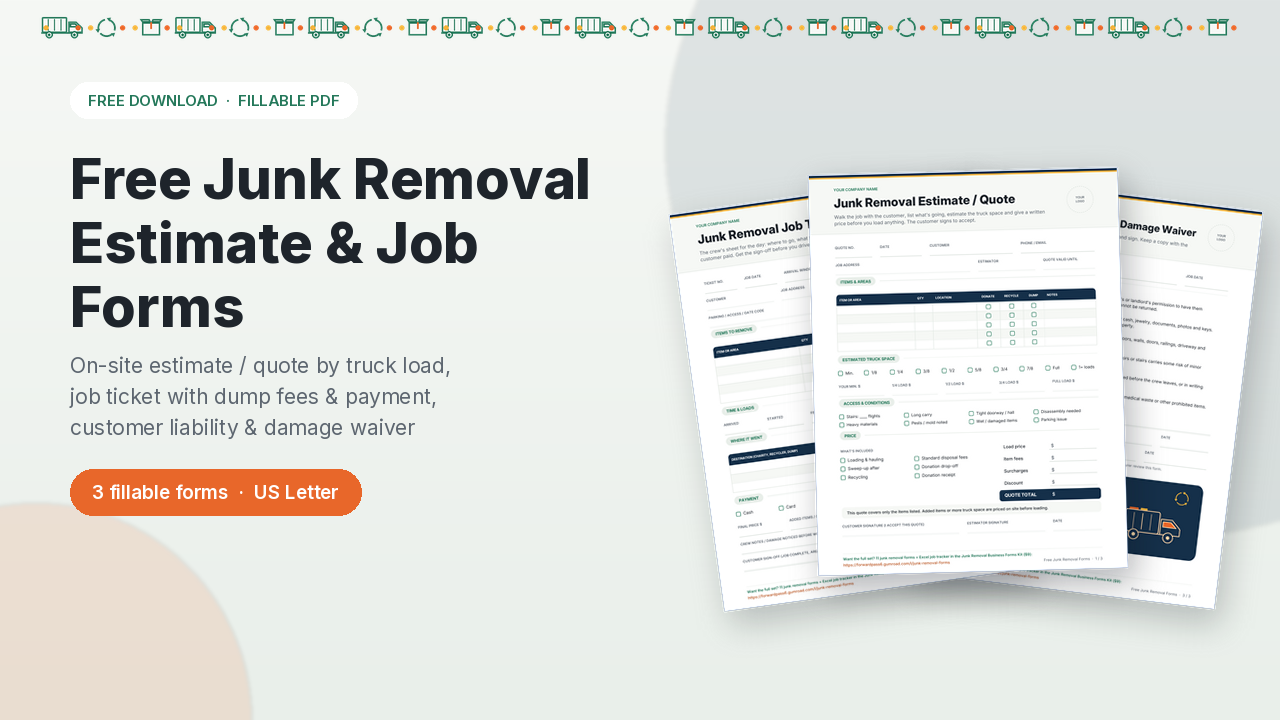
Free Junk Removal Estimate & Job Forms
A fillable junk removal estimate form priced by truck-load fraction, a job ticket and a customer liability waiver.
Download free →Price by truck-load fraction
Volume pricing is the industry standard because it is easy for customers to understand and it tracks your real costs. Measure your truck or trailer in cubic yards, then set prices for common fractions:
- Minimum load: a single item or a small pile.
- 1/4 load: a few pieces of furniture or a small room cleanout.
- 1/2 load: a garage corner, a shed, or a one-bedroom move-out.
- 3/4 load: most of a garage or a larger cleanout.
- Full load: a whole-house or estate cleanout, with a price for each additional load.
To set the numbers, add up your cost per full load: dump fees, fuel, crew wages for the typical job time, truck payment and insurance share, then add your target profit. Divide down for each fraction, and make sure the minimum still covers a trip.
Set a minimum charge and standard surcharges
A minimum protects you from jobs that cost more in drive time than they pay. Then list surcharges up front so they never feel like surprises:
- Heavy materials such as concrete, dirt, roofing shingles and brick, which fill weight limits before volume.
- Special-fee items such as mattresses, tires, appliances with refrigerant and TVs, where your landfill or recycler charges extra.
- Access: stairs, long carries, tight doorways and items that need disassembly.
- Same-day or after-hours service.
Keep a printed list of prohibited and hazardous items such as paint, chemicals, fuel and asbestos so customers know what you cannot take.
Give a written on-site estimate
Phone quotes are useful for booking, but the price should be confirmed on site. A good estimate form lists the items and areas, your estimated truck space, the load price, any item fees and surcharges, and a total range. Have the customer sign to accept before loading. If the final volume ends up smaller, charge the lower fraction; that small act of honesty earns reviews and referrals.
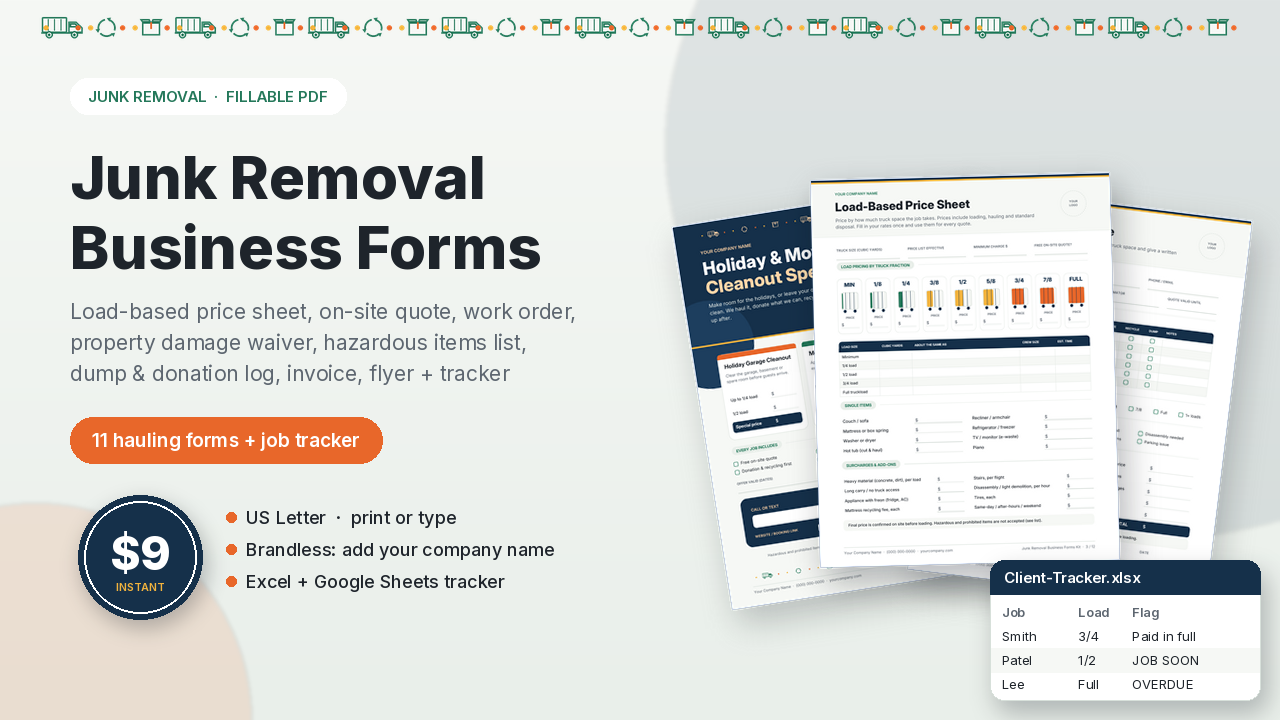
Junk Removal Business Forms Kit
11 fillable forms (booking form, load-based price sheet, estimate / quote, work order, liability & property damage waiver, prohibited items list, before / after checklist, dump & donation log, invoice, cleanout specials flyer, review cards) plus an Excel job tracker with profit per job.
Get it →Protect yourself with a waiver and job ticket
Moving bulky items through homes risks scuffed walls, scratched floors and damaged door frames. A simple customer waiver covers pre-existing damage, items the customer asked you to move through tight spaces, and what happens with items left behind by mistake. A job ticket records the crew, arrival window, approved price, items removed, dump and donation receipts and payment received. Together they keep jobs consistent as you add crews.
Track profit per job
Revenue per job means little if one job used two dump runs and five crew hours. Track the load price, dump fees, fuel, labor and resulting profit for every job. After a month you will know which job types and neighborhoods pay best, and whether your load prices need to move. Seasonal pushes such as spring cleanouts, move-out season and pre-holiday garage cleanouts are a good time to run specials once you know your margins.
FAQ
How much should I charge for a full truckload of junk?
It depends on your truck size, local dump fees, labor cost and market. Build your price from your cost per load plus profit, then compare it with what local haulers advertise.
Should I charge by weight or by volume?
Most residential junk removal is priced by volume, with weight-based surcharges for heavy materials like concrete, dirt and shingles.
Do I need a waiver for junk removal?
A simple liability and property damage waiver is common practice and helps set expectations about pre-existing damage and tight spaces. Have it reviewed for your state.
What items should junk removal companies refuse?
Typically hazardous materials such as paint, chemicals, fuel, asbestos and medical waste. Check your local landfill and recycling rules.
This page is general guidance, not legal advice. Disposal, hazardous waste and contract rules vary by state and city.
Related templates
Free Junk Removal Estimate & Job Forms
A fillable junk removal estimate form priced by truck-load fraction, a job ticket and a customer liability waiver.
Download free →Junk Removal Business Forms Kit
Fillable junk removal forms plus an Excel job tracker with load pricing, dump fees, crew labor and profit per job.
Get it →