Bounce House Rental Agreement: What to Include (Free Template)
What to put in a bounce house and party rental agreement, from booking details and setup site checks to deposits, damage deposits, wind and weather rules, supervision, waivers and cancellation, with free printable forms.
Why every bounce house rental needs a written agreement
Inflatables bring kids, wind, electricity and expensive equipment together in a backyard you have never seen. That is why a rental agreement is not optional for a party rental business. It sets the rules for safe use, makes the renter responsible for supervision and damage, explains what happens in bad weather, and shows insurers and customers that you run a careful operation. It also reduces disputes over cleaning fees, late pickups and damage deposits.
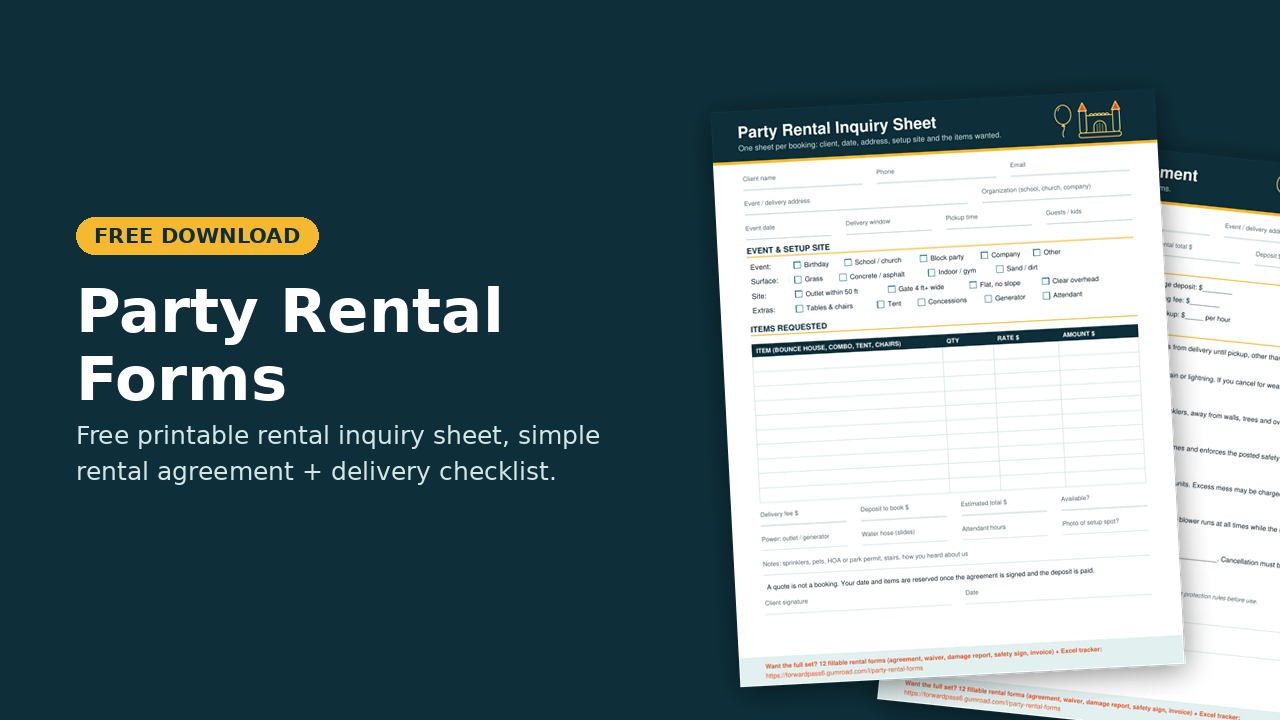
Free Party Rental Forms
A printable party rental inquiry sheet, a simple rental agreement and a delivery, setup & pickup checklist for bounce house and party rental businesses.
Download free →Collect the right details at booking
- Client and event: contact details, event date, delivery address, organization if any, guest count and event type.
- Delivery window and pickup time: so you can plan routes and avoid double booking units.
- Setup surface: grass, concrete, indoor or sand. Each needs different anchoring.
- Site checks: an outlet within reach (many units list a maximum cord distance, often around 50 feet), gate width for the rolled unit, slope, and overhead clearance from trees and power lines.
- Items requested: each item with quantity, rate and amount, plus extras like tables and chairs, tents, concessions, a generator or an attendant.
- Fees: delivery fee, deposit and estimated total.
Pricing, deposits and damage deposits
Most rental companies price by the item for a standard rental period, such as a day or a set number of hours, and charge a delivery fee based on distance. Overnight rentals, attendants and generators are add-ons. Separate two kinds of deposit in your agreement:
- Booking deposit: reserves the date and the unit, usually applied to the rental total.
- Damage or security deposit: held against damage, excessive cleaning or missing items, and returned after the pickup inspection.
State the balance due and when it must be paid, often before or at setup. List cleaning fees (for silly string, paint, food or mud), late pickup fees and any charges for a return trip if the site is not ready.
Wind, weather and cancellation
Weather is the most common reason a bounce house rental changes. Your agreement should state a wind limit for operation. Many manufacturers set this around 15 to 20 mph, so follow the limit in your unit's manual and require the renter to deflate and clear the unit if winds reach it or a storm approaches. Explain how weather cancellations work (credit, reschedule or refund), the deadline for customer cancellations, and what portion of the deposit is kept for late cancellations.
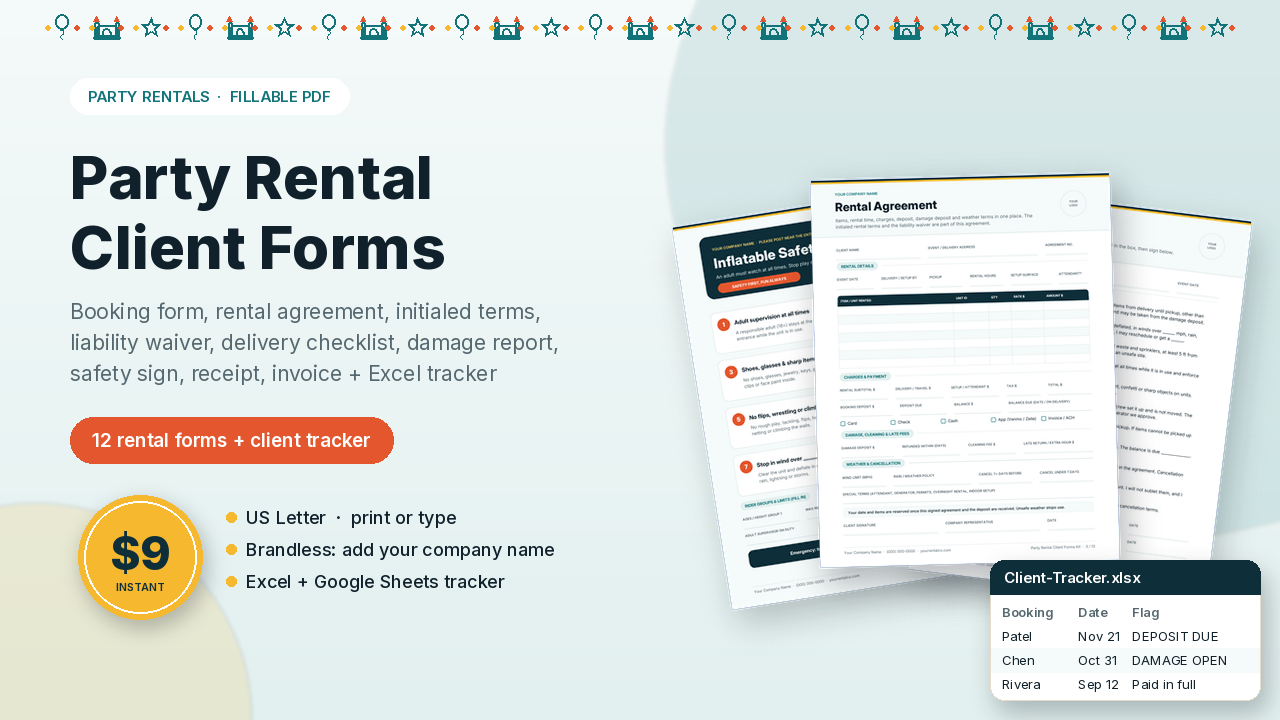
Party Rental Client Forms Kit
12 fillable forms (rental inquiry & booking, rental agreement, 10 initialed rental terms, liability waiver & release, delivery & pickup checklist, inventory check-out / check-in, damage report, inflatable safety rules sign, invoice and more) plus an Excel client tracker.
Get it →Rental terms to have the renter initial
- Damage: the renter pays for damage beyond normal wear, including cuts, burns and stains.
- Adult supervision: a responsible adult supervises the unit at all times it is in use.
- Rules of use: no shoes, sharp objects, food, drinks, silly string or pets; limit riders by size and number; no flips or climbing on walls.
- Weather and wind: stop use and deflate in high wind, rain or lightning.
- Setup site: the renter confirms the area is clear and accurately described, and marks any sprinkler lines or buried utilities.
- Anchoring and power: anchors and stakes stay in place, the blower stays running, and only approved cords or generators are used.
- Cleaning: the unit is returned in the condition delivered or cleaning fees apply.
- Liability waiver: the renter accepts the risks of inflatable use and agrees to the release.
Initialed terms are much harder to dispute later than a paragraph of fine print.
Delivery, setup and pickup checklist
Before leaving the shop, check the unit, blower, stakes, tarp, cords and safety sign. On site, walk the setup area, confirm clearance, anchor every point, test the blower, post the safety rules, check the wind and explain the emergency deflate procedure to the renter. Collect the signed waiver and payment, then take photos. At pickup, inspect and photograph again, note any damage on a damage report, and log the unit back into inventory so it is ready for the next booking.
FAQ
Do I need insurance to rent bounce houses?
Most party rental businesses carry commercial general liability insurance, and many parks, schools and venues require a certificate. Some states also regulate or inspect inflatables. Check your state rules and talk to an insurer.
What is a typical damage deposit?
It depends on your units and market. Some companies hold a set amount on a card and release it after a clean pickup inspection.
Can I rent a bounce house for use on concrete?
Many units can be set up on hard surfaces with sandbags or water weights instead of stakes, plus a tarp or mats. Follow the manufacturer's anchoring instructions.
Is a liability waiver enough on its own?
A waiver works best alongside clear rules, initialed terms, proper setup and insurance. How enforceable a waiver is depends on your state.
This page is general guidance, not legal advice. Check your state rules on inflatable rentals, waivers, deposits and refunds, and the manufacturer's instructions for every unit.
Related templates
Free Party Rental Forms
A printable party rental inquiry sheet, a simple rental agreement and a delivery, setup & pickup checklist for bounce house and party rental businesses.
Download free →Party Rental Client Forms Kit
Fillable bounce house and party rental forms plus an Excel tracker for bookings, inventory, deposits and damage charges.
Get it →