Nanny Rates: How Much to Charge Per Hour or Per Week
How nannies can set their rates: target hourly pay, extra children and duties, guaranteed hours, weekly pay, overtime, holidays and paid time off, driving and expenses, and a worked weekly quote.
Why nanny rates are different from babysitting rates
An occasional babysitter covers a date night. A nanny becomes part of the family's weekly routine: school runs, meals, naps, homework, laundry, activities and long stretches as the only adult in charge. That steady responsibility is why nannies usually charge more and why the terms around the rate matter as much as the hourly number.
A simple method helps: set your target hourly pay, adjust for children and duties, agree on guaranteed hours, then write down overtime, holidays, paid time off and expenses. The steps below end with a worked weekly quote. All numbers on this page are example numbers, not market data.
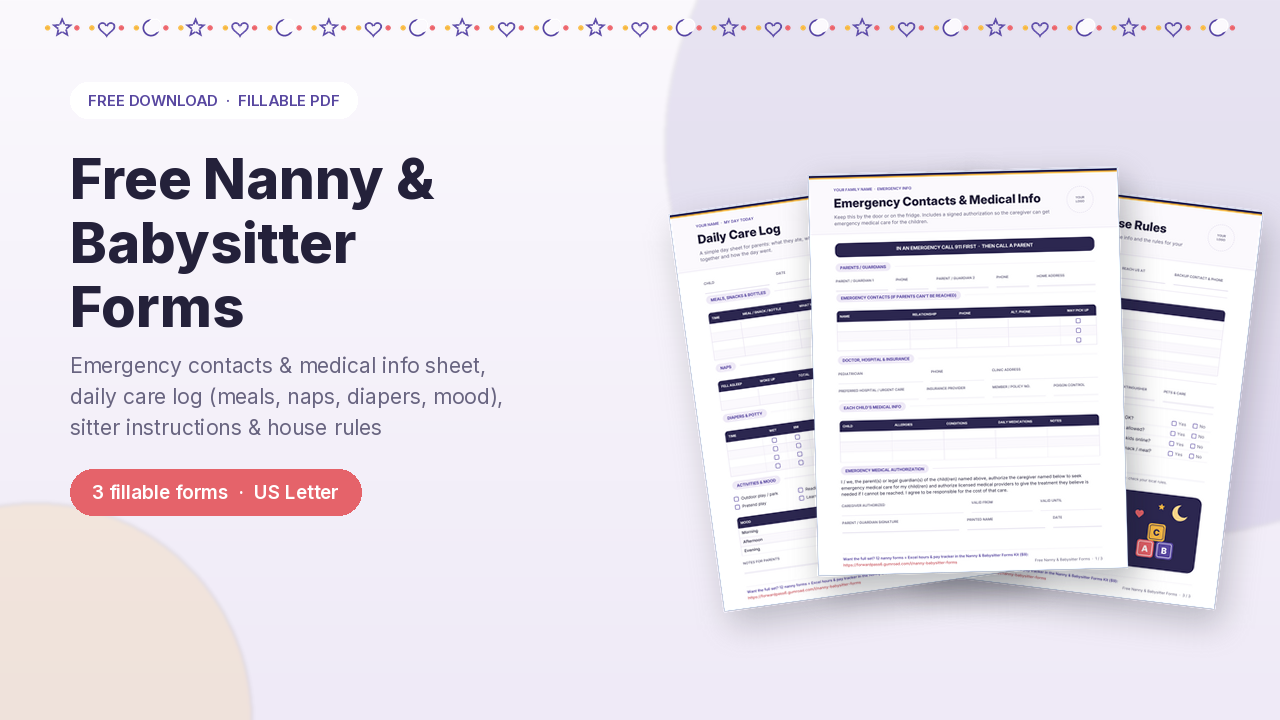
Free Nanny & Babysitter Forms
A fillable emergency contacts & medical info sheet, a daily care log and a sitter instructions & house rules page.
Download free →1. Set your target hourly pay
Begin with what you need to earn each week, then divide by the hours you plan to work. Think about costs that come out of your own pocket: commuting, phone, CPR and first aid courses, and any taxes you are responsible for.
- Example weekly need: $1,000 for 45 hours of work.
- Example base rate: about $22 an hour for one child.
- Example experience bump: add $1-3 an hour for certifications, newborn care training or many years of experience.
2. Adjust for children, ages and duties
Rates usually rise with the number of children and the extra work beyond childcare. The table shows one way to tier rates using example numbers.
| Situation | Example rate change | Notes |
|---|---|---|
| One child, school age | Base rate | Homework help and activities included |
| Infant or toddler | +$1-3 an hour | More hands-on care and night routines |
| Each additional child | +$2-4 an hour | Rather than doubling the rate |
| Household duties (family laundry, meal prep) | +$1-3 an hour | Beyond the children's own needs |
| Nanny share (two families) | About 1.3-1.5x base total | Each family pays a share |
Agree on exactly which household tasks are included, so extra jobs do not creep in without extra pay.
3. Guaranteed hours and weekly pay
Ask for a set number of guaranteed hours each week. The family pays for those hours whenever you are available to work, even if they cancel a day, leave early or go away without you.
- Set the weekly schedule and the guaranteed hours in writing
- Pay hours worked beyond the schedule at your agreed rate or overtime rate
- Agree on the pay day and the payment method
- Decide how late pickups are charged, for example in 15 minute blocks
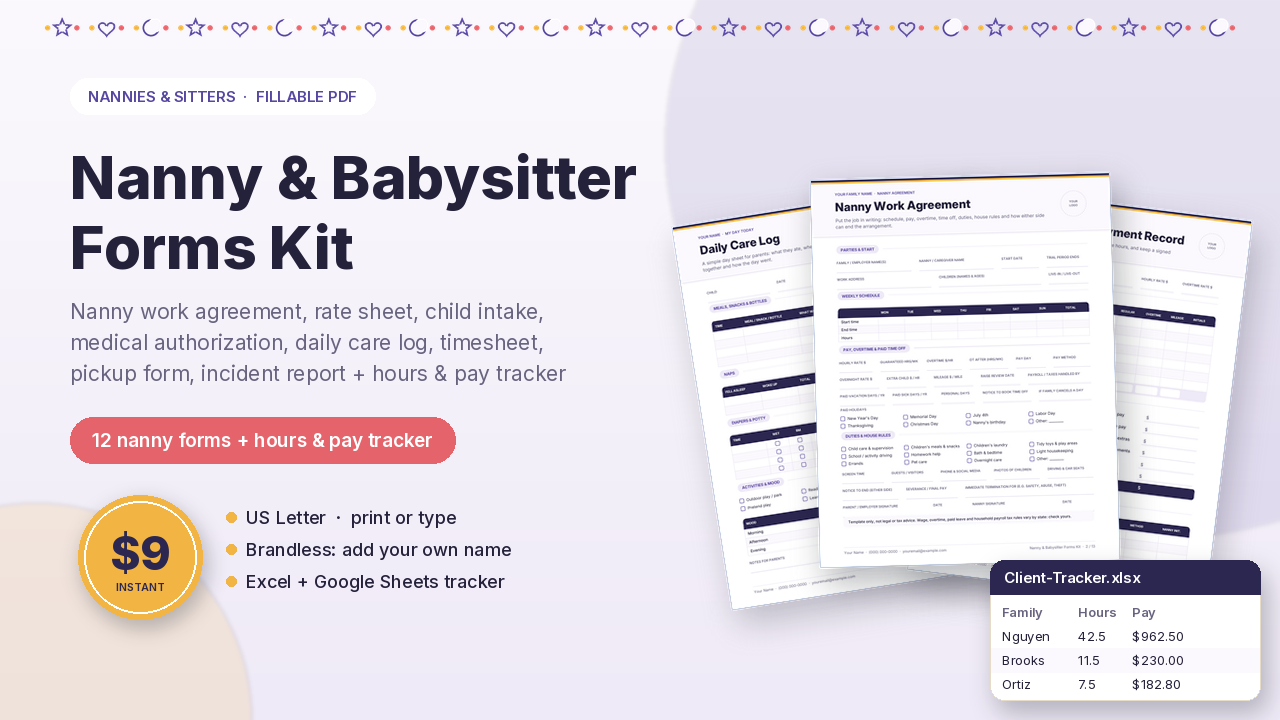
Nanny & Babysitter Forms Kit
12 fillable forms (nanny work agreement, babysitter rate sheet, child information form, emergency contacts and medical authorization, allergy and medication log, daily care log, weekly timesheet, pickup authorization, incident report and more) plus an Excel tracker for hours, overtime and pay.
Get it →4. Overtime, holidays and paid time off
Write down your rules before you need them. Many nanny agreements include:
- An overtime rate, often 1.5x, for hours over 40 a week or as local law requires
- Paid holidays, such as Thanksgiving, Christmas and New Year's Day
- A set number of paid vacation and sick days each year
- Higher rates for working on a holiday or overnight
- What happens when the family travels: paid as usual, or the nanny travels with them at a set rate
- A yearly rate review
5. Expenses, driving and the agreement
Agree on how outings and driving are paid. Many families reimburse mileage when the nanny drives their own car, or provide a car and cover fuel. Activity and outing costs are usually paid by the family.
Put everything in a written nanny agreement: schedule, guaranteed hours, rate, overtime, holidays, time off, duties, house rules, notice period and how either side ends the arrangement. The nanny contract template linked on this page covers these terms.
Worked example: a full-time nanny for two children
Here is how the method comes together, using the example numbers above.
- Two children, a toddler and a 6 year old, 45 hours a week, light meal prep and the children's laundry.
- Rate: $22 base + $2 for the toddler + $3 for the second child = $27 an hour.
- Weekly pay: 40 hours x $27 = $1,080, plus 5 overtime hours x $40.50 = $202.50, so about $1,283 a week in this example.
- Guaranteed: all 45 hours paid each week the nanny is available.
- Extras: mileage reimbursed for school runs, 6 paid holidays and 10 days paid time off a year.
These are example numbers to show the math, not market rates. Use your own needs, local rates and local employment rules.
FAQ
How much should a nanny charge per hour?
Start from the hourly pay you need to live on, then adjust for the number of children, their ages, your experience and certifications, and extra duties like cooking or driving. Nannies usually earn more than occasional babysitters because the work is regular, longer and carries more responsibility. Any rates on this page are example numbers, not market data.
Should a nanny be paid hourly or a weekly salary?
Many families and nannies agree on an hourly rate with a set number of guaranteed hours each week, paid even if the family does not need the nanny that day. This gives the nanny steady income and the family a reserved schedule. Hours beyond the schedule are paid on top.
What are guaranteed hours?
Guaranteed hours are the hours a family agrees to pay for every week while the nanny is available, even if they cancel, go on vacation or come home early. They are one of the most important terms in a nanny agreement.
How much more should I charge for each extra child?
A common approach is to add a set amount per hour for each additional child, often a few dollars, rather than doubling the rate. Infants and children with extra needs may justify more. Put the amount in writing before you start.
How does a nanny share work for pricing?
In a nanny share, one nanny cares for children from two families at the same time. The nanny usually earns more per hour in total while each family pays less than they would alone. Agree on how costs, sick days and hosting are split.
Is a nanny an employee of the family?
In many places a nanny who works in the family's home on a regular schedule is treated as a household employee, which can bring tax, payroll and overtime rules. Rules vary by country and state, so check local requirements or ask a tax professional.
This page is general guidance, not legal, tax or employment advice. Household employment, payroll, overtime and tax rules vary by location, so check the rules where you work.
Related templates
Free Nanny & Babysitter Forms
A fillable emergency contacts & medical info sheet, a daily care log and a sitter instructions & house rules page.
Download free →Nanny & Babysitter Forms Kit
Fillable nanny agreement, babysitter rate sheet, logs and timesheet plus an Excel hours and pay tracker.
Get it →