Babysitter Information Sheet: What to Include (+ Free Printable)
A practical guide for parents, babysitters and nannies: what to write on the sheet you leave on the fridge before a sitting, how to keep it short enough to use in a hurry, and what sitters should ask a new family to fill in before the first booking.
Why a babysitter information sheet matters
Most of what a sitter needs to know lives in a parent’s head: who to call if nobody answers, which child is allergic to what, what “bedtime” actually means in this house, whether the neighbor is allowed to pick anyone up. Parents usually explain it at the door, in a rush, while putting on coats. Sitters nod, try to remember, and then text questions all evening.
A babysitter information sheet puts the important things on one page the sitter can find in a few seconds, usually on the fridge or next to the door. It does not replace a proper walk-through on the first visit, and it does not replace a conversation about anything serious, such as a severe allergy. What it does is make sure the answers are written down when they are needed, including in the moments when nobody is calm.
This guide covers what to put on the sheet, why each part matters and how to keep it short enough to use. It is useful for parents preparing for a sitter, and for babysitters and nannies who want new families to fill one in before the first booking. It is not a work agreement; hours, pay, cancellations and duties belong in a nanny or babysitter contract. It is also not a pricing guide; for that, see babysitting rates, nanny rates and holiday babysitting rates.
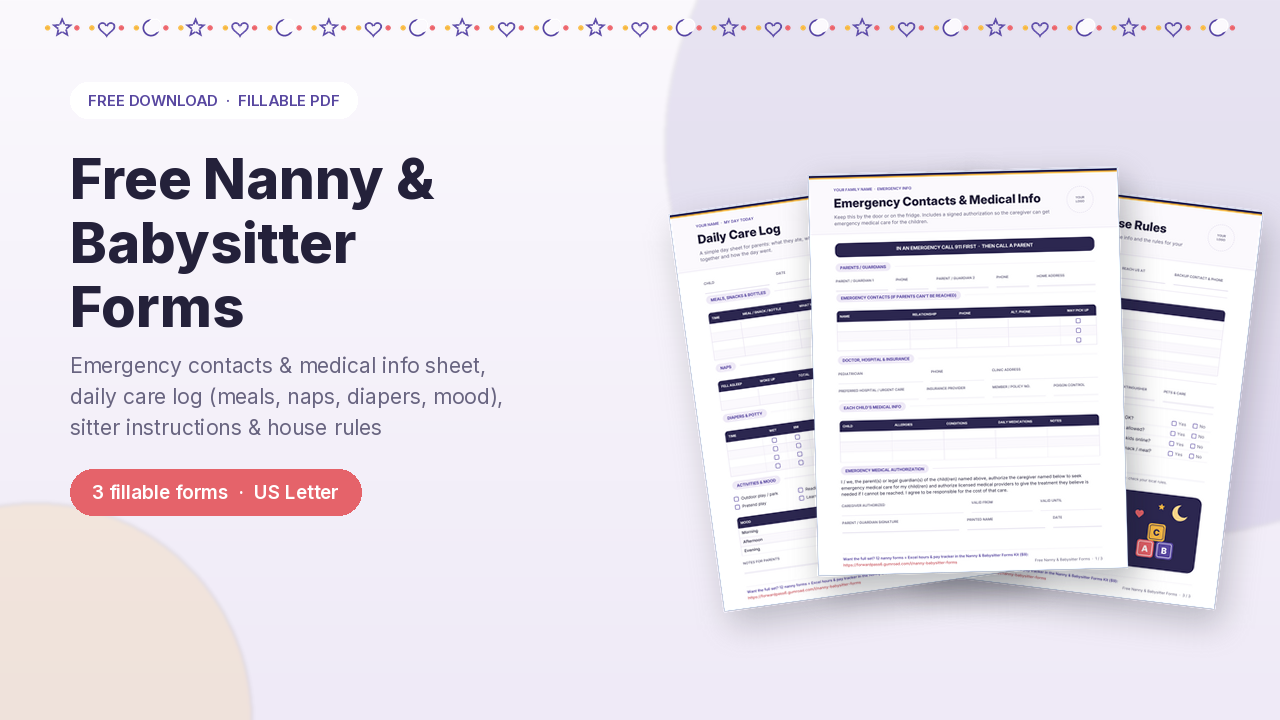
Free Nanny & Babysitter Forms
A fillable emergency contacts & medical info sheet, a daily care log and a sitter instructions & house rules page.
Download free →Part 1: Where the parents are and how to reach them
Put this at the very top. It is the part a sitter reads most often.
- Each parent or guardian’s name and mobile number, and which one to call first
- Where the parents will be tonight (the restaurant, venue or address) and a landline there if there is one
- Expected time home, and whether the sitter should text if the evening runs differently
- How parents prefer to be contacted: call for anything urgent, text for small questions, or a quick update at a set time
- The home address, written out in full, with the nearest cross street or a landmark
The address line sounds unnecessary until you think about who might need it. A sitter calling emergency services from an unfamiliar house may not remember the house number or the apartment number. Writing it where they can read it out is one of the simplest and most useful things on the page.
Part 2: Emergency and backup contacts
List who to call in an emergency and who to call if the parents cannot be reached.
- Local emergency number (911 in the US; write the right number for where you live)
- Poison control number for your country or region
- Child’s doctor or pediatric practice name and phone number, including the after-hours line if there is one
- Two backup adults who know the family and live nearby, with their names, relationship to the family and phone numbers
- Which of those backup adults may come over or collect the children, if anyone
- Building manager, doorman or a neighbor for practical problems such as a lockout or a leak
Agree in advance what the sitter should do in each kind of situation. A common approach is: emergency services first for an emergency, then the parents; parents first for anything that is not an emergency; backup adults if the parents do not answer. Write that order on the sheet so the sitter does not have to decide it under pressure.
Part 3: Each child’s details
Give each child their own short block. Keep it factual and quick to scan.
- Full name, the name they actually go by, and age
- Allergies, with what happens and what to do (see Part 4)
- Medical conditions the sitter should know about, and any equipment such as an inhaler or epinephrine auto-injector and where it is kept
- Medication, if any is due during the sitting, with the dose and time written exactly as the doctor or label says
- Comfort items, such as a particular blanket, toy or song
- Things that tend to upset them and what usually helps
- For babies and toddlers: feeding amounts and times, how they are put down to sleep, and diaper or potty routines
| Parent writes | More useful version |
|---|---|
| “Maya has allergies” | “Maya: peanut and tree nut allergy. No food with nuts or ‘may contain’ labels. Auto-injector in the red pouch by the door. Emergency plan from her doctor is taped inside the pantry door.” |
| “Bedtime around 8” | “Bath at 7:15, two books, lights out by 8. Night light on. If he calls out, check once and settle him; call us if he is still upset after 20 minutes.” |
| “She can have a snack” | “One snack from the basket on the counter before 7. Water or milk only. No snacks after teeth are brushed.” |
| “Screen time is fine” | “Up to one show on the living room TV after homework. No tablets after 7:30.” |
| “Baby eats at 6” | “Bottle at about 6 p.m.: [amount] of the formula in the cupboard above the kettle, prepared as the label says. Burp halfway.” |
The table shows examples of turning a vague note into one a sitter can follow. It is not medical guidance. Instructions about allergies, medication and feeding should come from the child’s doctor and the product label, and the parents should go through them with the sitter in person.
Part 4: Allergies, medication and health notes
If a child has a serious allergy or a medical condition, the information sheet should point to the plan, not try to be the plan. Many doctors give families a written allergy or emergency action plan. Keep a copy where the sitter can find it, and note its location on the sheet.
- For each allergy: the allergen, what a reaction can look like for this child, and where the action plan and any medication are kept
- For any medication due during the sitting: name, dose, time, how it is given, and who prescribed it, written exactly as on the label
- Whether the sitter is trained and comfortable to give it, and whether the parents have shown them how
- A place for the sitter to note the time any medication was given
- Any recent illness, injury or new medication the sitter should know about tonight
Rules about consent for medical treatment of a child in the care of someone else, and about giving medication, vary by location. Some families also sign a separate medical authorization for longer arrangements. Do not assume a general information sheet covers that. If it matters for your situation, check the requirements where you live and ask the child’s doctor what they recommend.
Part 5: Routines for the time the sitter is there
Routines are where most of the evening’s small questions come from. Write down the ones that apply to the hours of the sitting.
- Meals and snacks: what to serve, what is off-limits, where things are, and whether the children have already eaten
- Homework or quiet time, if any, and how much help to give
- Bath time, if expected, and any rules about it (for example, never leaving young children alone in the bath, even for a moment)
- Bedtime routine for each child, in order, with the time lights should be out
- What to do if a child wakes up, has a bad dream or will not settle
- Screens: which devices, which shows or apps, and for how long
Keep this part in the order the evening happens. A sitter reading at 7:45 should be able to find “what happens at 8” without reading everything above it.
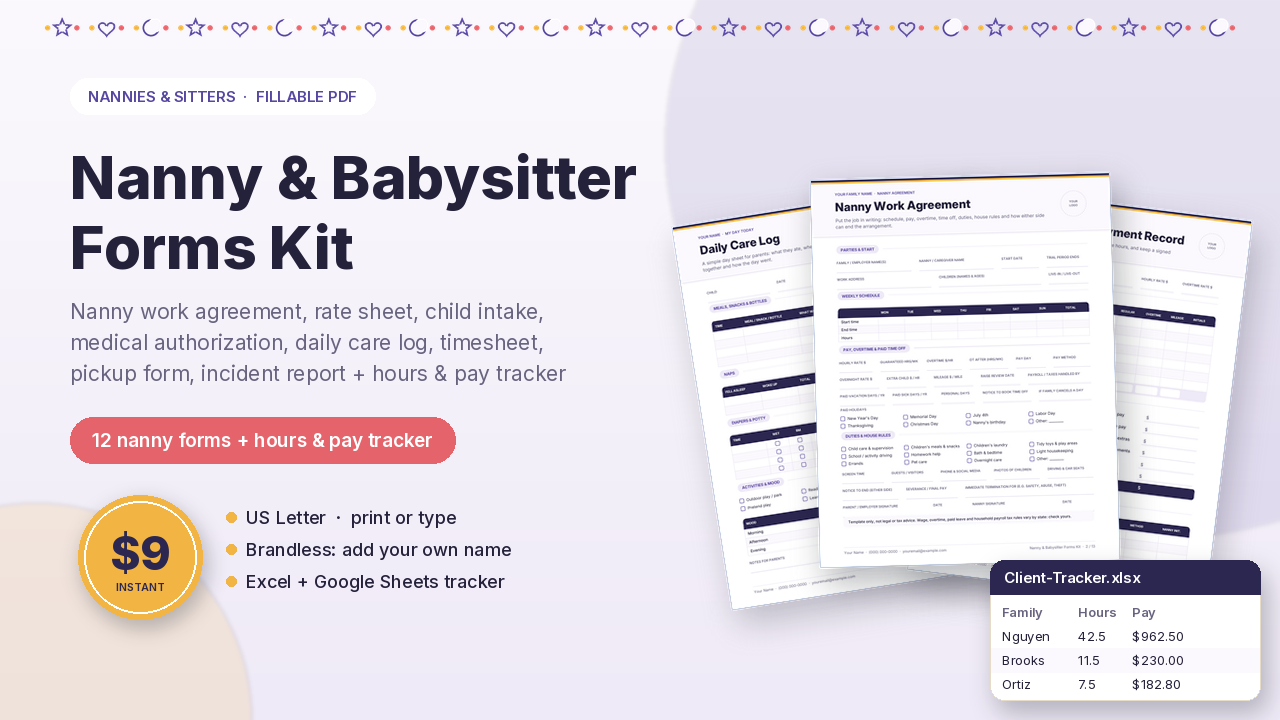
Nanny & Babysitter Forms Kit
12 fillable forms (nanny work agreement, babysitter rate sheet, child information form, emergency contacts and medical authorization, allergy and medication log, daily care log, weekly timesheet, pickup authorization, incident report and more) plus an Excel tracker for hours, overtime and pay.
Get it →Part 6: House rules and boundaries
House rules save the sitter from having to guess, and save the children from testing a new adult on every rule they can think of.
- Rooms or areas that are off-limits
- Whether children may go outside, into the yard or to a neighbor’s house
- Visitors: whether anyone may come over, and what to do if someone knocks or rings
- Phone use: whether the sitter may post photos of the children (many families say no) and whether the children may use phones or tablets
- Pets: feeding, walks, and whether the pets and children should be kept apart at any time
- What the sitter may help themselves to, such as food, drinks and Wi-Fi
- Discipline: what the parents use and are comfortable with, and what to do if things escalate
Be specific about anything you feel strongly about. “Please do not post photos of the kids anywhere” is clearer than “be careful with social media.”
Part 7: Safety, the house and practical details
This part is easy to skip and often the most useful when something goes wrong.
- Location of the first aid kit, flashlights and spare batteries
- Location of fire extinguishers, smoke alarm and fire escape plan, and where to meet outside
- How to lock and unlock the doors, and the alarm code if there is one
- Where the main water shut-off and electrical panel are (useful for the sitter to know where they are; repairs are for an adult the family calls)
- Wi-Fi name and password
- Where medicine, cleaning products, sharp tools and any firearms are stored and secured, and confirmation that the sitter should not access them
- Car seat and transport rules, if the sitter will drive or walk anywhere with the children
If the house has stairs, a pool, a balcony or anything else that needs extra care, write that down too. A first walk-through of the house, with the sitter, is the best time to point these things out.
Part 8: Pickup permissions and who may collect the children
If the sitter does school or activity pickups, or if another adult might collect the children during the sitting, write down exactly who is allowed.
- Names of adults allowed to collect each child, with phone numbers
- Anyone who is not allowed to collect the children, if that applies, and what the sitter should do if they arrive
- School or activity names, addresses and pickup times
- Whether the school needs written permission for the sitter to collect, and whether that has been given
- A family password or phrase the children know, if you use one
Many schools and childcare settings have their own pickup authorization process. Check what yours requires; a note on the fridge does not replace it.
| Situation | What the sheet should already answer (example) |
|---|---|
| A child has a minor scrape | Where the first aid kit is; whether to text parents now or tell them at the end of the evening. |
| A child seems unwell and is getting worse | Who to call first, the doctor’s after-hours number, and when to call emergency services. |
| Parents do not answer | Which backup adult to call next, and their number. |
| Someone the sitter does not know rings the doorbell | The visitor rule and whether to open the door at all. |
| Power cut in the evening | Where the flashlights are and who to call; not to attempt electrical repairs. |
These are examples of the kind of questions a good sheet answers in advance, not advice for any particular situation. In an emergency, the sitter should contact emergency services first.
For babysitters and nannies: asking new families to fill one in
If you sit for several families, a standard information sheet that each family fills in before the first booking saves you time and makes you look organized. It also means you are not relying on a rushed handover at the door.
- Send it with your booking confirmation and ask for it back before the first sitting
- Ask for the emergency, allergy and pickup parts to be completed in full, and the rest as needed
- Bring a printed copy on the first visit and go through it with the parents during a walk-through
- Ask the family to tell you when anything changes, such as a new allergy, medication or phone number
- Keep each family’s information private and stored securely, and return or delete it when you stop working with them
Your information sheet works alongside your other paperwork: a contract or work agreement for hours, pay and cancellations, a rate sheet (see babysitting rates), and an incident report and daily log if you care for the same children regularly.
Keep it to one page
A sheet nobody reads does not help. Some practical tips:
- Put parent contacts, the address and emergency numbers at the top, in a larger font
- Use short lines and bullet points rather than paragraphs
- Keep the long version, such as full routines and house rules, on a second page or in a binder, and point to it from the first page
- Date the sheet, and update it when something changes
- Keep a copy on the fridge or by the door, and send a photo or PDF to the sitter’s phone
Common mistakes
- Writing “allergic to nuts” and nothing else. Say what a reaction looks like, where the medication is and where the action plan is kept, and go through it in person.
- Leaving out the home address. It is the line most likely to be needed in an emergency call.
- Only listing the parents. Add at least one backup adult in case the parents cannot be reached.
- Vague routines. “Bedtime around 8” leads to a negotiation. Write the steps and the time.
- Not saying who may collect the children. Write names, and check your school’s own pickup rules.
- Never updating it. Old phone numbers, an outgrown routine or a new medication make the sheet less reliable. Date it and review it.
- Treating the sheet as a contract. Pay, hours and cancellations belong in a separate agreement.
One-page checklist
- Parent names, mobile numbers, who to call first and preferred contact method
- Where the parents will be and expected time home
- Full home address with cross street or landmark
- Local emergency number and poison control number
- Doctor or pediatric practice and after-hours number
- Two backup adults with phone numbers; who may come over or collect
- Each child: name, age, allergies, medical notes, medication due, comfort items
- Location of action plans, medication and first aid kit
- Meals, snacks, homework, bath and bedtime routine, in order
- Screen rules, visitor rules, photo and social media rules
- Off-limits areas, outdoors rule, pets
- Safety: fire exits, alarm code, flashlights, locks, secured items
- Pickup permissions and school pickup details
- Wi-Fi password and what the sitter may help themselves to
- Date of last update
FAQ
What should be on a babysitter information sheet?
Parent contacts, the home address, emergency and backup contacts, each child’s details including allergies and medication, routines for the time of the sitting, house rules, safety notes and pickup permissions. Put contacts and the address at the top.
Is a babysitter information sheet the same as a babysitter contract?
No. The information sheet tells the sitter what they need to know to look after the children. A contract or work agreement covers the working relationship: hours, pay, cancellations and duties. Many families and sitters use both.
Who should fill in the information sheet, the parents or the sitter?
The parents, because they know the children, contacts and rules. Many babysitters and nannies send their own blank sheet to new families to fill in before the first booking.
Can the sheet give the babysitter permission to get medical treatment for my child?
Do not assume it does. Rules on consent for a child’s medical treatment in someone else’s care vary by location. If it matters for your situation, check the requirements where you live and ask your child’s doctor what they recommend.
How often should I update it?
Whenever something changes, such as a phone number, an allergy, a medication or a routine, and at least each time you book a new sitter. Put the date on it so everyone knows how current it is.
Where should I keep it?
Somewhere the sitter can find it in seconds, such as on the fridge or by the main door, with a copy sent to the sitter’s phone. Keep private details such as alarm codes off any copy that could be seen by visitors if you prefer.
This page is general information for parents, babysitters and nannies, not legal, medical or safety advice. Rules on childcare, consent for medical treatment, giving medication, school pickup authorization and data privacy vary by location. Follow your child’s doctor’s instructions and any written action plans, check the requirements that apply where you live, and in an emergency contact your local emergency services.
Related templates
Free Nanny & Babysitter Forms
A fillable emergency contacts & medical info sheet, a daily care log and a sitter instructions & house rules page.
Download free →Nanny & Babysitter Forms Kit
Child information form, emergency contacts, allergy and medication log, pickup authorization, incident report, timesheet and more, plus an Excel hours and pay tracker.
Get it →