Holiday Painting Pricing: How House Painters Price Pre-Holiday Rush Jobs, Quick Refreshes, Gift Certificates and January Packages (Plus Free Forms)
How interior and exterior painters can price late October through early January: homeowners who want fresh walls before guests arrive, rush and short-notice fees, scheduling around hosting dates, one-room, accent-wall, trim and front-door refresh packages, dry and cure-time disclosures, cold-weather exterior limits, deposits and cancellation rules, gift certificates and January slow-season packages, with a worked example and free painting estimate forms.
Why painters need a holiday price sheet
Every fall, the same call comes in: “We’re hosting Thanksgiving (or Christmas) and the living room looks tired. Can you paint before the 20th?” From late October to mid-December, interior painters see a wave of homeowners who want fresh walls, clean trim and a new front door before family arrives.
The same weeks bring short days, cold mornings that end exterior work and deadlines fixed by a dinner date. Priced like a relaxed March repaint, that means working nights for the same money and handing over rooms the client scuffs hanging decorations the next day. A short written holiday price sheet fixes most of that.
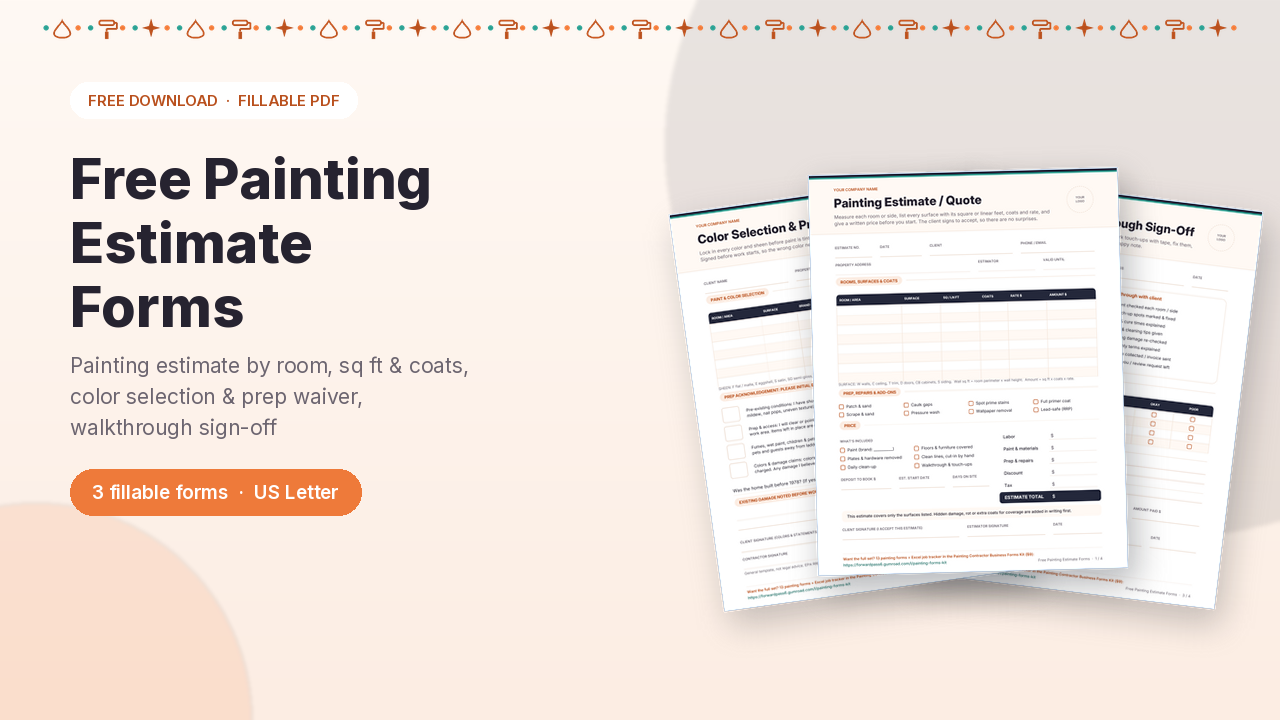
Free Painting Estimate Forms
A free fillable painting estimate / quote sheet with room-by-room sq ft and coats pricing rows, a paint & color selection sheet with prep and liability waiver, and a job completion walkthrough sign-off.
Download free →1. Start from your regular pricing
Keep your normal method as the base, whether you price by square foot, by room, or by labor hours plus materials. If you have not written it down yet, start with our painting pricing guide and our painting estimate template, which walk through measuring, coats, prep and materials.
The holiday sheet adds only what changes this season. Clients accept a clearly stated seasonal policy far more easily than a price that seems to jump for no reason.
2. Rush fees and peak pre-holiday dates
Your calendar is the limited resource from early November to mid-December, so price it on purpose:
- Name your peak window. For many painters that is the two weeks before Thanksgiving and the first three weeks of December.
- Charge a short-notice fee. A job booked a week before the client’s deadline often means reshuffling other work, evening or weekend hours, or a second crew member. Many painters add a rush fee for jobs that must finish inside a set window, such as ten business days from booking, and state it as a flat amount or a percentage of the job.
- Set a minimum job size on peak dates. It keeps small touch-ups from blocking a full room repaint.
- Price evenings and weekends separately. If the client needs work done after hours or on a Saturday so the house is usable during the week, quote it at a stated after-hours rate.
Keep your regular pricing for jobs booked early or scheduled with flexible dates.
3. Schedule around hosting dates
A holiday painting job has a hard deadline that is not yours: the day guests walk in. Build the schedule backward from it:
- Ask for the hosting date on the intake form.
- Build in a buffer. Plan to finish at least a few days before the hosting date for touch-ups and for paint to firm up before decorations go up.
- Agree on access. Who moves furniture and whether rooms must be empty.
- Spell out what moves the date. Late color decisions, added rooms and hidden repairs can push the finish date, not just the price.
If a job cannot realistically finish with a safe buffer, say so at the estimate. Offer a smaller scope now and the rest in January.
4. Quick-refresh packages
Many holiday callers do not want the whole house. They want the rooms guests will see. Small, defined packages are easy to quote and fit short calendar gaps:
- One-room refresh. Walls only, one or two colors, light prep, a stated maximum room size. Ceilings, trim and doors are add-ons.
- Accent wall. One wall, one color, often finished in a single visit. Good as an upsell on a one-room package.
- Trim and doors. Baseboards, door casings and interior doors in the entry, hallway and living areas, which show wear more than walls.
- Front door. A new color on the front door and a fresh coat on the frame. Weather limits apply (see below).
- Guest-room or powder-room package. Small rooms with lots of cutting in, priced as a set fee instead of by square foot.
Write what each package includes: number of colors and coats, prep level, whether patching is included, and how much furniture moving you do. Anything outside the list is a priced add-on.
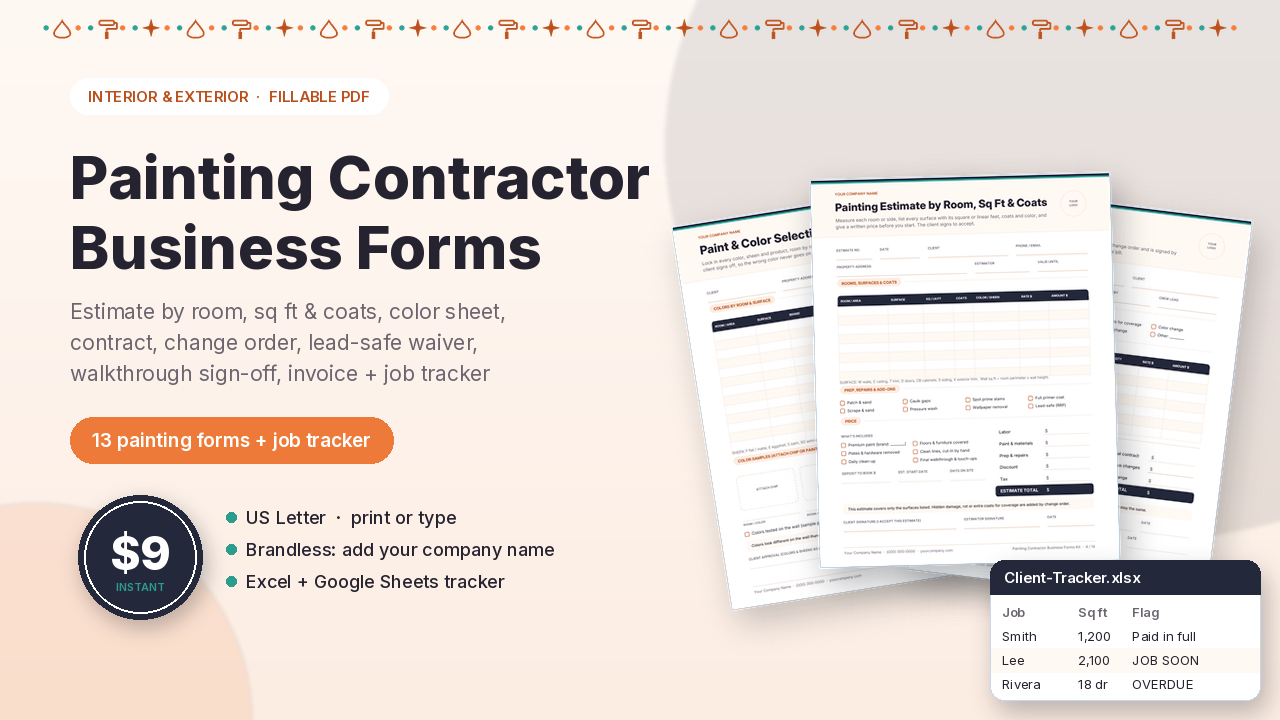
Painting Contractor Business Forms Kit
A 14-page fillable PDF with 13 forms (inquiry and site visit, pricing worksheet, estimate by room, sq ft and coats, paint and color selection sheet, materials list, prep checklist, painting contract, change order, lead-safe and liability waiver acknowledgement, walkthrough sign-off, invoice, touch-up and warranty log) plus an Excel job tracker that prices by the square foot and shows costs and profit.
Get it →5. Dry time and cure time disclosures
This is where holiday jobs go wrong most often. Paint that is dry to the touch is not fully cured, and freshly painted walls and doors scuff, stick and mark easily for some time after you leave.
- Explain the difference. Dry to the touch, ready to recoat and full cure are three different times. Full cure can take days to several weeks depending on the paint, sheen, temperature and humidity; check the product data sheet.
- Put it in writing. Add a short care note to the estimate and walkthrough sheet: no tape, hooks or adhesive decorations on fresh paint for a stated period, push furniture back gently, and clean only lightly at first.
- Doors and trim need extra time. Enamel on doors and trim can stay soft longer, and doors closed too early can stick to the frame.
- Define touch-ups. State what touch-ups are included after the job and that damage from decorations or moving furniture before the paint cures is billed separately.
Clear disclosure protects you from free callbacks in your busiest month.
6. Cold-weather limits on exterior work
Late fall is when clients ask for a fresh exterior, a front door or porch railings before the holidays. Most exterior paints list a minimum air and surface temperature on the label, and cold nights and dew affect drying and adhesion.
- State your rule. For example, no exterior painting when the label minimum temperature will not be met during application and for the drying period, or when rain, frost or heavy dew is expected.
- Allow weather rescheduling. Exterior holiday jobs should include a clause that you may move the date because of weather, with the deposit carried over.
- Offer a spring rain check. If the exterior cannot be done safely before the holidays, offer to lock in the price for an early spring date with a deposit, and suggest an interior refresh now.
- Front doors. Doors can sometimes be removed and painted indoors; price the extra handling.
7. Deposits, cancellation and the lead-safe note
A slot that cancels a week before Thanksgiving is hard to refill:
- Deposit at booking. Many painters ask for a stated share of the job to reserve a peak date and cover materials, with the balance due at completion and walkthrough.
- Rush jobs paid sooner. For short-notice jobs, some painters require a larger deposit.
- Cancellation terms. State how much of the deposit is kept depending on how close to the start date the client cancels, and that custom-tinted paint already bought is billed at cost.
- Change orders. Extra rooms, colors and repairs get a written change order with a new price and finish date.
- Older homes. In the US, homes built before 1978 may contain lead-based paint, and federal and state lead-safe work rules can apply to disturbing painted surfaces. Check the rules for your area and include the required notices in your paperwork.
8. Gift certificates and January slow-season packages
Gift certificates work well for painting. Adult children buy a room refresh for parents, and real estate agents give them as closing gifts. Sell them for a set package (for example, one standard room) or a dollar amount, print the terms on the certificate (what is included, how to book, that scheduling is subject to availability, and any rules required where you work), and steer redemption toward January and February when you have open dates.
January is slow for many painters, so package the work that clients want after the holidays instead of cutting prices: post-holiday touch-ups for scuffs and nail holes, ceilings and trim while the house is quiet, and pre-listing paint for spring sellers. A modest early-booking discount for January dates, offered to holiday clients at the walkthrough, can fill the calendar before the season ends.
9. A worked example (example numbers only)
These numbers are invented to show the math. Use your own production rates, costs and local market prices.
- Example job: living room and dining room walls, two coats, one color, booked eight days before the client’s Thanksgiving hosting date.
- Example estimate: 14 labor hours for prep, masking, painting and cleanup, at an example rate of $60 per hour = $840. Materials: an example $160 for paint and supplies. Subtotal: $1,000.
- Example add-on: front door repaint, done in the garage with the door removed, quoted at an example $225.
- Example short-notice fee: 15 percent on the room work because the job must finish inside the example ten-day window: 15% × $1,000 = $150.
- Example total: $1,000 + $225 + $150 = $1,375. Example deposit: 30 percent, or $412.50, due at booking; balance due at the walkthrough.
- Example schedule: finish three days before the hosting date, with a written care note on cure time and decorations.
Every number on the estimate should trace back to estimated hours, a rate that covers your costs, materials, and rules the client saw before signing.
Put it on one page and send it early
Write your peak window, rush fee, minimums, refresh packages, dry and cure-time care note, exterior weather rule, deposit and cancellation terms, gift certificate terms and January offers on one sheet. Send it to past clients and agents in October; the earliest calls take your best dates.
Then use the same paperwork on every job: an intake sheet that records the hosting date, an estimate by room, a color selection sheet, a contract with deposit and change-order terms, and a walkthrough sign-off with the care note.
FAQ
Do painters charge more before the holidays?
Many keep their regular rates and add holiday rules instead: a short-notice fee for jobs that must finish before a hosting date, a minimum job size on peak dates and an after-hours rate for evenings or weekends. Jobs booked early with flexible dates often stay at regular pricing.
How far ahead should homeowners book painting before Thanksgiving or Christmas?
Earlier is better, because pre-holiday dates fill fast. Many painters suggest booking several weeks ahead and finishing a few days before guests arrive so there is time for touch-ups and for the paint to firm up.
How long should I wait to hang decorations on freshly painted walls?
It depends on the paint, sheen, temperature and humidity. Check the product data sheet for recoat and cure times, and avoid tape, hooks and adhesive decorations on fresh paint until the cure period the painter gives you has passed.
Can you paint a house exterior in November or December?
Sometimes, but only when the temperature, surface and weather meet the paint label’s requirements during application and drying. Many painters move cold-weather exterior work to spring and offer an interior refresh or a front-door job before the holidays instead.
What should a quick room refresh package include?
State the room size limit, number of colors and coats, prep level, whether patching is included and who moves furniture. Ceilings, trim, doors and extra colors are usually priced as add-ons.
Should painters sell gift certificates?
They can work well as holiday gifts. Sell a set package or a dollar amount, print the terms clearly, check any gift certificate rules where you work, and steer redemption to January and February when you have open dates.
This page is general guidance, not legal, tax or financial advice. Contracts, deposits, cancellation terms, gift certificate rules, licensing and lead-safe work requirements vary by location. Always follow the paint manufacturer’s instructions and have an attorney review your painting contract.
Related templates
Free Painting Estimate Forms
A free fillable painting estimate / quote sheet with room-by-room sq ft and coats pricing rows, a paint & color selection sheet with prep and liability waiver, and a job completion walkthrough sign-off.
Download free →Painting Contractor Business Forms Kit
Fillable estimate by room and sq ft, color selection sheet, contract, change order, lead-safe waiver and invoice plus an Excel job tracker.
Get it →