Event Planner Contract Template: Scope, Fees, Retainers and Cancellation
How to write an event planner contract, from client intake and scope of services to flat-fee, percentage and hourly pricing, retainers, payment schedules, change fees, vendors and cancellation, with free printable forms.
Why event planners need a clear contract
Event planning work is mostly invisible until the day itself. Hours of vendor calls, budget revisions and timeline changes happen before anyone sees a centerpiece. Without a written agreement, clients can assume you are available around the clock, that "planning" includes setup and cleanup, or that a canceled event means a full refund. A contract defines your scope, your fee, how you get paid, and how changes are handled, so the relationship stays friendly even when plans shift.
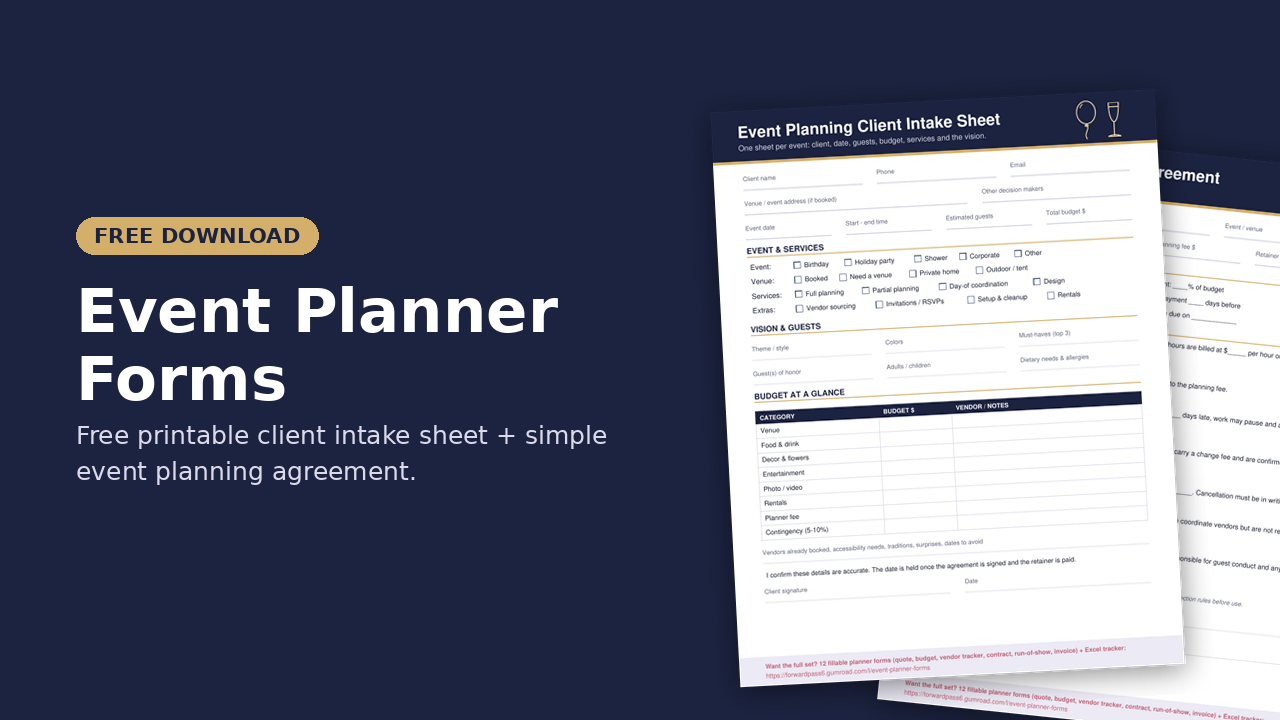
Free Event Planner Forms
A printable event planning client intake sheet plus a simple event planning agreement for event and party planners.
Download free →Start with a detailed client intake
- Who and when: client contact, other decision makers, event date and times, and estimated guest count.
- Event type and venue status: birthday, corporate event, shower, anniversary or holiday party, and whether a venue is booked.
- Budget: the total budget and the client's priorities. A budget-at-a-glance table by category (venue, food, decor, entertainment) keeps expectations realistic.
- Services wanted: full planning, partial planning, day-of coordination or design only.
- Extras: vendor sourcing, invitations and RSVPs, rentals, setup and cleanup.
- Vision: theme, colors, must-haves, guests of honor and dietary needs.
How event planners charge
- Flat fee: one price for a defined scope. Clients like the certainty, and it rewards you for working efficiently. Define the scope carefully so it does not grow.
- Percentage of budget: a share of the total event budget. It scales with event size, but explain how the budget is measured and when the fee is calculated.
- Hourly: best for consulting or partial planning where the work is unpredictable. Set a minimum and track hours.
Many planners combine these, for example a flat fee for planning plus an hourly rate for extra meetings. Build your price from the hours each event really takes, including travel, vendor meetings, site visits and the event day, which often runs 10 or more hours.
Retainers and payment schedules
A non-refundable retainer is common in event planning because booking a date means turning down other clients. State the retainer amount and when it is due, then set a payment schedule for the rest, for example installments at set milestones with the final payment due before the event. Add a late fee and make clear that vendor payments are separate from your planning fee unless you agree otherwise.
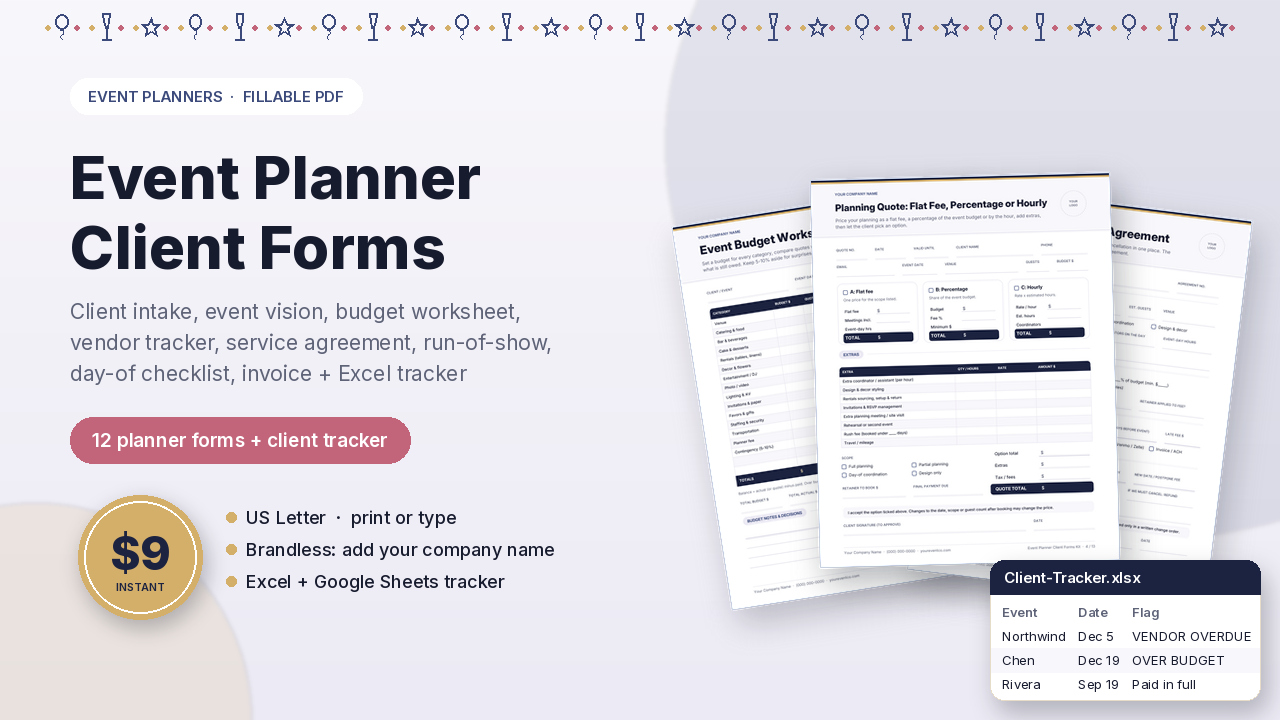
Event Planner Client Forms Kit
12 fillable forms (client intake, event vision & guest details, planning quote, event budget worksheet, vendor booking tracker, service agreement with retainer and change fees, timeline / run-of-show, day-of checklist, invoice and more) plus an Excel client tracker.
Get it →Terms every event planning agreement needs
- Scope of services: exactly what is included and what is not, with the number of meetings or hours if relevant.
- Change fees: how added services, date changes or major redesigns are priced, logged and approved.
- Vendors: vendors contract directly with the client unless stated otherwise, and you are not liable for a vendor's performance.
- Budget approval: the client approves spending above the agreed budget in writing.
- Cancellation and postponement: what the client owes at different points, and how a reschedule is handled.
- Guest conduct and damage: the client is responsible for guests and any venue damage they cause.
- Communication: response times and business hours, so planning does not become a 24/7 job.
Common contract mistakes event planners make
The biggest one is a vague scope such as "plan the party". Spell out the number of planning meetings, vendor searches, design revisions and event-day hours. The second is mixing your fee with vendor money, which makes it hard to show what the client actually paid you for. The third is skipping a written change process, so extra work quietly becomes free work. Finally, many new planners forget to say what happens if the client postpones rather than cancels. Decide whether the retainer moves to the new date and whether a rebooking fee applies.
Tools that keep events on track
After signing, move into a vendor contact and booking tracker with deposits and due dates, an event budget worksheet that compares estimated to actual spending, and a timeline or run-of-show minute by minute for the day. Pack a day-of checklist and emergency kit (tape, scissors, safety pins, chargers, stain remover, first aid). Keep a change order log so every added service has a price and a signature, then close the event with a final invoice and a feedback request.
FAQ
What percentage do event planners charge?
It varies by market and event size. Percentage-based planners commonly charge somewhere in the range of 10 to 20 percent of the event budget, but many small planners prefer a flat fee for clarity.
Is a retainer the same as a deposit?
In everyday use they overlap, but a retainer usually pays to reserve your time and is non-refundable, while a deposit is applied to the total. Say exactly which you mean in the contract.
Should vendors sign my contract or the client's?
Usually vendors contract directly with the client. That keeps you from being financially responsible for vendor payments or vendor mistakes.
Do I need a contract for day-of coordination?
Yes. Day-of work still needs a clear start time, hours, what you will and will not do, and a cancellation policy.
This page is general guidance, not legal advice. Review the wording and check your local contract, business licensing and consumer protection rules before using any agreement.
Related templates
Free Event Planner Forms
A printable event planning client intake sheet plus a simple event planning agreement for event and party planners.
Download free →Event Planner Client Forms Kit
Fillable event and party planner forms plus an Excel tracker with planning fees, retainers, vendors and budgets.
Get it →