Pet Sitter Report Card: What to Include After Every Visit (+ Free Template)
A practical guide for pet sitters, dog walkers and house sitters: what to record on each visit or walk, how to keep updates quick and consistent, and how to write notes owners actually read.
Why a report card after every visit matters
When owners are away, the question on their mind is simple: is my pet okay? A text that says “all good!” answers it for a day or two. After that, owners start to wonder whether the dog actually went out three times, whether the cat is eating, and whether anyone noticed the back door was sticking. A short report card after every visit or walk answers those questions the same way every time, and it shows the owner that you follow their instructions rather than improvising.
A consistent report card also protects you. If a pet gets sick, a package goes missing or a neighbor complains about barking, a written record of what you saw and did at each visit is far more useful than trying to remember it later. And it is a quiet marketing tool: owners forward good updates to partners and friends, and a professional, friendly report is one of the reasons clients rebook and refer.
This guide covers what to put on the card, how it changes for dogs, cats and walks, and how to fill it in quickly. It is not about the first meeting with a new client, covered in our pet sitter meet and greet checklist, or about your terms of service, covered in the pet sitting contract template guide. For rates, see pet sitting pricing and dog walking pricing.
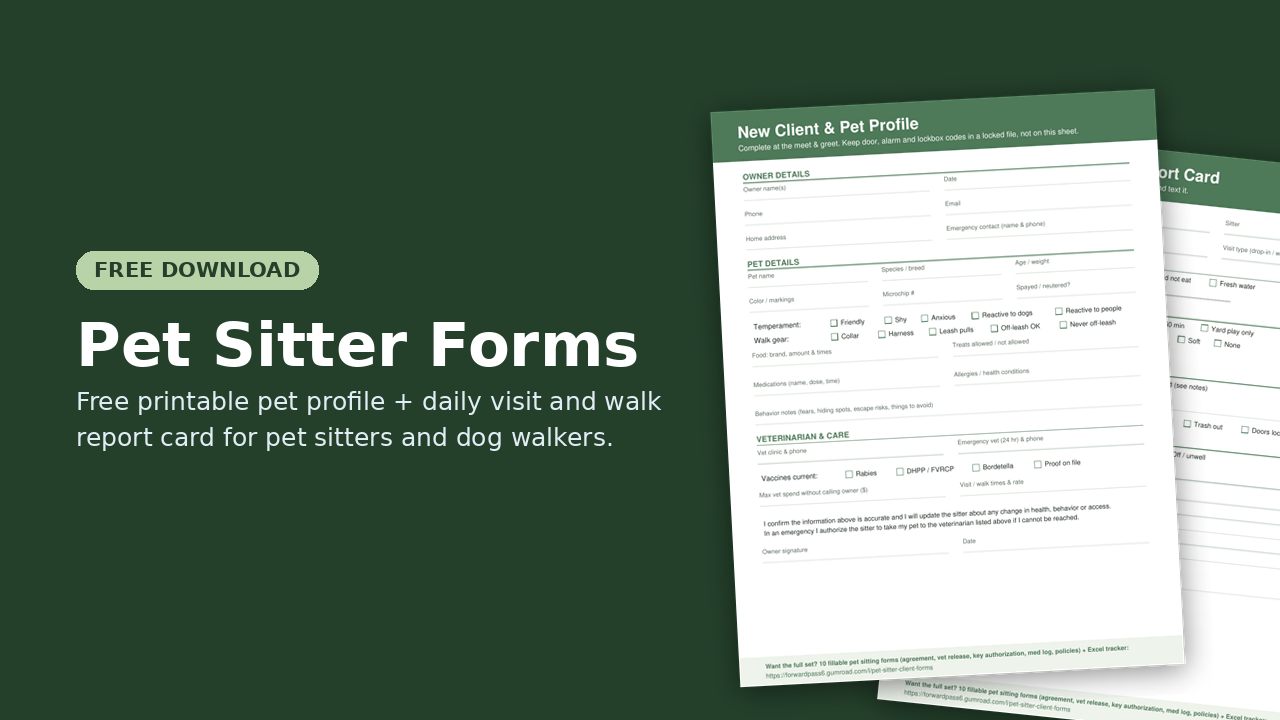
Free Pet Sitter Forms
A printable new client & pet profile plus a daily visit and walk report card for pet sitters and dog walkers.
Download free →1. The basics at the top
Start every card with the same few lines so the owner can scan it in seconds:
- Pet name(s) and date
- Arrival and departure time (or walk start and end time)
- Your name or the name of the sitter or walker who did the visit
- Type of visit: drop-in, overnight, walk, group walk, house check
Use actual times, not the booked slot. If you were running late or stayed longer because a dog needed extra time outside, the card should say so. Keep these times consistent with whatever you use to invoice. If you bill per visit or per walk, the report card doubles as a simple service record when an owner asks about a charge.
2. Food and water
Record what you gave and, more importantly, what the pet actually ate. “Fed” tells the owner very little. “Breakfast: 1 cup dry as instructed, ate about half, finished it by the time I left” tells them a lot. Note fresh water, and whether the bowl was empty or full when you arrived, since that can be an early sign that something has changed.
| Instead of | Write |
|---|---|
| Fed | 1 cup dry + topper at 7:40 am, ate all of it |
| Ate a bit | Ate about a quarter of dinner, sniffed and walked away; left the rest down for 20 min then picked up as instructed |
| Water ok | Water bowl nearly empty on arrival, washed and refilled |
| Treats | 2 training treats on the walk (from the jar on the counter) |
Example entries only. Always follow the owner’s feeding instructions and portions. If a pet stops eating or drinking, contact the owner and follow the plan you agreed for when to involve their vet.
3. Potty and litter
Owners care about this more than you might expect, because it is often the first sign of a stomach upset or stress. For dogs, note pee and poop and anything unusual in plain, factual terms (soft, very hard, straining, blood). For cats, note that the litter box was scooped and whether it looked normal. If there was an accident in the house, say where it was and that you cleaned it.
Keep it factual. You can describe what you saw without guessing at a cause: “Soft stool on the afternoon walk, normal this morning” is useful; “he has a stomach bug” is a diagnosis that is not yours to make.
4. Walk, play and exercise
For walks, record the length, route type (neighborhood loop, park, trail) and anything notable: pulling, reactivity to other dogs, meeting a neighbor, getting off-leash in a fenced area if the owner allows it. For drop-ins, mention play, brushing or cuddle time. For group walks, it helps to note which other dogs were in the group in general terms (“walked with two small dogs”) rather than naming other clients.
If the owner gave you rules (no dog parks, no off-leash, avoid a certain street, harness only), the card is a good place to show you followed them. A short line like “Harness on, stayed on leash, avoided the park as requested” reassures far more than a general “great walk”.
5. Medication and care tasks
If you give medication, record the name as written on the label, the dose, the time and how it was given (in food, pill pocket, by mouth, topical). For pets on several medications or a long schedule, keep a separate medication log, one line per dose, and simply reference it on the report card. Do not guess if a dose seems to have been missed or the instructions are unclear; contact the owner, and if you cannot reach them, follow the plan you agreed for contacting their vet.
Other care tasks belong here too: eye drops, brushing teeth, wiping paws after a muddy walk, cleaning a cone, checking a wound or stitches the owner asked you to watch. Note what you saw, not a medical opinion.
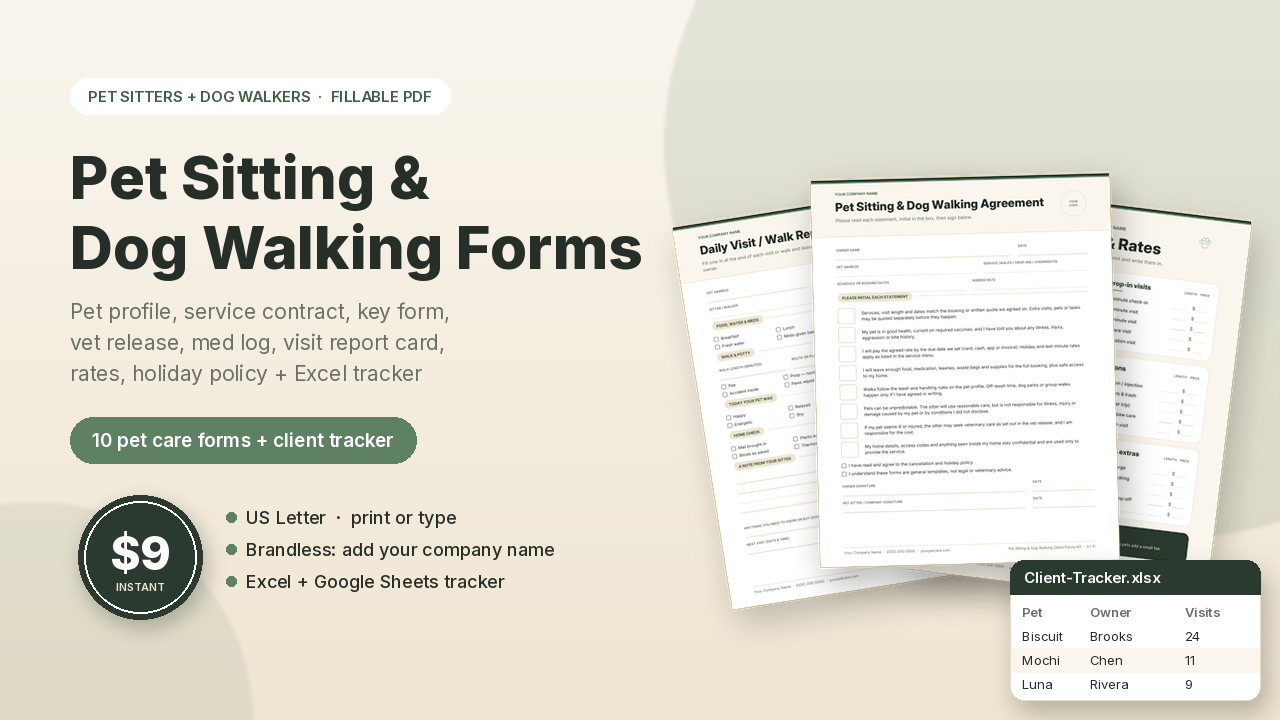
Pet Sitting & Dog Walking Client Forms Kit
10 fillable forms (client & pet profile, service agreement, key and alarm authorization, veterinary release, medication log, visit report card, meet & greet checklist, services and rates, cancellation & holiday policy, photo release) plus an Excel client and pet tracker.
Get it →6. Mood, behavior and anything unusual
This is the part owners read twice. A few words about how the pet seemed (happy to see you, hid under the bed for the first ten minutes, a bit restless, slept through the visit) gives the owner a picture of the day. Then note anything that is different from normal: limping, vomiting, coughing, scratching, not wanting to go outside, unusual hiding in a cat.
| What you notice | What to write and do |
|---|---|
| Pet seems a little quieter than usual but is eating, drinking and toileting | Note it on the card; mention it again if it continues at the next visit |
| Vomited once, otherwise normal | Describe it factually, clean up, and message the owner the same day |
| Not eating, very lethargic, struggling to breathe, collapse, suspected poisoning | Contact the emergency vet first, then the owner, following your agreed emergency plan; write it up afterward |
| Minor scratch or small cut found during the visit | Describe and photograph it if appropriate, tell the owner, and complete an incident note |
Example only, not veterinary advice. Agree in advance with each owner which vet to use, how to reach them and any spending limit, and follow that plan. When in doubt, call a vet.
7. Home check (for drop-ins and house sitting)
When you are in the client’s home, a short home check is part of the job, and the report card is where to record it:
- Doors and windows locked, alarm set or disarmed as instructed
- Lights, blinds and thermostat as the owner asked
- Mail and packages brought in, trash or recycling taken out if agreed
- Plants watered if that is part of the service
- Anything that needs the owner’s attention: a leak, a smoke alarm chirping, a delivery that needs a signature
Report problems without trying to fix things that are outside the service. A line such as “Small drip under kitchen sink, put a bowl under it, please let me know who to call” is enough. If something looks like an emergency (water pouring in, a strong smell of gas, signs of a break-in), get out if needed and contact the right emergency service before you think about the report card.
8. Notes for the owner and photos
End with one or two short, friendly lines and anything the owner needs to do: “Running low on food, about two days left”, “Poop bags nearly out”, “Back gate latch is loose”. Then add one specific highlight, which is what owners remember: “She brought me her squeaky toy the second I walked in.”
Photos and short videos are one of the things owners value most. Agree in advance whether they want photos, how many, and whether you may share any on your own social media; many sitters include a photo permission in their service agreement. Avoid photographing the inside of the home beyond what is needed, and never post anything that shows the client’s address, house number, keys or alarm panel.
Dogs, cats and walks: what changes
The same card works for most visits, but the emphasis shifts with the pet and the service:
| Dog drop-in or overnight | Cat visit | Dog walk only | |
|---|---|---|---|
| Most important lines | Potty, food, exercise, mood | Food eaten, litter, sighting and behavior | Walk length, potty, behavior on leash |
| Easy to forget | Water bowl, crate or gate left as found | Confirming you actually saw the cat (not just that food went down) | Paws wiped, water refilled, door locked on the way out |
| Typical extras | Medication, brushing, bedtime routine | Medication, brushing, plants, mail | Harness or gear notes, treats given |
| Photo idea | Mid-walk or settled on the bed | Cat on a favorite spot | On the walk |
Example only. Adjust to each pet and to what you agreed with the owner.
For cats in particular, write whether you saw the cat. A shy cat can hide for the whole visit, and owners understandably worry when food disappears but no one has laid eyes on the cat. If you have not seen a cat for more than one visit, tell the owner and agree what to do next.
Paper, text or app?
There is no single right format. A printed card left on the counter works well for house sitting and for older clients who prefer paper. A short message with the same headings works for most drop-ins and walks. Pet sitting apps can send structured reports with GPS walk maps and photos, which many clients like, but they come with a subscription and you are tied to how the app formats things.
Whatever you choose, keep the headings the same every time, so the owner learns where to look, and keep a copy. A photo of a paper card, a saved message thread or the app history is fine. Treat client details, addresses and access codes as private, and do not keep them anywhere that other people can see.
Keep it quick
A good report card takes two or three minutes, not fifteen. Some habits that help:
- Use the same template every time, with tick boxes for routine items and a few lines for notes
- Fill it in during the visit, not hours later from memory
- Write facts first, then one friendly line, then any to-dos for the owner
- Save common phrases on your phone, but always personalize at least one line
- Send it before you leave or straight after, while the owner is still wondering
Common mistakes
- “All good!” and nothing else. It reassures once and then starts to feel automatic.
- Leaving out problems. Owners would much rather hear about a soft stool or a missed meal from you than discover it later.
- Guessing at medical causes. Describe what you saw and let the owner and their vet decide what it means.
- Different formats every visit. Consistency is what makes the card useful.
- Sharing photos without permission, or photos that reveal the home’s location or security.
- Naming other clients or their pets in group walk notes.
- Times that do not match the invoice. That invites questions you could easily have avoided.
One-page report card checklist
- Pet name(s), date, visit type, sitter name
- Actual arrival and departure (or walk) times
- Food given and how much was eaten; water refreshed
- Potty and litter, with anything unusual described factually
- Walk length or play, and any owner rules followed
- Medication and care tasks, with time and dose (details on a separate log if needed)
- Mood, behavior and anything different from normal
- Home check: locks, alarm, lights, mail, plants, anything needing attention
- Supplies running low and to-dos for the owner
- One specific highlight and an agreed photo
FAQ
What should a pet sitter report card include?
At minimum: the date and actual visit times, food given and how much was eaten, water, potty or litter, walk or play, any medication given, how the pet seemed, a quick home check for drop-ins, supplies running low and a friendly note. Many owners also appreciate a photo.
How often should a pet sitter send updates?
Most sitters send a short report after every visit or walk, so the owner hears from them once per visit. For overnight stays, an evening and a morning update is common. Agree the frequency and the format with each owner at the meet and greet.
Is a report card the same as a pet sitting contract?
No. The contract sets out the terms of service once: what you do, prices, cancellations, keys, vet release and emergencies. The report card is filled in at every visit and records what actually happened that day.
Should I tell the owner about small problems?
Yes. Describe them factually and calmly, such as one vomit, a soft stool or a missed meal, and say what you did. Owners generally prefer to know, and patterns are easier to spot when every visit is recorded. For anything that looks serious, contact the vet first according to your agreed emergency plan, then the owner.
What if I did not see the cat during the visit?
Write that you did not see the cat and what you noticed instead, such as food eaten or the litter box used. If the cat stays hidden for more than one visit, tell the owner and agree what to do next.
Should I keep copies of report cards?
It is a good idea. A copy, photo or saved message history gives you a record if questions come up later about a visit, an injury or a charge. Store copies privately and only for as long as you need them.
This page is general information for pet sitters, dog walkers and house sitters, not legal, veterinary or insurance advice. Rules on pet care businesses, liability, privacy and record keeping vary by location. Agree an emergency and vet plan with every owner, follow their care instructions and their vet’s advice, and in an emergency contact the vet or local emergency services first.
Related templates
Free Pet Sitter Forms
A printable new client & pet profile plus a daily visit and walk report card for pet sitters and dog walkers.
Download free →Pet Sitting & Dog Walking Client Forms Kit
Fillable agreement, key and alarm authorization, vet release, medication log and visit report card plus an Excel client and pet tracker.
Get it →